
Park bench aluminum slat cutting starts with a deceptively simple request: “cut these planks to length.” The useful quotation is more specific. It identifies the exact extrusion, the assembled bench geometry, the cut-end interface, and how replacement pieces will be checked and packed. A straight length that is correct on a tape measure can still be unusable when a cap will not seat, a bolt hole is referenced from the wrong end, or a finished face is marked during handling.
Outdoor benches do use different aluminum plank systems. For example, Belson Outdoors describes an extruded-slat bench with frame legs and cross-bolting, while Pilot Rock describes ribbed extruded aluminum planks and associated brackets or end caps among its material options. Those examples show why “aluminum bench slat” is a product family, not a transferable cutting drawing. The buyer must release the section and assembly details for the particular bench.
Start with the bench assembly, then define each blank
Make a separate line item for every distinct plank: seat, backrest, end position, and any shorter replacement piece. State the quantity per bench and per order. Attach a section drawing or approved sample that identifies the visible face, internal ribs, mating slot or cap groove, and any asymmetric feature. Include the alloy and temper only if they are confirmed in the released product specification. A material label alone cannot describe where the saw and supports may contact the part.
For replacement work, identify the bench generation and the mating parts. “Same nominal width” is insufficient if a newer cap, bracket, or fastener pattern differs. Ask the bench owner or assembler to confirm whether the supplied part is a raw cut blank, a drilled and finished plank, or a complete service kit. Saw cutting supplies a length and cut face; it does not by itself establish hole position, coating quality, fit, or the strength of the installed bench.
Put the length datum and end condition on the RFQ
Specify finished length after cutting and identify which surfaces are the datums. If one end has a factory feature or predrilled hole, show the measurement from that end. For two-end cuts, show whether both ends are square or whether one is angled for a specific assembly. Give the permitted length variation, end squareness or angle requirement, and where the inspector should measure. Do not borrow a machine brochure tolerance as the plank acceptance limit.
The cut-end requirement should describe the next operation. An exposed edge may need a different burr and appearance standard from an end hidden inside a cap. If an end cap must slide over ribs or into a groove, define the fit check and any edge preparation. If a coating is applied after cutting, confirm whether the coating supplier needs a particular edge condition. If stock is already coated, decide how the finished surface will be protected from clamps, rollers, chips, and packing.
Match support and handling to the actual section
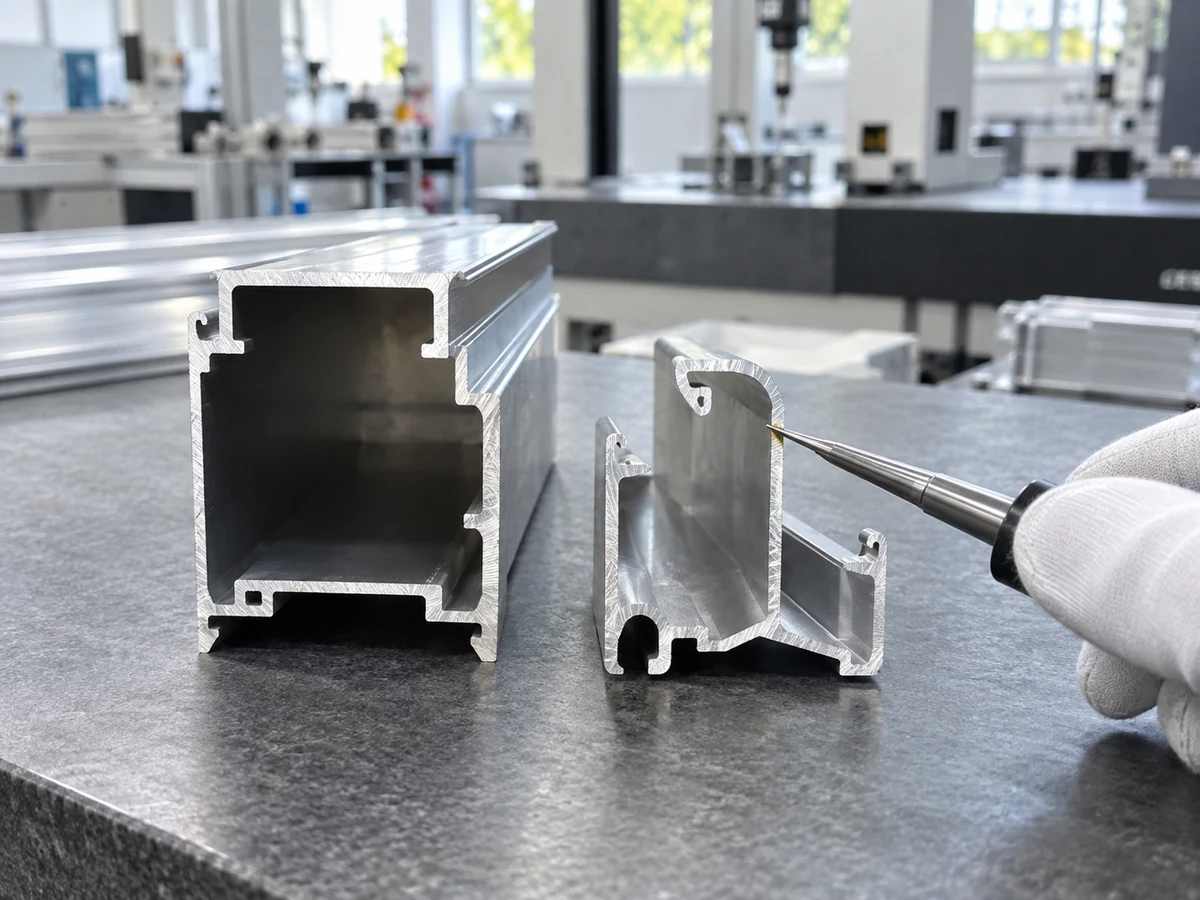
Long, relatively narrow profiles need a stable reference through feeding and cutting. The fixture plan should show where the slat is supported, which face is clamped, and whether a rib or thin wall can deflect under contact. Ask the cutting supplier to review the released section and stock length before proposing the feed path, blade, and clamping arrangement. For park bench aluminum slat cutting, the correct trial uses the actual supplied profile, not a visually similar sample.
Plan the downstream handling at the same time. Separate raw and coated parts, define face-to-face protection where needed, and prevent mixed lengths or colors in a replacement kit. Give each bundle a part number, finish, quantity, and orientation if the profile is asymmetric. This is a purchasing control as much as a shop-floor control: a perfectly cut slat delivered in the wrong kit still delays assembly.
Validate one representative kit before the batch
Request a first-article sample for each distinct section and end condition. Measure length from the agreed datum and inspect the cut faces. Then install the sample with the actual cap, fasteners, bracket, and bench frame. Record any interference, visible end gap, inconsistent spacing, or finish contact. The assembler should approve the fit; the saw supplier should document the dimensions and process observations it can actually verify.

Use the approved sample to settle the written inspection method. Include sample size, measurement locations, acceptable burr or edge condition, and a response plan for nonconforming pieces. Where cosmetic faces matter, agree on a visual standard and viewing condition. Keep the acceptance drawing, sample approval, and packing instruction under the same revision so purchasing, cutting, finishing, and installation all use one definition.
Park bench aluminum slat cutting RFQ checklist
- Bench and service-kit identity; seat or backrest position; quantity per kit and order.
- Released extrusion section, asymmetric orientation, stock length, and confirmed material and finish.
- Finished length, datum, end angle or squareness, and where dimensions will be measured.
- Exposed or capped end; burr, edge preparation, cap fit, and any later drilling or coating.
- Protected faces, acceptable contact points, packaging, labels, and mixed-part controls.
- First-article measurement and assembly trial with the actual mating hardware.
Related cutting equipment demonstration
The following video from Jiurun Machinery’s own channel shows a long aluminum profile on the infeed of an automatic cutting machine. It is a related equipment demonstration only. It does not show the bench plank, coating, cap fit, acceptance inspection, or a validated production rate for the RFQ discussed above.
What to send Jiurun for a cutting review
For a park bench aluminum slat cutting review, send the section drawing, stock and finished lengths, annual or batch quantities, datum and end-face requirements, finish stage, and photos of the mating cap or frame. Jiurun can review the cutting equipment and workholding approach against those inputs. An equipment review is not a substitute for the bench maker’s structural design approval or the assembler’s fit trial. See our industrial aluminum profile cutting overview and contact us with the released drawing to discuss a suitable cutting process.
Frequently asked questions
Can the same cut length be used for every bench slat?
Only if the released bench design confirms it. Seat and back positions, end locations, brackets, and replacement revisions may differ even when the extrusions look alike.
Should replacement slats be cut before or after coating?
Follow the approved product route. Decide who owns exposed cut-edge finishing, how coated faces are protected, and whether the final fit check is performed after all finishing operations.
Does a clean saw cut prove the plank will fit the bench?
No. Fit depends on the extrusion section, length datum, cap and bracket interface, hole pattern, finish build, and assembly tolerance. Test a representative kit with the actual mating parts.