
Packaging change part cart aluminum frame cutting is a small but important scope decision for a packaging OEM or line integrator. A cart may carry format-specific guides, plates, pushers and other components used when a line changes package size. If its approved design uses aluminum extrusions, the saw job is the set of straight frame members cut from those extrusions. The saw does not make the complete cart or validate how the cart carries its load.
Before requesting a machine quote, identify the cart design, its revision and the exact members the factory will cut. A packaging line may have more than one cart and several change-part families. Treat each released cart frame as a defined bill of cut members rather than a photograph of a finished trolley.
Why the change-part cart deserves its own cut list
Packaging equipment makers describe change parts as components exchanged for different product or carton formats. R.A. Jones describes carts as one way to organize these parts, while also noting the risk of lost, mixed or damaged items. That makes labeling and storage layout relevant to the cart designer. For a saw buyer, the direct question is narrower: which approved aluminum frame members must arrive at the assembly station, in what condition and in what quantity?
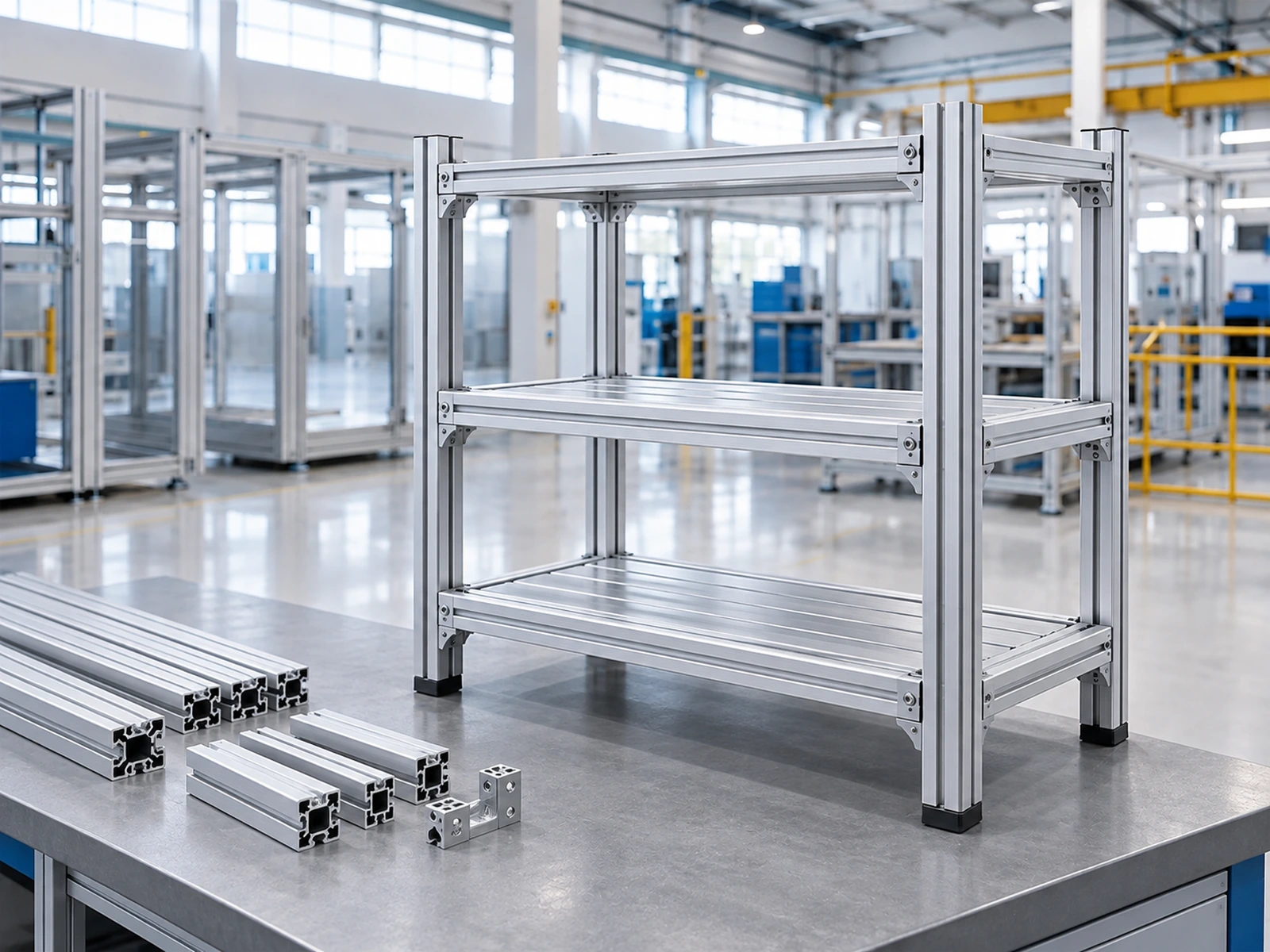
First separate the stationary machine, the interchangeable format parts and the storage cart. The cart may use uprights, base rails, shelf supports and handles; the actual profile sections depend on the approved drawing. Shelves, castors, labels, hooks, trays and the format parts themselves may be bought or made elsewhere. Never count them as saw output simply because they appear on the same assembly drawing.
Build the packaging change part cart aluminum frame cutting schedule
For a packaging change part cart, a usable schedule identifies each member without making the saw operator infer its role from a cart rendering. Ask the designer or assembler for one controlled table per cart revision. A practical row includes the member ID, profile drawing and alloy, stock condition, finished saw length, end geometry, quantity per cart, handed orientation, inspection datum and receiving location. Add a column for work after sawing, such as drilling, tapping or bracket installation, so the quote cannot silently absorb those operations.
| Member family | Cutting question | Assembly handoff |
|---|---|---|
| Base and upper rails | Which length and end orientation belong to each side? | Keep left and right rails identified by drawing revision. |
| Uprights | Is the same section used on every corner? | Match the approved shelf and bracket locations later. |
| Shelf supports | Are short pieces repeated across several levels? | Bundle by level and member ID, not loose by length alone. |
| Handle or guard members | Are these straight saw blanks or formed parts? | State which supplier owns forming and final fit. |
These rows are examples, not a claim about a particular Jiurun customer cart. If the final design uses welded steel, formed sheet or a bought complete trolley, an aluminum extrusion saw may have no retained frame-member job. Confirm the material and make-or-buy decision before comparing equipment.
Use the real profile and a representative saw trial
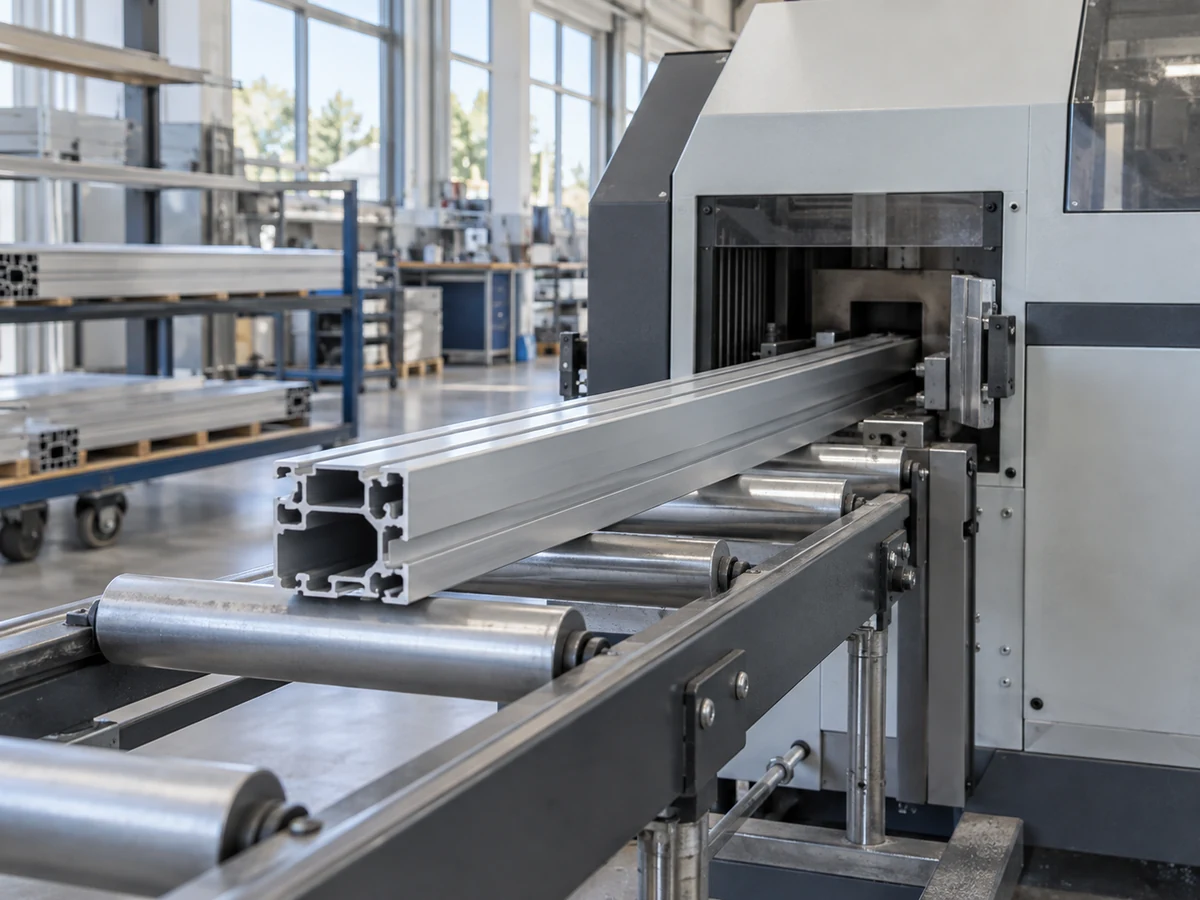
For a packaging change part cart, a dimension on the layout is not enough to set up a saw. Send the actual extrusion cross-section, wall thickness, surface finish and available raw-stock length. Identify the face that must remain visible and the face that locates against the saw fence. For a hollow or slotted section, clamping and support should be tested on the real profile rather than assumed from a solid bar.
Choose trial pieces that challenge the intended production route: the longest rail to expose feeding and support issues, a short repeated shelf member to check handling, and an end geometry that represents the joint. State the length datum and the permitted end condition on the released drawing. Record the first accepted sample and enough consecutive pieces to compare the proposed process with the buyer’s acceptance criteria. Do not use a generic demonstration video as evidence of tolerance, throughput or finish on this cart.
Ask whether a straight cut is enough for the joint. Some assemblies require subsequent drilling, tapping, milling, bracket positioning or other preparation. Those steps need their own drawing, supplier and inspection gate. A circular saw quote should name the accepted saw-blank condition and exclude later work unless a specific, verified configuration is offered.
Keep format families and revisions from mixing
On a packaging change part cart, the frame is usually less format-specific than the change parts it stores, but a revised storage layout can change shelf spacing and member lengths. Link each cut bundle to the cart revision and destination, then link the assembled cart to the change-part set it will hold. A simple traveler can show cart ID, member IDs, profile batch, cut quantity, drawing revision and receiving signature. This is a proposed control method for the buyer, not proof that a particular cart or customer already uses it.
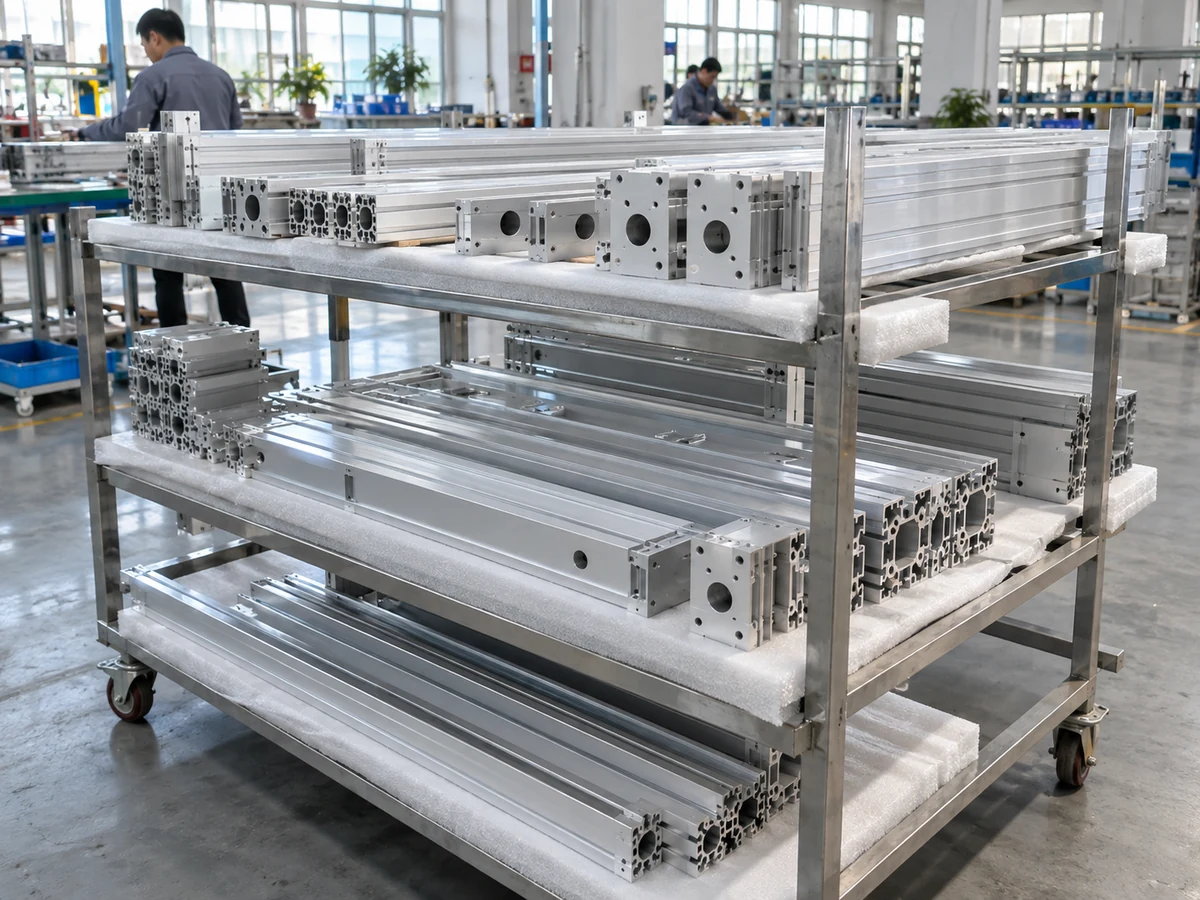
At receiving, compare the bundle label with the current member schedule before the parts go into a shared bin. Protect surfaces that will remain visible, separate left- and right-hand members, and flag an incomplete kit before assembly starts. If a partial bundle is acceptable, record who approved it and which missing members remain open.
Compare saw proposals on accepted output
For a packaging change part cart, a short saw cycle time alone does not answer whether a saw is a good fit. Have each supplier quote against the same profile family, cut list and trial acceptance plan. Request a description of infeed support, locating face, clamp contact, usable cut envelope, first-off measurement, batch identification and outfeed handling. Compare the total route from raw stock to accepted, identified members. A more automated feed is valuable only when it fits the actual job mix and the required receiving condition.
JiurunCut supplies industrial aluminum circular-saw equipment. Its machine range is a starting point for discussing feed, clamp and saw configuration; the correct direction follows the released profile and trial, not this article’s illustrative images. Buyers with several profile families should include the changeover and support requirements for each family in one RFQ.
Related equipment video
The following video from the Jiurun Machinery YouTube channel shows a related aluminum cutting process. It does not show this packaging cart, its member material or configuration, a customer trial, or verified performance for the job described above.
What to send for a useful quote
A packaging change part cart RFQ should give every supplier the same controlled inputs:
- The approved cart assembly drawing and revision, plus the exact aluminum member schedule.
- Extrusion cross-sections, stock lengths, surface condition, cut angles and required quantities.
- The boundary between saw blanks and later drilling, tapping, forming, bracket work or full assembly.
- One representative long rail, short member and joint sample with inspection datums.
- The packaging, labels and receiving location for each cart kit.
- The expected batch pattern and number of cart revisions to be supported.
Next step: send JiurunCut the released profile drawings and cut-member list. Ask for a job-specific feeding, clamping and sample-cutting review. State any unknowns explicitly so the proposed saw route can be checked before a purchase decision.
Questions buyers often ask
Can one saw make the entire change-part cart?
No. The saw can be evaluated for specified aluminum cut members. Cart structure, castors, shelves, accessories, assembly and load acceptance remain separate responsibilities unless the supplier explicitly quotes them.
Can a photo of a rack replace a cart drawing?
No. A related image can explain the member concept, but it does not establish material, dimensions, load, caster arrangement, revision or cut acceptance for the buyer’s cart.
Should every format get a different cart frame?
Only if the approved storage plan requires it. Many format changes concern the replaceable machine parts. Compare the physical change-part sets and their storage needs before creating new frame-member revisions.
References: R.A. Jones on cart-based changeovers; Douglas Machine on change-part scope; Change Parts storage-cart examples. These sources explain industry context; they do not validate a specific Jiurun machine setup or buyer design.