
Mezzanine aluminum toe board cutting is a small part of a much larger platform handoff. The saw supplier can deliver identified, straight cut blanks from an approved extrusion. The platform designer still owns the edge-protection layout, post interfaces, fasteners, installation and acceptance of the complete system. If an RFQ specifies only the overall deck perimeter, a batch of clean lengths may arrive without the right joints, corner pieces or clearance at a gate. This guide turns a released toe-board drawing into a cut-blank inquiry that suppliers can price and check consistently.
Platform systems differ. mk Technology Group describes toe kicks on industrial platform outer contours, while a KattSafe toe-board assembly drawing shows a particular extrusion, end caps, joiners and brackets. These are examples of how a finished system can have more interfaces than a saw blank. Neither defines the section, compliance route or hardware for a Jiurun customer’s project.
Define the supply stage before the saw trial
Write the accepted stage on the purchase order. A cut blank is a specified length of the approved stock with an agreed end condition. A prepared member may add holes, notches, end caps, coating repair or labels. A toe-board assembly includes connectors and installation work. A quote for bare cuts should not be compared directly with a quote that includes joiners and mounting hardware. Ask each vendor to price the extra operations as separate lines.
Also keep the safety decision outside the cutting acceptance. The responsible platform designer should confirm the applicable standards, edge layout, board height, openings, strength, attachment and site conditions. For a US workplace, the official OSHA 29 CFR 1910.29 text is a starting reference for falling-object protection criteria. A clean saw end alone cannot establish that an installed mezzanine meets those requirements.

Release the section, stock route and finish
Send a section drawing with revision, extrusion supplier, alloy and temper if specified, stock length, finish and permitted handling faces. The section may include a channel for a joiner, a lip at the deck edge, a cap interface or a face that must remain visible. A generic photo of a rectangular profile cannot settle those details. If the buyer has not selected an extrusion, the first commercial decision is to approve the system section, rather than ask a saw vendor to invent one from a platform sketch.
Check how stock reaches the saw. Record incoming straightness and surface condition, any protective film, and whether the extrusion arrives as one stock length or as already prepared members. A profile with a thin unsupported lip may need different support from a solid bar. Give the cutting supplier a real sample for a fixture review; a proposed setup based only on the outer width can press the wrong wall or obscure the visible face.
Turn the perimeter into named cut members
Make a member schedule before assigning lengths. Identify each mezzanine edge, corner, gate, stair opening and end-of-run. Mark the start and finish orientation of every piece, the post or bracket it meets, and whether the cut end remains exposed or is concealed by a cap or joiner. A left and right end can look interchangeable in a flat list even when the installation sequence is different. Carry the drawing revision and member ID on the label and inspection record.
Define the length datum explicitly. Is the dimension measured over both physical cut ends, between post centers, to a joiner shoulder, or to the installed outside corner? If a joiner needs an insertion allowance or the designer wants an installation gap, put that value in the released schedule. Do not ask the saw operator to infer it from the deck perimeter. For mitered or returned corners, state the angle and which face controls the finished length. State whether corner preparation is part of cutting or a downstream operation.
Check posts, joiners and gate interruptions
The toe board often meets a rail post, a bracket, a corner connector or a removable opening. These interfaces are where a correctly cut length can still fail to assemble. Send the hardware drawing or a physical fitting with the stock sample. Specify whether the board passes behind a post, stops against it or terminates in an end cap. If drilling or notching is needed to clear a post, name the operation owner and inspect it separately from the saw cut.
For a gate or loading point, identify the accepted interruption and the party who confirms the installed edge protection. A saw supplier should not substitute a convenient short piece for the designer’s release. Keep any later field trim under change control: a cut list made from the current approved revision is easier to reconcile than one silently adjusted on site.
Support the extrusion without damaging its working face
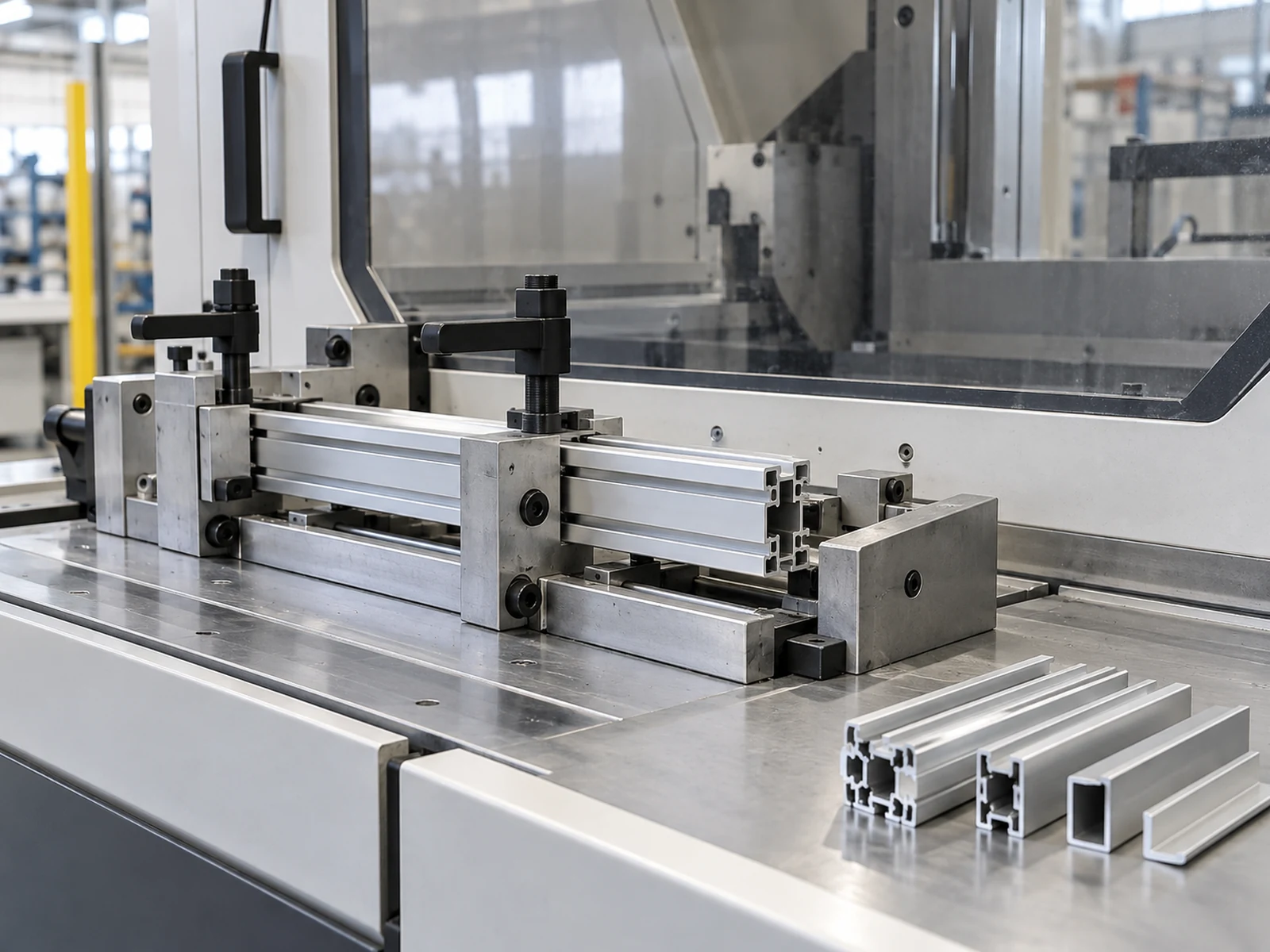
Before the first cut, review the actual section in the proposed fence and clamp arrangement. Mark which face may contact the stop, where support is required beneath a hollow wall, and where the blade will clear a lip or joiner slot. Check the profile after release from the fixture, because a temporary clamp mark or local distortion may be less visible while it is held. Separate a cut-quality trial from the platform assembly test.
Protect the finish and accept the first-off by member type
State whether the board is supplied bare, anodized, painted or otherwise finished, and who owns protection after cutting. Define the visible face, allowable edge condition and treatment of burrs or coating damage. Pack long pieces so their ends and outer faces do not rub during transport. An installer should be able to identify the member without removing all protection and guessing its location.
Review a first-off against the actual released drawing and mating hardware. Record stock batch, setup, member ID, length datum, measurement method, end appearance and joint fit. If there are different corner, gate and straight-run pieces, one sample should not stand in for every type. Reject or quarantine mismatched parts before they are mixed into a kit. Assembly strength and installed safety acceptance remain with the system owner.
Seven RFQ checks for mezzanine aluminum toe board cutting
| Check | Send with the inquiry | Decision it resolves |
|---|---|---|
| 1. Supply boundary | Cut blank, prepared member or installed assembly | Comparable quote scope |
| 2. Released section | Revision, stock sample, material and finish | Real saw input and handling faces |
| 3. Member schedule | IDs, perimeter positions, corners and openings | Correct quantities and handedness |
| 4. Length datum | Cut-end, post or joiner reference; allowances | Blank length versus installed span |
| 5. Secondary work | Caps, holes, notches, labels and operation owner | Where the saw supplier’s duty ends |
| 6. First-off plan | Fixture contacts, mating hardware and inspection method | Approved setup for each member type |
| 7. System handoff | Packing, revision control and acceptance owner | Traceable delivery without unsupported safety claims |
Ask each vendor to answer the same schedule. A quote that includes drilling, caps and kit packing may cost more than a saw-only quote while covering a wider responsibility. Compare accepted outputs, not only the price per cut. For another platform-related boundary, our aluminum saw floor-load guide addresses the machine installation side rather than the toe-board member kit.
What the saw video can and cannot show
The following video from Jiurun Machinery’s own channel shows a general aluminum saw and feed process. It is related equipment context only. It does not show this article’s toe-board section, a released mezzanine project, a customer trial, an approved fixture or compliance with any platform standard.
Send a drawing-led inquiry
For a mezzanine aluminum toe board cutting RFQ, send Jiurun the released extrusion section, a stock sample description, the named member schedule and the required cut-blank acceptance. Include one joiner and one post interface where possible. Jiurun can then discuss saw support, first-off checks and kit identification for the actual material without making claims about the finished platform’s safety performance.
Common questions
Can the deck perimeter be divided into equal cut lengths?
Only if the released design says so. Posts, corners, gates, joiners and end caps can change the individual blank lengths and orientations.
Does a clean cut prove the installed toe board meets a standard?
No. Cutting acceptance covers the specified member. The responsible designer and installer must assess the complete edge-protection system against the applicable requirements.
What should be sent if the extrusion has not been chosen?
First select and release the section and its connection method. A saw inquiry can then use the real section, stock sample and cut schedule instead of an assumed profile.