
A patient privacy screen is an assembly, not a length of extrusion. A buyer may source a finished three-panel screen, a frame kit, or cut aluminum members for a separate assembler. Those offers carry different drawing, hardware, cleaning, stability and acceptance responsibilities. This guide helps an OEM purchaser define a repeatable medical privacy screen aluminum frame cutting request without presenting a saw trial as approval of the finished product.
Start with the screen you are buying
Medline lists a mobile three-panel privacy screen with lightweight anodized aluminum construction, vinyl panels and casters. Its catalog also lists other privacy screens with powder-coated steel frames. That comparison is a useful reminder: “medical privacy screen” does not identify one material, section, joining method or cut list. Ask the screen designer to identify the exact frame design before issuing a machining RFQ. See Medline’s aluminum-screen product description and its product comparison. These are external design examples, not Jiurun customer specifications.
For a finished screen, the supplier is responsible for the assembled frame, panels, hinges, casters and applicable product requirements. For a frame kit, the purchase order must name supplied members, connectors, machining and packaging while identifying who assembles and validates the product. For cut members only, Jiurun’s relevant role is machine selection and a sample cutting process for the approved extrusion; the OEM remains responsible for fit, finish, assembly and finished-screen assessment. Do not merge these three supply scopes into one unqualified quotation.
Medical privacy screen aluminum frame cutting: seven RFQ checks
1. Freeze the profile and revision
Send the extrusion drawing, alloy/temper if specified, finish, wall geometry, mass per length, permitted surface-contact zones and revision. Note any hollow cavities, channels or projecting lips that may deform under clamping. A photograph of a complete screen cannot substitute for an approved member section. If several uprights and cross rails share a visual style but use different sections, give each a separate part number and cut program.
2. Define the cut-length datum
State whether each dimension is an overall panel width, a clear opening, a finished outside frame dimension, a long-point miter length or a square-cut member length. Show both ends, angle direction, datum face and measurement method. An apparently small difference at each joint can accumulate across a folding set. The assembler should establish the allowance for hinges, connectors and panel retention; the saw operator should not infer those allowances from an overall screen dimension.
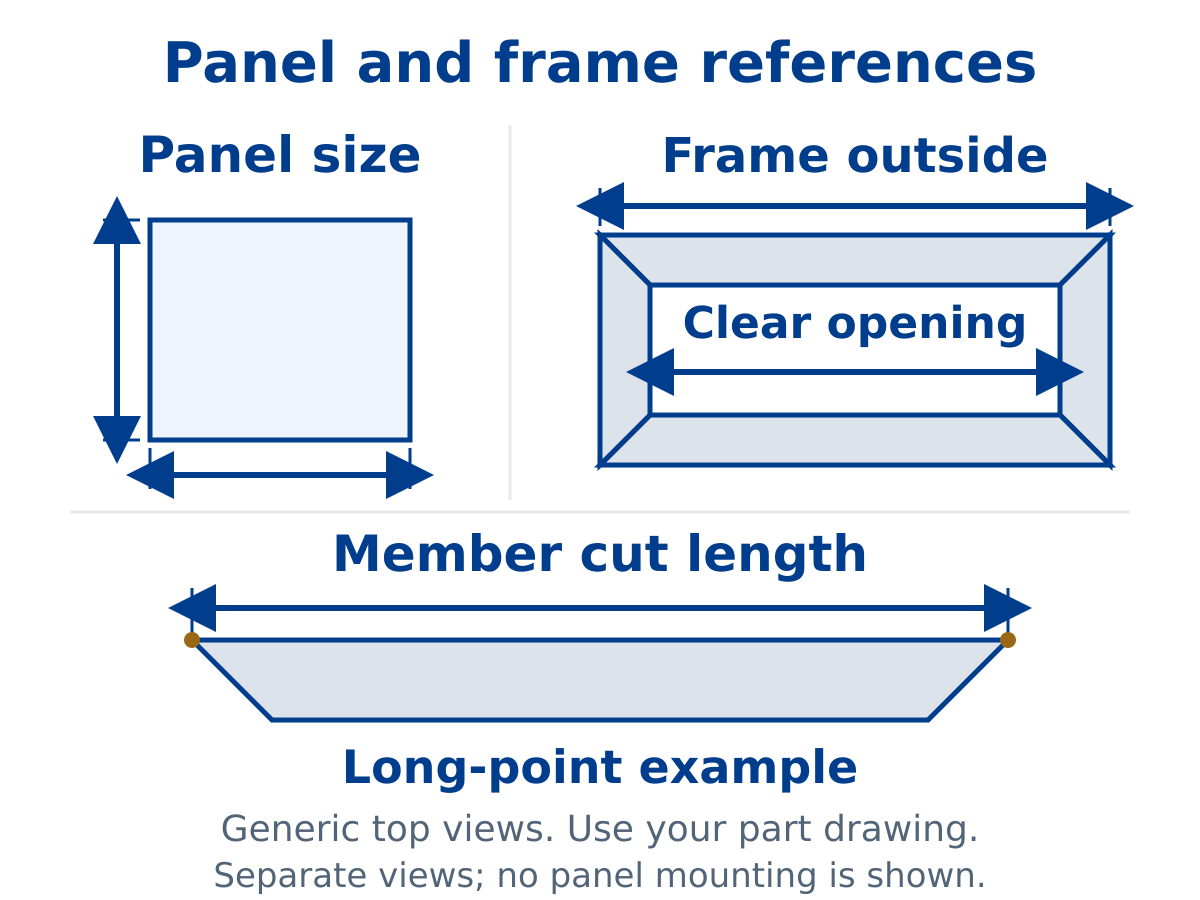
3. Identify joints and downstream machining
Mark every hinge-side and free-side member and show its hole, slot, end preparation or connector requirement. Decide which work is included in the saw-cell scope and which belongs to a later machining or assembly operation. Label left- and right-handed parts so mirrored panels cannot be mixed. If a frame kit is quoted, the bill of materials should separate cut members from hinges, fasteners, feet, casters and panel materials.
4. Review clamp contact and finish protection
A finished visible extrusion needs a defined clamp-contact plan. During a sample review, check whether the jaws support the section without crushing a thin wall, slipping on a coated surface or marking a sightline. Specify the protected faces and acceptable cosmetic limits in the RFQ. A sample cut can show cut-end and clamping behavior for the submitted stock; it does not establish cleanability, infection-control suitability or durability of the completed screen.

5. Agree on end quality and inspection
For each member, define length and angle tolerances, burr limits, corner damage limits, cut-face condition and sampling frequency. Say which features are measured before and after deburring. A numeric tolerance without the measurement datum, instrument and acceptance point can create two different interpretations. Record the first-article pieces by part number and lot, then use the same method for production checks.
6. Quote the delivery boundary
State whether the deliverable is cut blanks, deburred members, a labeled frame kit or a finished screen. Identify who supplies extrusion, finish, connectors, panel material and packaging. If a kit is expected, specify the number of members per panel and how matched sets are labeled. A pile of accurate lengths can still cause assembly delay when hinge-side parts and cross rails arrive mixed.
7. Separate saw acceptance from product acceptance
Witness a trial with the approved profile and drawing revision. Inspect the first cut, short and long members, angle orientation, repeatability and visible-surface contact. Then let the OEM or finished-screen supplier validate folding clearance, caster installation, panel tension, cleanability, stability and any requirements for the intended clinical setting. The saw trial is evidence about the submitted cutting operation only.
What a useful frame-kit RFQ contains
For medical privacy screen aluminum frame cutting, a concise package includes the assembly drawing and revision; separate profile sections; part-numbered cut list and quantities; square or miter end details; hinge and connector interfaces; finish and protected faces; measurement datums; cut-end and burr acceptance; sample quantity; batch size; labeling; and a clear division of assembly and product-validation responsibility. Include actual stock samples when the section is difficult to clamp. For a wider machine-selection boundary, see our medical equipment frame saw guide.
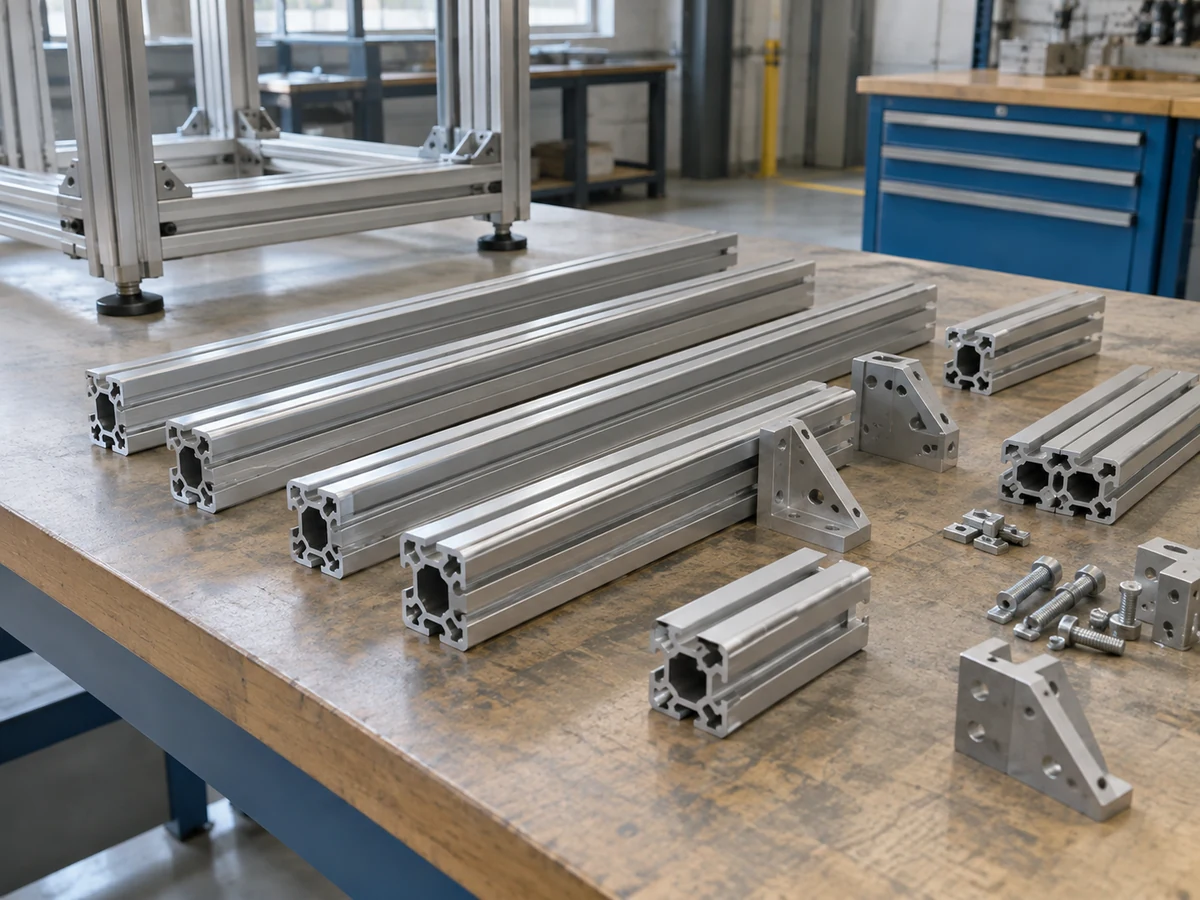
The equipment image below shows separate aluminum frame members and connectors on a workbench. It is a related frame-kit illustration only. The parts are not identified as a patient privacy screen, Jiurun’s proposed extrusion, a customer’s job or a passed trial.
Equipment demonstration and its limits
The video is an actual demonstration from the Jiurun Machinery YouTube channel of an industrial aluminum angle saw. It illustrates a related cutting process. It does not show the profile, material grade, screen model, approved setup, customer job or performance claimed in this article. Select a machine and prove its fit only after reviewing the OEM’s drawing and stock.
Send the drawing before choosing the saw
JiurunCut can discuss a cutting process for a specified aluminum member, including workholding, angle control and a sample review. Send the extrusion drawing, cut list, finish requirement, volume and acceptance method through our contact page. We will scope the cutting question against those inputs; the finished medical privacy screen remains the responsibility of its designer and assembler.