
Manual coffee grinder housing blank cutting is a narrow manufacturing decision. A saw can prepare a defined piece of incoming metal for later operations; it cannot make a finished grinder, prove the burr alignment, or establish how well the grinder brews coffee. Before comparing saw proposals, identify exactly what the factory receives, what it still cuts, and which features belong to later machining and assembly.
A useful consumer-product reference is TIMEMORE’s Chestnut C5 product page. It identifies aluminum and stainless steel in a finished hand grinder and describes a body, catch cup, handle, and burr set. That page does not disclose the raw stock, blank-cutting route, fixture, or acceptance limits for any particular housing. Use the component distinction to frame an RFQ, not as evidence that the pictured grinder was made on a Jiurun saw.
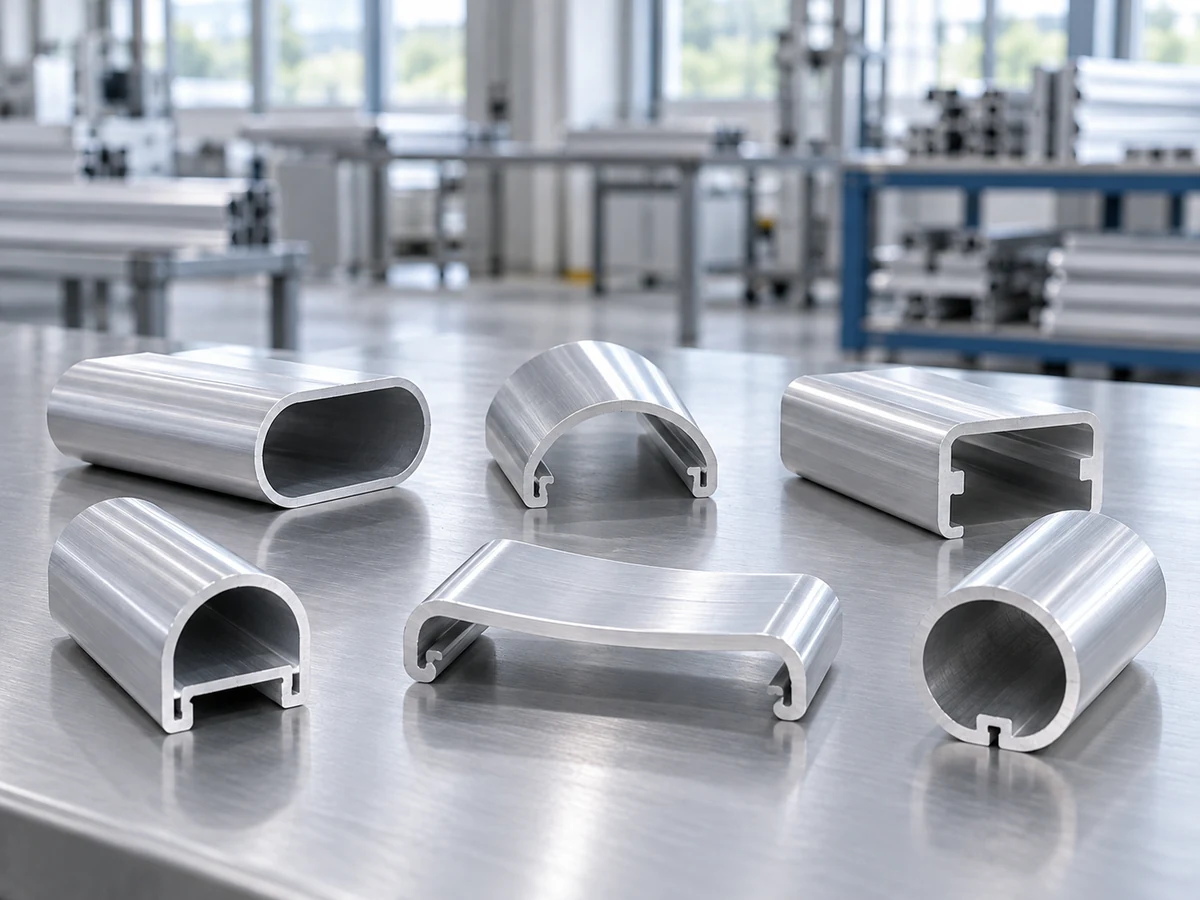
First decision: which housing input reaches the saw?
Ask the purchasing and process teams to name the physical input at the point where the proposed saw would work. A finished product photograph cannot answer this. A grinder body may be purchased as a prepared shell, may arrive as a longer metal section for further work, or may follow another route entirely. Do not infer extrusion, casting, tube stock, solid bar, or a specific alloy from the final cylindrical appearance.
Uncut metal stock
Buyer question: What physical section, length, material certificate, and surface state arrive? Saw scope: Evaluate a defined blank cut only after stock and cut requirements are released.
Cut rough housing blank
Buyer question: Who controls the blank length, end condition, traceability, and allowance? Saw scope: No housing blank cut remains if this accepted stage is already purchased.
Machined or finished housing
Buyer question: Which interfaces, finish, and inspection records are supplied by the vendor? Saw scope: Keep machining and surface finishing outside an unsupported saw claim.
Catch cup, burr set, handle, or complete grinder
Buyer question: Are these bought components or separate in-house work packages? Saw scope: Do not put burr geometry, assembly, grind performance, or complete-product testing into a housing-cut quote.
These supply stages are a scope tool, not a claim that every grinder uses every stage. If the buyer already accepts a machined housing, compare that purchased route with a retained blank-cut route using the same accepted deliverable and review period.
Manual coffee grinder housing blank cutting starts with a released section
For a retained cutting operation, send the actual stock cross-section or a representative physical sample. State whether the section is hollow or solid, its outside and inside geometry, wall regions, straightness condition, incoming length range, surface finish that must be protected, and any variation between suppliers. State the material and temper on the buyer’s released document. The finished grinder’s outside diameter or retail dimensions are not a substitute for incoming-stock measurements.
A curved or hollow section changes how a piece can rest, locate, and resist clamp pressure. The drawing should identify permitted contact areas and visible surfaces that cannot be marked. A sample cut may reveal whether the chosen support and clamp arrangement controls movement without damaging the stock. This is a trial question to be demonstrated on the buyer’s material; no generic photograph establishes the answer.
Keep blank length separate from the finished housing
Specify the cut blank by its own revision-controlled drawing. Record the reference faces, target rough length or allowed range, end orientation, and how each piece is identified after cutting. Any machining allowance must come from the downstream process owner. It cannot be calculated safely from a finished housing dimension alone, because later facing, boring, threading, finishing, or supplier operations may change what the cut piece must provide.
Also identify the location of the eventual cup interface and burr-support structure in the product architecture without converting those interfaces into saw promises. The saw trial can assess the blank and its cut ends. Functional alignment, fit after machining, and grinding behavior need separate downstream evidence. If one cut blank feeds several grinder variants, provide a variant-to-blank map so a change in product name does not silently change the saw recipe.
Review feed, support, and clamping on the actual stock
A machine comparison should begin with the largest and smallest incoming sections and the required cut length range, not the exterior size of a boxed grinder. Check how long stock is supported before the blade, how the section is presented to the locating surfaces, whether the cut-off piece has controlled support, and whether operators can clear chips and segregate parts safely. A proposed feeder or clamp needs a witnessed setup for the supplied section and finish.
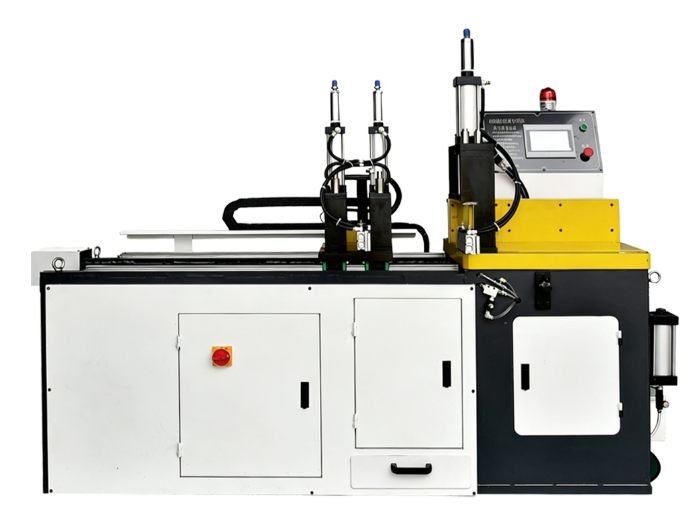
Ask the supplier to show the setup sequence and the actual point at which the stock is constrained. For hollow or cosmetically finished input, look specifically for local pressure marks and section distortion. For short cut-offs, confirm collection and part identification. If a proposed automatic feed is involved, distinguish positioning repeatability from measured finished-blank quality; one figure does not prove the other.
Video scope: the following owned-channel clip shows general Jiurun aluminum-saw equipment. It is an equipment illustration only. It does not depict a grinder housing, verify this buyer’s input, or prove a specific configuration, tolerance, cycle time, or grinder performance.
Agree on sample acceptance before comparing quotations
Send an inspection plan with the sample stock. Separate incoming-material checks, cut-blank checks, and finished-housing checks. For the cut blank, the buyer can specify how length is measured, which face is the datum, what end condition and burr review are required, how visible-surface marks are judged, and what constitutes a rejected piece. The exact limits must come from the released drawing and downstream process, not from a generic machine listing.
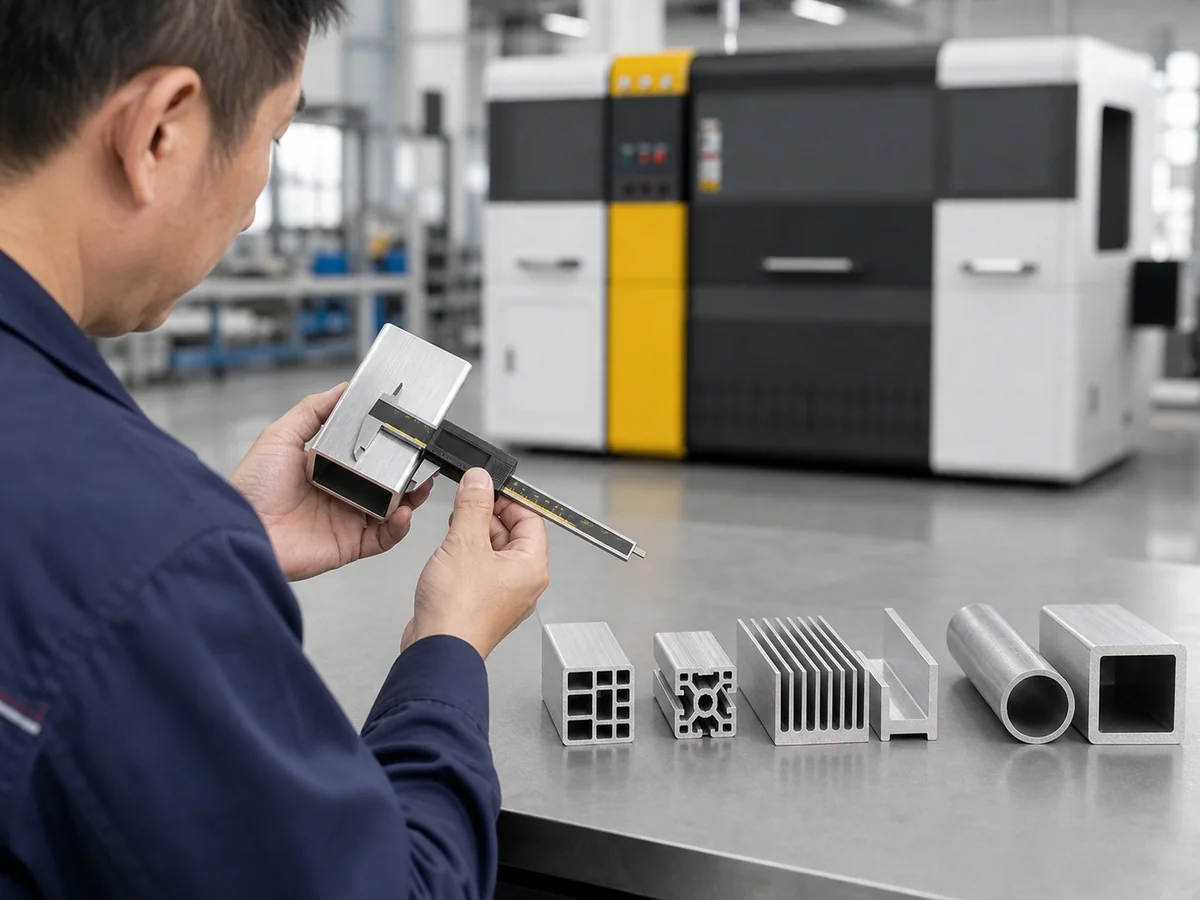
Request both an accepted sample and any rejected sample photographs, with the same stock lot, machine settings, operator method, and measuring procedure identified. A clean-looking cut in a photo is useful for discussion but cannot substitute for a documented inspection record. Ask whether the sample covers the smallest wall, shortest cut-off, and most sensitive visible surface in the intended mix.
Compare retained cutting with prepared-part purchasing
A low machine price is not an economic comparison by itself. Put the retained cutting route beside a prepared-blank or machined-housing purchase for the same period, quantity, quality definition, and accepted handoff point. Include incoming stock cost and minimum order, cut allowance and scrap, saw labor and tooling, fixture changeover, sample and production inspection, handling and storage, outside machining, surface finishing, and the cost of sorting or replacing rejected pieces. Mark every assumption whose value has not been validated.
If the supplier delivers a finished housing, it may absorb operations that the factory would otherwise coordinate. If the factory retains only a rough cut, it must still plan later machining and assembly. Do not compare the price of a rough blank against a finished housing as if they were the same deliverable. The useful question is which route meets the same accepted stage with manageable cost, capacity, and quality evidence.
RFQ packet for a housing-blank saw trial
- Released drawing and revision of the incoming stock and the rough housing blank.
- Material, temper, supplier form, incoming length range, and photographs or physical stock samples.
- Variant map tying the blank to the intended housing and later components.
- Required cut quantities, batch sizes, changeover pattern, and expected accepted output.
- Protected surfaces, allowed clamp contacts, and handling or marking rules.
- Cut-length reference, end-condition requirements, and the agreed measuring method.
- Downstream operations and the owner of each machining allowance.
- Sample acceptance criteria, including how rejects and disputed measurements are handled.
- The purchased alternative’s accepted stage and included inspection, packaging, and outside work.
Include a question about the equipment configuration actually offered for the supplied sample. Jiurun manufactures industrial saws for aluminum and other nonferrous metal cutting; the appropriate model and tooling still depend on verified stock and application. Avoid borrowing an accuracy, feed length, or capacity from another model or setup.
Decision and next step
For manual coffee grinder housing blank cutting, if a real metal section must be cut into housing blanks in-house, send the released stock and blank requirements for a witnessed saw proposal. If the housing already arrives cut or machined, remove that operation from the saw business case and compare the remaining work instead. Keep the burr set, catch cup, handle, final fit, and coffee-grinding results in their own work packages and tests.
For a focused review, contact Jiurun with the actual input section, drawing revision, sample quantity, cut criteria, and intended purchasing boundary. For another example of separating a retained metal blank from a bought consumer-product assembly, see our control-knob blank discussion; use its scope logic only, not its geometry or acceptance values.