
Low voltage lighting track cutting is a scope decision before it is a saw decision. Are you buying a complete approved track system, a factory prepared length with conductors, or a bare aluminum extrusion for a system owner to finish? Those are different deliverables. A clean aluminum end cannot by itself establish electrical continuity, connector fit, luminaire compatibility, or approval of an installed lighting system.
Manufacturer details show why the boundary matters. iGuzzini’s recessed low voltage track specification identifies painted extruded aluminum and an insulated copper conductor, and says that this particular track can be cut on site if required. Its Filorail product sheet describes a sealing sheath, dedicated lighting adapters, and separately coded straight and corner joints. Those statements describe their named systems, not permission to cut every electrified track or a capability claim for a Jiurun machine. Obtain the current system owner’s instructions before releasing any cut.
1. Name the deliverable before quoting a saw
Put one of three items on the request for quotation (RFQ): an approved finished track supplied by its system manufacturer; a prepared track length whose conductor, end treatment, and connection hardware are handled under that manufacturer’s instructions; or an identified bare aluminum blank for later authorized assembly. State who supplies the conductor, end cap, joint, feed, driver, luminaire adapter, and test record. A saw supplier can quote an eligible metal blank; the electrical system owner must define the rest.
Do not mix a site cut permitted for one catalog track with a factory blank made from a different section. Flos lists a separate Tracking Magnet surface or suspension profile with its own compatible accessories. The product family and part code belong on the RFQ; a generic phrase such as “magnetic rail” does not identify a released section.
2. Separate track cross section from mounting route
Recessed, surface, suspended, framed, and trimless routes can change the extrusion envelope and exposed finish faces. Ask for the exact section drawing, product code, revision, mounting direction, stock length, and finish condition. Mark the open channel, conductor location, connector interface, and the face that must remain unmarred. If a track has an integrated conductor, verify with the manufacturer whether it may be cut in that state and what post cut treatment is required. Do not infer the answer from the outside width.
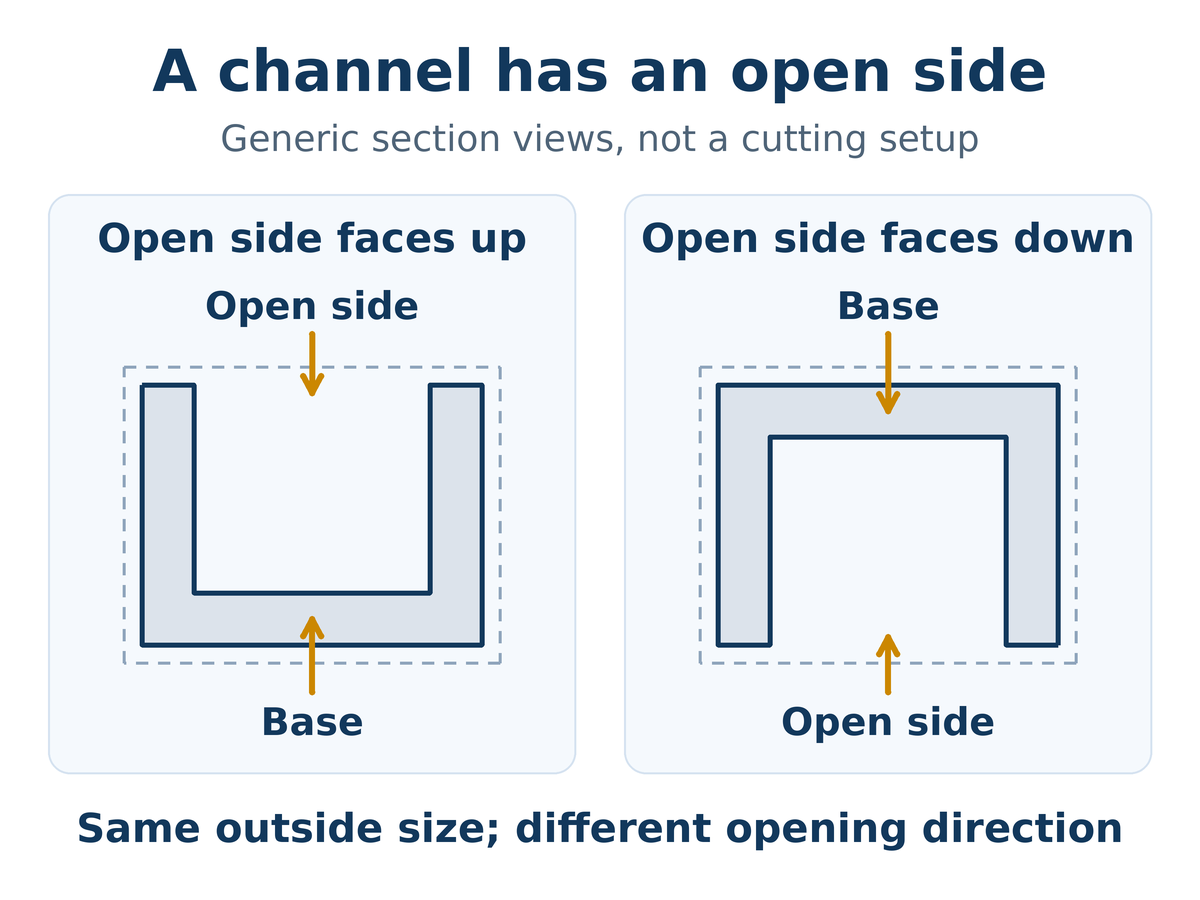
3. Release lengths and connector allowances together
A room span or lighting layout is not necessarily the saw blank length. On the approved drawing, show each straight member’s finished reference length, cut datum, end squareness or permitted angle, orientation, and any system specified allowance for joints, feeds, corners, covers, and end caps. Separate actual curved components and factory formed corners from straight stock. Check whether a joined line uses a dedicated connector instead of a mitered aluminum end.
Make the installation owner sign off the interface dimensions before a trial. Where the manufacturer’s instructions allow a site cut, follow those exact instructions. Where they do not, order an approved prepared length or ask the system owner for a factory process. The RFQ should say who owns the consequence of a cut end that cannot accept its intended connector.
4. Trial only the approved material and state
For a bare aluminum extrusion trial, give the saw supplier representative long and short lengths, the current drawing, and the actual finish stage. Review section support, clamping contact, guarded clearance, the open channel, and visible edges. Keep trial conclusions limited to the section and setup observed. An assembled electrified track requires a separate manufacturer approved work method and qualified electrical review; a generic aluminum cutting demo is not such a method.

Collect one first-off blank for each distinct section and end geometry. Record the actual section identity and revision, cut datum, end condition, channel deformation, coating marks, and fit to the approved mechanical connector or inspection gauge. Avoid treating a bright-looking end photo as proof of electrical continuity or system approval.
5. Protect the conductor and finish boundary
Cutting debris and burrs matter at an open channel and any conductor or adapter interface. Ask the system owner to define what is removed or protected before cutting, what cleaning and inspection follow, and who releases the part for electrical assembly. Do not specify a universal conductor trimming distance, insulation step, wiring method, or pass criterion in a saw RFQ. Those are product-specific instructions for the authorized installer or manufacturer.
The same applies to painted or anodized stock. State whether cutting happens before or after finishing and which exposed end treatment belongs to the deliverable. Make face protection, handling, and packing visible in the quote rather than assuming an unmarked finish from a generic machine brochure.
6. Compare accepted kits, not a nominal cut rate
Ask bidders for the same released part mix and acceptance boundary: identified lengths, drawing revisions, first-off inspection, end protection, packaging, and any excluded electrical work. Compare the full route: material yield, setup, short-part handling, clamping, inspection, cleaning, rework, and downstream assembly. A lower price per cut has little meaning if the receiving team still must sort unlabelled lengths or reject damaged connector ends.
For related purchasing context, see our LED neon mounting channel guide and lighting fixture saw selection guide. Those applications are different from an electrified low voltage track, so carry over the RFQ discipline rather than their assumed section geometry.
7. Send a complete low voltage lighting track cutting RFQ
| Release item | Question the buyer must answer |
|---|---|
| System identity | Which manufacturer, product code, revision, and mounting route apply? |
| Delivery stage | Finished track, prepared electrified length, or bare aluminum blank? |
| Cut geometry | Which member lengths, datums, ends, orientations, and joint allowances are released? |
| Trial and inspection | Which actual sections, finish states, first-off checks, and connector fits are required? |
| Responsibility | Who approves cutting, conductor treatment, assembly, testing, and installation? |
Related Jiurun equipment demonstration
The video below is from Jiurun’s own YouTube channel and shows an aluminum cutting machine with automatic feeding. It is a related equipment scene only. It does not show this lighting track, its conductors, a customer project, a specified machine configuration for this RFQ, or verified electrical or cutting performance.
Next step: Send Jiurun the approved track section drawing, the system owner’s cut permission or factory blank specification, representative stock, and the exact delivery boundary. We can review a supervised aluminum blank trial and discuss a suitable saw route only after those inputs are clear. Contact JiurunCut with the released RFQ.