
Lighted wardrobe rail cutting is a different purchasing job from shortening a plain clothes rail. The aluminum member may carry a lens, LED strip, cable and end caps, while the wardrobe’s nominal opening is only one input to the cut list. A saw quotation should therefore name the approved rail system, the part handed to the saw, and the completed stage the buyer will accept. This guide gives a practical RFQ and trial plan for a wardrobe or furniture-component buyer. The images and machine video are related illustrations, not a test of a particular lighted rail.
Decide whether the order is a plain rail, a prepared housing or a lighted kit
A plain wardrobe rail can be supplied as stock, a cut tube with supports, or a ready-to-fit set. A lighted rail adds at least a housing, light source, lens or diffuser, cable route and end treatment. Those are different deliverables, even when both products look like a horizontal hanging tube in a catalog. Write down which company owns the aluminum blank, end caps, electrical parts, mounting supports, assembly and final function check. Do not compare a saw-cut blank price with a complete lighted kit price as though they were the same output.
Hettich’s silver-anodized oval wardrobe rail is listed as a 3,000 mm aluminum rail with separate support options. By contrast, Häfele’s lighted closet rod is offered as a ready-to-install set including a rod, lens, LED strip, driver cable and two end caps. These are examples of different supply boundaries, not interchangeable sections or a Jiurun-approved cut list. Get the actual profile drawing, article number, finish and kit bill of materials for the product your factory has released.
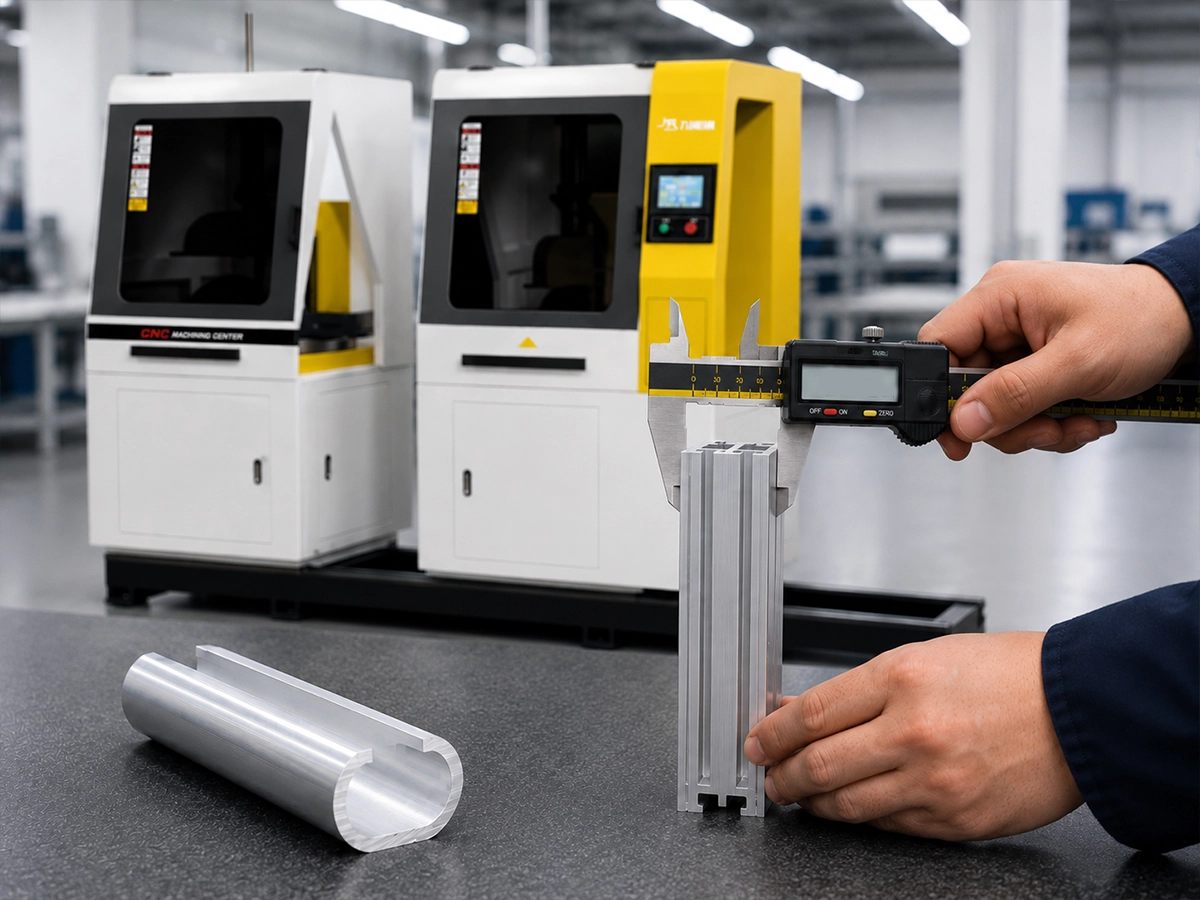
Set the metal datum for lighted wardrobe rail cutting
The cabinet opening, nominal product length, aluminum housing length, finished kit length and mounting-center spacing can all differ. Ask the rail-system owner to identify the exact measurement datum on its current drawing. Record whether the cut length is measured over the raw metal ends, between support seating faces or on the fully capped assembly. Include the permitted end-cap engagement and any cable-exit clearance as separate drawing-controlled values. Never subtract an allowance merely because another brand does so.
Häfele states that one of its lighted closet-rod products is cut 6 mm shorter than its nominal size to make room for end caps and driver-cable exit. That is a product-specific example of why nominal and metal lengths must be separated; it is not a universal 6 mm rule for wardrobe rails. A plain oval rail with separate supports may have a different relationship altogether. Request one approved dimensioned member schedule per product family and revision, with left/right or top/bottom identity if the assembly is handed.
For each line, show the cabinet or opening reference, approved profile and finish, stock length, released metal cut length, quantity, end treatment, support or cap set, cable-exit side, downstream operation and receiving stage. If a buyer changes the driver route or end-cap design, hold the old cut list until the product owner releases a revised schedule. The saw stop should be set from the approved metal datum, not from an unlabeled wardrobe width in a sales order.
Protect the lens channel and visible finish without assuming a fixture
The illuminated housing may have an open slot or lens seat, a visible hanging surface and a protected cable space. These features create potential contact and chip-trapping points at the saw. Supply a real section drawing that marks the visible faces, lens lips, permissible support surfaces and areas that may not be clamped. Ask the bidder to show how the proposed infeed, clamp, stop and outfeed touch the actual rail. A useful answer includes the shortest piece the machine must hold and the longest incoming stock, not only a nominal cross-section.
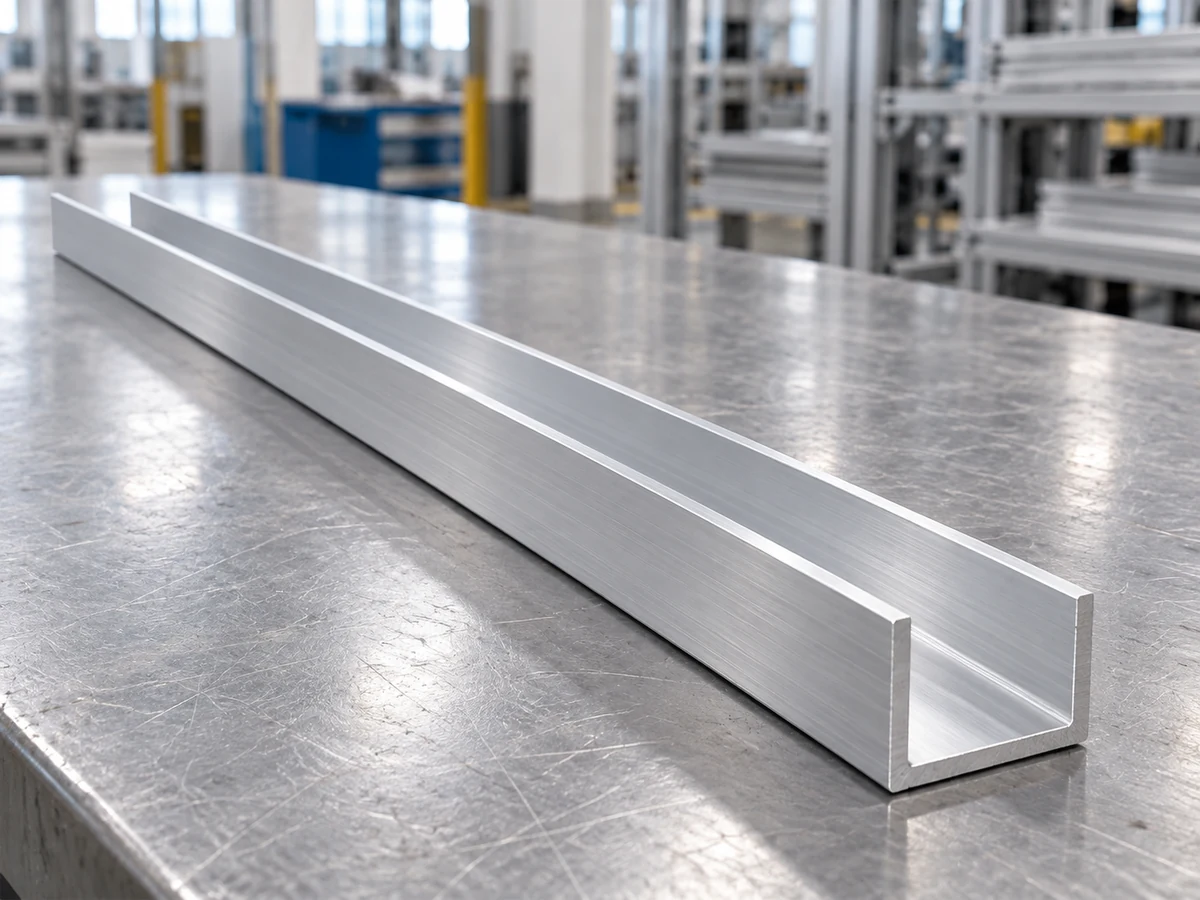
Do not accept a generic U-channel photograph as proof that a lighting housing will clamp safely. The picture below only helps explain why an open side, wall thickness and contact face matter. On a real part, a thin lip could be marked, a flexible section could shift under pressure, and chips could lodge where the lens must later fit. These are checks for a representative trial, not claims that a particular profile or saw will fail. Include incoming finish condition and any protective film in the acceptance plan.
Keep sawing separate from the electrical and furniture-system work
A cutting station can make a metal blank to an accepted length and end condition. It does not establish that the LED strip, lens, cable, power supply, mounting support or finished wardrobe complies with its separate requirements. Define whether the light assembly occurs before or after the cut. If a fully wired module arrives for shortening, the buyer must first obtain a product-owner-approved modification route; a loose aluminum housing trial cannot validate cutting through an assembled electrical product.
Ask who supplies and inspects the caps, lens, strip, cable and supports, and which receiving operation confirms they fit together. The interface between the cut edge and an end cap may need an agreed burr, appearance and fit criterion. The cable-exit side may make two physically similar pieces noninterchangeable. Do not state an electrical rating, load capacity, cabinet span or lighting performance for a Jiurun saw from a rail catalog. Treat those as finished-product approvals held by the rail-system owner.
Run a representative first-off set, then evaluate the complete handoff
Send actual released stock for the trial, including its intended finish and the longest and shortest member in the order. If the factory buys both plain and illuminated rails, test each distinct section and record any different clamp or blade arrangement. Mark the product number and drawing revision on incoming samples. For lighted wardrobe rail cutting at first-off, measure the released metal datum, inspect the cut ends and visible surface under an agreed method, and check the orientation of the lens opening and cable exit. Preserve any rejected sample with its cause record rather than blending it into the approved lot.
The receiving team should dry-fit the approved caps, support hardware and lens on the cut member. For a lighted kit, the responsible electrical team should complete its own assembly and function checks under the product specification. An acceptable loose metal cut is only one gate. A rail may measure correctly yet leave too little room for a cap, damage a visible face or obstruct the cable path after assembly. Agree numerical tolerances and test frequency with the product owner; this article supplies no universal cut tolerance or cycle-time guarantee.
Compare quotations at the same accepted supply stage
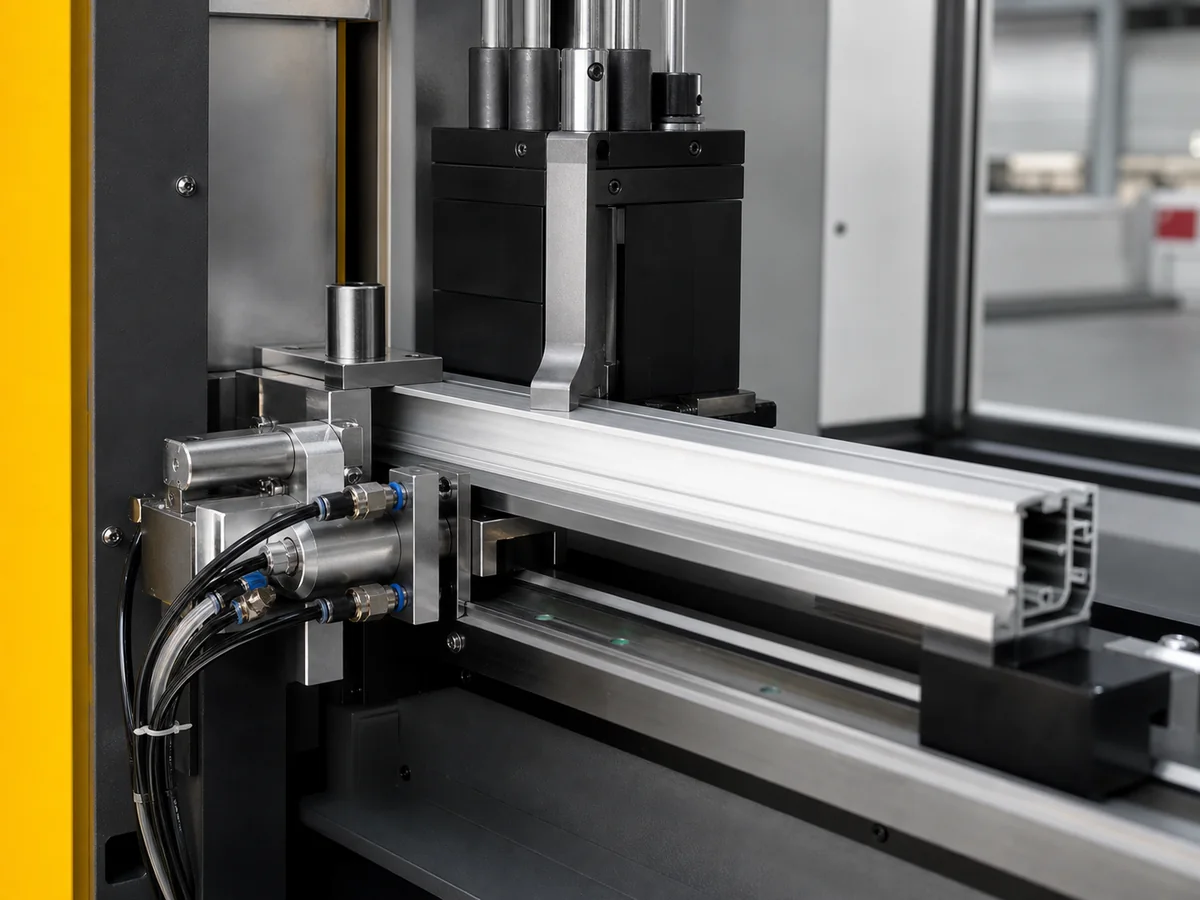
Give each bidder the same rail-family mix, approved drawing revisions, annual and batch quantities, stock condition, expected member lengths, finish, packaging and receiving definition. Ask for the quoted machine model and configuration, stock supports, clamp contact method, positioning reference, blade and chip control, operator tasks, changeover method, included accessories, first-off demonstration and exclusions. A catalog machine photograph is not evidence that a particular wardrobe-rail section has been qualified.
Compare the full route to the same accepted output: bought complete kits, purchased cut housings with retained assembly, or retained stock cutting plus all remaining preparation. Include scrap, setup, first-off approval, lens or cap damage, sorting by rail family and finish, and shipment protection. Count only the rail families your factory has released for in-house cutting. If an outside supplier still provides an assembled lighting module, keep that cost and acceptance route visible rather than claiming the saw replaces it.
Video: related Jiurun cutting equipment
The Jiurun channel video below shows a related aluminum cutting machine in operation. It is equipment context for a buyer’s trial request. It does not show a wardrobe rail, LED lens, end-cap fit, cable route, customer project or acceptance result for this guide.
Send a clear RFQ and release each kit at receipt
A useful lighted wardrobe rail cutting RFQ includes the approved system and section drawing, product numbers and revisions, plain versus illuminated route, actual metal length datum, lens and cap interface, cable-exit side, permitted contact faces, stock and batch mix, first-off acceptance sheet, and the exact output stage. Ask suppliers to identify what they will test and which components the buyer must provide. Record exceptions in writing before comparing prices.
At receipt, match part labels to rail family, cut length, finish lot and cable-exit orientation. Keep the agreed caps and lens with the correct member set, protect visible surfaces during transport, and quarantine a mixed or damaged kit before wardrobe assembly. For a machine review, send Jiurun the released rail drawings and representative sample requirements. The rail-system owner remains responsible for the completed lighting and furniture product.