
JR-455Y vs JR-455CNC selection starts with the work that leaves your saw, not a label such as “semi-automatic” or “CNC.” Both routes can be relevant to aluminum profiles. The purchase question is how many accepted parts each route can deliver from your real stock and cut list, with the operators, fixtures and inspection method available in your plant. Treat the machine name as a shortlist; make the part family and an agreed trial the decision.
JR-455Y vs JR-455CNC: what changes in the workflow?
The JR-455Y semi-automatic route suits a process in which an operator remains closely involved with presenting stock, setting up the work and managing each batch. A hydraulic cutting function does not make the surrounding handling automatic. The JR-455CNC profile-cutting route adds programmable length positioning for a defined profile and part mix. That can reduce repeated manual length-setting work, but it does not remove the need to plan stock support, clamping, blade choice, part collection and inspection. Confirm the exact offered configuration for either model before assigning a capability to the quotation.
A useful comparison therefore asks who sets the next length, when the operator must touch the stock or output, how a change of section is recovered, and what happens to the first and last pieces of a bar. These questions are more valuable than comparing a nominal cutting cycle in isolation.
Map the workload before requesting prices
Separate your jobs into part families, rather than averaging every order into one “typical” job. For each family, give the supplier a drawing or marked sample, the section envelope and wall arrangement, stock length and condition, required cut lengths, quantity per length, visible or functional faces, angle requirements and the downstream assembly check. State the actual acceptance method. A length tolerance on a drawing is only one part of acceptance; burr, end-face condition, surface marking and fit can reject a part even when a length reading looks acceptable.
Then record the operating pattern. A short, stable list of lengths run in compact batches presents a different changeover problem from orders that alternate lengths and sections several times per shift. Include who loads bars, who removes parts, how much floor space exists for infeed and outfeed, and whether a second operator is available. These are site facts to test, not performance claims about either model.
When does the JR-455Y route make sense?
Shortlists often favor an operator-led route when batches are manageable, stock presentation varies, and a trained operator can control setup and inspection without excessive repeated length changes. Its value is clearest when the surrounding process is already manual: the same person stages stock, verifies the first piece, separates accepted parts and records the job. The buyer should still ask what the hydraulic function covers on the offered JR-455Y, which guards and clamps are included, and how a length is referenced for every subsequent piece.
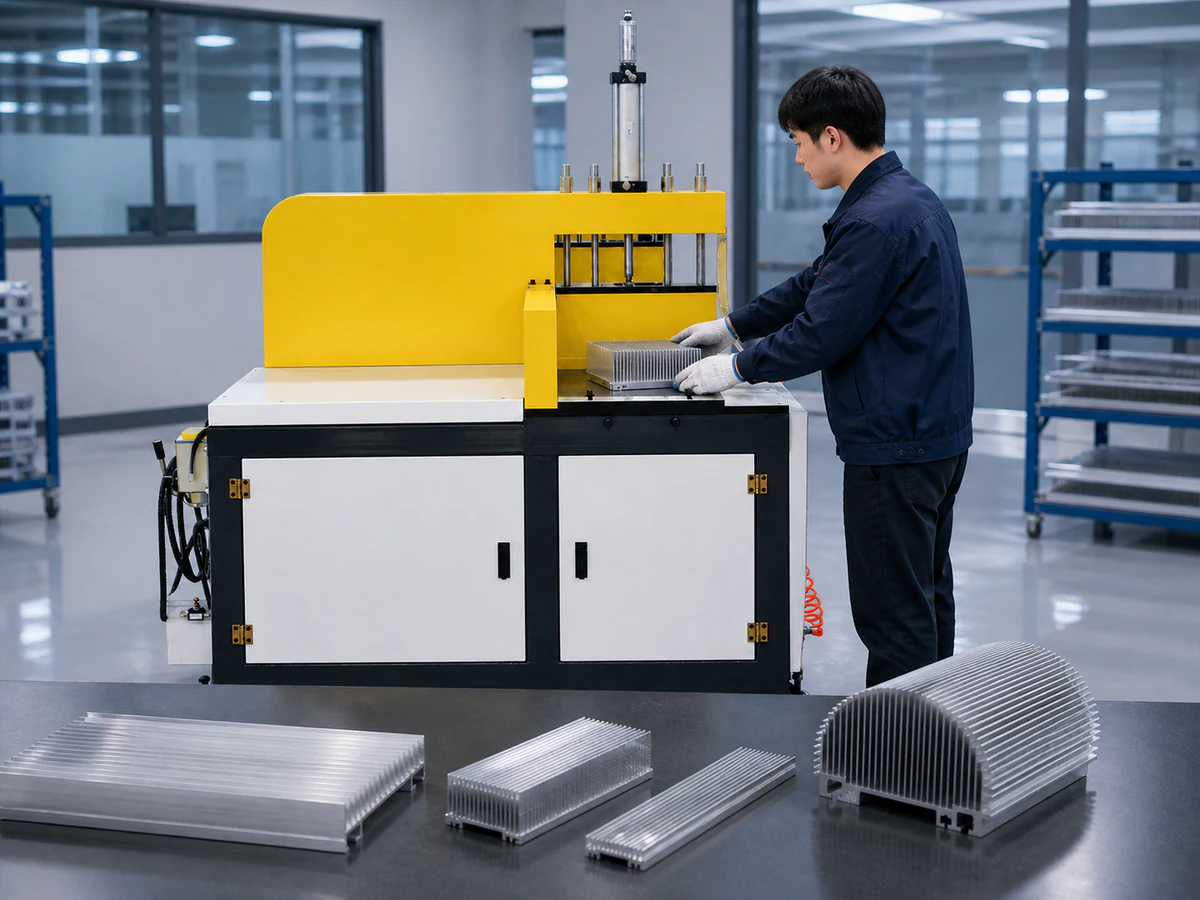
Do not infer that operator control is automatically more accurate, less accurate, faster or safer. Those outcomes depend on the section, blade, fixture, datum, working method and acceptance standard. If the order requires the operator to repeatedly reset a stop or manage many short lengths, measure that handling time and the risk of mixing parts during a trial. If batches are long enough for a simple setup and the operator can manage them reliably, the extra programming route may have little purchasing value for this specific part family.
When does the JR-455CNC route make sense?
Consider the programmable route when a recurring profile family has many lengths, repeat orders or a cut list that changes often enough for manual resetting to consume substantial work. CNC positioning can organize length recipes, but the quote should explain how programs are named and checked, which dimensions the feed system references, and how the operator confirms the first piece after each change. The buyer should request a demonstration with their own sequence of lengths rather than one uninterrupted run of a convenient length.
Programming does not guarantee finished-part accuracy. Feed positioning repeatability, cut length, end-face squareness and assembly fit are different measurements. The final result depends on the stock and entire cutting system. If the profile twists, bows or moves under the clamp, a saved length program cannot correct that by itself. Confirm the supported section, clamp contact, blade and output handling for the actual offered machine before approving a CNC route.
A paired trial that can actually decide
Ask the supplier to run a representative sequence, not two unrelated demonstrations. Start with the same approved stock condition and the same drawing revision. Include an easy part, a part with the most demanding end or visible-face requirement, a change of length and—if your production really does this—a change of section. Agree on the blade and fixture proposal for each route before the trial. If the routes require different fixtures, price and document them separately rather than pretending the test is identical.
Record the time from a released drawing and staged bar to the first accepted piece, then the operator actions needed to make the remaining accepted pieces. Observe loading, positioning, clamping, sawing, unloading, sorting and marking. Count rejects and rework by reason. Include the last usable part of a bar and the leftover stock; a quotation based only on mid-bar pieces can hide a practical problem at the tail. The buyer may add a repeat-order test after a program or setup has been put away and restored.
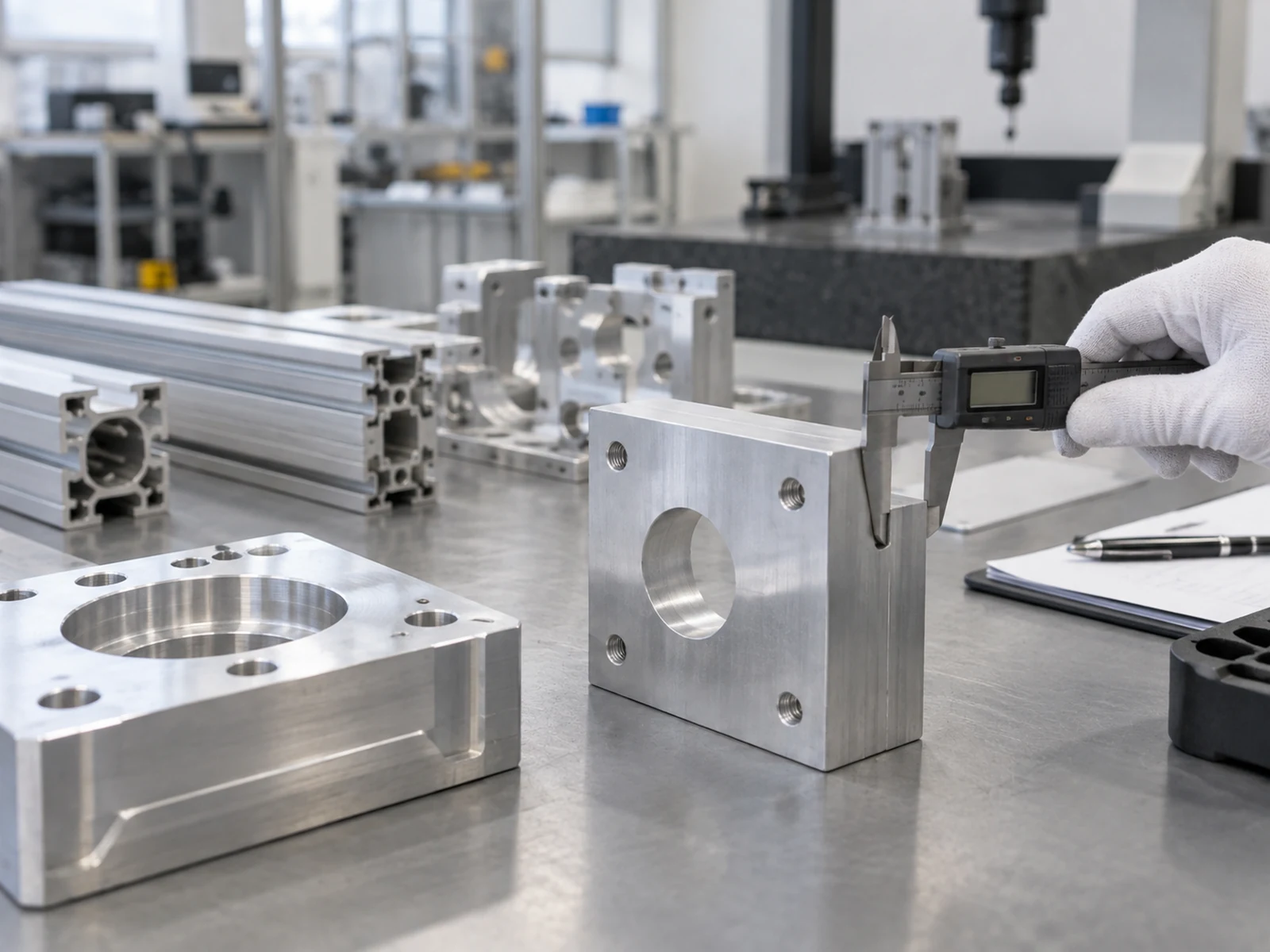
Inspect the outputs at the datum used by the drawing, with an agreed measuring tool and sampling plan. Note burrs, end-face condition, surface damage and any assembly fit check. Keep feed-position figures separate from finished-part measurements. If both routes meet acceptance, compare the full operator time, changeover work, material loss and support requirements before choosing.
Questions to put in both quotations
Request a configuration sheet for each proposed machine. It should identify the machine variant, guarding, clamp and blade proposal, stock support, length-setting or program method, part collection, utilities, site footprint, installation and training scope. Ask which items are standard, optional or supplied by the buyer. A proposal for a CNC route should also describe program naming, backup and first-piece verification; an operator-led proposal should explain how stops or length references are set and checked. Neither answer should be assumed from the model suffix alone.
For a meaningful commercial comparison, ask both quotations to price the complete cell that passed the trial, including fixtures, stock racks, outfeed, any required measurement equipment and commissioning. Then compare the expected mix of accepted parts, labor allocation, changeovers and scrap under your own schedule. A lower machine price does not automatically mean a lower cost per accepted part, while a programmable machine is not automatically justified by the word “flexibility.”
A simple route decision
Choose the JR-455Y shortlist if the representative batches and operator-led workflow meet quality and output needs with acceptable manual length-setting and handling. Choose the JR-455CNC shortlist if a verified sequence of different lengths or repeat programs removes enough work to justify its complete configuration, while maintaining accepted cut and assembly results. If one route fails a required section, fixture or site constraint, document that failure before discussing productivity. If neither quote has been tested on the critical part family, keep the decision open and specify the missing trial rather than inventing a winner.
The key distinction is the production route, not an unqualified claim that one model is “better.” A buyer with mixed lengths but fragile cosmetic faces might need fixture development on either route. A buyer with a long stable run could still need CNC for traceable length programs or could prefer an operator-led process; the paired trial and business case decide.
Video: JR-455Y equipment example
The following video from Jiurun’s own channel shows general JR-455Y equipment and material handling in a workshop. It is an equipment illustration only. It does not show or prove the article’s proposed part mix, the quoted configuration, a customer job, a comparative trial or any performance result for either model.
Send a usable RFQ package
Send Jiurun the drawing revision, representative stock and cut list, expected quantities and length mix, any sample with a marked datum, the visible-face and end requirements, and the plant layout for infeed and outfeed. State how you will accept a trial part and which operations the buyer will provide. Ask for both routes to be scoped against that same package. The response should explain where the operator remains involved, which options are necessary, and how the trial will produce an agreed set of accepted parts.
For background on the available machine families, review the JiurunCut product range. To begin a model-specific review, send the part and cut-list package to JiurunCut. We can discuss which route is worth testing and what evidence your purchasing team needs before committing to a machine.