
The JR-455CNC vs JR-510CNC-3A-1S choice starts with a cut list, not a model number. Both appear in Jiurun’s automatic aluminum saw range, but the buying decision depends on how stock enters the saw, how often programs change, what happens to the last piece of a bar, and which handling steps belong in the quoted cell. A factory running several short orders may value a different workflow from one cutting recurring lots, yet either model still needs a profile-specific configuration and a representative trial.
This guide gives purchasing and production teams a way to compare the two platforms without treating a catalog photo, a short video, or a feeder specification as proof of finished-part quality. The direction below is provisional. Send the actual profile and part drawings before deciding that either machine fits.
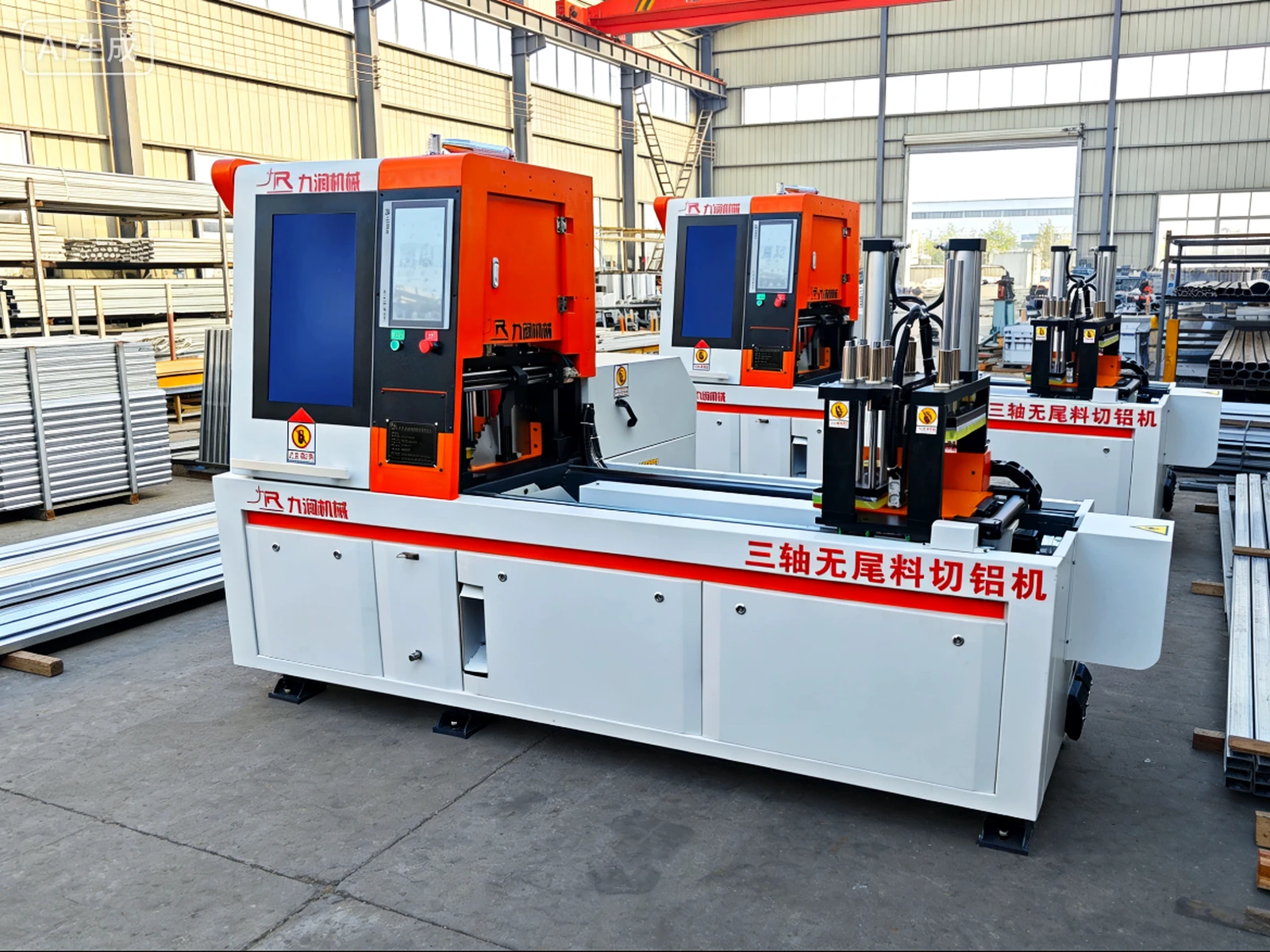
JR-455CNC vs JR-510CNC-3A-1S: the first decision
JiurunCut presents the JR-455CNC as a programmable CNC length-control direction for changing industrial profile orders. Its product-family guidance presents the JR-510CNC-3A-1S as an automatic batch-cutting direction, while the energy-storage solution also describes it as suitable for changing project lists and mixed finished lengths. Therefore, “mixed lengths” alone does not separate the models. The useful question is whether the proposed feeding, support, clamping, cut sequence and collection arrangement handles your mix with acceptable operator effort and accepted-part output.
Cut-list control
JR-455CNC: Ask how approved lengths, quantities and job changes are entered and recalled.
JR-510CNC-3A-1S: Ask how multiple lengths and quantities are sequenced within an automatic run.
Incoming stock
JR-455CNC: Identify the bar support and feed arrangement included for the actual stock length and section.
JR-510CNC-3A-1S: Identify infeed support, positioning and bar-end handling included in the complete cell.
Profile changeover
JR-455CNC: List the clamp faces, stops and programs that must change with the profile family.
JR-510CNC-3A-1S: List the supports, guides, clamps and cut-list settings that must change.
Operator work
JR-455CNC: Show where an operator loads, inspects and removes parts in the offered layout.
JR-510CNC-3A-1S: Show which loading, monitoring, replenishment and collection steps remain manual.
Proof before purchase
JR-455CNC: Run a mixed-order trial and record accepted lengths and changeover actions.
JR-510CNC-3A-1S: Run the same list, including bar-end conditions, and record accepted output and handling.
These questions request evidence; they are not a promise that a base machine includes every function. Put the supplier’s answers in a configuration sheet with the exact profile, stock and acceptance criteria.
Start with one representative cut list
Prepare a single test pack before asking for a quotation. Include the extrusion cross-section, alloy and temper if known, wall thickness, stock-length range, surface finish, cutting orientation and finished-part drawing. List every required length and quantity, marking which orders repeat and which are occasional. Add the acceptable length and angle result, the chosen measurement datum, burr and appearance requirements, and any downstream fit check. If several profile families will run on one saw, include a difficult member from each family rather than only the easiest section.
A strong trial list contains a normal repeat item, a short finished part if required, a change of finished length, a change of profile if required, and an end-of-bar condition. These are distinct questions. A machine producing a good middle-of-bar part has not demonstrated how it handles the final usable piece, the remaining tail or a changeover. Ask both suppliers to identify which items need different fixtures, support or manual intervention.
Compare the feeding scope, not just the word “automatic”
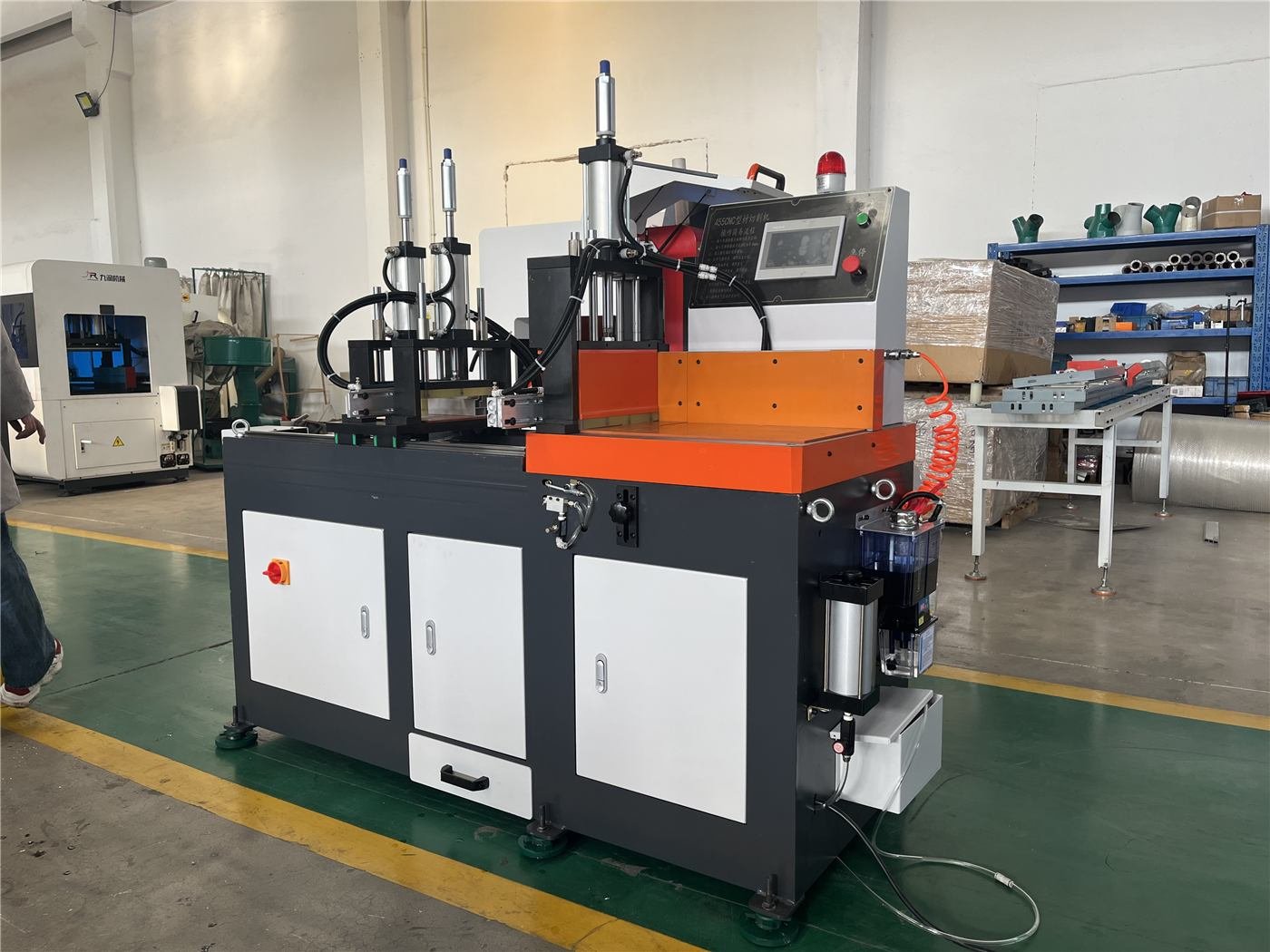
On the JR-455CNC side, confirm how CNC positioning, stored programs and the proposed feed arrangement work with the actual stock. Jiurun’s verified catalog notes for the JR-455CNC include a 700 mm single feeding movement, with customized feeding treated as a separate configuration question. A single movement is not the same as maximum incoming bar length, maximum finished-part length or achievable length accuracy. If the quotation cites a stroke, ask whether longer parts require repeated movements and how that sequence is validated.
On the JR-510CNC-3A-1S side, request a drawing of the complete infeed-to-outfeed path. The channel video below visibly shows an enclosed machine, feeding/positioning hardware and a clamped profile during a short cutting sequence. It cannot establish the feeder stroke, automatic loading scope, production rate, material saving or finished-part tolerance for your proposed build. Ask for a written list of included infeed supports, guards, sensors, clamping, collection and controls.
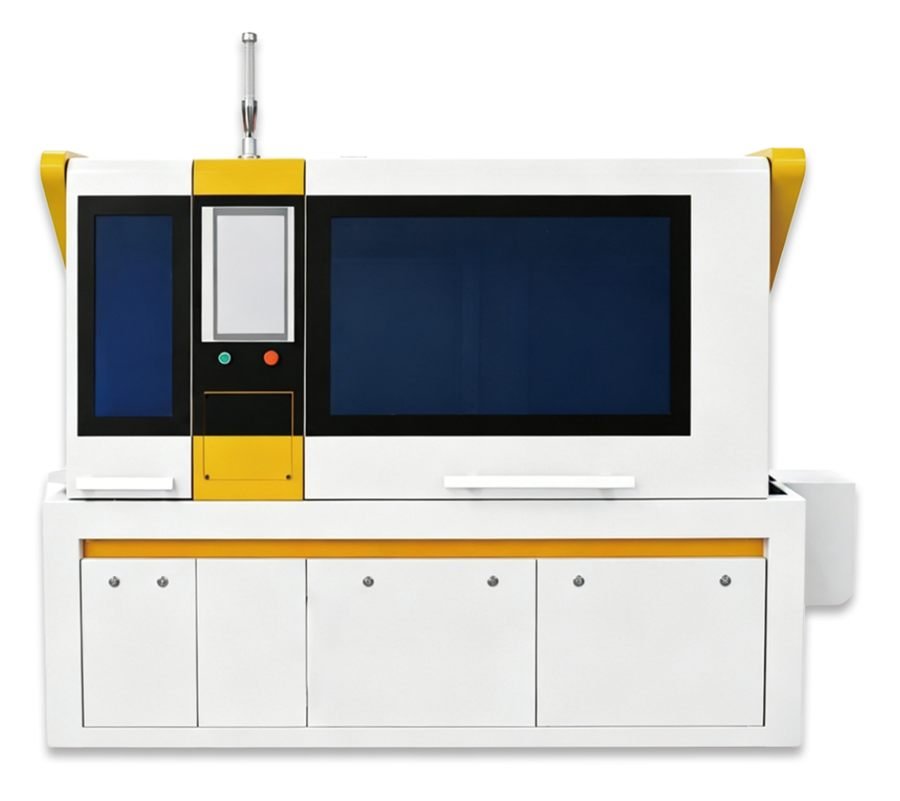
Jiurun’s JR-510CNC-3A-1S video shows general equipment and a short profile-cutting sequence. It does not document the material, fixture, customer order, acceptance trial or performance of the configuration discussed here.
Measure the whole batch workflow
A comparison based on one sawing cycle hides the time needed to bring stock to the saw, confirm a program, adjust support, clear a finished part, replenish stock and inspect output. For each model, time a defined batch from the first required setup through the last accepted part. Record operator actions, interruptions, rejected or unchecked pieces and the time spent switching to the next order. If loading or collection equipment is outside the proposed supply, record that boundary instead of attributing its work to the machine.
Where the same profile repeats all day, automatic handling scope may matter more than a fast program change. Where profile sections and quantities change repeatedly, fixture and recipe changeover can dominate. The JR-510CNC-3A-1S should not be assumed to suit only long repeated runs; Jiurun’s own energy-storage guidance also positions it for flexible lists. Test the real mix on both offered configurations and compare accepted output per staffed shift, not an advertised cutting speed.
Keep the four length questions separate
Request four named values for each offer: incoming stock length, single feeding movement or stroke, supported finished-part length range, and remaining tail after the agreed cutting plan. Ask how each is defined and under what profile and fixture conditions it applies. A claimed positioning repeatability is a property of the feeding or control system under its stated test; it is not automatically a measured finished-cut tolerance. Finished length depends on the agreed datum, stock condition, clamp stability, blade and inspection method. Do not compare unlike numbers in a supplier table.
For material use, give both suppliers the same raw lengths, cut list and kerf assumptions, then ask for a cut plan showing accepted parts and remaining material per bar. If a zero-tail or tail-saving arrangement is proposed, ask which mechanisms and restrictions make that result possible on your profile. Do not infer a guaranteed tail length from a model suffix or a video.
Define a fair sample-cut acceptance test
- Freeze the input: identify representative stock, section orientation, finish and the complete cut list.
- Freeze the offered build: list blade, support, feed, clamp, guide, guarding, discharge and any optional equipment used in the trial.
- Measure parts: record finished length from an agreed datum, angle if applicable, burr/cut-face condition, visible-surface damage and downstream fit.
- Measure workflow: record accepted pieces, rejects, operator steps, replenishment, changeover and full-batch elapsed time.
- Test the edges: include the shortest and longest required parts, profile changes and end-of-stock behavior where those occur in production.
Retain the measurement sheet and sample photos with the quotation. A short equipment demonstration can help explain a motion sequence, but it is not a substitute for a trial on the buyer’s own material.
What to ask each supplier to quote
Ask for a side-by-side scope sheet covering the exact machine model and revision; accepted profile orientation and size; stock and finished-length range; feeding movement and long-part sequence; program storage and cut-list import or entry method; guards and safety interlocks; clamps and support tooling; loading and finished-part collection; utilities and footprint; delivery, installation and operator training scope; and the agreed sample-test and inspection plan. Mark each line included, optional, excluded or pending engineering review. A lower headline machine price can lose meaning if the comparison omits handling equipment or additional fixtures.
The JR-455CNC is a reasonable starting question when programmable length control and changing orders are central. The JR-510CNC-3A-1S is a reasonable starting question when the buyer is evaluating an integrated automatic feed-and-cut workflow, including mixed production lists. These are starting directions from Jiurun’s published product guidance. Neither can be declared the winner until the actual part family, quote scope and representative trial are compared.
Frequently asked questions
Does the JR-510CNC-3A-1S only suit one repeated length?
No. Jiurun’s energy-storage solution also describes changing project lists and mixed finished lengths. Ask how the proposed control and handling layout switches between your specific lengths and quantities, then verify it in the trial.
Does the JR-455CNC’s CNC control guarantee my finished-part tolerance?
No. Programmed feeding and a catalog positioning figure do not establish the final cut result. Agree on the part datum, sample size and inspection method, then measure accepted parts from the configured machine.
Can a 45-second video prove output or tail saving?
No. The linked channel video shows equipment and a brief cutting sequence. A production claim needs a timed representative batch, a material-use calculation and written configuration boundaries.
What should I send Jiurun for a useful comparison?
Send the profile cross-section and part drawings, alloy/temper if available, stock lengths, finished lengths and quantities, tolerance and appearance criteria, expected output, changeover frequency, available floor space and destination requirements. Request the same trial and scope sheet for both proposed configurations.
Request a drawing-based comparison
Send your profile family and cut list through the JiurunCut contact page. Ask the engineering team to identify the proposed JR-455CNC and JR-510CNC-3A-1S feeding, support, clamping and collection scope, then agree on a representative sample-cut and inspection plan. For broader machine categories, see the product selection overview and the application workflow guide.
Sources and scope: JiurunCut’s industrial-profile guidance, energy-storage guidance and machine-direction overview inform the model positioning. The manufacturer’s automatic saw range lists both models. The JR-455CNC single-feed figure comes from Jiurun’s product catalog and requires confirmation against the final configuration. Trial criteria and the comparison questions are editorial procurement guidance, not measured performance data.