
Inspection fixture frame delivery is more than a freight choice. A buyer may receive a complete measuring fixture, an assembled aluminum frame that still needs locating hardware and qualification, or a labeled set of cut profiles for local assembly. Those three offers can look similar in a quotation while assigning very different work and risk after arrival. Decide who rebuilds the frame, who establishes its reference geometry, and who releases the fixture for measurement before comparing prices.
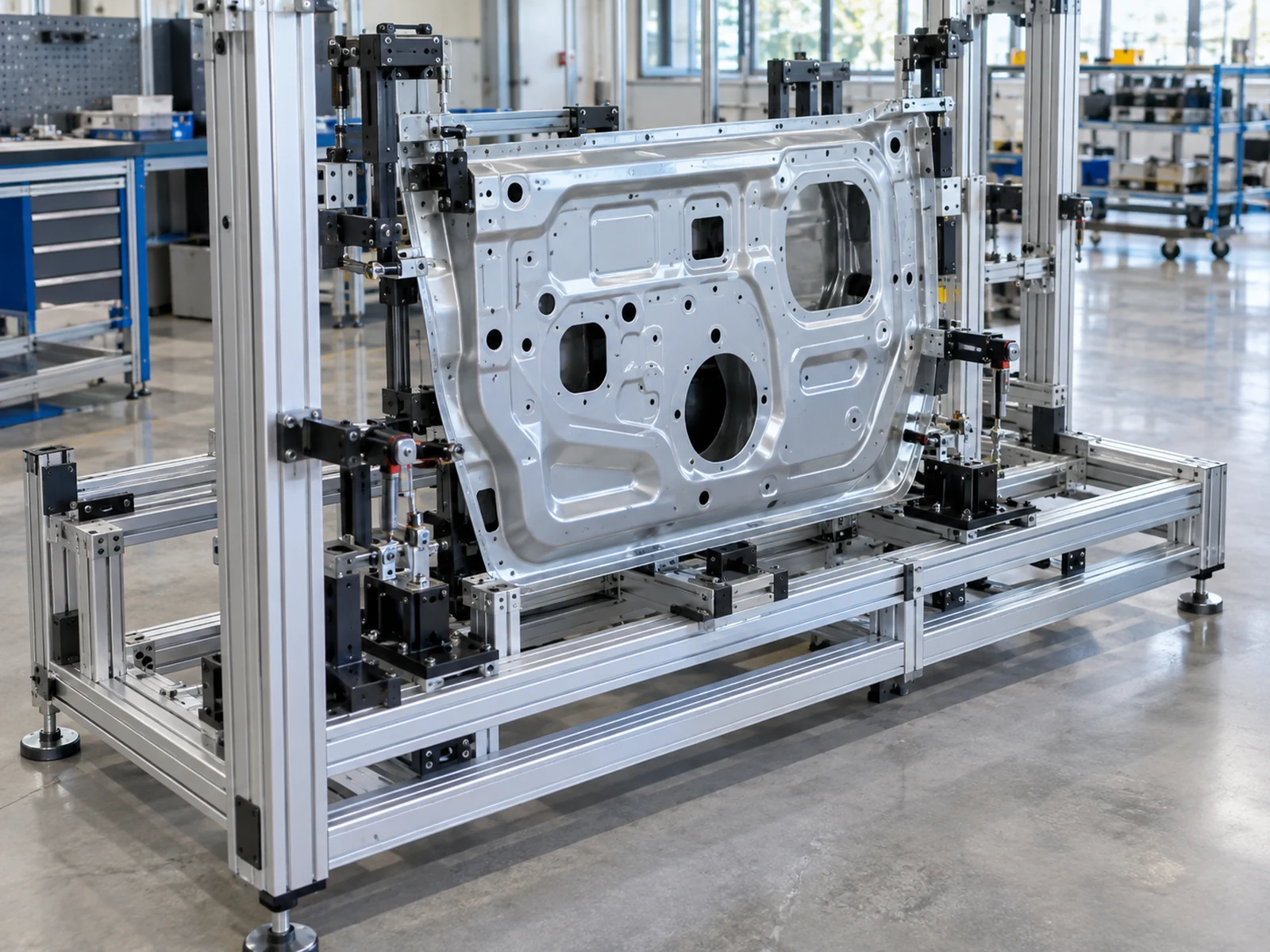
Start with the acceptance boundary, not the shipping box
A saw-cut frame member has a profile identity, length, end condition and quantity. An assembled frame adds joints, orientation and installed geometry. A usable inspection fixture adds the workpiece locators, clamps, reference features, inspection procedure and evidence that repeated loading gives the agreed result. A clean cut does not establish the final measurement datum. Keep these acceptance stages separate in the purchase order.
For modular metrology fixtures, Renishaw explains that documented, reproducible set-ups support repeatable inspection. That principle is useful even when the structural frame is made from aluminum extrusions: if a frame is dismantled or disturbed in transit, the buyer must know how the working set-up will be reproduced and checked. It does not mean that any particular frame or saw is automatically metrology-qualified.
Compare three delivery routes
1. Complete fixture, assembled and qualified by the responsible integrator
Choose this route when the buyer wants one party to supply the frame, locating elements and a documented pre-dispatch functional check. The order must still state what happens after transport: which reference checks are repeated at the destination, what constitutes transit damage, and who corrects a failure. Factory evidence is a baseline, not a substitute for the agreed receiving check. Freight envelope, lifting points, restraints and handling responsibility belong in the same scope discussion.
2. Assembled structural frame, with qualification assigned elsewhere
This option may reduce local frame assembly, but the delivered structure is not yet the same thing as an accepted measuring fixture. Specify the frame drawing and revision, member positions, joint hardware, mounting faces and any interfaces reserved for locators. Name the party that installs the metrology components and verifies the final datum. Ask for a before-shipment frame record and an after-arrival condition check so a freight issue is not confused with a cutting or assembly issue.
3. Labeled cut-member kit for local assembly
A kit can be easier to pack or move through a constrained doorway, but only if the receiving team can identify every profile, connector and orientation. Require a member schedule tied to the approved drawing revision, end-view or orientation marks where needed, a hardware list, an assembly sequence and a clear owner for final geometry and metrology release. The frame should not be accepted merely because every bar appears in the box.
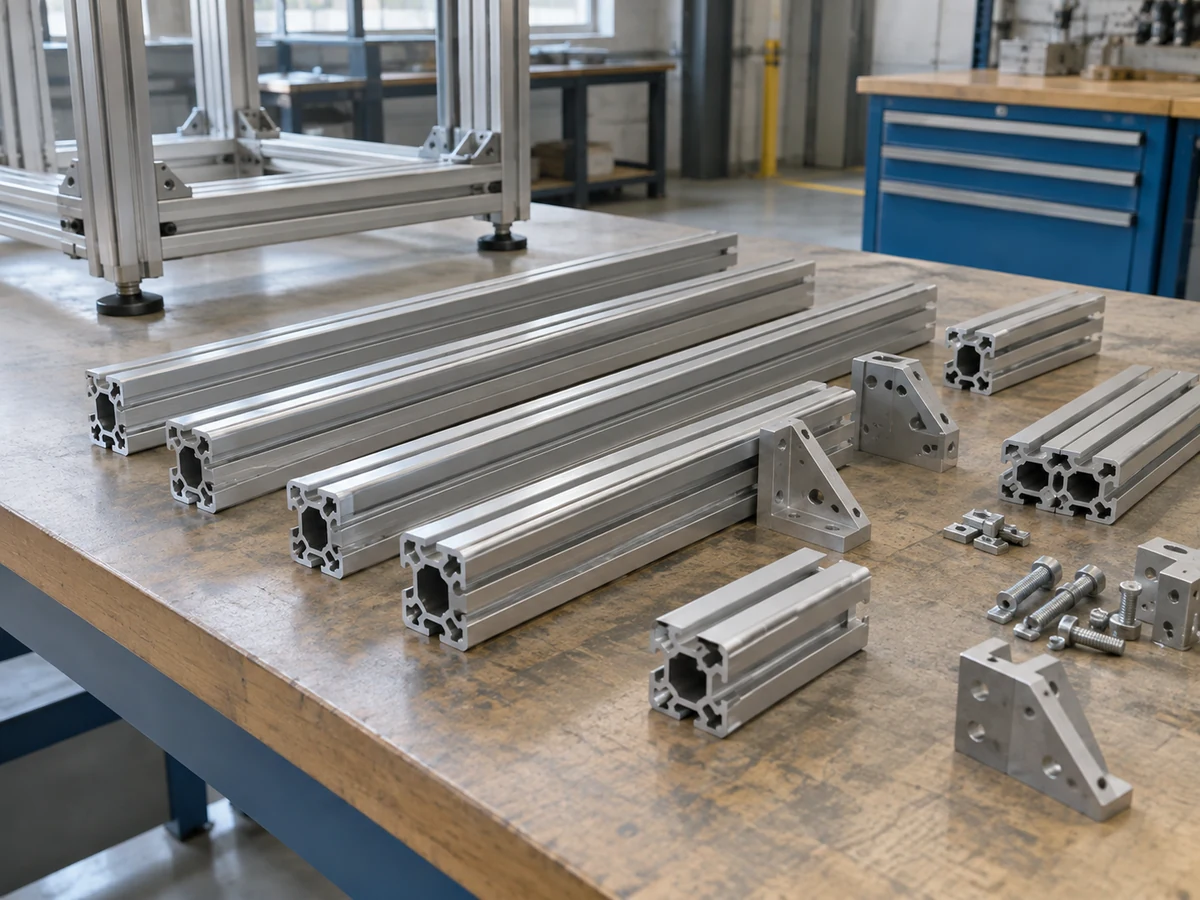
An item modular frame example is explicitly offered as a set rather than preassembled and lists a parts list, profile machining information and an assembly guide among its project documents. That is an example of the documentation a kit buyer can request, not proof that the illustrated inspection fixture or any Jiurun-cut member uses the same proprietary system.
Inspection fixture frame delivery: define the datum-restoration gate
The key decision is who restores and verifies the working reference after delivery. Write the gate as a sequence with named owners:
- Before dispatch: record the released drawing and bill of materials, assembly state, marked reference features, supplied locators and the inspection evidence included in the price.
- At receipt: inspect package condition, identify each module or member, and record any disturbed joint, missing locator or visible damage before assembly or adjustment.
- After placement: establish the support condition required by the fixture designer, install or verify locators, then perform the agreed repeatability or reference check using the specified workpiece or master.
- Release: record the result, responsible sign-off and corrective route if the frame fails. Do not label a frame measurement as a metrology acceptance result unless the agreed method actually establishes that result.
The exact reference points, gauge, repetition count and acceptance limits must come from the buyer’s fixture or inspection specification. This article supplies no universal tolerance or calibration interval. If a revised member or joint is being introduced, our separate guide on inspection fixture frame revisions explains why a structural recut and metrology requalification are different decisions.
Put the right fields on the RFQ
For inspection fixture frame delivery, give every bidder the same scope sheet. It should identify the workpiece family and fixture function; approved frame and member drawings; profile and connector system; cut lengths and end preparations; number of frames or kits; factory assembly state; supplied locators and clamps; labeling and packing method; site access constraints; reference-check method; evidence deliverables; and the owner of post-arrival correction. Ask each supplier to mark exclusions. A low kit price is not a like-for-like offer if site assembly, missing hardware or qualification is carried by the buyer.
For the saw or outsourced cutting portion, send the actual extrusion cross sections, stock lengths, end geometry, quantity mix and the member schedule. Define how a trial sample will be identified and inspected. Our guide to buying an aluminum saw for inspection fixture frames focuses on that structural cutting package. The machine supplier should not be asked to certify the final fixture solely from feed-position figures or a sample cut.
Use a receiving scenario to expose missing ownership
Suppose the fixture designer specifies a frame that must pass through a narrow installation route. One bidder offers an assembled frame; another offers cut profiles with brackets. The buyer should first check whether the assembled unit can pass through the route without dismantling. If it cannot, request a defined module split or a kit, then assign the reassembly and datum check to a qualified party. Compare the landed and accepted state, not only freight volume or saw-cut price. This is a decision example, not a claim about a particular customer’s fixture.
Related equipment footage
The following video is from Jiurun Machinery’s own YouTube channel. It shows general JR-455CNC aluminum cutting equipment and clamp-area footage. It does not demonstrate the pictured fixture material, a supplied inspection-frame configuration, this article’s delivery route, a customer project, a witnessed cut or any fixture accuracy or performance claim.
General equipment illustration only; no fixture-frame delivery or metrology proof.
Questions to settle before placing the order
Does an assembled frame arrive ready for inspection work?
Only when the quotation includes the required locating system, post-arrival checks and a named acceptance owner. Assembly status alone does not establish a usable measurement datum.
Can a cut-member kit be accepted by counting parts?
Counting checks completeness. It does not verify orientation, joint condition, final geometry or repeatability. Include those later checks in the assembly and release plan.
Who pays if the arrival check fails?
Define evidence, responsibility and remedy in the purchase agreement before dispatch. Separate a damaged shipment, an incorrect cut member, an assembly error and a metrology set-up issue.
Need to quote the cut-member portion? Send JiurunCut the approved profile and member drawings, required cut ends and production quantities. We can review the aluminum cutting scope; the fixture designer or appointed integrator must define and approve the installed datum and measurement release.