
Industrial sign frame shipping can mean measured loose members, a cut-and-labeled assembly kit, or a complete frame. These are different purchase and shipping commitments. If an aluminum saw is being specified for sign production, decide which output the shop will actually release before asking a supplier to quote throughput or automation. A saw can produce the approved cuts; it cannot by itself establish that every corner key, cover, face component and instruction reaches the installer together.
Start with the accepted sign, not a generic frame length
Record the sign system, drawing revision, finished external dimensions, face type, mounting arrangement, finish and installation location. Then identify which aluminum members the shop owns and which components come from a system supplier. Some systems require a particular extrusion, corner key or spring. As one concrete example, SignComp’s Large Snap Frame with Flat Cover lists a frame extrusion, cover, two-piece corner key and spring as separate kit components, and publishes assembly instructions. That example shows why a cut-length list alone is not an accepted frame kit. It does not establish compatibility with another manufacturer’s system.
The release unit should be explicit: one frame, one opening, one installation zone or one order line. A project may have several visually similar frames with different face openings. Give each unit an identifier that follows its parts from saw output through packing and receipt. Where the graphic supplier and frame supplier are different, agree who signs off the panel opening and when that measurement becomes fixed.

Industrial sign frame shipping: three output boundaries
Loose cut members. The shop supplies identified pieces to another fabricator. The buyer needs an approved cut list, profile/finish identification, cut-end acceptance, bundle protection and a clear statement that connectors, face and assembly are outside the saw shop’s delivery. This route can work when the receiver has its own complete system inventory and assembly controls.
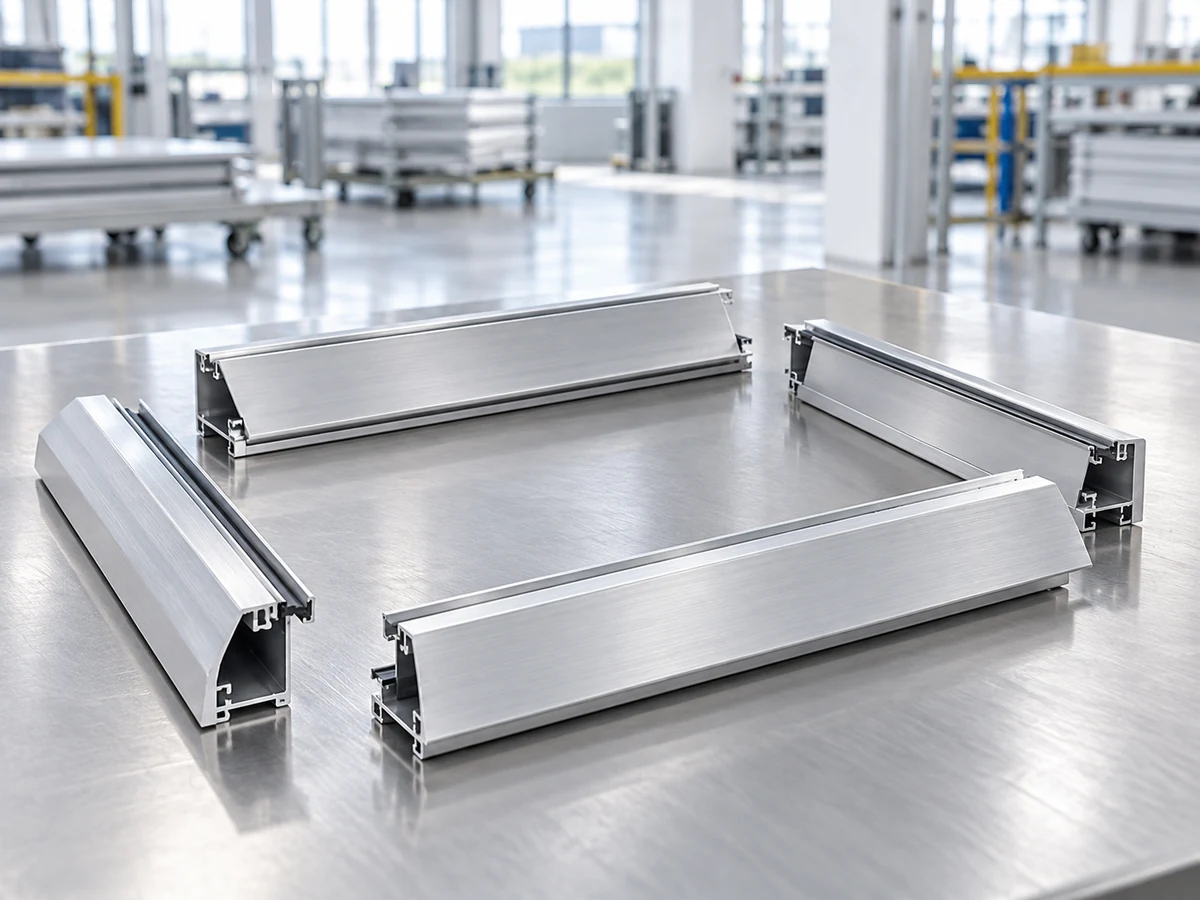
Cut frame kit. The shop groups members for a specific frame, adds the agreed connectors and ancillary pieces, and supplies an assembly list. A representative kit should be dry assembled against the approved drawing before routine release. The trial exposes a missing corner key or wrong orientation that an individual length check could miss. SignComp’s commercial kit guide distinguishes unassembled frame kits and names cut-to-size and mitered bodies with assembly hardware; use the actual selected system’s instructions for the order, not the example as a universal specification.
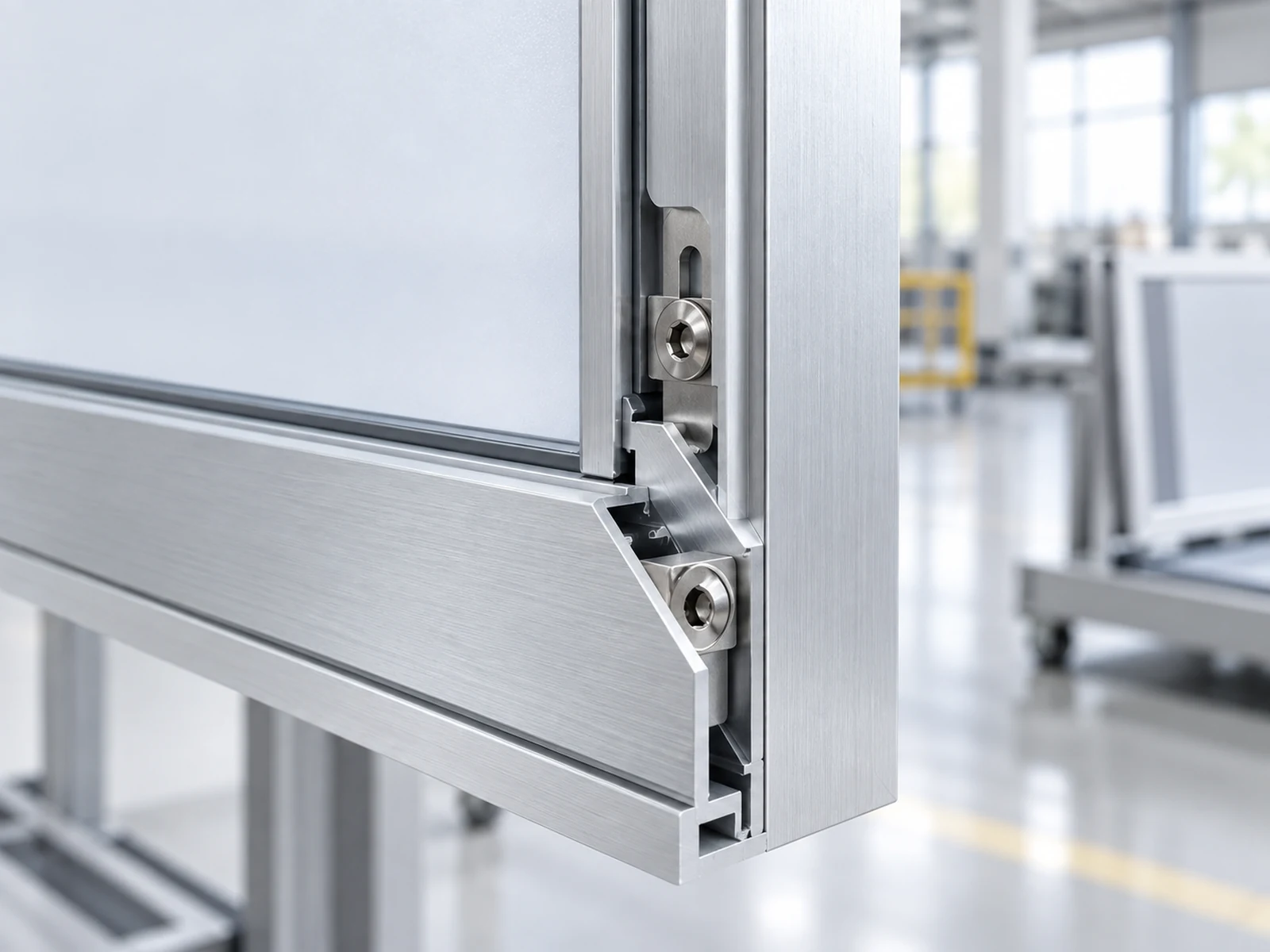
Assembled frame. The shop delivers the approved complete frame or approved subassembly. It must agree on joint, face-opening and finish acceptance before packing. An assembled frame shifts work out of the installation site but changes the packed footprint and the surfaces that need restraint. Get the receiver to approve which components may be installed before transport and which should ship separately.
Write the saw RFQ around the release unit
A supplier trial should use actual approved stock, the shortest and longest retained members, both left- and right-hand pieces if they differ, and the exposed finish most likely to show handling marks. Send the drawing revision, profile sections, stock lengths, cut angles, datum faces, clamping restrictions and the accepted cut-end condition. Specify which dimensions are checked on a free member and which are checked on a temporarily assembled frame. Do not substitute a machine feed-position claim for the measured fit of a finished kit.
Ask the saw supplier to show the entire route from infeed to labeled output. Include the short offcut and remnant, because a trial that only shows one clean long piece may hide an awkward release or mixing point. The acceptance record should identify stock batch, blade and fixture setup, measured samples, rejected pieces and the disposition of each offcut. The approved result is a documented part and kit route, not a video of a cut alone.
Protect identity and finish between the saw and the box
For each frame kit, define a packing list with member marks, cut lengths or part numbers, connector count, face or cover components if included, and the drawing revision. Keep look-alike pieces from adjacent openings separate. Labels should remain readable after protective wrapping and should not damage a visible finish. If labels cannot safely adhere to the profile, attach them to a protective sleeve or bundle tag and keep the unit identifier on the package.
Agree where protective film is removed, whether cut ends need caps or separation, and how loose keys are contained. A frame corner can be accepted at the bench yet arrive with a dent from movement in an oversized package. UPS packaging guidance notes that flat, narrow products can move in transit and calls for suitable cushioning, particularly at corners and edges. That is a general carrier principle, not a validated packaging design for this sign system. Trial the proposed pack against the actual freight route and receiver’s handling method.
Compare the two shipping routes by work transferred
A cut kit reduces the dimensions of the packed frame but transfers assembly, hardware-count and alignment work to the receiver. A complete frame transfers assembly control to the fabricator while increasing the need to protect a larger, potentially less rigid assembly. Neither route is automatically cheaper or safer. Compare them using the same approved sign: saw and kit labor, assembly labor, packaging materials, occupied freight space, site handling, expected rework and the cost of a missing component. Use actual carrier quotations rather than assuming a freight saving from smaller pieces.
For a repeat product family, a practical trial is to build two representative units from the same drawing revision: one dispatched as a labeled kit, the other as the agreed assembled form. Have the receiving party record package condition, completeness, assembly time or installation preparation, fit and any finish damage. The sample is evidence for that system and route; it is not a performance guarantee for every sign size.
Put acceptance and recovery terms in the order
State who owns a dimension error, missing key, damaged visible face, mixed kit or outdated drawing. Define when the receiver must report a shortage and which evidence identifies the affected unit. Keep spare-member and replacement-kit policy separate from general scrap allowance. If one member is replaced, decide whether the whole frame needs another trial assembly and whether the replacement must match the original finish lot. A clear handover record makes the next order more reliable than an informal request to “cut the same frame again.”
The purchase order should contain the final released drawings, component responsibility matrix, kit bill of materials, sample acceptance record, pack specification and receipt check. A general sign-frame cutting article can establish the retained member scope; this shipping decision closes the additional gap between a cut part, a complete kit and a ready-to-install frame.
Video: general equipment context
The Jiurun Machinery video below shows general aluminum cutting equipment footage. It does not demonstrate the sign system, frame configuration, customer order, shipping method, trial result or performance described in this article. Use it only to understand the kind of cutting process that may form one step in a separately approved production route.
Before asking for a saw quote, send the chosen sign-system drawing, an identified frame bill of materials, representative profiles, expected release unit and proposed pack. Contact JiurunCut to discuss a trial plan around the accepted members and the handover your buyer actually needs.