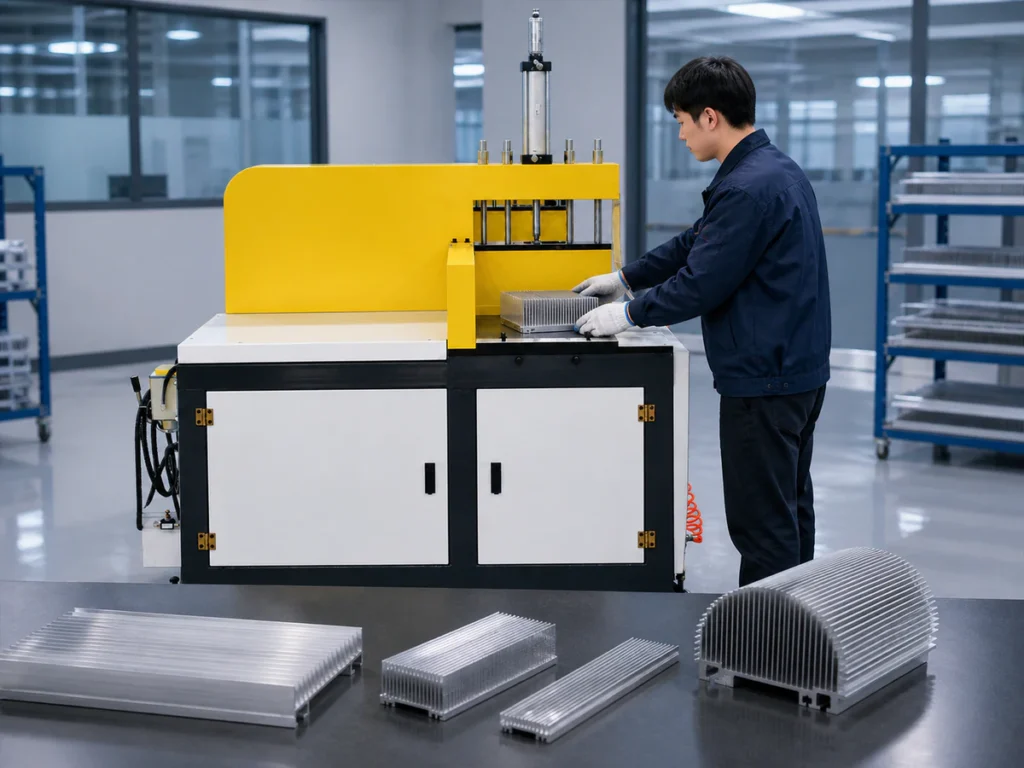
Hydraulic saw oil foaming is a circuit symptom, not a parts order. Air bubbles can reach a saw’s hydraulic reservoir when oil is drawn through a leaking suction connection, the oil level falls, or returning oil churns the tank. The first useful question is when the bubbles appear: immediately on start, only during a stroke, or after the machine has warmed up. Stop an unstable machine and ask a qualified technician to identify the circuit before opening lines or replacing components.
This guide concerns hydraulic oil used to move or hold a machine function. It does not diagnose foam in a water-miscible cutting-fluid sump. Those are different fluids and systems; see our separate aluminum saw coolant foam guide if the bubbles are in the cutting-fluid tank.
Confirm which circuit is foaming
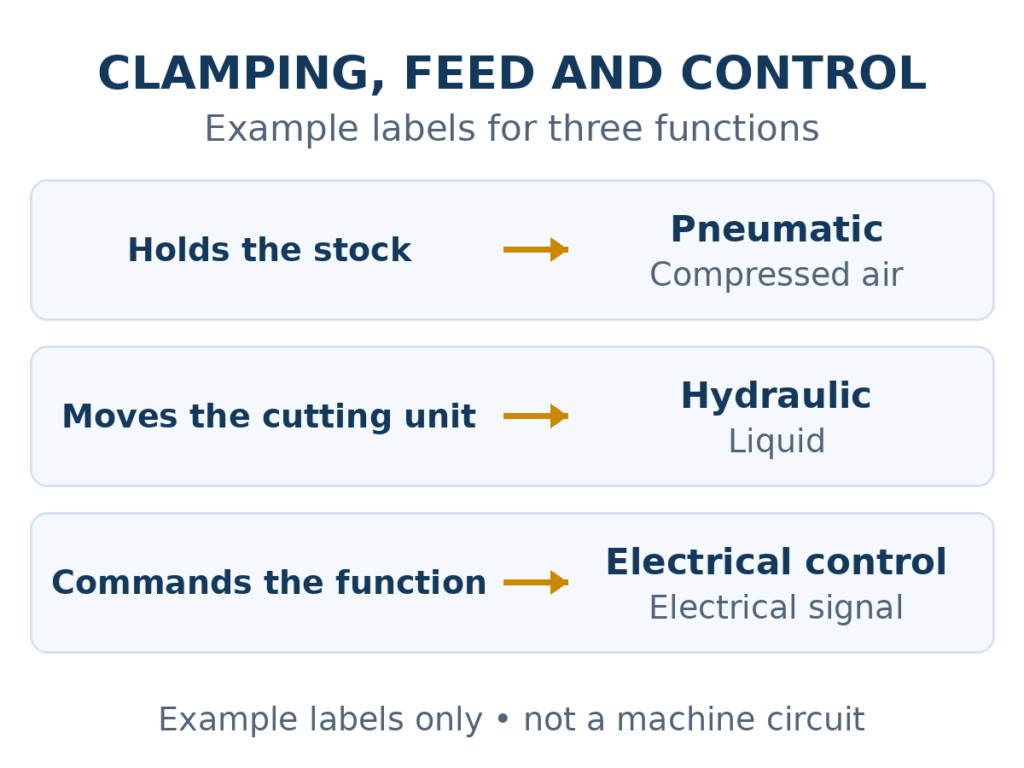
Some aluminum saw configurations use a hydraulic circuit; others combine hydraulic, pneumatic, and electrical functions differently. Find the actual hydraulic reservoir and the machine’s circuit documentation before assigning the symptom to a clamp, blade feed, or other motion. Record the machine identification, recent service, oil identification from its maintenance record, and the normal inspection point. A white cutting-fluid tank or air-line lubricator is not proof of a hydraulic-oil fault.
Hydraulic saw oil foaming: what appearance can tell you
Visible bubbles or a foamy surface are a reason to investigate air entering or being stirred into the hydraulic oil. A cloudy or milky appearance alone cannot identify the contaminant: entrained air and water can look similar. A technician may need a controlled sample and the oil supplier’s test method. Do not label a tank as water-contaminated from a photograph, and do not pour in an anti-foam additive as a shortcut.
Note whether the oil clears while the saw is stopped, whether foam returns with a particular movement, and whether pump noise, irregular motion, or pressure behavior changes at the same time. These observations help locate the cause; they are not a substitute for safe pressure and contamination checks. Parker’s hydraulic troubleshooting material lists suction-side air entry, low level, and a turbulent return path among possible aeration causes. Parker hydraulic troubleshooting reference.
Use the timing to narrow the search
Foam appears soon after startup
Ask the service technician to compare the indicated oil level with the approved fill and operating condition, then inspect accessible suction connections and the pump inlet route using the machine documentation. A connection can admit air without leaving a large external oil puddle. The technician should also check whether a filter or strainer restriction is increasing inlet demand. The correct inspection and repair depend on the installed pump and plumbing; do not tighten fittings or open a live suction line by guesswork.
Foam grows during a stroke or continuous running
Record the exact motion and time when the foam increases. The return line may discharge where it churns the surface or close to the pump intake, or the reservoir may not allow enough time for air to separate. Those are design and installation questions for the equipment supplier, not permission to reroute a pipe in the field. Donaldson describes return diffusers as a way to limit reservoir turbulence and aeration in suitable hydraulic systems. Donaldson reservoir accessory guidance.
Foam starts after oil or component service
Compare the before-and-after record: oil product and batch, fill quantity and method, filter replacement, opened lines, and any bleeding procedure the manufacturer specifies. Trapped air after a service intervention may require an approved venting sequence by trained personnel. Parker’s machine guidance also notes that bubbles can indicate low oil or suction leakage, and that the oil level should be checked after appropriate bleeding. Parker machine manual.
When to stop and what to send the technician
Hydraulic saw oil foaming becomes an urgent stop signal when it comes with erratic movement, new pump noise, repeated pressure loss, overheating, or a persistent foam layer. Isolate the machine under the site’s lockout procedure and keep people clear of stored hydraulic energy. A qualified technician should follow the actual machine manual for pressure release and inspection. Do not crack a fitting to “see whether air comes out”; pressurized hydraulic fluid can injure skin, and a running saw adds blade and clamping hazards.
Send a short evidence set rather than a replacement-part guess: machine and pump identification, oil and filter records, a dated photo of the reservoir at the stated operating condition, startup-to-foam timing, the motion that triggers the change, noise or movement observations, and recent work. If water is suspected, ask for a sample test before specifying a remedy. Donaldson lists air and water as distinct hydraulic-fluid contaminants, which is why the same cloudy look can lead to different corrective work. Donaldson contamination overview.
Release the saw only after the fault stays away
After the authorized repair, have the technician confirm the approved oil level and condition, stable pump behavior, and no renewed foam across the relevant operating cycle. Then run the machine’s normal guarded functional checks and inspect the first cut parts against the job’s dimensional and surface requirements. Hydraulic saw oil foaming that returns under load means the fault is still open, even if the tank briefly clears at idle.
For a new machine, agree the fluid, fill, filter, and handover evidence with the supplier before acceptance; our hydraulic oil handover checklist covers that stage. If the issue is an external drip rather than reservoir foam, use the separate hydraulic saw leak guide. Tell Jiurun the saw model, hydraulic function, oil record, and symptom timing when requesting configuration-specific support.
Related equipment video
The short Jiurun channel video below shows a JR-455Y hydraulic semi-automatic aluminum cutter handling a profile. It is a related equipment view only; it does not show reservoir foam, this fault, a diagnostic procedure, or evidence of the machine discussed above.