
On a heated cooler door, a clean-looking rail cut can pinch the track where a wire or cover must pass. A length reading alone will miss that failure. For heated refrigerated door rail cutting, ask which features must remain open, which cuts are handed, and who signs off the heater route before you buy a saw.
This guide concerns an approved aluminum extrusion used in a door or frame system that has a heater path. It is not a drawing for a universal refrigerated door. Anthony’s service manuals show heater wires in door-rail grooves and frame tracks for specific models; other designs can use different layouts or no door heat. Use the current OEM or system-designer drawing for your own project.
Mark the approved heater path before choosing a saw
Give the saw supplier a released cross-section and mark the heater track, cover retention edges, lead exit and any access opening. Identify the surfaces that may contact a stop, table, clamp or outfeed support. A photograph of a similar-looking extrusion cannot establish which small lip is functional. Mark end A and end B on each part and state whether the rail is handed.
Anthony’s Model 401/403 service instructions describe pulling a heater from an aluminum groove in the door rail and replacing it through a track. Its 1100/1500 sliding-door manual describes a heater wire around the outside back edge of a door rail and a separate frame heater track. Those are examples of why the groove and access route matter, not specifications for every cooler door. If the owner has not released the extrusion and heater arrangement, ask for that decision before asking a saw vendor to promise a finished heated rail.

Trace the heater route across both cut ends
Ask the door-system owner how the heater reaches the rail: through an end of the track, through a service opening, or by another approved route. Mark the entry, any cover-retaining edge and the lead access on the released section. Anthony’s 401/403 instructions describe a heater in an aluminum door-rail groove; its 1100/1500 sliding-door instructions describe a back-edge door track and a separate frame track. Those service details show why one generic clamp drawing cannot be applied to every heated door.
For each handed part, name end A and end B on the drawing and show the cut face in installation orientation. The owner must state whether the wire or cover enters from an end, snaps in from a face, or is installed by another method. The saw trial can then test the relevant opening without guessing how the finished door is assembled. If a miter, fastener, end cap or later machining changes the route, include that interface in the approved sample and acceptance note.
Set the cut sequence before asking for a machine quote
A long, released extrusion cut before heater installation is a defined saw-blank task. A rail that arrives with a heater or lead already installed needs a separate, approved process; an ordinary dry saw trial does not establish a safe way to cut the assembly. If the manufacturer supplies a completed rail kit, first confirm whether there is any retained cutoff operation. The broader refrigerated frame supply guide covers the complete-door versus member decision. Here, the purchasing question is narrower: can the specified saw, fixture and post-cut handling leave the approved heater route usable?
Check track continuity after sawing and deburring
For heated refrigerated door rail cutting, the trial should check the measured length from the named datum and the geometry at the track entrance. Agree on acceptable burr, sharp-edge, deformation and finish conditions with the system designer. A saw operator should not remove metal from a heater-retaining lip by guesswork. If deburring is required, specify the tool, location and inspection step separately from sawing.
Show the finished rail in its installation orientation. A clamp may leave a visible mark or narrow a small opening without changing the nominal outside size. Include the shortest piece, the least well-supported end and both hands if the rail family is asymmetric. Inspect after cutting and again after the contracted post-cut handling. Record whether a cover or approved non-energized fit gauge can traverse the track. Heater installation and energized checks belong to qualified personnel under the door-system procedure.
Separate cutting proof from electrical proof
Anthony’s manuals discuss lead wires, access holes and service steps for named models. They do not make a saw trial an electrical certification. In the purchase acceptance plan, put the evidence into two columns: cut-member results and door-system results. The first can include dimensions, end condition, labels and batch consistency. The second belongs to the door or frame integrator and may include wire routing, cover fit, continuity, insulation, grounding and any applicable safety or condensation tests under its approved procedure. Avoid copying a service manual’s model-specific wiring or hole position into another design.
Also ask whether the proposed product actually requires a heater. Anthony describes a rail design that removes the need for anti-condensate door and glass heat. That makes the released product configuration a purchasing input, not an assumption based on the word “refrigerated.”
Run a representative saw trial before committing
Send one released drawing revision, actual stock or an approved sample, a cut list and the downstream interface owner. Ask the vendor to state the blade, fixture, feed arrangement and included outfeed support used during the demonstration. Have the owner identify where clamping is permitted and where finish, cover or heater features must remain untouched. Measure the defined length and end angle, inspect the groove and protective surfaces, and label each sample to its drawing and orientation.
Related machine footage. The video from Jiurun Machinery’s own channel shows aluminum-cutting equipment in operation. It is a machine-workflow illustration. It does not show the heated rail, an approved refrigeration-door configuration, a customer trial, heater installation, or performance proof.
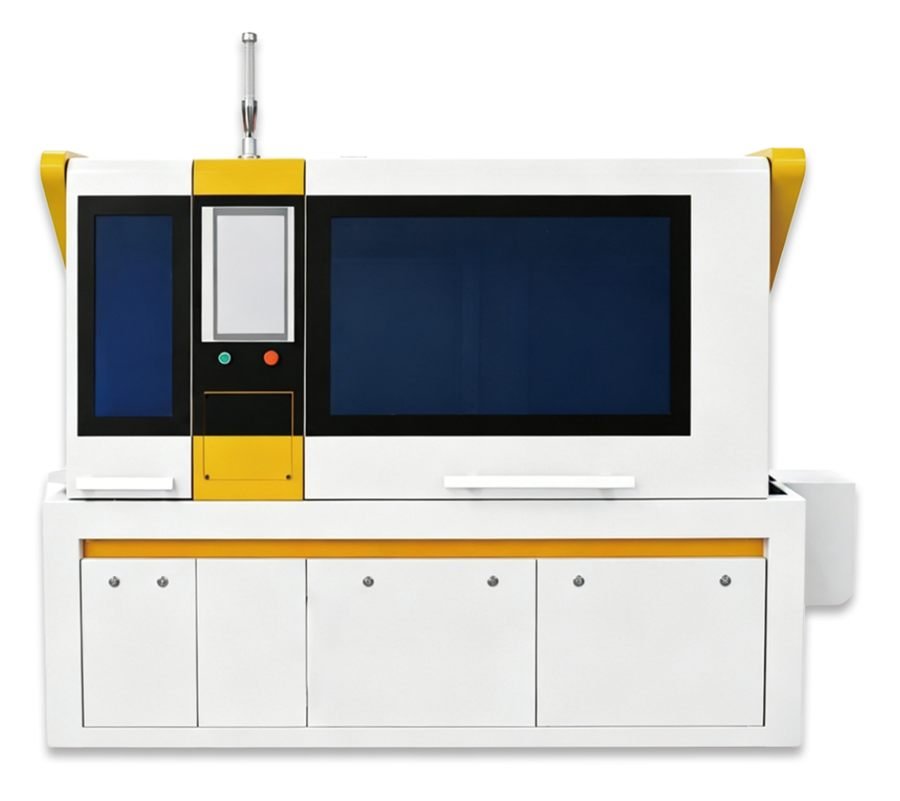
Compare offers using the same trial packet. Note which fixture and inspection items are in the base quote, which are optional, and who revises them when the extrusion changes. A quoted cut-length repeatability figure alone cannot approve a cover or heater route. If a candidate machine cannot hold the real section without touching the functional lip, record that result before deciding whether a different support or a pre-cut OEM kit is the better purchase.
RFQ packet for heated door rail blanks
- Released OEM or system-designer drawing, revision and permitted manufacturing scope.
- Extrusion section, alloy/temper, finish, stock length, straightness condition and annual or batch demand.
- Marked heater track, cover edges, lead access and other protected surfaces where they exist.
- Part numbers, handedness, end A/B orientation, length datum, end geometry and shortest part.
- Approved clamp zones, sample stock, inspection method and agreed end-condition limits.
- Named owner for deburring, holes, heater and wiring work, system fit and electrical acceptance.
Request a bounded cutting review
Send Jiurun the released rail section, drawings and representative stock, and identify the exact cut blank you want back. Ask for a sample plan that protects the functional track and records the cut result. Keep heater routing, electrical safety and finished-door acceptance with the responsible system team.
Source notes
- Anthony Model 401/403 service and installation instructions: model-specific door heater groove, access and replacement route.
- Anthony Model 1100/1500 sliding-door service instructions: distinct door and frame heater tracks.
- Anthony Eliminaator Renu product page: example of a different rail design without anti-condensate door and glass heat.