
A heat pump mounting rail may leave the saw at the specified length and still be unusable on the roof. The cut is only one component check. The outdoor unit must meet its mounting instructions, the fasteners must fit the chosen rail and the supporting roof or platform must carry the load. Treat heat pump mounting rail cutting as a defined manufacturing task only after the support system and the rail drawing are released. A neat cut face does not approve an installation.
Which item is being purchased: a support kit or a loose rail?
Start with the purchase description, not the saw catalog. Walraven’s Rubberfoot support kit is sold as an assembled system for small climate units and heat pumps. Its listed contents include two rubber feet with aluminium rails and four T-bolt assemblies. Walraven also directs buyers to technical support for detailed load distribution and says the installer must verify roof load capacity. A shop offering a cut extrusion is not thereby offering that assembled kit, its rubber feet, fasteners or approved load path.
An LG outdoor-unit application guide describes an anchored pad, base rails or another mounting platform, and calls for the underlying structure to support the unit. It also refers the installer to the applicable model manual and local requirements for clearances, anchors and vibration measures. Those are installation requirements for the actual unit and site. They cannot be inferred from the length of an aluminium blank.
If the project specifies a complete manufacturer kit, identify its exact part number and ask the kit supplier whether field modification is allowed. Do not saw a finished rubberfoot assembly or substitute an unapproved rail simply because a shorter length would fit the drawing. If the purchase is deliberately for loose, separately designed rails, the buyer can release a different manufacturing package: the extrusion drawing, cut schedule, mating hardware and component inspection criteria.
What the heat pump mounting rail drawing must identify
A slot in a generic extrusion is not automatically a compatible mounting channel. The drawing should state the actual section, alloy and temper if specified, finish, slot opening, rail orientation, mounting-hole or end-cap interfaces, cut datum and finished length. The mating bolt or nut must be identified by the support-system owner. In particular, a clean outer edge does not tell you whether a burr has narrowed the slot lip or whether the correct fastener can be inserted and seated.
For a loose heat pump mounting rail, ask how the hardware enters: from an open end, through a permitted slot opening or as part of a preassembled foot. This determines which end conditions matter. Use a representative piece of the approved extrusion and the actual mating fastener for a first-off fit check. Our separate T-slot nut compatibility guide covers the general hardware check; the heat-pump project must still approve its own rail and hardware combination.
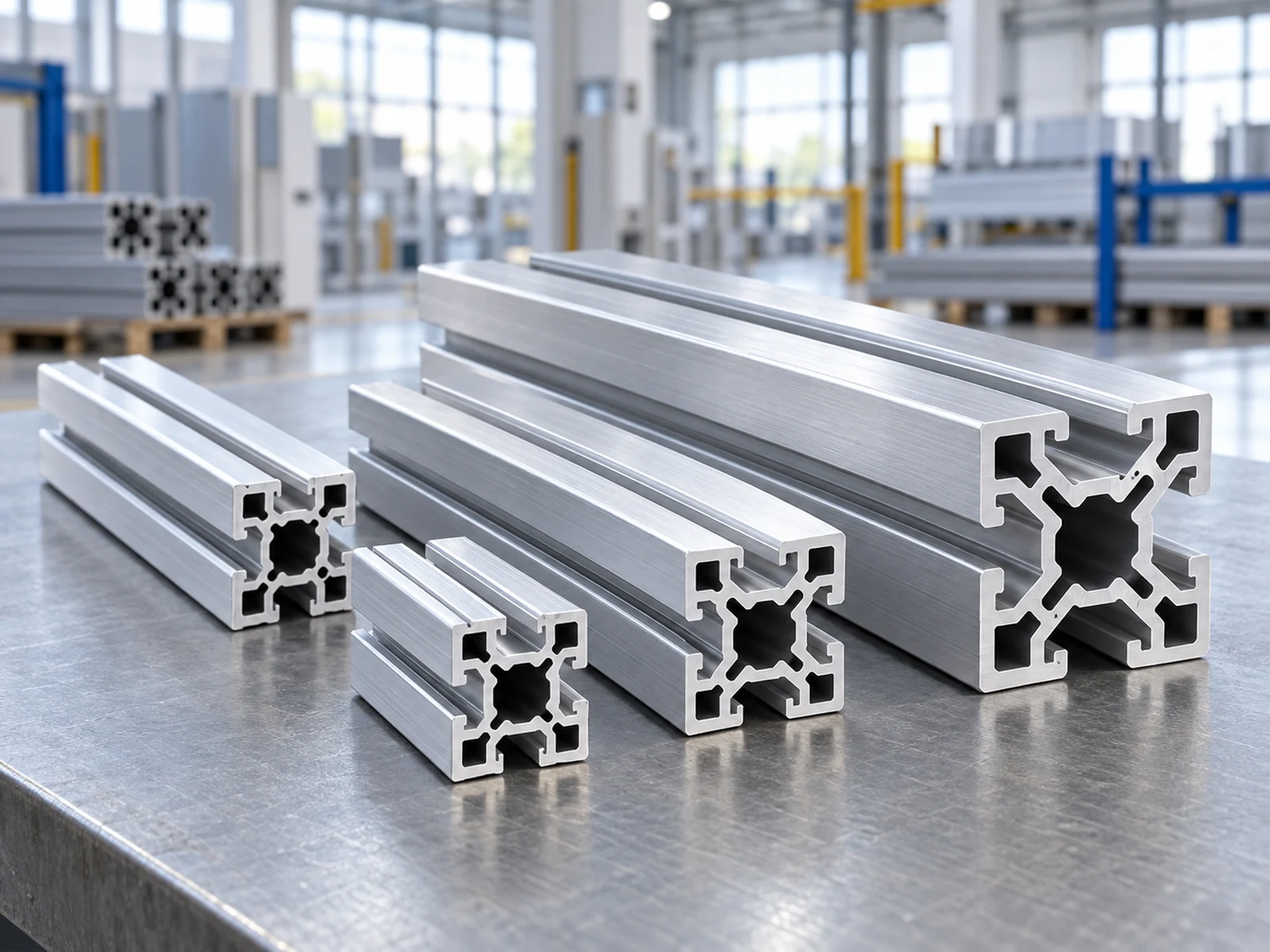
Prove the cut without claiming to prove the support
On a saw trial, present the actual loose-rail section in the planned orientation. Confirm that support and clamping hold the profile without distorting the slot, that the cut end is square to the drawing datum where required, and that loose chips and burrs do not obstruct the mating path. Record a first-off and a later production piece, including the measuring method. A trial on a convenient T-slot extrusion of another size is a setup demonstration, not approval of the project rail.
The operator should follow the machine maker’s guarding and blade-change procedures, and the buyer should ask for the proposed machine and tooling configuration rather than assuming a catalog machine will meet a profile-specific tolerance or finish. Jiurun makes industrial circular saw cutting equipment for aluminium profiles and other nonferrous stock; a rail-specific result requires the actual section, approved cut criteria and a witnessed trial. The image below shows a related Jiurun cutting line and loose profiles, not a heat-pump support-rail production run.

The Jiurun video here shows an operating aluminium saw and control area. Watch it to understand the kind of equipment involved in a profile-cutting conversation. It does not show a heat-pump rail, T-bolt fit test, approved support design or verified cutting performance for this application.
Release the first-off part against the mating hardware
At component inspection, keep the rail drawing, the measured cut length and the first-off sample together. Check the slot mouth, cut face and both ends for damage or trapped chips. Try the specified fastener in the intended insertion direction and confirm its seat against the approved assembly drawing. If an end cap or rubber foot will capture the rail, trial that interface as well. Record what was checked and what was not; a caliper value by itself is not a fit test.
If the fastener binds, do not widen the slot by hand or change the extrusion section without the designer’s approval. Separate causes: an incorrect profile, burr from the cut, finish buildup, a different fastener, or an assembly route that never allowed end insertion. Each calls for a different owner. A revised saw setup can address a cut-edge defect; it cannot authorize a different support geometry.
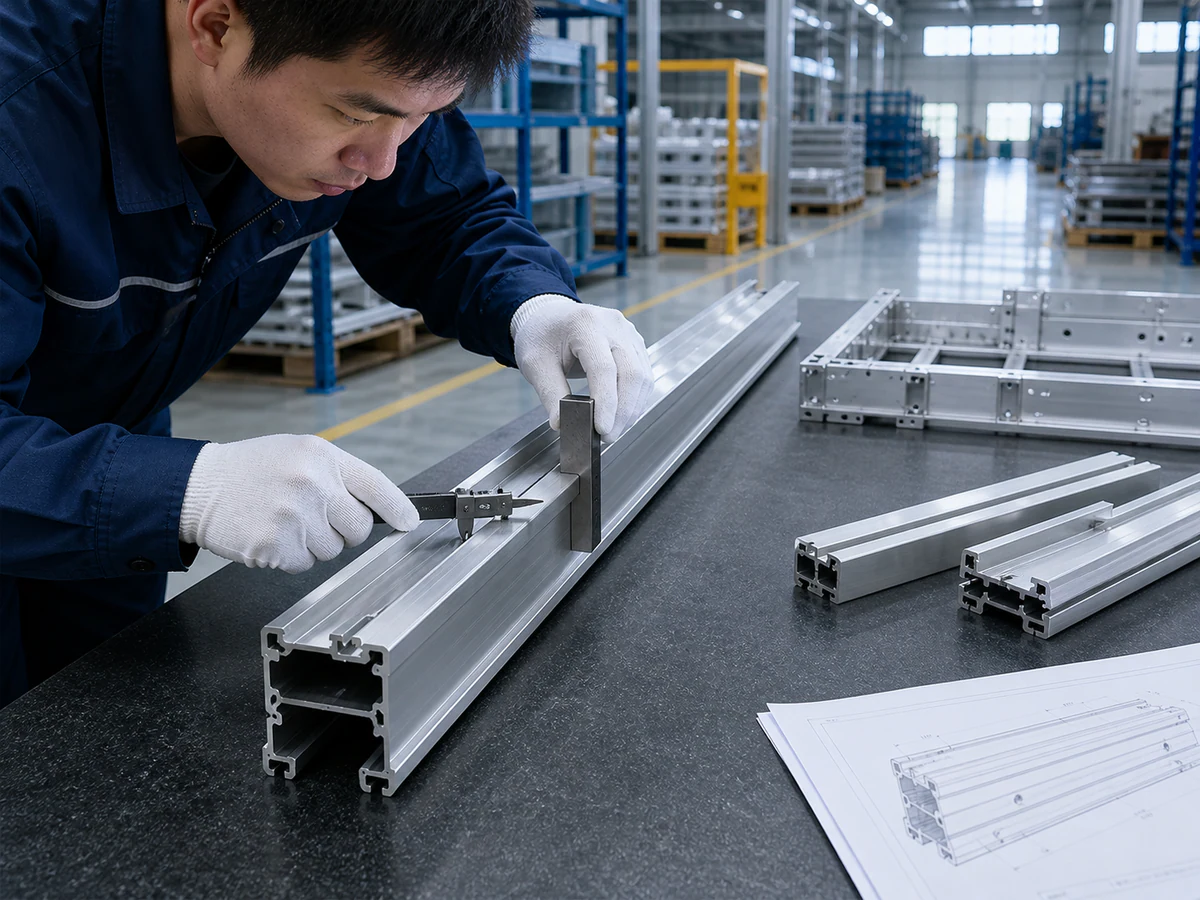
The roof approval stays with the equipment and installation team
After the loose component passes its drawing and hardware checks, the installation team still owns the outdoor-unit support decision. A Daikin installer guide for one heat-pump family tells installers to check the strength and level of the installation ground and secure the unit according to its foundation drawing. Other units and roof systems require their own instructions. Wind restraint, drainage, vibration isolation, weatherproofing, anchorage and roof capacity cannot be certified by a cut-length report.
The purchasing handoff should therefore carry two distinct approvals. The cutting supplier reports the identified extrusion, accepted length and end condition, first-off evidence and any proposed tooling or fixture limits. The support-system designer or installer confirms the complete kit or assembly, mating fasteners and site-specific load path under the applicable unit manual. If either document is missing, keep the component quote conditional and do not describe it as a ready-to-install support.
Send the drawing that lets a saw supplier answer the right question
For a machine review, send Jiurun the released loose-rail cross-section, stock length, target cut lengths, cut angle, finish condition, expected batch mix and the permitted inspection method. State whether hardware must enter from a cut end and provide a representative rail and mating item for a trial. Ask what the proposed aluminium profile cutting machine can demonstrate on that exact material. Keep the roof, unit and mounting-system approval with their responsible parties. You can send the drawing and cutting requirement to Jiurun for a configuration review; do not treat a saw quote as an installed-heat-pump approval.