
Grow light aluminum bar cutting is a blank-making step within a lighting system, not a qualification of the finished fixture. A bar can carry LED boards, a lens or cover, a seal and heat-dissipating fins. The buyer needs to define the actual extruded stock and the interfaces that must survive cutoff before asking a saw supplier for cycle time or a machine recommendation.
Two manufacturer examples show why the stock route matters. Hishine describes a foldable grow light with one-piece extruded aluminum bars, separate driver placement and sealed light bars. Cooltron describes a linear grow-light heat-sink assembly using slim aluminum extrusion bars and hinged light-bar combinations. These are external product designs; they are not Jiurun customer projects, approved cut drawings or evidence that either fixture uses the same saw setup.
Grow light aluminum bar cutting starts with a released section
First confirm whether the purchased component is a straight extrusion, a forged or machined heat sink, a complete light bar, or a fabricated multi-part housing. Those routes do not share a single cutting plan. If the OEM buys finished sealed bars, the relevant purchase may be a fixture or component assembly rather than loose extrusion blanks. If it buys extrusion stock for in-house assembly, obtain the section drawing, alloy and temper, finish, stock length, straightness condition and part revisions. Include a physical stock sample so the supplier can see thin fins, grooves and clampable lands.
Mark each bar family separately. A heatsink extrusion may have a broad mounting surface, fins on the opposite face and narrow channels for a lens or end cap. Another section may use an enclosed cavity or a completely different cover interface. Measure finished length from named datums, not the overall fixture width. The full fixture can include end caps, hinges, connectors and a central driver that change its assembled size without changing the extrusion blank length.
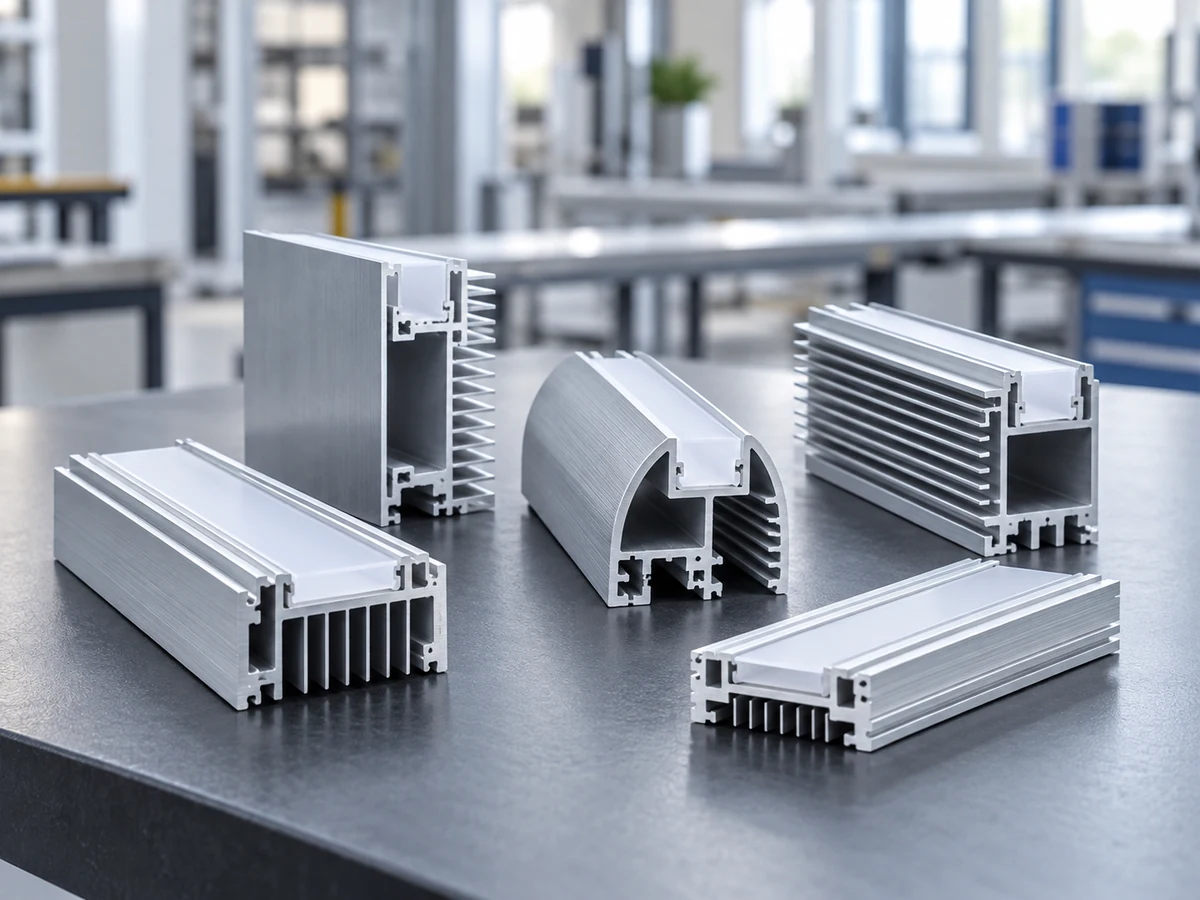
Protect the fin field and cover channel during cutoff
The saw has to grip the section without flattening a fin field or marking a visible coating. Document which surfaces can touch clamps, where sacrificial pads are allowed and whether the section needs a shaped support. A thin fin may vibrate or trap chips; a cover groove can collect debris or be deformed by careless handling. Ask the vendor to show the clamp and support concept on the actual supplied profile, not on a convenient solid bar.
Define the cut-face acceptance criteria around assembly. Finished length, end squareness or specified angle, burr limits and surface condition should be measured against the drawing. Where an end cap, lens or seal mates to the cut end, check that the profile remains open and the sealing land is free of chips and damage. A clean-looking end in a photograph cannot establish any numeric tolerance, seal compression, moisture rating or heat transfer value.

Separate the bar, optics and electrical scopes
A grow-light bill of materials may include the extrusion, LED board, driver, lens or diffuser, seals, end caps, hinges, cable routing, suspension hardware and packaging. The saw supplier can quote eligible blanks and agreed secondary operations. It cannot infer the finished light’s electrical safety, optical distribution, moisture protection or crop outcome from a cut sample. Assign each downstream operation and acceptance owner explicitly.
Hishine’s example includes a driver separated from the light bars, hinged connections and moisture sealing. Cooltron’s example likewise describes a complete heat-sink assembly rather than a loose cut stick. An OEM should therefore state whether the RFQ is for saw-cut extrusion lengths, prepared bars with holes and end features, an assembled mechanical light bar, or a tested luminaire. Comparing prices across those stages without a common deliverable invites missing components and false cycle-time comparisons.
Run a representative sample before selecting equipment
Supply the shortest and longest bar variants, the most delicate fin or groove, the coated finish and the latest assembly drawing. Ask for a first-off cut from every materially different section and end condition. Record finished length from the agreed datum, burrs, fin damage, channel cleanliness, clamp marks and end-cap or cover fit. If the process must cut after coating, inspect the actual coated sample and define how exposed ends are treated. The thermal and environmental qualification remains the fixture manufacturer’s separate test.
Ask the machine vendor to describe blade and feed assumptions, support length, clamp contact, chip removal, changeover and sample inspection. Jiurun lists aluminum-profile cutting equipment, but a catalog family does not prove that a particular grow-light extrusion is suitable. Decide from a documented trial on the buyer’s real stock and agreed acceptance criteria.

This video from Jiurun Machinery’s own YouTube channel shows another aluminum cutting equipment scene. It is a process illustration, not footage of a grow-light bar trial or evidence about any fixture’s seal, thermal or electrical performance.
RFQ checklist for grow light aluminum bar cutting
- Identify every released extrusion section, finish and revision, and provide real stock samples.
- List blank lengths, quantities, end geometry, datums and allowed stock-yield assumptions by bar family.
- Mark protected fins, lens or seal channels, coating and clamp-contact zones.
- Separate saw cutoff from drilling, tapping, hinges, end caps, boards, drivers, seals and fixture testing.
- Specify sample checks for cut face, burr, damage, channel clearance and mating-part fit.
- Define forecast mix, batch size, changeovers, packaging and the acceptance owner for each deliverable.
Need to compare cutting routes? Contact Jiurun with the released bar section and sample stock. Request a written trial scope that distinguishes the cut aluminum blank from the completed grow-light assembly.
Common questions
Does a clean saw cut prove thermal performance?
No. Thermal behavior depends on the complete design and needs the fixture manufacturer’s validation. A saw trial can verify agreed blank characteristics and interfaces.
Can one setup cover every bar in a foldable light?
Only if the real section, length, end and clamp conditions have been checked. Different bar families or coated surfaces may need different support and inspection plans.
Who verifies moisture protection?
The owner of the assembled and sealed light bar. Cut-end condition is an input to that work, not a moisture-rating test.