
Greenhouse climate screen profile cutting is a cut-blank purchasing decision inside a larger screen-system project. The aluminum profile can carry a cloth edge, a guide, a seal or a connection to the drive arrangement. A saw-cut length therefore needs an approved profile reference, an end datum, a protected contact plan and a receiving test. This guide helps a greenhouse screen installer or component supplier prepare an RFQ for the metal cutting step. It does not design a screen installation, approve a greenhouse structure or establish climate performance.
System identity comes first. Van der Valk Horti Systems describes a screen profile with separate chambers for wire-guide blocks and cloth strips, plus choices of screen attachment. TGU lists several aluminum screen-profile types for professional greenhouse shading systems. These are examples of different manufacturer-defined systems, not interchangeable drawings for a Jiurun saw trial. Request the actual approved section and revision for the job.
1. Name the screen system and the part being bought
Start with the greenhouse bay or screen-section schedule, the screen supplier, system family, profile type, and current drawing revision. Identify whether the member carries a cloth strip, uses clips, supports a seal or guides another component. Record each part number and its place in the assembly. A profile intended for a different screen family can look similar at a distance but have different chambers and end connections. Do not let a saw supplier select a replacement merely from a photograph or an overall width.
Separate the aluminum member from the screen fabric, drive tube, wire, guide blocks, clips and sealing parts. Those items may be supplied by different companies and may be installed after cutting. Ask the system owner which surfaces and cavities must remain undamaged, which accessories arrive pre-fitted, and which fit checks it will perform. The approved screen manufacturer or project engineer retains responsibility for the complete installation.

2. Compare standard lengths, cut blanks and prepared kits
Ask whether the project can use the screen-system supplier’s standard profile lengths. TGU’s published listing includes 6.40 m lengths for several named types; that is a catalogue example, not a universal stock length. If the approved standard member fits the released layout, buying it can avoid another cut, exposed end and inspection step. If custom lengths are required, compare a factory-cut member with a site-cut member and assign the measuring, edge finishing and acceptance work to a named party.
A prepared kit is a different purchase from a pile of metal blanks. A kit may include matched lengths, location labels, end treatment and associated parts. The RFQ should say whether the saw shop delivers individual blanks, identified member sets or a complete prepared kit. Compare supplier quotations at the same accepted hand-off stage. Do not treat the cheapest cut-length price as the cost of an installed screen system.
3. Release the cut datum and end geometry
For each member, provide the drawing revision, incoming stock condition, finished length, quantity and datum face. Mark which end is measured, whether cuts are square or angled, whether left and right members differ, and whether a connector or seal needs an untouched allowance. Do not calculate a profile length from a greenhouse bay width unless the screen-system designer has released that conversion. Project span, cloth width and metal blank length are distinct dimensions.
Define the acceptable cut face separately from length. State limits for squareness or angle, burrs, damaged lips, crushed chambers, scratches on visible faces and remaining chips. If a later operation drills, slots or connects the member, label the saw-cut blank as an input to that operation. A positioning number in a machine brochure is not proof of the finished screen member’s dimensional acceptance.
4. Protect chambers, seals and contact faces in the saw trial
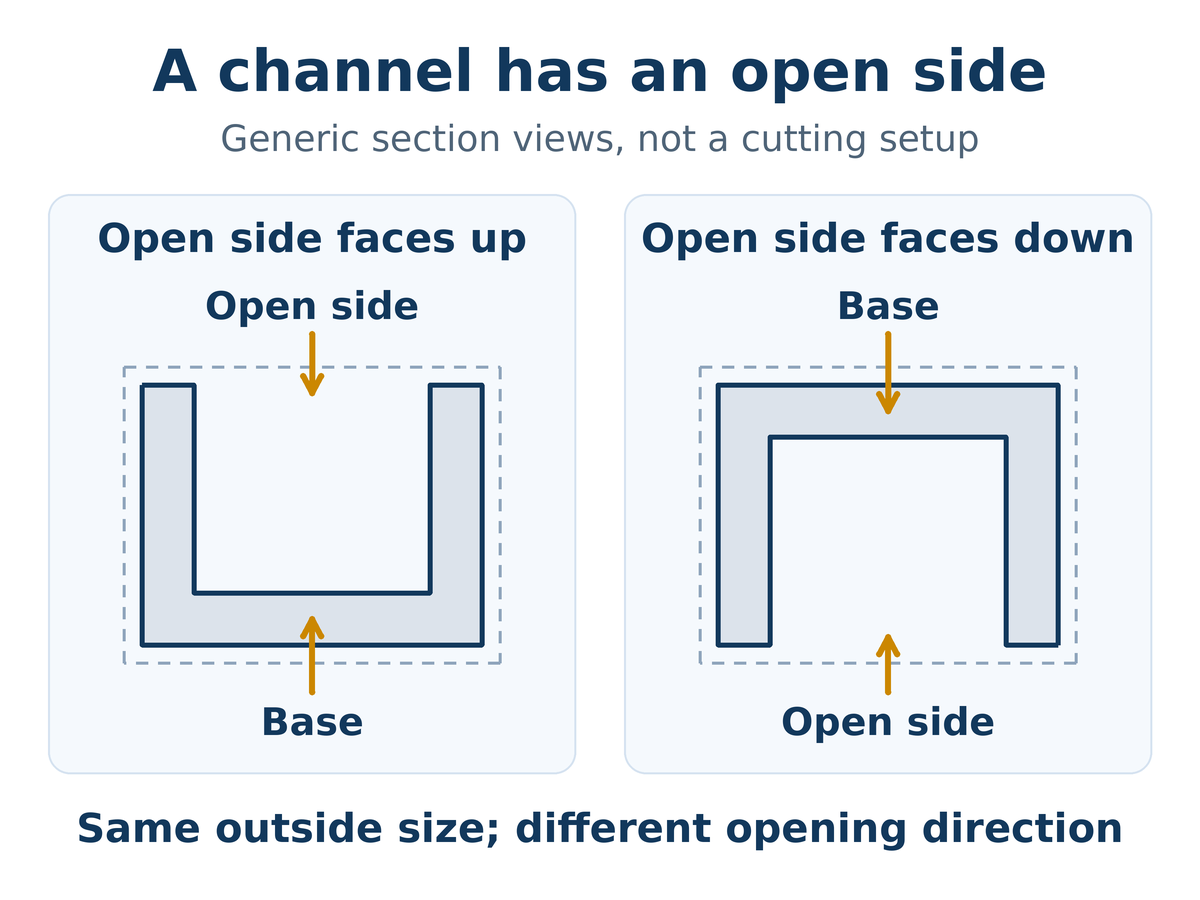
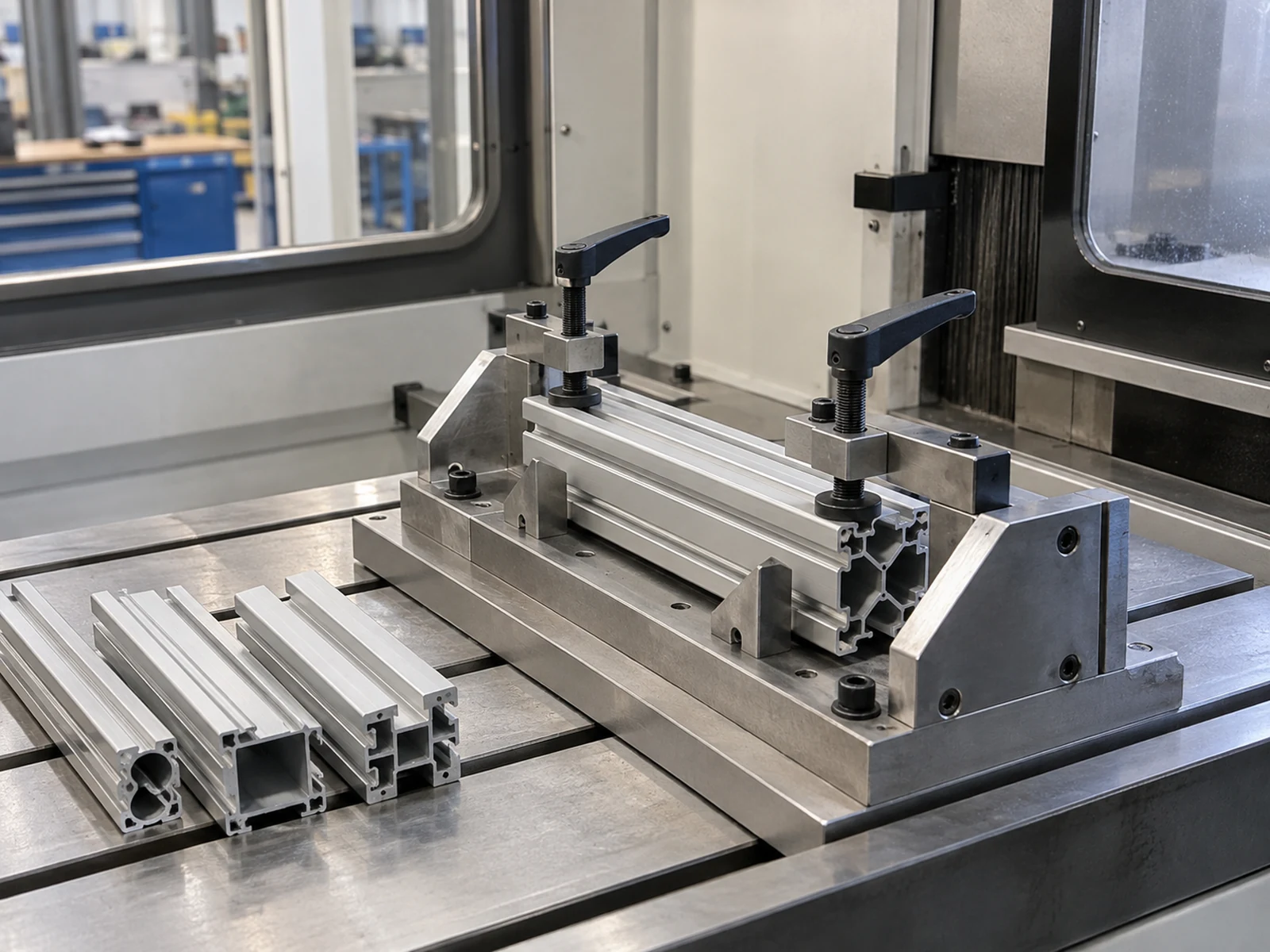
Send a physical sample or a dimensioned cross-section to the saw supplier. Mark the surfaces the table, fence and clamps may touch. A narrow slot or open chamber can deform under a clamp that works well on a closed rectangular tube. An already fitted rubber seal may change where the stock can rest or where a blade can enter. The supplier should show a stopped setup and explain support pads, clamp locations, chip clearance and the path of both the incoming length and the short cut piece.
The drawing must decide what can be removed or covered for cutting. The saw operator should not improvise an attachment change to make an unfamiliar profile fit. If the actual screen member has a pre-fitted seal, guide or connector, test that exact incoming state. A trial on bare extrusion does not prove the process for a finished or accessorized member.
5. Define a first-off inspection the buyer can witness
Before volume cutting, request first-off pieces from the actual stock lot. Include the shortest and longest released members and any section or finish variant that changes support or blade contact. Record the machine setup, fixture contact, blade, feed plan and inspection method with the sample identity. Measure cut length from the released datum and inspect the lip, cavity and seal condition at the cut end. If the first piece fails, document the correction and cut a new sample; do not relabel the failed trial as acceptable production.
Have the screen-system owner or its appointed assembler check downstream fit with the specified guides, clips and mating members. That fit review is not the same as a saw-shop dimensional report. Neither result alone establishes screen movement, fabric tension, shading, wind behavior or greenhouse structural approval. Assign those decisions to the responsible system supplier and project engineer.
6. Keep revision, member location and packing together
A correct cut length can still be unusable if it arrives in the wrong screen section. Label the approved system, profile type, drawing revision, lot, member location, orientation and quantity. Preserve any pairing instruction for adjacent members and keep finish batches separate when the project requires a consistent appearance. Pack long profiles so the chambers, seals and visible faces are protected during handling. Agree how the receiver reports a mixed, bent or scratched member and who authorizes replacement.
When a design revision changes the screen attachment route, quarantine old stock and open purchase orders until the system owner decides whether each member remains usable. Van der Valk’s example distinguishes clip attachment from a later cloth-strip route; it does not authorize another product to change routes. A revised blank needs its own released section and trial evidence if its geometry or incoming state changes.
7. Compare the saw investment with the actual cut portfolio
A factory buying an aluminum saw should calculate more than a single profile’s cut time. List the approved section families, stock lengths, typical and extreme finished lengths, annual batch sizes, finish states and changeovers. Ask for a trial across the real portfolio, including the most delicate chamber and longest supported stock. Include operators, fixtures, blades, scrap, inspection, packing space and rework in the cost comparison. If the business only needs occasional prepared screen kits, outsourcing those kits may be more practical than owning a dedicated station.
The broader greenhouse-manufacturing saw guide covers roof and sidewall component packages. The roof-vent frame guide addresses a different moving assembly. This page is limited to climate-screen aluminum profile cut blanks and their hand-off evidence.
Watch a related Jiurun aluminum-profile saw
The embedded video is from Jiurun Machinery’s own channel. It shows general aluminum-profile feeding and cutting equipment. It is not a greenhouse-screen profile trial, a specified machine configuration, a customer order or evidence of screen-system performance.
RFQ checklist for greenhouse climate screen profile cutting
- Approved screen-system supplier, profile type, part number, section drawing and revision.
- Incoming stock length, alloy and finish as specified by the system owner, plus any pre-fitted seal or accessory.
- Cut-list quantity, length datum, angle, orientation and member-location identity.
- Allowed support and clamp contact, protected chambers and visible surfaces.
- Cut-end, chip, burr, crush and scratch acceptance criteria with first-off inspection method.
- Downstream guide, clip, cloth, drive and installation responsibilities outside the saw quote.
- Receiving labels, packing, rejected-part handling and revision-change procedure.
For a bounded machine review, send JiurunCut the approved section drawing, a representative stock sample, cut list and acceptance criteria through the contact page. We can discuss the saw operation and a sample-cutting plan. The screen-system supplier remains responsible for the finished installation and its performance.