
Gravity flow rack aluminum frame cutting starts with a surprisingly important question: which pieces in the released rack drawing are actually aluminum extrusion blanks? A flow rack can combine uprights, crossmembers, inclined lane supports, roller tracks, connectors, stops, wheels, bins, and signage. A circular saw can prepare approved aluminum members to length. It does not establish the lane slope, load rating, first-in-first-out behavior, or safety of the assembled rack. This guide helps an OEM buyer separate those responsibilities before requesting a saw trial or a cut-part quotation.
The Bosch Rexroth aluminum-profile overview shows flow racks, Kanban flow racks, and workstations as distinct applications of its profile system. Its aluminum framing page also groups flow racks with material shuttles. These references establish the application context; they are not a cutting specification for your design or a performance claim for Jiurun equipment.
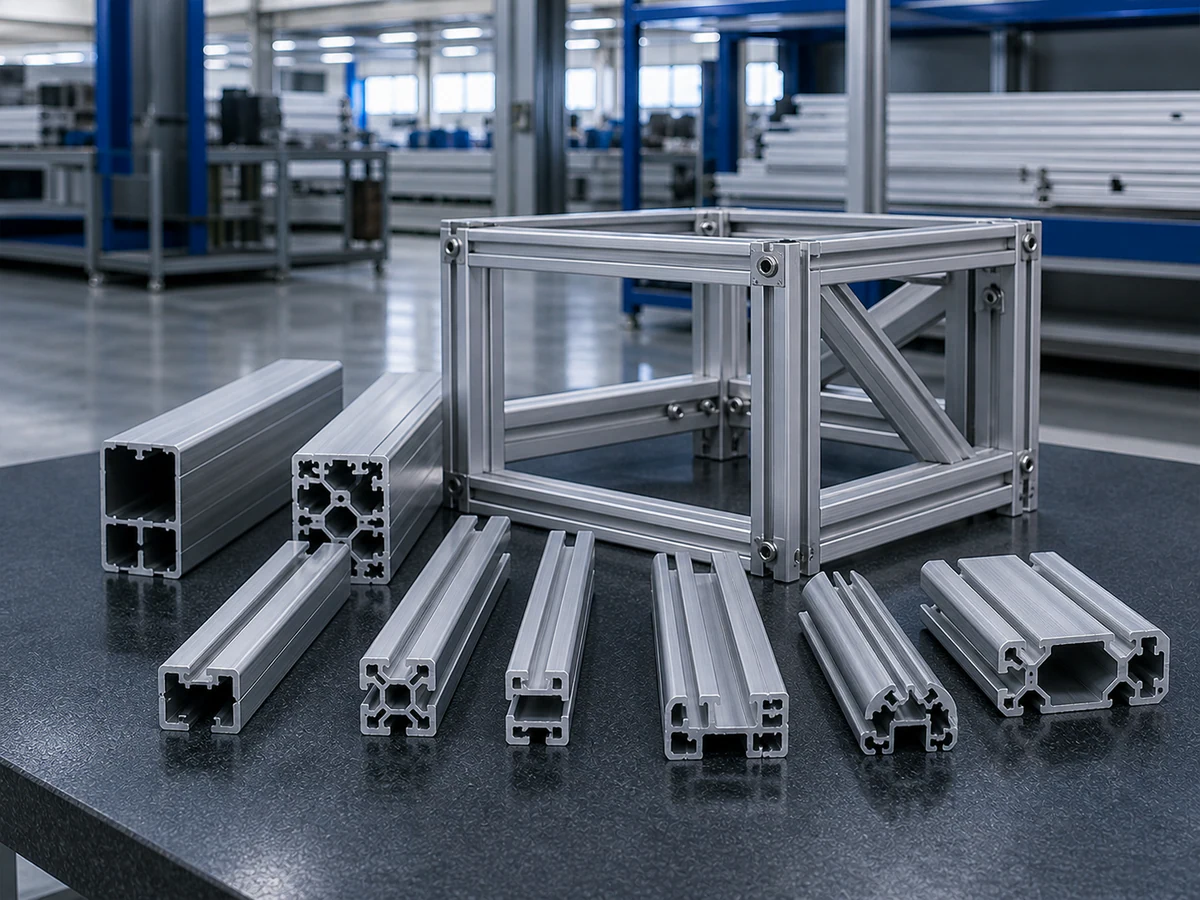
Gravity flow rack aluminum frame cutting: freeze the configuration
A request for “one rack” is not enough to calculate saw capacity. Ask the rack designer to identify the revision, overall envelope, number of levels, lane count per level, loading and picking faces, mobile or fixed base, and the approved connector system. Record whether each level is horizontal, gravity fed, or mixed. This is an input checklist for quoting, not a proposal to set slope or capacity. Those decisions belong to the system designer.
Create a separate line for every extrusion family. Uprights may share a cross-section but differ in length because of a taller replenishment face or a handle. Front and rear crossmembers may be cut alike in one variant and differently in another. Lane-support rails may be handed, stepped, or cut to clear brackets. If the supplier delivers a preassembled roller lane, that lane is a purchased component rather than a generic saw blank. Do not count plastic guides, steel brackets, fasteners, castors, or bins as aluminum cut parts merely because they appear in the same bill of materials.
2. Distinguish frame pieces from the flow mechanism
The frame supports the rack architecture; the flow mechanism controls container travel. A buyer should split the package into at least four columns: approved aluminum extrusion blanks, roller or slide-lane assemblies, connectors and end stops, and final rack assembly or testing. The saw inquiry should include only the first column unless an actual drawing assigns another metal member to the cutting operation. This prevents a nominal “rack quote” from hiding a purchased track, a punched or machined detail, or a finished-system acceptance task.
- Uprights: profile ID, cut length, end condition, orientation mark, and quantity per rack.
- Crossmembers and braces: family, length datum, square or angle end, and connection clearance.
- Lane-support members: approved section, left/right or front/rear identity, and the interface to track brackets.
- Not saw blanks: roller tracks, stop mechanisms, bins, guards, electrical features, and finished rack qualification unless separately specified.
3. Put each length on an unambiguous datum
A rack with many visually similar members is particularly vulnerable to mixed-length errors. Each drawing line should state the dimension between finished cut faces, whether a tolerance applies to an individual member or an assembled kit, and the orientation of any non-square end. For mitered parts, state the dimension convention explicitly: short point, long point, or another released datum. For an extrusion with a functional slot, identify the face that must contact the fence. A photo of a completed rack cannot replace these details.
Also disclose the longest incoming stock, shortest finished member, section envelope, wall thickness, protective surface condition, and whether the factory supplies stock as full bars or precut lengths. Check the saw manufacturer’s published envelope for the actual machine and configuration under consideration. A catalog figure for a different model, feed arrangement, or blade setup should never be copied into the rack’s acceptance plan.
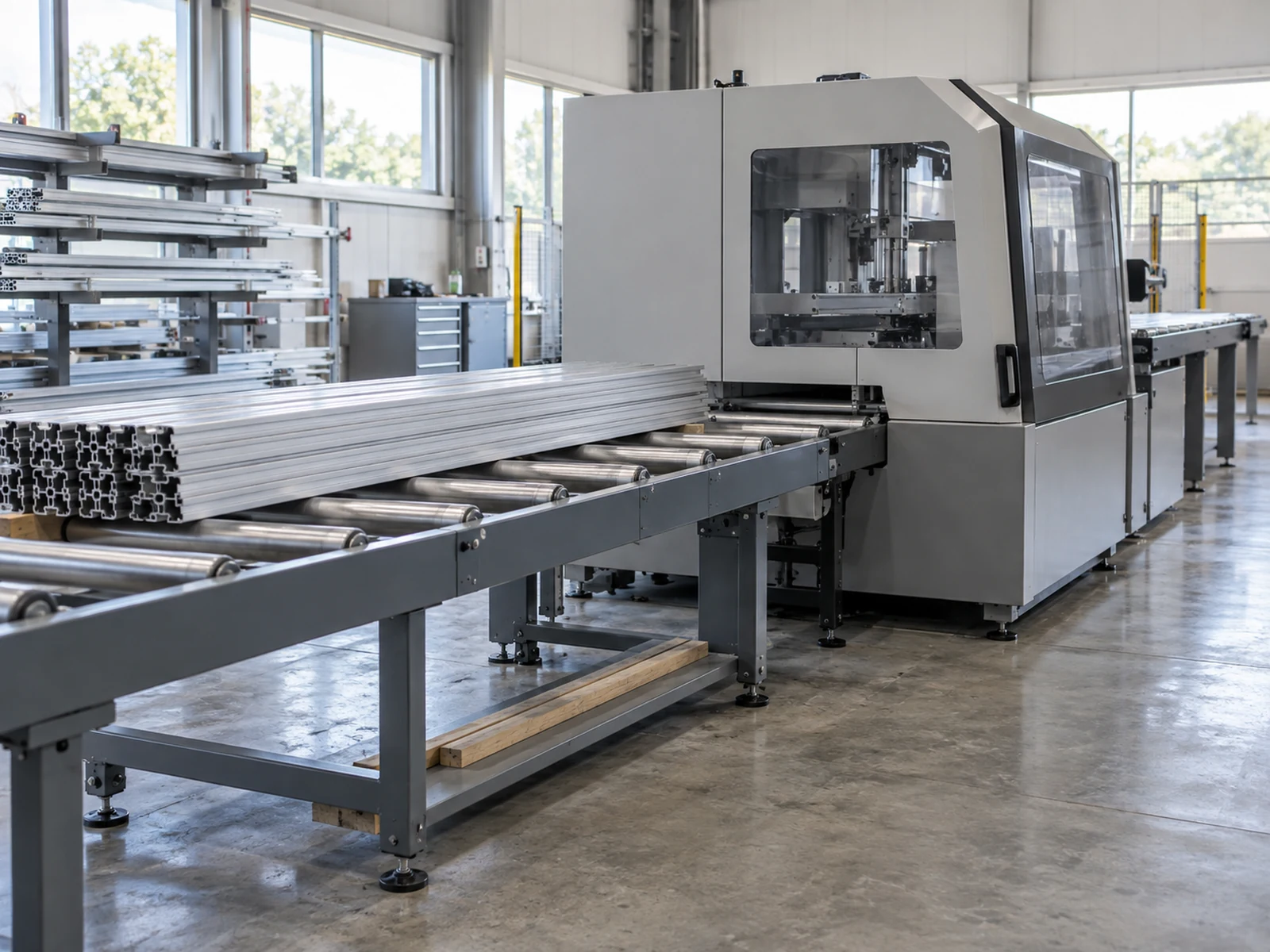
4. Test the contact and handoff, not only the nominal length
Long structural profiles can shift or mark if the support, side fence, top contact, and outfeed do not suit the actual cross-section. A trial plan should include the thinnest or least stable approved family, a long member, a short member, and any end that will be visible after assembly. Note the intended batch mix and changeover frequency. Compare first-off and repeat cuts using the buyer’s released gauges and measurement method. If a slot or connector pocket must remain clean, define its acceptable edge condition rather than writing “good finish.”
A saw demonstration can show that a cutting process runs; it cannot prove the profile fits a specified flow rack. The rack builder must still assemble a representative lane, inspect connector engagement and track alignment, and run the required product-level checks. Do not translate a single clean cut into a rack load rating or an ergonomic claim.
5. Decide the procurement route before buying equipment
There are three common routes. A buyer can purchase complete, approved flow-rack modules; buy a cut-and-labeled member kit with tracks and hardware supplied separately; or retain stock-to-member cutting in-house. The right comparison uses the actual annual variants, revision churn, available floor space, labor, scrap-handling method, and delivery needs. The lowest nominal price per cut may lose its advantage if the factory must inspect many mixed kits or repeatedly reset fixtures. Conversely, a bought kit may shift lead time and change-control work to the supplier. Compare complete landed and receiving costs rather than assuming one route is universally cheaper.
For gravity flow rack aluminum frame cutting in-house, ask where each cut member goes after the saw. Will it be staged by rack level, lane, or assembly cell? How are long and short members separated? What protects a visible face? The discharge and label scheme should be quoted alongside cutting, because a perfect blank placed into the wrong lane kit is still a production problem.
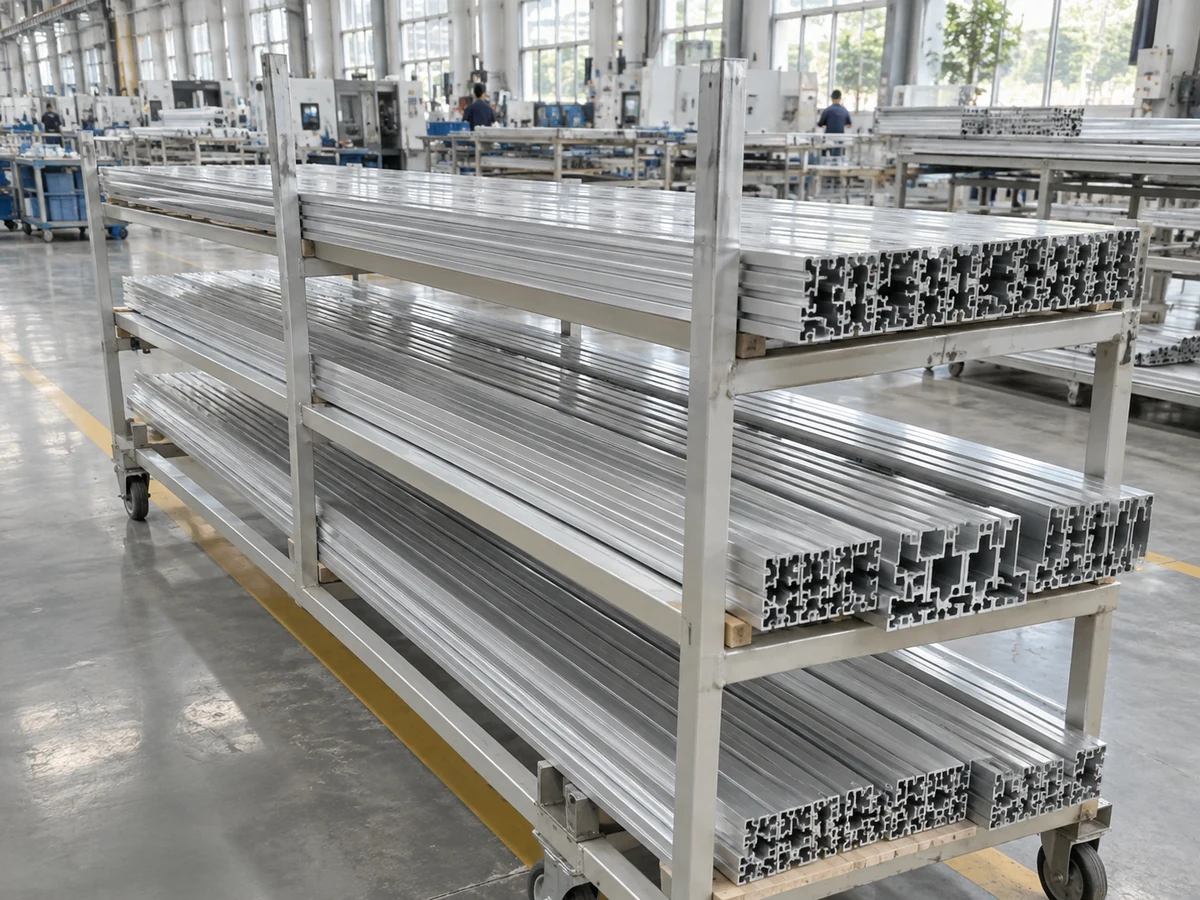
6. Make first-off acceptance measurable
Before the first production batch, request a documented first-off for each materially different family or setup. Keep the released drawing and revision beside the sample. Record the stock ID, orientation, machine setup, cut length and end condition, operator-visible defects, and measurement method. The buyer should choose the sample size and acceptance thresholds. If the downstream join requires drilling, tapping, or other work, mark it as a later operation; a saw-cut blank should not be quietly accepted as a finished assembly component.
For production, the lot traveler can group pieces by rack level or module while retaining their individual drawing numbers. A practical rejection loop identifies whether a nonconformance came from wrong stock, wrong length, wrong orientation, edge damage, label confusion, or a later assembly operation. Each cause has a different owner. This keeps the saw supplier from being asked to warrant functions that are outside the cut-blank scope.
7. Send a complete RFQ package
A useful inquiry contains the rack assembly drawing for context, the released cut-member list, extrusion cross-sections, stock length range, annual mix, finish protection requirements, inspection criteria, and a representative sample of each difficult member family. State whether the request is for a machine trial, a cut-parts service quotation, or both. Separate the cost of a feeder, support, outfeed, or fixture option from the base saw. Ask the seller to identify assumptions in writing and demonstrate the agreed sample set before any production commitment.
- Rack revision and module variant; lane count and fixed or mobile base for context.
- Part number, section drawing, material/finish, cut datum, quantity, and left/right identity for every blank.
- Shortest and longest stock and finished piece; required support and handling path.
- Defined first-off measurements, visible-face and edge criteria, and segregation/label format.
- Clear ownership for tracks, brackets, castors, assembly, and finished-rack validation.
For an industrial aluminum-cutting inquiry, contact JiurunCut with those released inputs and ask for a trial plan tied to the actual profile set. JiurunCut’s machine overview provides equipment context; suitability for a particular flow-rack blank remains subject to the drawings, configuration, and trial results.
Related saw demonstration
The video below is from the Jiurun Machinery YouTube channel and shows a general aluminum saw process. It is an equipment illustration only. It does not show the flow-rack design in this article, the listed extrusion families, a customer project, or measured rack or cutting performance.