
Glass railing base shoe cuts are a narrow manufacturing task inside a complete, engineered railing system. A saw may turn an approved aluminum base-shoe extrusion into identified cut blanks. It does not select the glass, approve an anchor, establish structural capacity, or certify an installed guard. Before buying a cutting machine or ordering cut lengths, separate the factory’s retained sawing work from the system supplier’s design, fabrication and installation responsibilities.
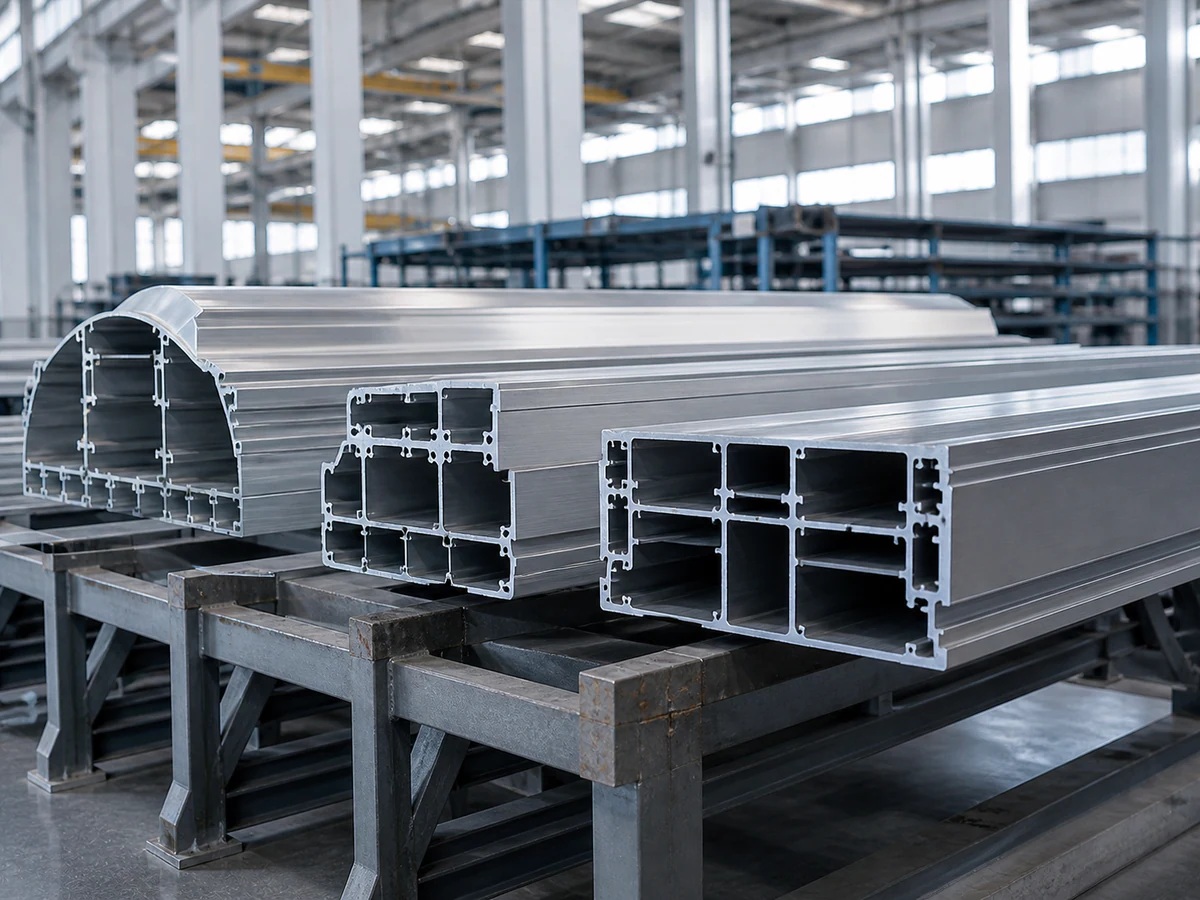
This guide is for aluminum-fabrication buyers and production engineers. The featured photograph shows unrelated large industrial aluminum sections for visual context; it is not a glass-railing base shoe, a specified project or a performance test. Use the current system drawing and the responsible engineer’s approval for every production dimension and safety-related decision.
1. Confirm whether cutting is actually retained in house
Compare three receiving routes. One supplier may deliver a complete, ready-to-install railing package. Another may supply base shoes already cut, drilled and finished. A third may provide approved stock extrusion and leave your factory to cut members before the system supplier or installer completes the remaining work. Only the third route creates a recurring saw requirement. Count the actual stock-to-blank volume by profile, length and shift before sizing equipment.
Balconette says its own glass-balustrade systems are supplied cut to size and ready to assemble. By contrast, CRL lists custom cutting and mitering for a particular aluminum base-shoe series. These are examples of different supply routes, not interchangeable systems or Jiurun process approvals. Ask the chosen supplier what arrives at your factory and what is already included in its quotation.
2. Release the exact base-shoe profile and system revision
Request the approved system name, profile code, revision-controlled cross-section and stock condition. Identify the glass-receiving channel, any wedge or glazing interface, cladding interface, fixing zone, cover piece and end cap on the real drawing. The same visual outline can conceal different internal features. A generic U-channel, a rail-transit extrusion and a glass-railing base shoe cannot be substituted on appearance alone.
Record alloy, temper and finish only when they are supplied by the system owner. Mark visible surfaces, protective film, permitted clamp faces and surfaces that must not be marked. If a stocked base shoe is predrilled or slotted, show the hole pattern and the permitted cutting region. CRL’s product information distinguishes drilled and undrilled supply options; do not assume every length can be trimmed without affecting a required fixing feature.
3. Put each cut length on a drawing datum
For each member, state whether the quoted length is overall extrusion length, a long-point miter dimension, a short-point dimension, a centerline reference or a site-measured finished distance. Draw the left and right ends and label their orientation. Record whether the piece is straight, mitered or supplied with a factory-prepared return. A list of numbers without end views is insufficient for a saw program or a receiving inspection.
Ask who owns the final site survey and whether any field-adjustment allowance is approved. A factory cut can be released when the system geometry and cut datum are fixed. A field cut belongs only in the selected supplier’s approved installation route. The cut list should also identify joint gaps, expansion provisions, drainage paths and end treatments where the responsible system designer requires them. The cutting-machine seller should not invent those values.
For a mixed order, use one line per profile and end condition: part ID, drawing revision, stock length, cut length and datum, quantity, side or location, finish, hole status and next operation. Keep provisional measurements visibly provisional instead of allowing them into a production program.
4. Protect the channel and long stock during sawing
A base shoe can be a long and relatively heavy extrusion with a channel that must receive glazing components. For the actual approved stock, map the support points, fence contact, clamp pads, feed route, blade clearance and cut-piece collection before a trial. Ask whether the machine can support the longest incoming and outgoing member without uncontrolled sag or twist. Check that chips can be removed from the channel and that clamping does not deform or mark a critical interface.
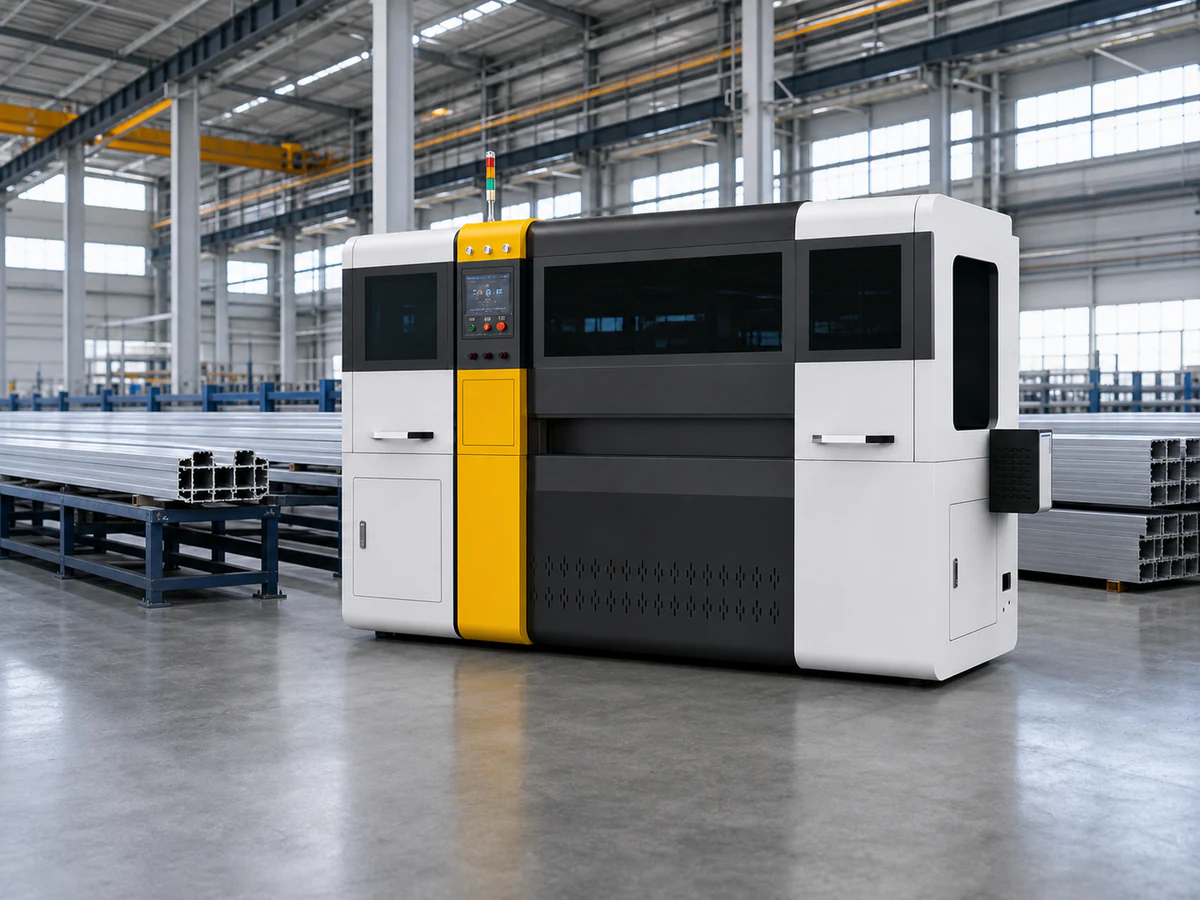
Use a stopped setup review first. Then run representative straight and mitered cuts, if both are in the released order. A machine brochure showing maximum cutting capacity does not establish that it can safely grip this particular cross-section, preserve the channel and meet the buyer’s accepted end condition. The long aluminum cut-part staging guide explains the separate receiving and handling questions for long members.
5. Separate a sound cut blank from an approved railing
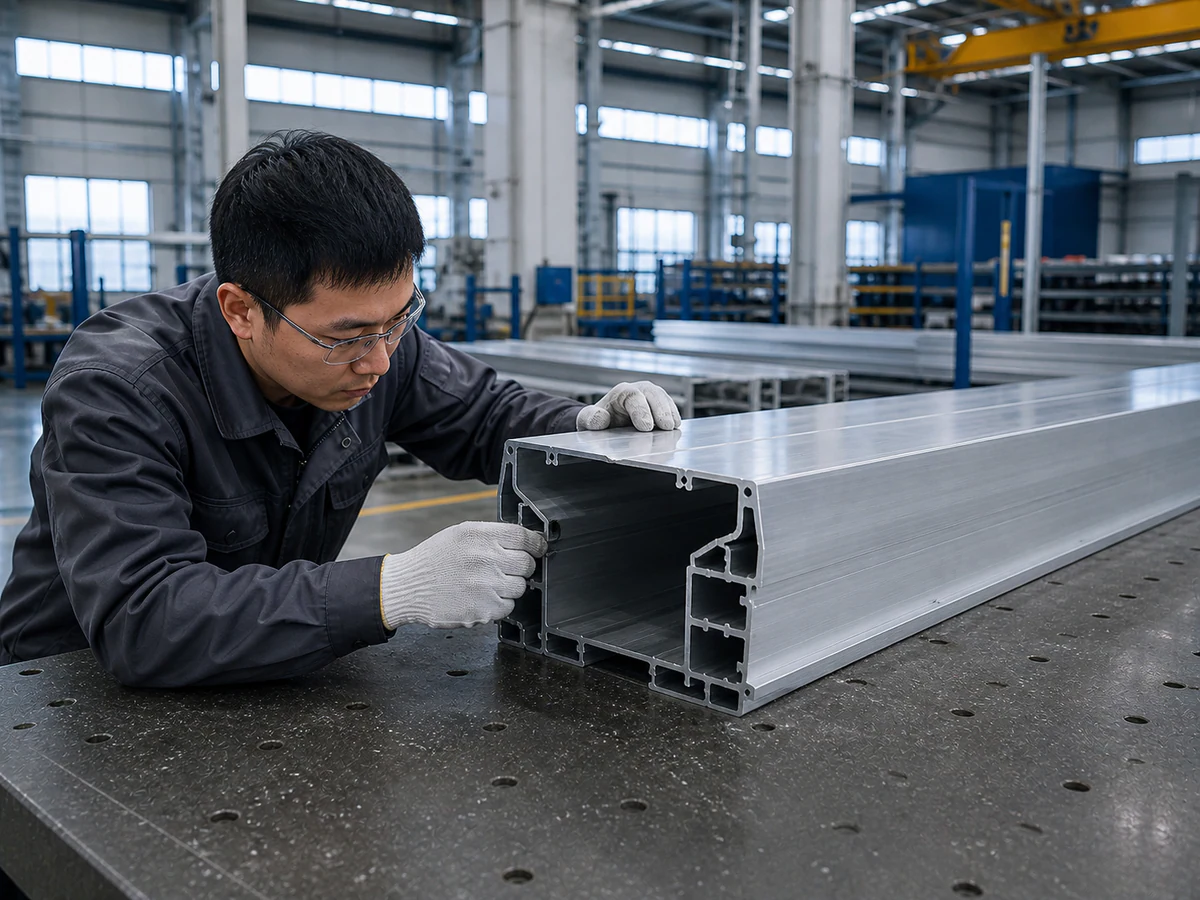
The trial record should name the actual profile and finish, stock lot, drawing revision, machine and blade setup, support arrangement, operator, cut orientation and sample identity. Inspect the cut blank against the released drawing: length from the defined datum, end condition, burrs, visible finish damage, channel obstruction and the status of nearby holes or slots. Let the system owner specify the measuring method and acceptance limits. A generic catalog accuracy number cannot replace them.
Photograph one accepted sample and one rejected sample where possible, with the part ID and measurement reference in view. If downstream drilling, milling, coating, cladding or assembly remains, state who performs and inspects it. Keep a saw-cut record separate from the system supplier’s glass, anchor, glazing and installed-guard approvals. Balconette’s explanation of its own base-shoe system shows how installation and glazing are a separate system-level step; it is not a general specification for other brands.
6. Compare quotations at the same output boundary
Do not compare a bare saw price with the price of a fully fabricated, predrilled and finished railing member. For each offer, mark the exact output delivered: full stock, saw-cut blank, drilled and finished member, or complete system kit. Add the real cost and responsibility for handling, fixtures, blades, changeovers, inspection, chip removal, labeling, packaging and downstream fabrication. The lowest machine price is not decisive if the required output boundary or validated profile mix differs.
Ask a machine supplier to describe the included support equipment, the actual profile range demonstrated and any exclusions. Ask the railing-system supplier to confirm which processing steps it permits outside its own supply chain. If the system is supplied ready to install, a separate saw may have no role in that order. If only blanks are required, do not burden a saw quotation with unapproved glass or anchor claims.
7. Release a usable glass railing base shoe cuts RFQ
Send a compact packet: approved system and profile revision; actual stock sample; section and end drawings; length and quantity matrix; finish and protected faces; existing holes or slots; required output boundary; accepted end, burr and surface criteria; longest and shortest members; and the named trial witness. List unresolved site measurements and approval owners separately. Ask for a trial on the real profile before committing to a cutting configuration.
If the profile or drawing is not released, compare a prepared-member or complete-system supply route first. When the sawing scope is real, send Jiurun the approved extrusion drawing and cut list for an equipment-fit discussion. The railing-system designer, engineer and installer retain responsibility for the safety-critical design, glazing, anchorage and final installation.
Watch a general aluminum-saw example
This video from Jiurun Machinery shows general aluminum cutting equipment. It does not demonstrate a glass-railing base shoe, this article’s material, a specified machine configuration, a customer project, an accepted trial or railing performance.