
Fume hood sash guide aluminum cutting is a narrow manufacturing task with a large system boundary. A saw may make a straight, approved guide blank, but it cannot establish sash balance, glazing retention or fume containment. Before asking for a machine quote, the hood maker must identify the exact replaceable member, its material, drawing revision and approved delivery level. Some hoods do not use an aluminum sash guide at all; this article applies only when the responsible designer has released an aluminum member for cutting.
That distinction is visible in manufacturer documentation. Hamilton’s SafeAire II maintenance manual labels left and right sash guides, a bottom sash frame, glass and the surrounding hood frame as separate items. Esco’s hood selection guide shows that sash mechanisms and materials vary across models. Neither source supplies a universal aluminum guide profile, cut length or Jiurun machine setup. Use the selected hood’s own documentation and approved sample as the controlling source.
Identify the exact sash guide and the party who owns the design
Start with the hood manufacturer, model, size, serial or configuration identifier and revision. Ask whether the request concerns new production, a service replacement or a redesign approved by the hood maker. A replacement for an installed hood is not simply a length taken from an opening. The existing guide may interact with a corner post, fasteners, glass edge, bottom pull, cable and counterbalance. Hamilton’s maintenance diagram shows several of those pieces separately; it does not authorize a third party to copy one piece without the governing drawing.
Confirm what the purchaser will receive: a raw saw-cut guide, a guide with drilled mounting features, a matched left/right pair, a service kit or an assembled sash. Put that supply level on the purchase order. If the original part is proprietary or the OEM sells a complete service kit, compare that route before paying to reproduce a profile. Cutting a similar-looking extrusion cannot establish interchangeability.
Release the section and distinguish material from appearance
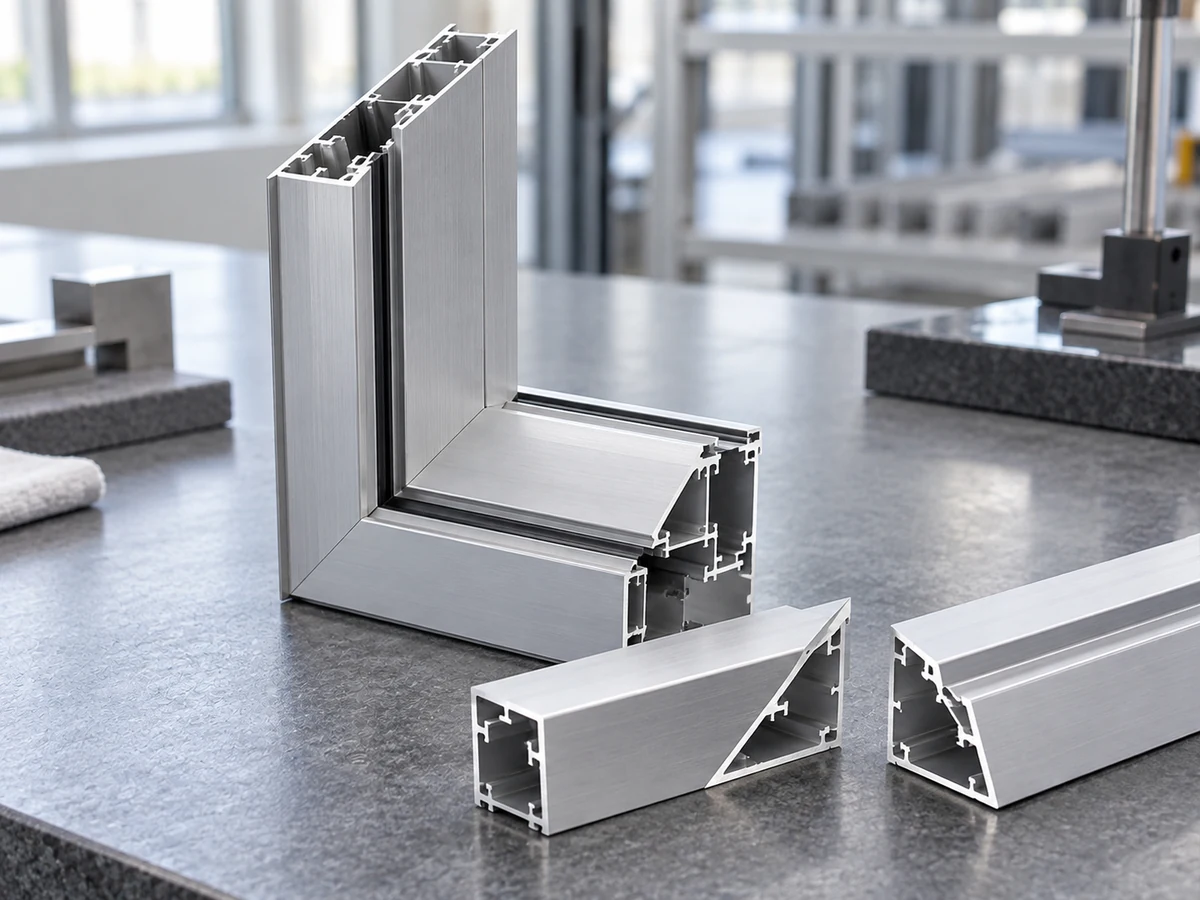
Request the approved profile drawing and, if available, an actual sample of the guide stock. Record alloy and temper where specified, extrusion source, coating or anodized finish, protective film and revision. Mark the faces that guide the moving sash, receive a seal or liner, carry fasteners, or remain visible. An outside width alone is not enough: wall thickness, return lips, internal ribs and screw channels can change both clamping and finished fit. A material that merely looks metallic in a catalog image may not be the aluminum stock in the RFQ.
Document the direction of travel, front and rear faces, inside and outside orientation and any left/right handed version. Name the surfaces a fixture may support or clamp without damaging a running face or finish. If the guide incorporates a plastic wear insert or seal, clarify whether it arrives preinstalled, is inserted after cutting or belongs to another supplier. Keep those items out of a saw-only quotation unless the equipment and process have actually been specified for them.
Define each blank length from a real datum
Give each part number its own end-to-end definition. Is the controlled dimension the overall guide length, the distance between end faces, a locating-hole datum, or an installed dimension between upper and lower stops? Where corner posts or covers overlap the guide, show the relationship on the drawing and assign the resulting blank length to the design owner. A nominal hood height is not automatically the saw-cut length.
Mark end A and end B, the required square or angled geometry, cut-face condition, permitted burr, measured dimension and inspection method. If the two guides are mirrored, write the hand and orientation next to each cut list entry. If a replacement is being quoted, ask the hood maker to resolve wear, previous field modifications and model revisions before copying an installed component. A repeatable saw feed cannot correct an incorrect datum.
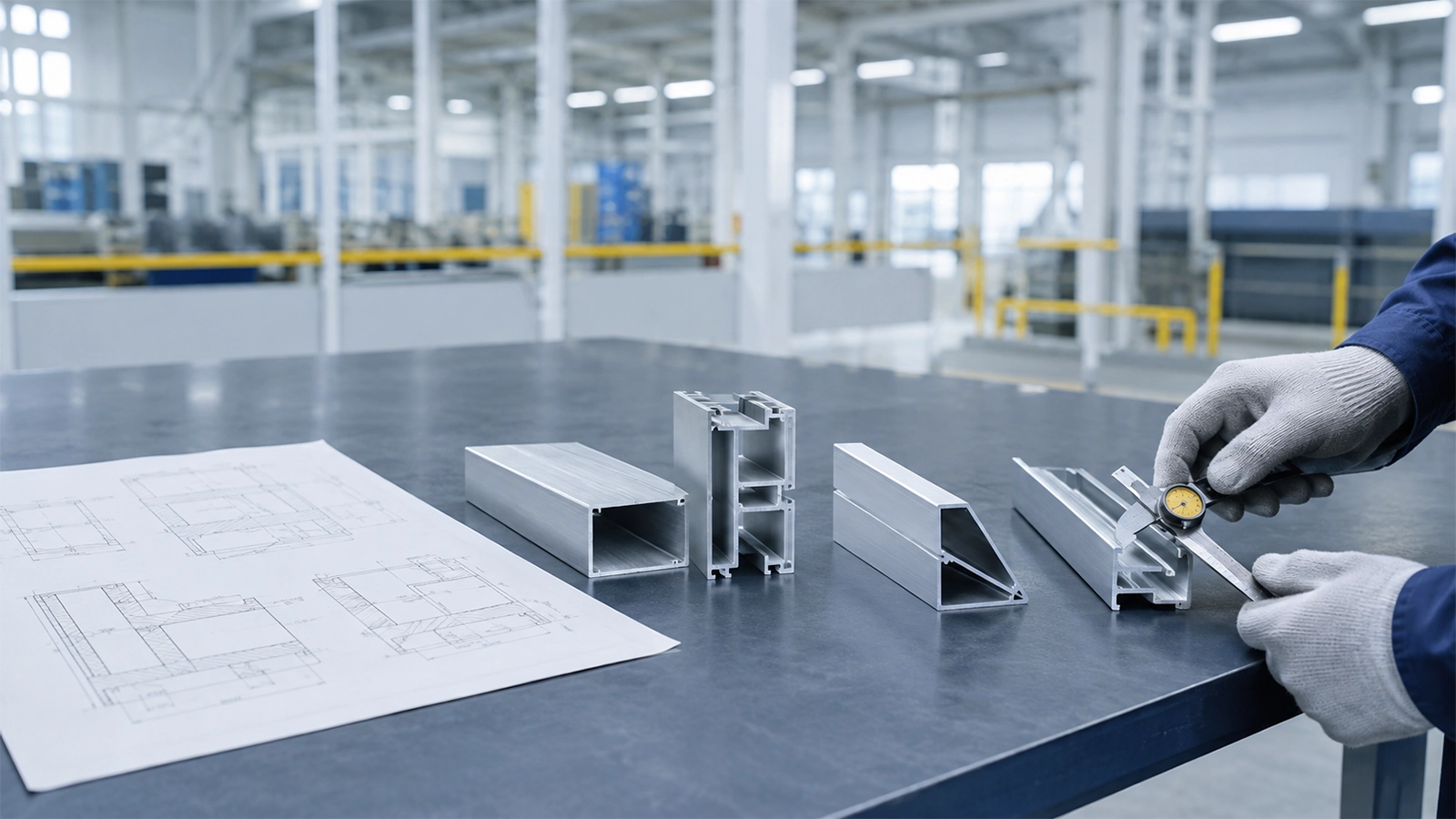
The quotation packet should pair a released drawing with stock dimensions, minimum and maximum blank lengths, batch quantity, end geometry, inspection tolerance and acceptable sample. Our cut-part drawing gap guide gives a broader checklist for finding missing production information before a trial.
Separate the saw cut from holes, reliefs and sash assembly
A straight circular-saw cut establishes the blank’s end geometry. It does not automatically create mounting holes, countersinks, local slots, drain details, formed tabs or a wear surface. List every secondary feature with its own drawing, station and acceptance method. A miter across the whole end is different from a local cutout near a corner. Do not assume that a saw capable of cutting an angle can also machine a pocket.
Likewise, keep glass, gaskets, sash cables, counterweights, fasteners and motion adjustments in a separate assembly responsibility matrix. Hamilton’s service instructions describe removing guides while holding the glass and subsequently checking alignment in the guides. Those are model-specific maintenance steps and a reminder that the guide is part of a moving, safety-relevant assembly. They are not a cutting procedure or permission to alter a hood. The hood maker and qualified service or commissioning parties must control assembly and use.
Trial the actual stock and verify the cut face
Use released material from the intended supply lot for a first-off trial. Inspect whether the extrusion sits securely on the support, whether clamps touch only approved faces, and whether the cut creates wall collapse, section movement, burrs, scratches or coating damage. Measure from the stated datum at the temperature and method agreed by the buyer. Keep the first-off specimen and settings traceable to the drawing revision and stock batch.
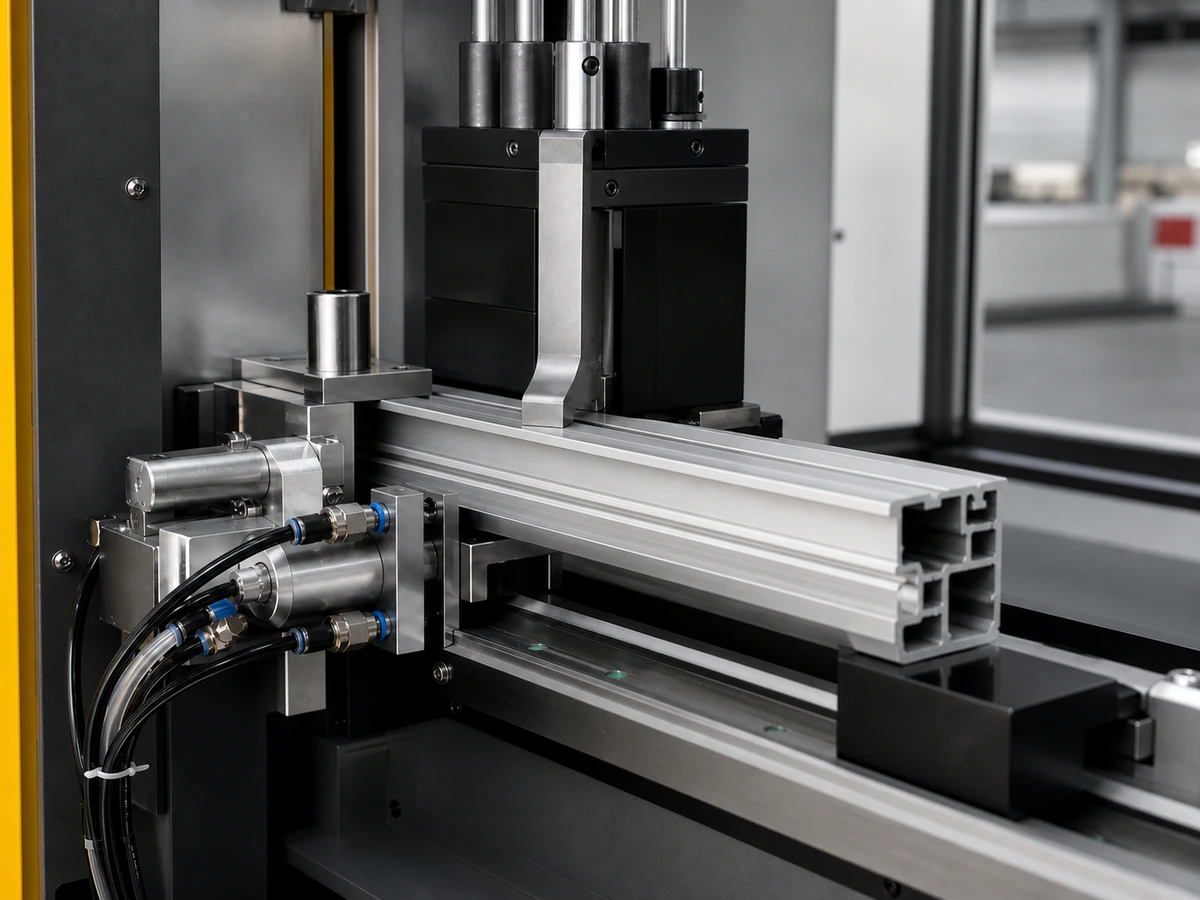
For a thin or asymmetric guide, workholding may be the decisive issue. A fixture that squeezes a running channel can produce a numerically correct length yet leave a sash that binds. Ask the saw supplier to show the actual support and clamp plan on the submitted profile, including any insert or backup required. If the saw trial passes the blank measurements, the hood maker should still inspect a small assembled set for guide alignment, fastener access and sash travel under its approved procedure. Do not infer airflow, containment or operator safety from a cut sample.
Decide whether to buy blanks, a kit or an in-house saw
Three routes are worth comparing. An OEM guide or sash kit may carry the correct design revision and service instructions. A specialist supplier may deliver approved cut and machined guides to the hood manufacturer’s print. An in-house aluminum saw makes sense only if the factory retains enough released, repeatable guide blanks to justify stock handling, first-off checks, change control and the downstream operations. Compare total responsibility and accepted parts, not only the nominal cost of a single cut.
For an equipment inquiry, give Jiurun a real profile sample, drawing, cut schedule, lot pattern and the expected range of guide lengths. Ask for a support, feed and clamp review and for a clear list of features outside the quoted cutting operation. A video of another aluminum extrusion job shows a process category, not proof that a particular fume hood section, finish or safety requirement has been validated.
RFQ checklist for fume hood sash guide aluminum cutting
- Hood maker, model, configuration, serial or revision, and written authority for a new or replacement part.
- Confirmed guide material and approved aluminum extrusion drawing or physical sample; separate left/right variants.
- Delivery level: saw-cut blank, machined guide, paired guides, kit or completed sash assembly.
- Section features, functional running faces, finish, protective film, permissible support and clamp zones.
- Length datum, end A and end B geometry, quantity, variation and inspection method for each part number.
- Separate responsibility for holes, slots, wear inserts, seals, glass, cables, counterbalance and installation.
- First-off stock, mating components, drawing revision and named approval owner.
- Hood-maker acceptance and qualified service or commissioning plan for sash travel and containment, outside the saw trial.
A complete packet gives the saw supplier a quotable blank and leaves system fit and safety decisions with the people responsible for the hood. If the material or design is still uncertain, resolve that gap before programming a production batch.
Related aluminum-profile cutting video
The Jiurun video below shows aluminum-profile feeding and cutting equipment. It is a related process illustration only. It does not show this fume hood, sash guide, customer, approved fixture, trial or containment performance.
Illustrative Jiurun cutting process; no fume hood application or safety claim.
Send the released guide packet for a cutting review
When the hood maker has released an aluminum guide and its inspection requirements, send Jiurun the drawings, sample stock and cut schedule. We can review the cutting stage against the actual section and identify workholding questions and operations that belong elsewhere. The hood designer and qualified service team retain responsibility for the finished sash and hood acceptance.
Source notes
Hamilton SafeAire II operation and maintenance manual, especially the sash-glass replacement diagrams and maintenance section, shows separate guides, sash glass, bottom frame and related hardware for that model. Esco’s ductless fume hood selection guide illustrates that sash mechanisms and materials vary by product. Neither publication specifies Jiurun equipment or a universal aluminum cut list; confirm the actual project with its responsible manufacturer.