
Forearm crutch aluminum tube cutting is an early manufacturing step, not a complete mobility-aid specification. A buyer can receive a batch of straight, cleanly cut tube blanks and still face trouble when a telescoping leg, forearm section, bushing, lock nut, cuff bracket, grip, or tip is assembled. The useful RFQ therefore separates the saw’s measurable output from the fit and safety checks owned by later operations and the finished-device manufacturer.
A commercial example helps define the boundary: Medline describes forearm crutches with independently adjustable leg and forearm sections, telescoping parts, internal bushings, external lock nuts, cuffs, and grips. That description illustrates why a tube-length order needs an assembly drawing. It does not describe a Jiurun customer, approved tube design, cutting test, or verified device performance.
Forearm crutch aluminum tube cutting starts with a cut list
Start with a part-numbered cut list. For each straight blank, state the alloy and temper supplied by the buyer, outside diameter, wall thickness, stock condition, nominal finished blank length, length tolerance, end squareness or angle requirement, burr condition, and the datum used for inspection. Identify whether the length is measured before or after any later forming, trimming, end fitting, or surface treatment. If two blanks share a diameter but serve different telescoping positions, give them separate part numbers and labels.
Ask who owns the final end condition. A saw can produce a specified blank length and an agreed end-quality check. It cannot infer the clearance needed for a bushing, the insertion depth under a grip, or the final height range from a product photograph. Put those dimensions on a released drawing or approved sample and state which operation creates each feature.
Keep telescoping fit separate from blank length
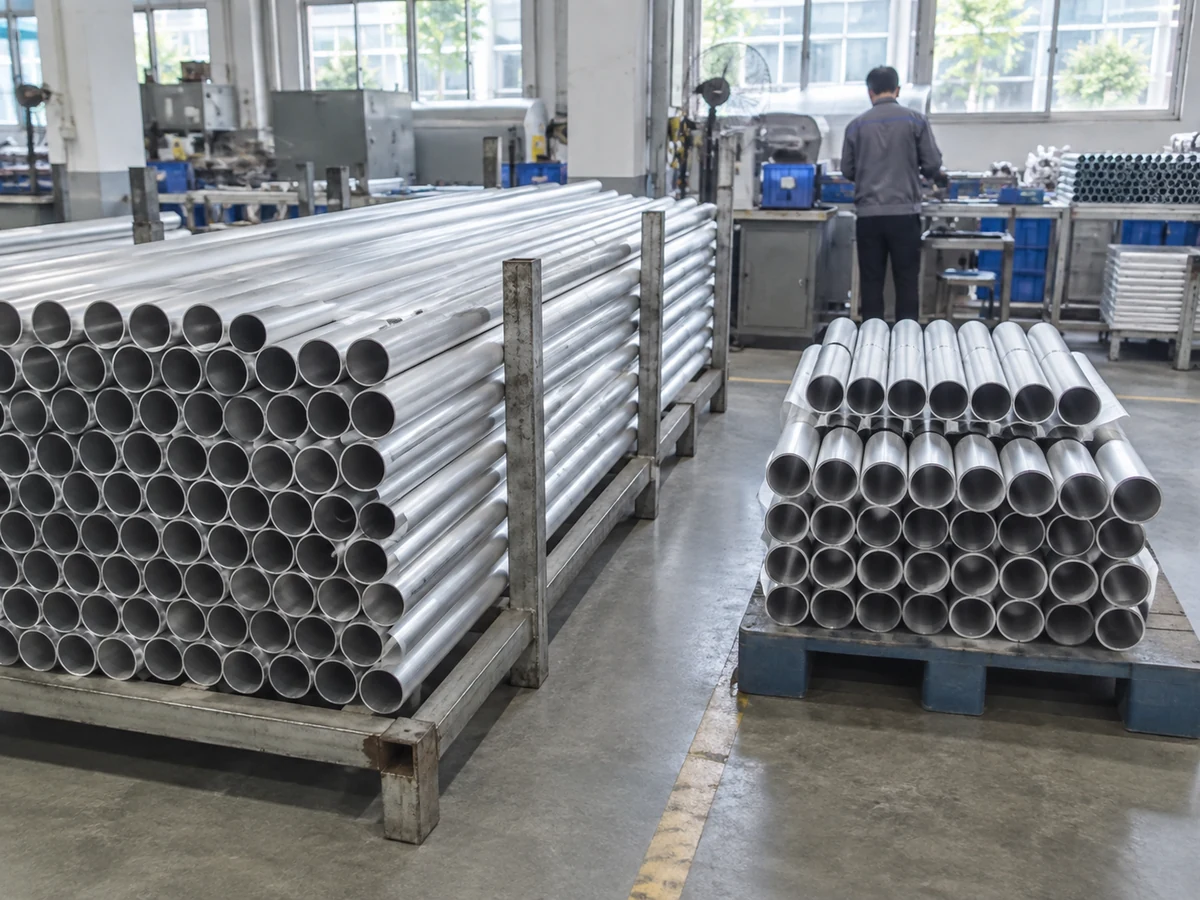
Telescoping fit depends on more than two nominal diameters. The receiving tube’s bore, the mating tube’s outside diameter, straightness, coating, bushing geometry, and the location of holes or adjustment features can all affect assembly. A length tolerance cannot stand in for this fit check. The buyer should provide the mating-part drawing and define the inspection method for the assembled pair. If a supplier cuts only blanks, the receiving factory should confirm fit after the processes that change the actual interface.
Set aside an agreed first-off pair from the intended material and finishing route. Record the measured blank lengths and end condition, then let the device maker assess insertion, adjustment, locking, and final assembly under its own validation plan. If the fit fails, identify whether the problem is cut length, incoming tube geometry, bushing size, a downstream hole position, or finish build-up before changing the saw setting. This prevents a length correction from masking a different cause.
Define support, clamping, and the inspection datum
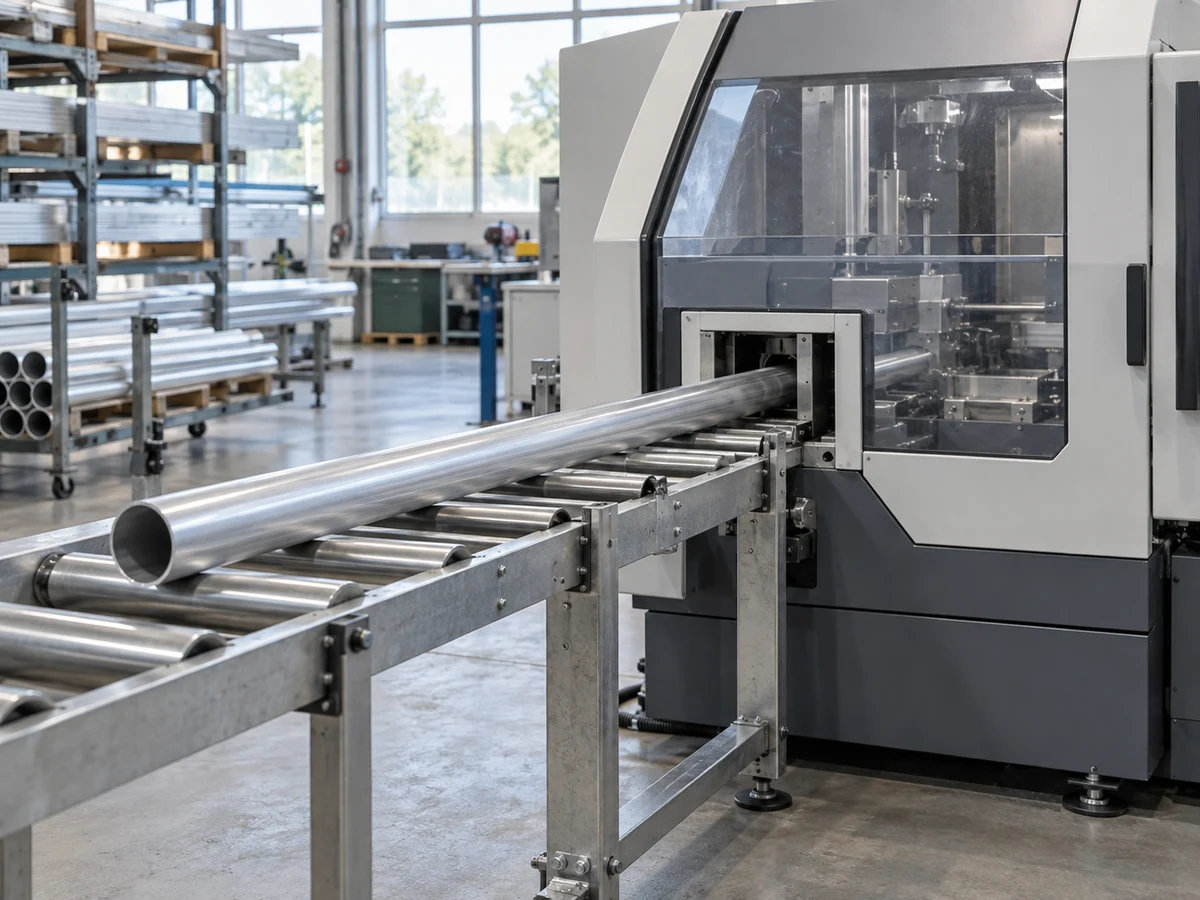
Thin-wall round stock can shift, mark, or ovalize under unsuitable contact. In an RFQ, show the incoming tube length range and whether tubes are straight, preformed, coated, or already drilled. State which cosmetic surfaces require protection and which end is the reference. Ask the cutting-machine supplier to explain how infeed support, length stop or feed measurement, clamping contact, and finished-part discharge would be evaluated for the actual sample. The chosen support and clamp pressure must be confirmed with the real tube, not inferred from a catalog photograph.
Inspection should use the same datum that matters downstream. For a blank later drilled from one end, label that end and inspect length from it. If both ends are functionally different, record the orientation through cutting, deburring, drilling, and packaging. A sample sheet can include nominal length, measured first-off result, burr acceptance, visible deformation, and part-number identity without pretending those observations validate a complete crutch.
Plan the handoff to drilling, deburring, and assembly
A crutch may need adjustment holes, attachment features, brackets, grips, and a finished surface. Those features usually require operations beyond straight saw cutting. The cut list should say whether holes are absent, pre-existing, or added after cutting, and which team owns their location relative to the end datum. The same applies to deburring inside the bore: an edge that appears acceptable outside may still interfere with a bushing or insert. Define the acceptance check rather than assuming a generic “burr-free” statement covers the interface.
If coating or anodizing follows cutting, confirm whether the blank length and fit dimensions refer to bare or finished parts. Packaging should keep unlike lengths and part numbers separated, protect appearance surfaces when required, and preserve the lot identity needed for the device maker’s traceability system. Jiurun’s cutting discussion can cover feeding, support, and cut-part handling; the buyer remains responsible for the finished mobility aid’s engineering and compliance review.
A practical RFQ checklist for tube blanks
- Part schedule: identify each leg, forearm, or other tube blank separately, including drawing revision and quantity.
- Incoming stock: supply alloy/temper, diameter, wall, stock length, surface state, straightness requirements, and permitted variation.
- Cut definition: specify length datum, tolerance, end angle or squareness, burr limits, and which end is marked.
- Fit boundary: provide mating tube and bushing drawings; name who verifies telescoping fit after subsequent operations.
- Downstream route: show drilling, forming, deburring, finishing, and assembly steps, with allowances only where the released design requires them.
- First-off evidence: agree which blank measurements and visual checks the cutting supplier will record, and which assembled checks remain with the device maker.
- Handling: define separation of length groups, surface protection, labeling, and traceability at handoff.
These items make a quotation comparable without inventing a universal tube size, feed rate, medical rating, or machine configuration. Actual capability should be assessed from the buyer’s approved tube samples and acceptance criteria.
See a related saw and feed demonstration
The following video is from Jiurun Machinery’s own YouTube channel. It shows a related cutting-machine/feed context. It does not show this article’s forearm-crutch material, model configuration, customer work, device test, or achieved tolerance.
Questions buyers should settle before a trial
Is the cut blank already the finished member? Usually that depends on the released route. If a later operation drills, forms, trims, inserts a bushing, or applies a finish, specify which drawing dimension governs at each stage. Keep a blank drawing and an assembled-part drawing separate so a supplier does not quote a finished feature it cannot inspect.
Can one saw setup cover every size? Do not decide from nominal diameter alone. Compare actual stock lengths, wall thicknesses, finish conditions, minimum cut lengths, and support requirements. Ask for a sample plan that includes the shortest and longest relevant blanks and the most sensitive contact surface. An approved machine arrangement follows that review.
What is a useful first-off result? For forearm crutch aluminum tube cutting, a useful first-off record identifies the stock lot and drawing revision, the measured blank length from the agreed datum, end condition, visible deformation, and part labeling. An assembly engineer then checks the finished interface and locking function. A clean saw cut alone cannot establish device safety or suitability.
Send the right sample for a cutting discussion
If you are comparing ways to prepare aluminum tube blanks for a forearm-crutch assembly, send the released blank drawings, mating-interface dimensions, stock sample, forecast quantities, and downstream process map. Review Jiurun’s cutting-machine range, then contact Jiurun with the tube and acceptance details. The useful next step is a scoped sample review and process discussion, followed by the device maker’s own assembly and safety validation.