
Folding room divider aluminum frame cutting is a kit problem, not simply a list of equal lengths. Every panel must close around its infill, fold past the next panel, and stand or roll as the selected base design intends. A purchasing drawing that gives only the overall screen width leaves the hinge edge, joint allowance and pack order to guesswork.
This guide is for OEM buyers and fabricators preparing an RFQ for cut aluminum members. It identifies the decisions to fix before a cutting supplier quotes or makes a first article. It does not prescribe a universal profile, hinge or tolerance.
1. Define the divider as panels, not one overall width
State the number of panels, finished height and width of each panel, open layout, folded stack direction, and any unequal end panel. Mark the face that is visible in use. A three-panel divider with a short return panel cannot be cut from one repeated side-rail length without checking how its hinges and corner connectors change the clear opening.
Send a panel-by-panel drawing or cut schedule with an identifier for every top, bottom, left and right member. Give the finished frame outside dimension and the infill opening separately. If the design uses a sliding fabric, board or acrylic infill, show the retention channel and the allowance needed for insertion.
2. Freeze the profile and connection method
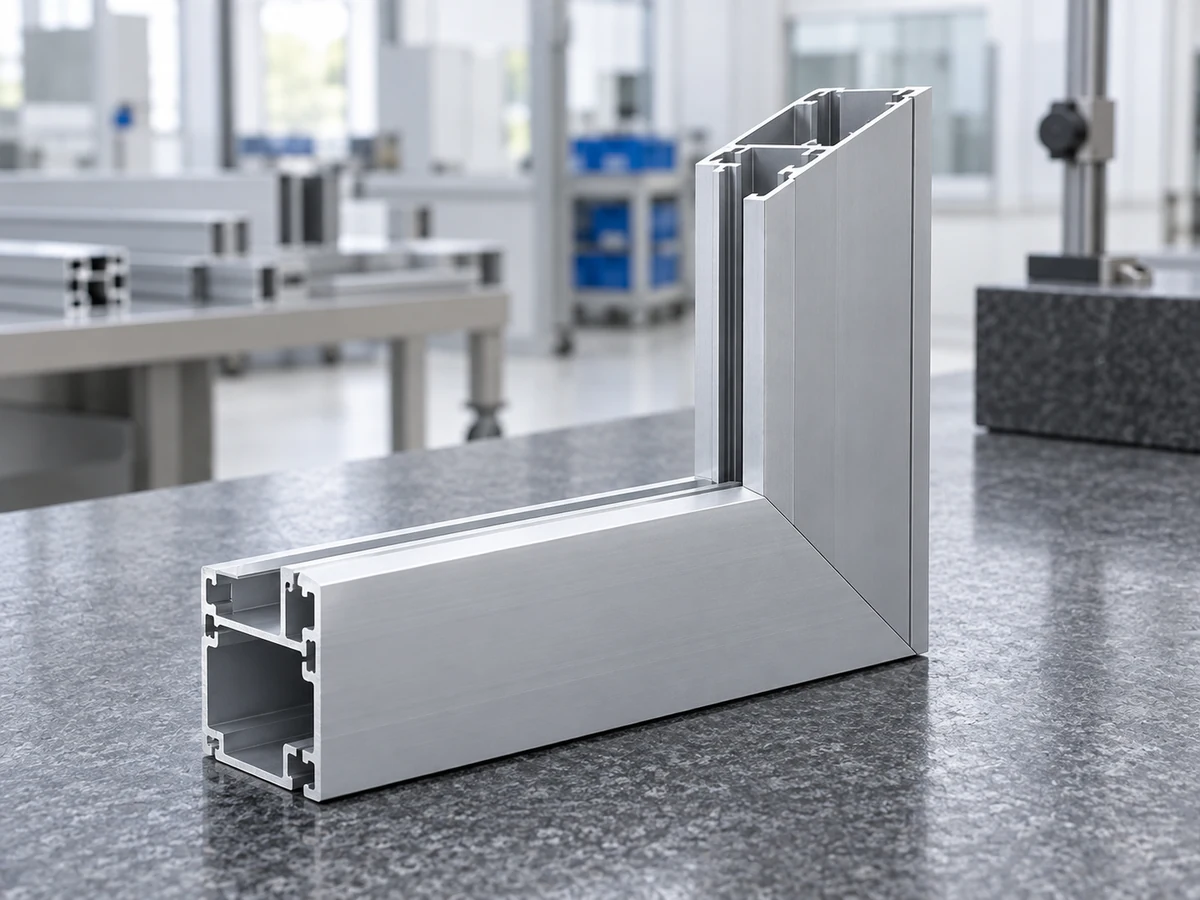
List the extrusion drawing or profile revision, alloy and temper if they matter to the application, finish and protected surfaces, and whether each member is a hollow tube, open channel or purpose-made frame extrusion. A nominal outside width is insufficient when a corner key, fastener or panel clip must fit inside. Put the mating connector drawing in the same RFQ package.
Choose the connection concept before deciding cut angle: square ends with mechanical corner pieces, mitered corners, or another engineered joint can have different length datums. Ask the assembler to confirm whether the cut list measures long point, short point or an external reference face. For a mitered frame, a missing datum can turn apparently correct individual parts into an oversized panel.
3. Reserve the hinge-side envelope
Mark the hinge axis, mounting face, screw or insert locations, required gap between adjacent frames, and the direction each joint must fold. Check the extreme open, closed and intermediate positions against the profile corner, panel infill and any edge trim. The cutting supplier should work to the approved hinge-side drawing, not assume a generic clearance.
Portable divider products vary: Nova Display describes modular screens with aluminum framing and hinged profiles, while Versare shows an accordion-style partition with aluminum framing and hinges. These are examples of differing architectures, not Jiurun configurations or dimensions to copy into a new design.
4. Treat bases, wheels and handles as interfaces
Record which panel carries a foot, wheel, handle or stabilizer. Include hole positions and reinforcement details only when they are on the approved drawing and within the supplier’s scope. A wheel bracket may create a no-clamp zone or require a particular bottom rail orientation. If those operations happen after cutting, label them as downstream work and identify the datum that must survive the cut.
Portable Partitions describes a folding screen built from aluminum profiles and corner components with base options. Its construction illustrates why a buyer should specify the base interface; it does not establish a universal load rating, material choice or Jiurun process result.
5. Decide how the panel infill is retained
Show the actual infill thickness range, gasket or clip, insertion direction and any access member that remains removable. Indicate whether a saw-cut end exposes a channel that needs deburring before the infill can slide in. The cut supplier can quote an end condition only after seeing the assembled stack-up. A profile photograph alone does not establish the correct clearance.
6. Folding room divider aluminum frame cutting: datums and checks
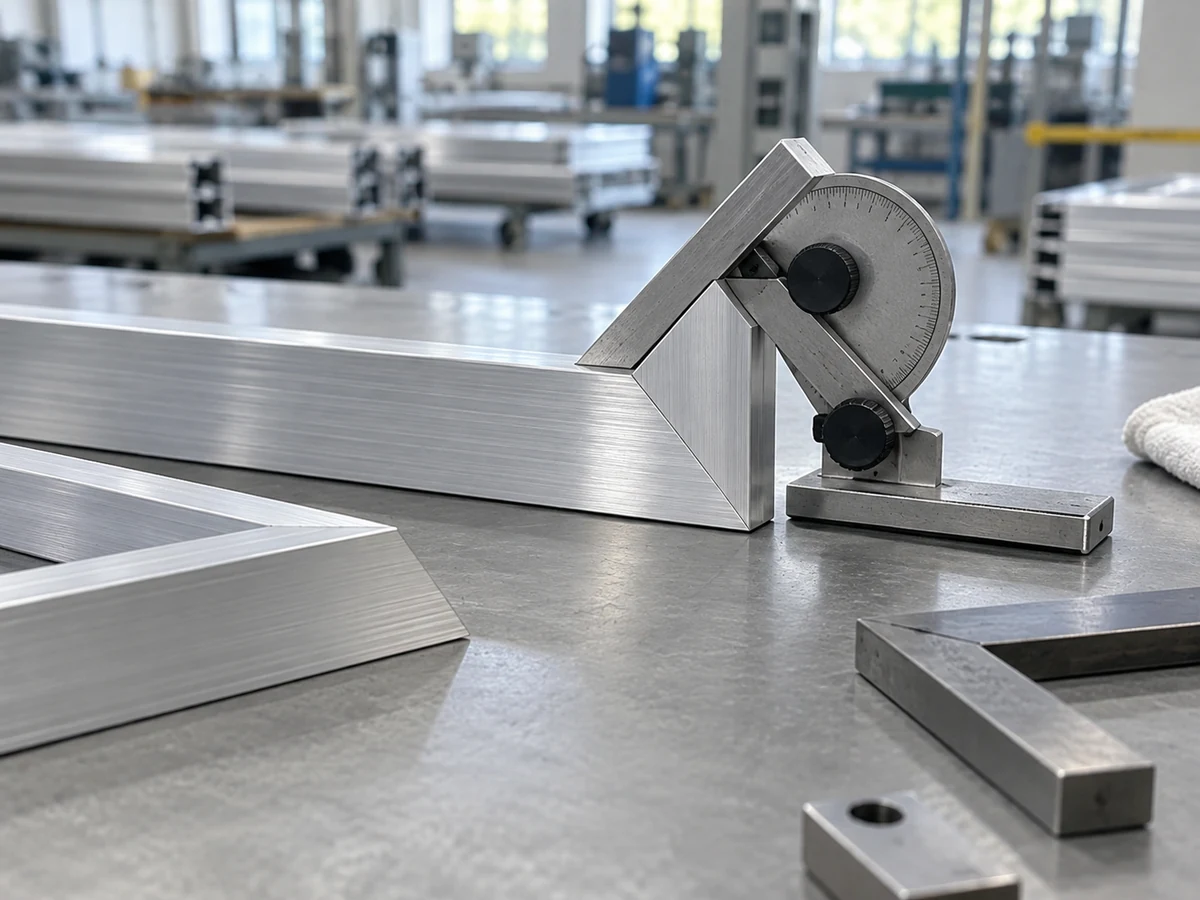
Give a measurable cut length for each member and identify the reference edge. Define the angle callout, squareness or miter criterion, burr condition, surface protection and inspection method in the drawing. Agree on sampling and acceptance with the assembler. For the first article, assemble one complete panel and then a hinged pair; check diagonals, infill fit and interference through the fold before releasing the full batch.
7. Pack a buildable kit, not a bin of profiles
Request panel IDs, member IDs, quantity per kit, revision and finish on the packing list. Separate mirrored hinge-side rails and any short end-panel parts. Protect visible faces and finished cut ends for transport. If the screen must be repeatedly assembled and dismantled, confirm how a damaged member can be replaced without confusing left and right variants.
8. Ask the supplier to quote the real boundary
State whether the quote covers saw cutting only, deburring, marking, secondary drilling, hardware installation or trial assembly. Ask which features need a supplied drawing and which require a separate machining setup. A useful response for folding room divider aluminum frame cutting identifies the stock form, cut schedule, inspection plan and exclusions; it should not imply that a saw demonstration proves an assembled divider.
RFQ package checklist
- Panel layout, fold direction, finished dimensions and per-panel IDs.
- Profile cross-section and revision, finish, stock length and protected faces.
- Corner and hinge drawings with length datum, gaps and mounting interfaces.
- Infill, trim, base and wheel interfaces, with downstream operations called out.
- Cut list, acceptable end condition, first-article assembly check and packing labels.
Related cutting-equipment view
The following video is from Jiurun Machinery’s own YouTube channel. It shows related cutting equipment in operation. It is not a folding divider project, selected profile setup, customer trial or proof of an assembly result.
Send a drawing for a cut-plan review
If you are sourcing a folding divider frame kit, send Jiurun your panel layout, profile section, hinge details and cut list. We can discuss a cutting approach and the information needed for a first-article review. Final dimensions, fit and acceptance criteria should come from your approved assembly design.