
Extruded heat sink cutting starts with a simple question: what shape does your incoming stock already have? If it already has the required fins, describe the lengths and ends you need cut. If the job also needs fins made or changed, list that work separately so Jiurun can discuss the stage the proposed saw would cover.
Starting point 1: the fins are already in the stock
Look at the material you plan to bring to the cutting area. Does its section already match the fin pattern on your finished-part drawing? Show a clear end view, a side view and any material information supplied with the stock.
The Aluminum Extruders Council explains that an extrusion die opening represents the intended profile cross-section. Eaton’s extruded heat-sink examples include finned profiles in several shapes. That section information belongs beside your required finished length.
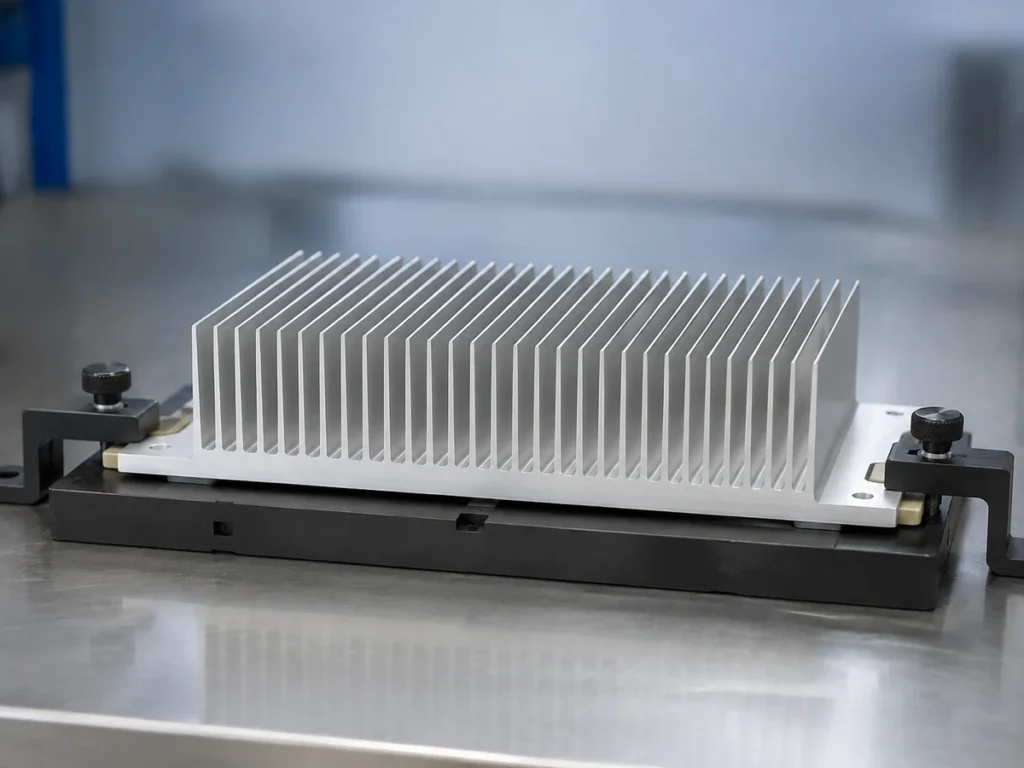
If the required fin shape is already present, your cutting inquiry can focus on the members to be separated from that stock. Identify the finished lengths, end shapes and the surfaces your next operation needs to receive.
What does your stock look like before cutting?
Send the stock end view and a finished-part drawing. Explain which features are already present when the material reaches the saw.
Starting point 2: the job also includes making the fins
A request for a finished heat sink can include more work than a request to cut an existing finned section to length. If the incoming material lacks the required fins, or its fin pattern must change, make that difference clear at the beginning.
Show both the starting material and the desired finished part. Then ask which manufacturing stages are included in the equipment proposal and which will happen elsewhere. A cutting-to-length requirement alone does not explain how the required fin pattern will be produced.
Example: two buyers asking for the same finished length
One buyer already purchases a finned profile and wants shorter members made from it. Another buyer starts with material that does not yet have the required fin section. Even if their finished lengths match, their incoming material and manufacturing scope differ.
Describe your own starting point instead of relying only on the name “heat sink.” Ask the supplier to explain the proposed saw’s role in the complete job.
Show the input and the output together
Include the existing stock shape, required cut ends and any fin-making or other work that still needs to happen.
Define what must leave the cutting area
On the finished-part drawing, identify the required cut length and end shape. Keep the length reference clear so the supplier understands which two points define the requested member.
Also identify requirements for the base, fins and cut ends that matter to the next workstation. If the finished part needs holes, slots or other preparation, list those operations beside the cutting work and ask how responsibilities are divided.
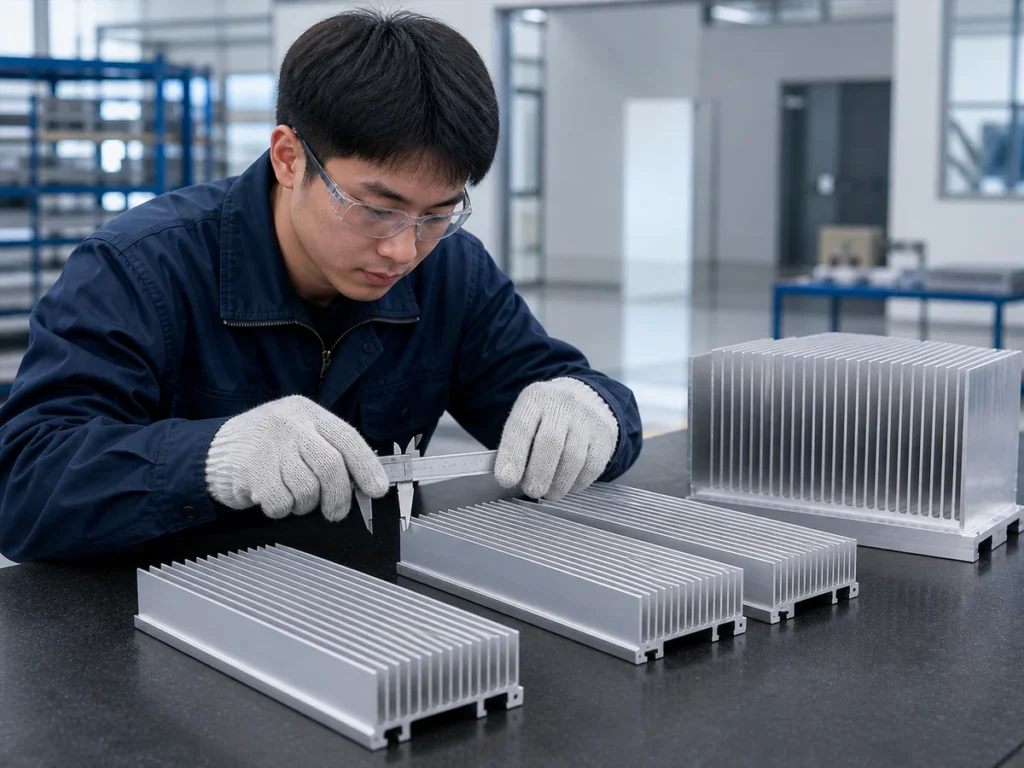
Jiurun’s brochure lists heat sinks among the JR-455CNC’s application materials and describes automatic feeding and clamping. Use that machine context to begin a discussion of your actual section and required output.
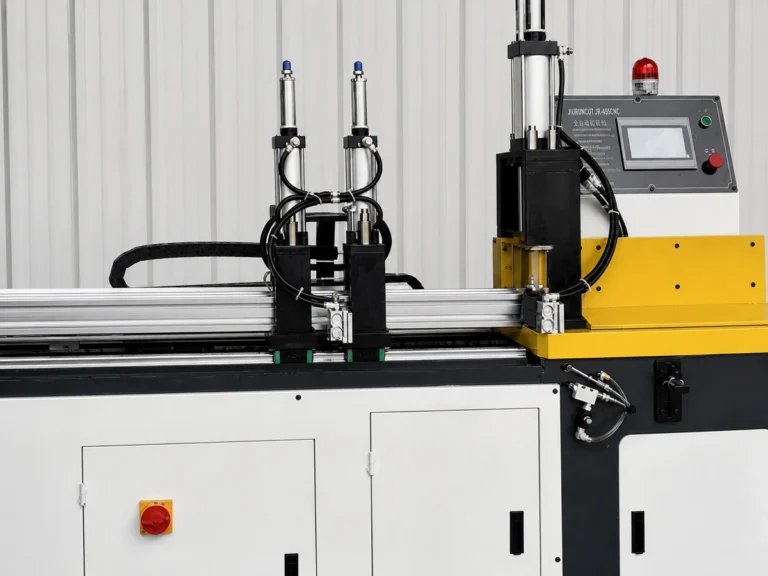
Watch: Jiurun JR-455CNC machine reference
Use this machine reference when discussing the stage your proposed saw will cover.
Discuss your heat-sink cutting scope with Jiurun
Share what the stock already contains and what the cut parts must become. Ask for the proposed equipment, included work and any separate manufacturing stages to be clear.
Machine context: Jiurun brochure, physical PDF page 7, through Catalog & Downloads. Suitability and included functions must be confirmed for the actual material, finned section and quoted configuration.