
Escalator aluminum decking profile cutting is a narrow purchasing task: release a documented aluminum member for a controlled cutoff operation, then send the cut blank to the party responsible for the approved escalator assembly. It is not an instruction to reproduce an installed deck from a photograph. If a request names only “escalator trim,” a saw supplier cannot know which profile, side, finish, end condition, or receiving point is in scope.
For a buyer, the first decision is whether the purchase is for a complete OEM replacement component, a prepared decking member, or a saw-cut blank from a released extrusion. The routes have different responsibilities and prices. A quotation for one must not be compared with a quotation for another as if both deliver the same item.
Confirm that the specified part is aluminum decking
Escalator catalogs use separate names for decking, skirt panels, steps, floor covers, and handrail components. These are not interchangeable cutting tasks. Schindler’s 9300AE design options list aluminum and stainless-steel decking options while listing skirt-panel options separately. KONE’s parts catalog identifies an anodized aluminum outer-deck profile for a specific balustrade configuration. Those examples establish that an aluminum decking profile can be a real item. They do not establish that every escalator uses the same section, that a substitute section is permitted, or that Jiurun has approved a cut for either manufacturer’s model.
Ask the system owner for the exact item or drawing number, revision, left/right designation where applicable, and authorized material and finish. A “decking” label can also refer to formed sheet, panel, or already assembled replacement stock. If the released item is not an extrusion or other saw-compatible nonferrous stock, keep it outside this profile-cutting RFQ until its manufacturing route is separately confirmed.
Draw the purchase boundary before choosing a saw
The buyer should issue a one-page boundary statement before asking for cutting capacity. It keeps material, secondary work, and final-system obligations visible to every bidder.
On a narrow screen, swipe the table sideways to read each route.
| Route | What the buyer receives | What to ask before pricing |
|---|---|---|
| Complete approved replacement | Identified OEM or authorized replacement item at its specified delivered state | Which model, configuration, side, finish, hardware, and release documents are included? |
| Prepared decking member | Profile with agreed cut and other specified preparation | Who performs forming, hole or slot work, coating repair, inserts, and final identification? |
| Saw-cut blank | Approved incoming stock cut to a defined blank length and end condition | Who owns all later features, system assembly, functional checks, and installation acceptance? |
Only the third route is automatically within a basic profile cutoff comparison. A cut length does not create an authorized replacement part. Escalator safety, compatibility, installation, and inspection remain with the responsible OEM, integrator, or qualified service organization under its approved documentation. The saw supplier’s trial can demonstrate an agreed cut-blank result, not that the final assembly is suitable for service.
Specify the member, side, and visible face
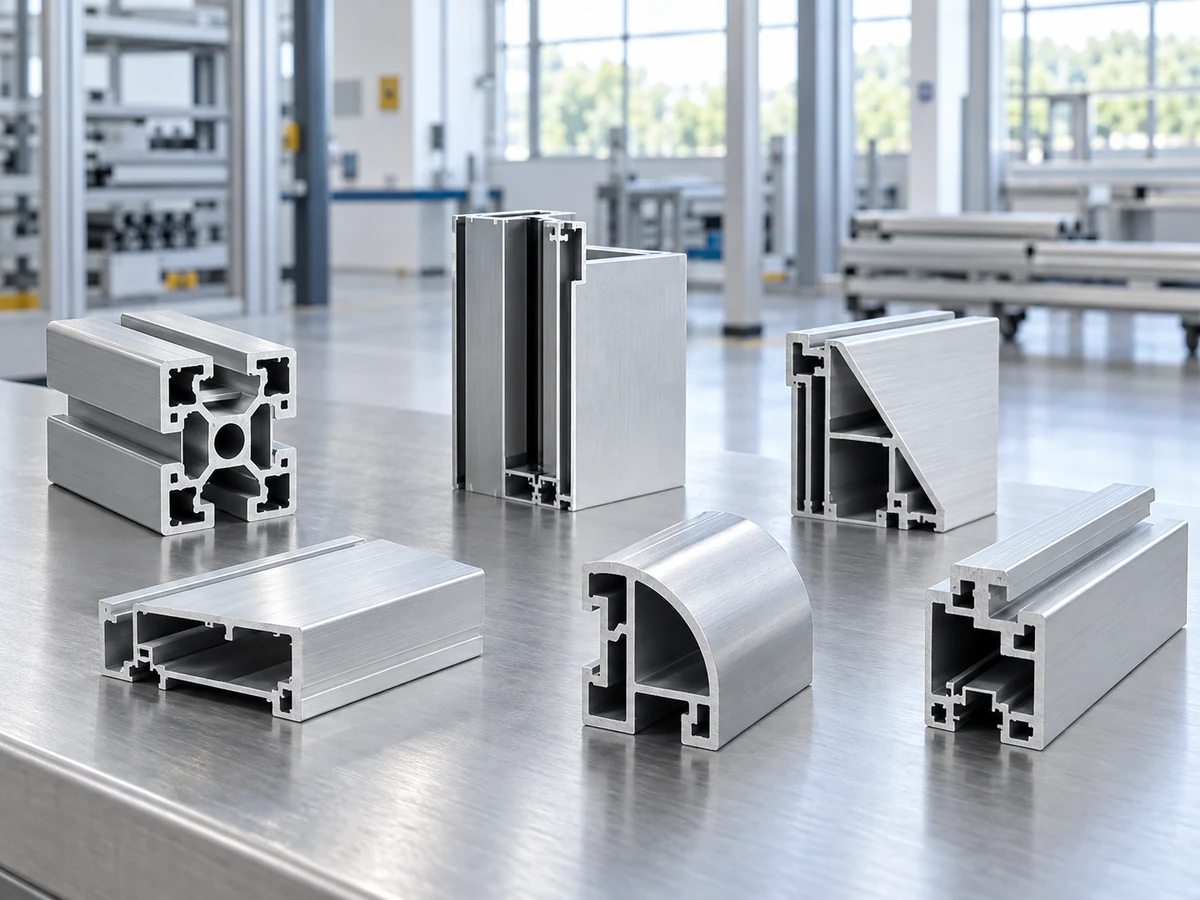
For each candidate member, provide the released drawing and actual stock cross-section. Record its alloy/temper if the system owner specifies them, incoming finish, stock length range, internal cavities or lips, and the face that will remain visible. Pair the profile code with the system configuration and the item designation; a nominal deck width alone is not enough. If inner and outer decking use different sections, put them on separate rows.
Finished surfaces matter at the saw. An anodized or factory-coated visible face can be marked during loading, support, clamping, or packing even if its cut end is dimensionally acceptable. Identify allowed contact faces and any removable protective layer from the released stock specification. Do not assume the operator may strip a protective film, change the coating, or touch up a damaged face without authorization.
For a hollow or asymmetrical section, show the permitted feed orientation and stable support surfaces on an actual sample. A photographed installed deck does not reveal internal webs or the surface that can be clamped. Provide the actual profile to the machine supplier so the quoted fixture, blade, support, and guarded cutting path can be reviewed against it. Jiurun’s industrial-profile cutting overview describes the broader equipment application; final configuration depends on a representative part and accepted cut requirements.
Define a blank length that can be inspected
Give each blank a physical length datum on the released stock: for example, from one designated finished end plane to another. If one end is square and the other requires an angle or a later trim allowance, state that separately. Do not derive the cutoff instruction from an installed escalator span, marketing dimension, or rough field measurement. Curved, formed, or transition decking may require other operations; a straight cutoff quote should not silently absorb them.
For each row, write the expected blank length, quantity, acceptable variation, end-angle definition if applicable, and the inspection condition. An unsupported number such as “high precision” is not a criterion. Decide whether the part is inspected free on the table, held in an approved fixture, or gauged at an agreed downstream station. A profile can appear different under different restraint. If the customer requires a matched left/right pair, describe how each member is measured and identified; do not infer mirror symmetry from appearance.
Separate cut-end acceptance from finished-part approval
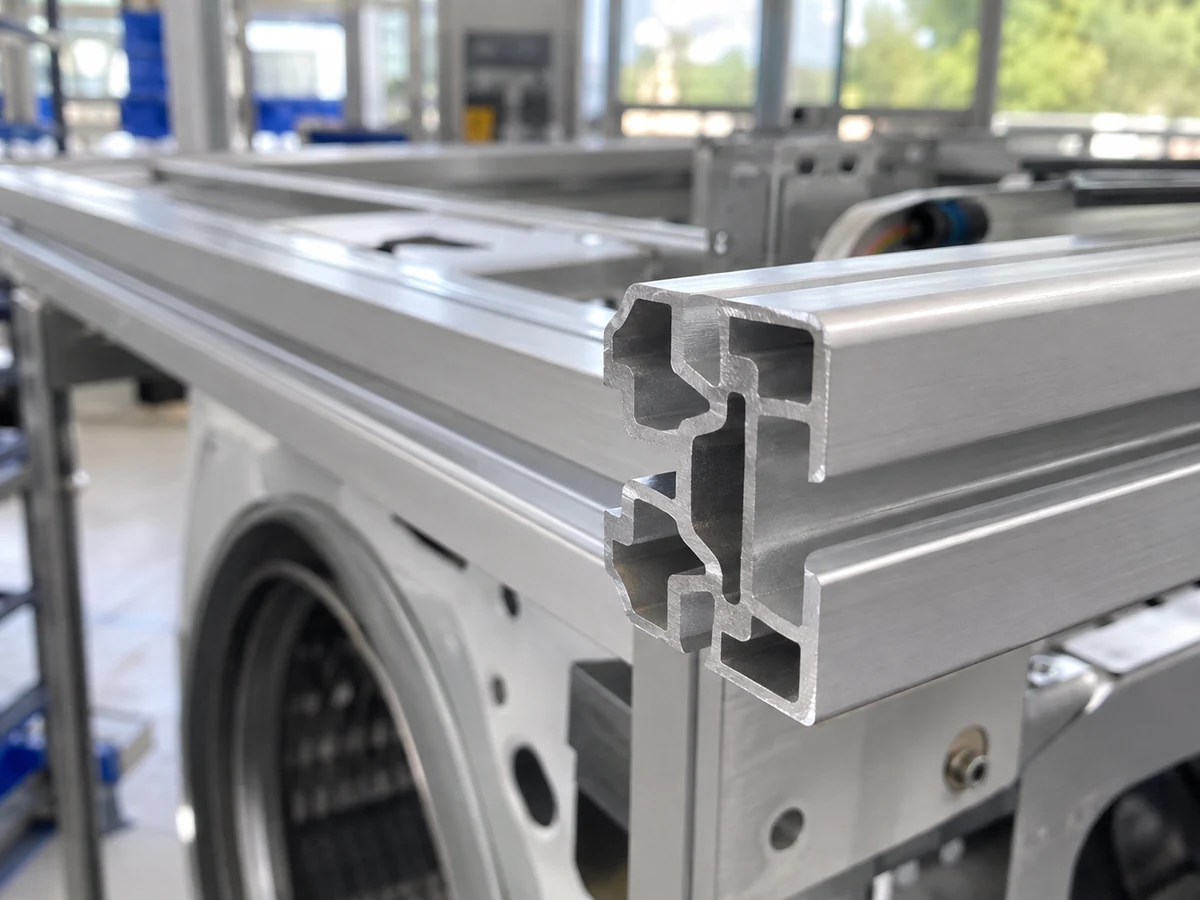
Ask the system owner which cut-blank features are actually relevant: length, end squareness or specified angle, burr condition, corner damage, chips trapped in a cavity, and visible-face marks. The accepted limits must come from the released drawing, purchase specification, or approved sample. A clean-looking photograph alone cannot establish dimensional fit or surface acceptance.
Make the trial representative of the difficult member, not merely an easy solid bar. Include the longest and shortest intended blanks, the most fragile lip or thin wall, each finish family that changes handling, and the end condition that carries the tightest acceptance. Record the actual stock revision, fixture contact, blade and feed setup as observed, sample IDs, inspection method, results, and any rejected pieces. If a supplier proposes a different blade or clamp, repeat the relevant accepted-part check before treating the quote as equivalent.
Do not use an aluminum-decking cut trial to claim step, skirt-panel, combplate, handrail, or complete escalator performance. Schindler and Otis catalogs distinguish those components and material options. Otis’s escalator brochure likewise shows separate material and appearance choices for decking and skirt panels. The OEM’s approved package controls any actual substitution.
Quote the production route, not only a machine cycle
A fair make-or-buy comparison starts at the same accepted receiving stage. A purchased finished replacement may include forming, coating, identification, hardware, inspection, packaging, and configuration responsibility. A saw-cut blank leaves those tasks with the buyer or another supplier. Put the remaining work and its cost beside the saw, operator, fixture, tool service, material yield, handling, inspection, and expected scrap costs. Use the actual mix of approved members and replacement quantities, not a one-size-per-escalator assumption.
Ask bidders to state what the quoted equipment will and will not process. Is the approved stock straight and short enough for the available loading path? Does the widest or tallest section clear the guarded opening in its accepted orientation? Can the offcut be supported without striking a finished face? Can small replacement lots be identified and packed separately? These questions are more useful than comparing a brochure’s maximum size with an installed deck width.
Keep replacement batches traceable
For production and replacement orders, identify every bundle by drawing revision, profile code, side, finish, blank length, quantity, lot, and receiving destination. Keep accepted and rejected pieces separate. Protect exposed faces and ends against transit contact, and ask the receiver how it will verify the kit on arrival. A loose bundle of visually similar silver sections is easy to mix even when every individual cut is dimensionally acceptable.

Escalator aluminum decking profile cutting: send a useful RFQ package
- System owner, approved model/configuration, item or drawing number, revision, and side.
- Actual stock section, finish, supplied length, orientation, protected faces, and physical sample.
- Separate member rows for length datum, blank length, end condition, quantity, and inspection method.
- List of later operations and the party responsible for final fit, approval, and installation.
- Representative trial matrix, accepted sample evidence, batch labels, and receiving requirements.
- Comparable price boundary for cut blank, prepared member, or complete approved replacement.
For escalator aluminum decking profile cutting, the released stock and receiving boundary determine what a saw trial can prove.
Share the released profile drawing and representative stock when you ask Jiurun about a cutting-machine trial. State that the request concerns saw-cut aluminum blanks only. Jiurun can then discuss a suitable equipment configuration and witnessed cut checks without implying approval of an escalator component or installed system.
Related equipment video
The following Jiurun machinery video is a related example of aluminum-profile cutting equipment. It is not a trial of the decking, OEM model, configuration, customer order, or performance described above.
Frequently asked questions
Can any aluminum decking profile be cut from a catalog dimension?
No. The approved cross-section, revision, finish, actual stock, physical length datum, and receiving stage are needed. A catalog appearance option is not a cut drawing.
Is a cut blank an approved escalator replacement?
No. The authorized system owner must define and accept all downstream features, assembly, compatibility, and installation requirements. A saw trial addresses only its agreed cut-blank criteria.
Should skirt panels be included in this saw RFQ?
Only if an approved separate specification says they are saw-compatible nonferrous stock within the supplier’s scope. Published escalator examples often list skirt-panel materials separately from aluminum decking; do not merge the two on a generic parts list.