
Dog grooming table aluminum frame cutting begins with a choice about what the OEM will actually make. A tabletop edge, a welded perimeter, folding legs, a lifting base and a detachable grooming arm are different parts, often made from different materials. A catalog photograph cannot tell a saw supplier which aluminum stock is approved for a specific table. Start with the released assembly drawing and identify the members that will enter the saw.
Commercial tables illustrate the variation. AEOLUS describes an aluminum portable competition table with a folding form and non-slip surface. Its grooming-table catalog also separates models with aluminum legs from products with stainless or powder-coated legs and composite tops. Those finished-product descriptions show why the exact table family matters; they do not supply a JiurunCut cut list, material certificate or machine trial.
Separate the tabletop, frame, legs and restraint arm
List each assembly before assigning cutting work. The top may be a board or composite panel with aluminum trim. A perimeter below it may use extruded or welded members. Legs may fold, detach, telescope or form part of a lift mechanism. The grooming arm, clamp and loop have their own material and safety decisions. Some parts may arrive as finished purchased subassemblies. A saw quote should include only the straight aluminum blanks that the manufacturer has chosen to cut.
For example, an AEOLUS air-lift table description distinguishes an aluminum-composite top, metal base, aluminum clamp and stainless arm. That combination must not be simplified into an all-aluminum frame. Ask the designer to mark the actual retained aluminum members on the drawing and to identify purchased parts, fabrication, finish and final assembly as separate responsibilities.

Dog grooming table aluminum frame cutting: build the cut schedule
Once the supply boundary is clear, build a line for every cut member. Record the drawing number and revision, part ID, approved stock cross-section, material and temper if specified, starting condition, quantity per table, order quantity, nominal blank length and tolerance. Add the length datum: is the dimension between square ends, between miter tips, or between a finished face and an end that will be machined later? A finished tabletop width is not a blank length.
Mark which ends join a hinge, pivot, foot, cross brace or corner. Show the miter or bevel orientation where needed and define how left and right pieces are distinguished. A folding leg can need hole features or a pivot boss after sawing; a lift base can contain a mechanism that is not part of the saw scope. Keep drilling, welding, bending, coating, arm mounting and restraint assembly outside the cut-blank quote unless the supplier expressly accepts them.
The purchase order should say whether the buyer wants loose blanks, prepared members, paired leg sets or a complete table frame. Quote comparisons fail when one vendor prices only cuts and another includes machining or assembly. A part-numbered schedule makes that boundary visible before anyone discusses speed or cost.
Check round tube and extrusion as separate stock cases
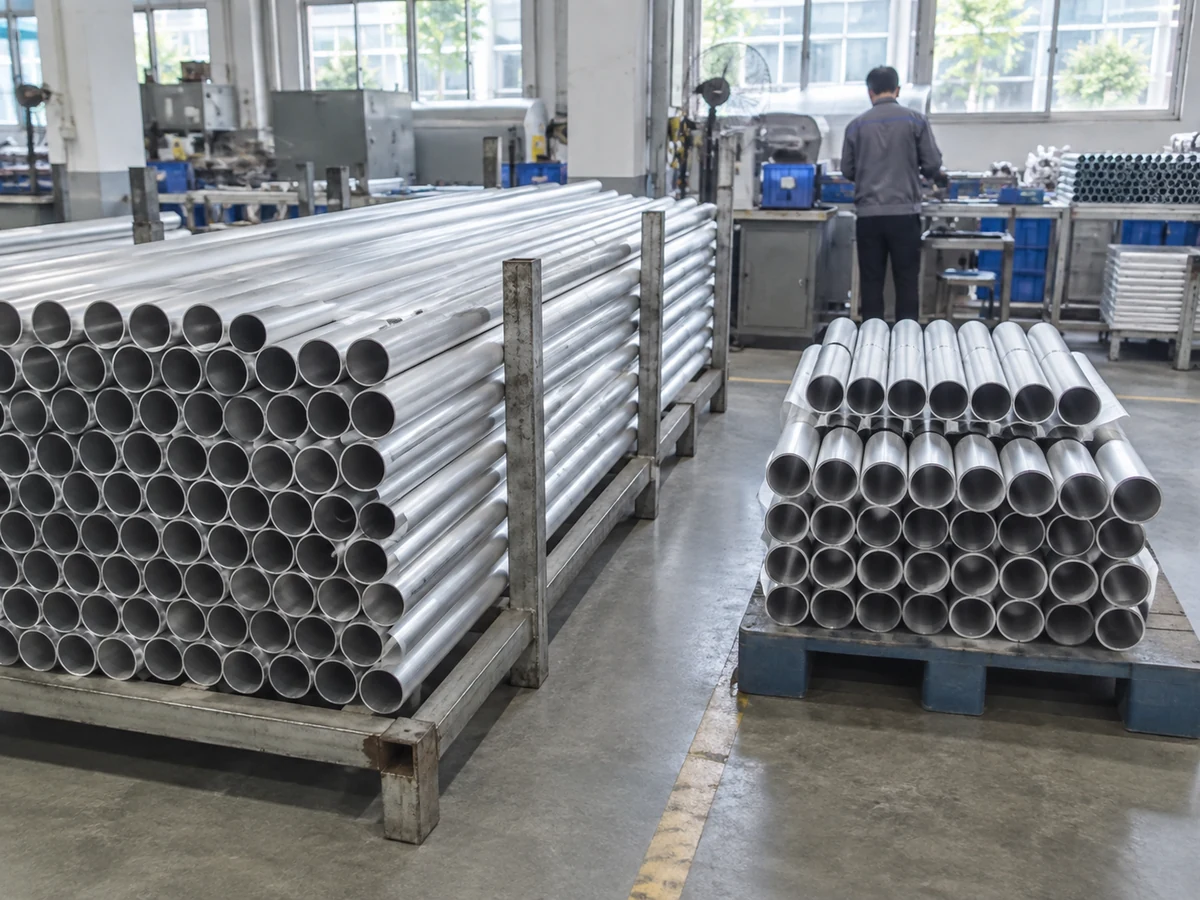
An approved design may use round hollow tube for a leg and a more complex extrusion for a top edge or frame rail. Do not substitute one section for the other because both are described as aluminum. Give the saw supplier a physical sample or section drawing for each stock family. Ask how the profile will be supported at the fence, how clamp contact will avoid marking an exposed surface, and whether thin walls or slots need a dedicated fixture.
Tube length affects handling. Distinguish the usable bar length from the ordered nominal length, allow for a real blade kerf and any first-end trim, and identify short parts that need a safe stop or alternate setup. If a leg telescopes, confirm which inner and outer sections are truly cut in house and whether their later fit is checked by the assembly owner. A finished table height alone does not determine either blank length.
Specify a useful first-article inspection
Ask for representative sample cuts from the real approved stock before treating a general machine demonstration as proof. The inspection plan can record measured length against the drawing datum, squareness or angle, end-burr condition, clamp marks, profile deformation and any finish damage. State which faces are cosmetic and which ends will be concealed or further processed. If the acceptance term is “burr free,” define the observable edge and the method rather than relying on a broad adjective.
The table manufacturer then checks the cut pieces in a real assembly: hinge alignment, leg folding or extension, foot seating, top attachment and arm-mount clearance. That is a separate test from the saw’s ability to produce a blank. The responsible designer and purchaser must establish final stability, load, restraint and animal-use safety requirements; no saw image, generic profile or unrelated video can validate a finished grooming table.
Plan repeat orders around the actual member mix
A portable table family may combine several top sizes or leg heights. Count the expected parts by approved drawing revision, not merely by the number of finished tables. For repeat dog grooming table aluminum frame cutting, label left/right members and packed sets so that a change in top, hinge or arm bracket cannot quietly mix old and new stock. If two models appear to share a section, confirm fit and revision before consolidating cutting batches.
| RFQ question | Buyer information to send | Decision supported |
|---|---|---|
| Which table design? | Released assembly drawing and bill of materials | Aluminum blank versus purchased component scope |
| Which stock enters the saw? | Actual tube or extrusion section, material and condition | Feeding, support, clamp and blade review |
| How are ends accepted? | Part length datum, angle, cosmetic faces and inspection method | Sample-cut plan and comparable quotations |
| What leaves the saw shop? | Part IDs, quantity, batch labeling and downstream owner | Assembly handover without mixed revisions |
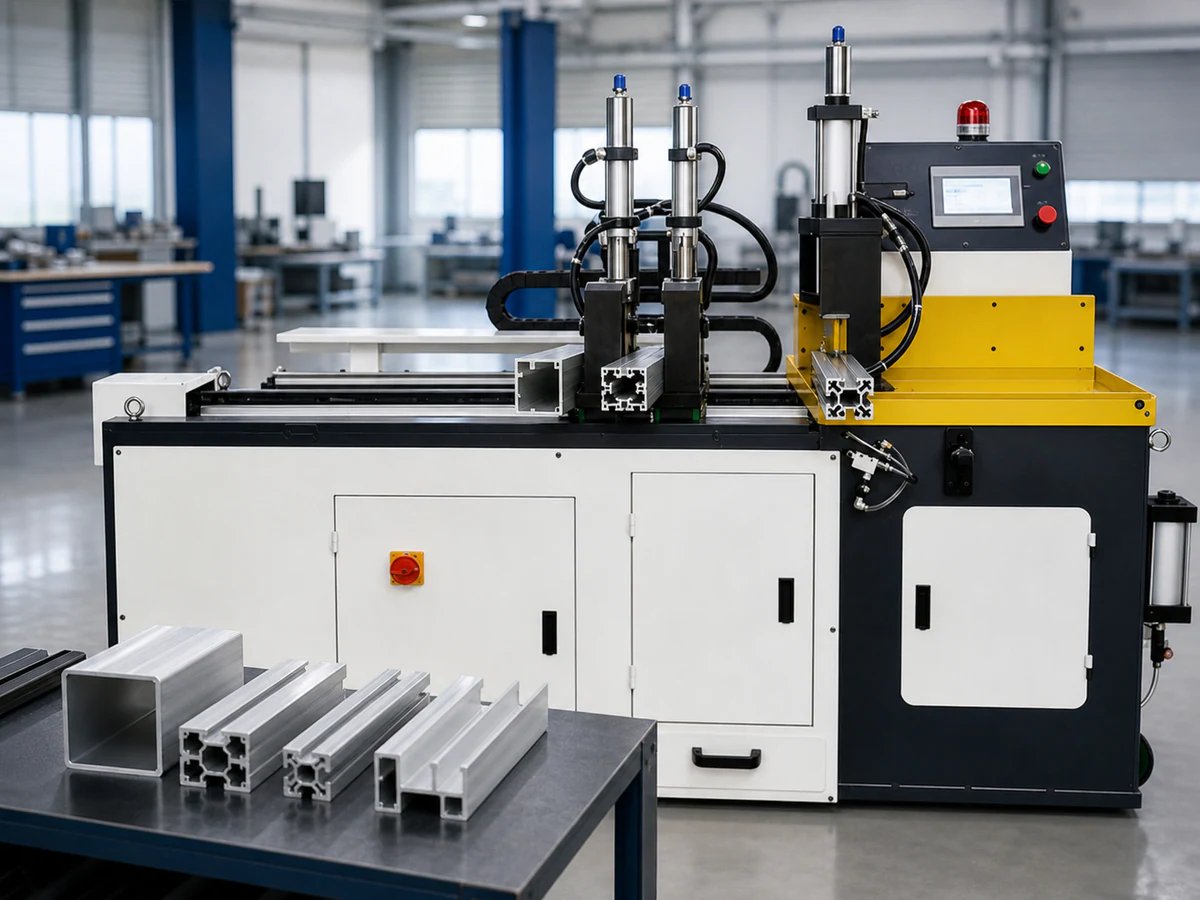
For a machine purchase, compare options against the entire retained blank mix at the same accepted input condition. Ask the supplier to identify any family that needs another fixture, process or machine. Include changeover time, inspection and yield assumptions in a repeat-order discussion. Do not convert a finished-table catalog dimension into a promise of saw capacity or cycle time.
The following video comes from Jiurun Machinery’s own channel. It shows another aluminum-cutting equipment scene to help frame a machine discussion. It does not show a grooming table, the approved material, a project trial, a specific quoted configuration or finished-table performance.
Send the drawing package before choosing a saw
For a useful machine-selection conversation, provide one approved table assembly, its part-numbered metal cut list, real tube and extrusion samples or sections, length range, estimated quantities, end geometry, required cosmetic protection and sample acceptance points. Say whether the buyer needs only a saw or also wants another party to machine, weld, finish or assemble parts. That package lets a supplier discuss feeding, support, clamping and inspection for the actual metal work while leaving finished-product approval with the responsible table manufacturer.
If the design is still being developed, identify the current revision and unresolved interfaces rather than guessing dimensions from another manufacturer’s table. Send JiurunCut the approved profile drawing and cut schedule for an aluminum-cutting-machine discussion. We can review a proposed cutting route; the table designer and purchaser remain responsible for the final assembly and its safe use.