
Cold room aluminum shelving member cutting starts with a purchasing decision, not a saw setting. Are you buying a tested shelving system, replacement parts approved for that system, cut aluminum members to your own drawings, or a machine for recurring production? Those four purchases have different owners for fit, load capacity, cleaning and service temperature. A square, clean saw cut cannot by itself qualify an assembled shelf for cold-room use.
This checklist helps a buyer define the cut-member scope before requesting a quotation. Use the shelving designer’s released drawings and the material supplier’s documents as the controlling records.
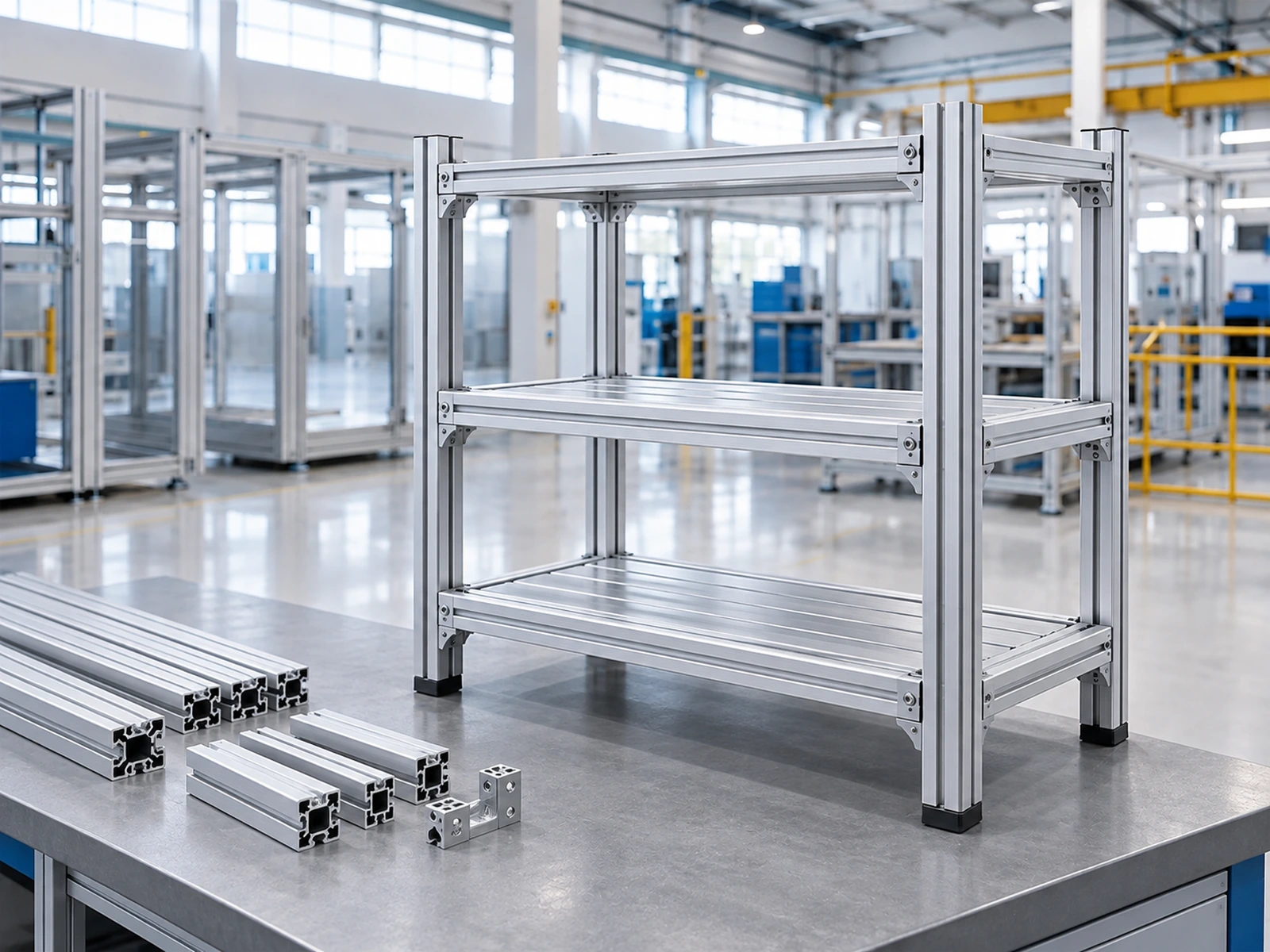
1. Decide whether the deliverable is a shelving kit or cut members
A complete shelving kit includes a system-specific set of uprights, shelves, connectors and installation rules. If you need a rated replacement piece, begin with its manufacturer and part reference. If your team owns the design, a cut-member order can be defined from approved drawings. If volumes repeat, an in-house saw may be worth comparing with outsourced cutting. Do not substitute a visually similar extrusion into a rated kit without the system owner’s approval.
Published product lines illustrate why the purchase boundary matters. Hupfer describes a specific aluminum Norm 20 shelf element; its stated service conditions belong to that product, not to every aluminum profile. Cambro’s Camshelving is a different assembled material system. These examples do not establish that an arbitrary saw blank is suitable for a cold room.
2. Release a part list for one shelf family
List each member by drawing revision, profile cross-section, alloy and temper if specified, finish, length datum, quantity per bay and intended connector. Separate cut extrusions from formed shelves, slats, plastic pieces and purchased fasteners. A rack photograph may suggest a rail and upright, but it cannot determine your bill of materials. For replacements, record the existing shelf family’s identification and whether mixing generations is permitted.
Ask the designer to mark left/right and front/back parts where a notch, hole or angle makes orientation important. A cut list should also say which operations are excluded: drilling, deburring, machining, cleaning, coating and assembly may have separate acceptance criteria.
3. Confirm the cold-room service requirements with the system owner
Specify the intended room temperature range, cleaning chemicals and frequency, condensation exposure, expected loading, shelf span and anchoring method. Obtain material and finish approval from the shelving designer or customer. An anodized surface seen in a media image is only a visual cue; it is not evidence that the depicted member has the finish, corrosion resistance or hygiene approval required for your project.
Keep three approvals distinct: the material and finish, the cut part, and the assembled shelving system. A saw supplier can discuss cutting and handling a sample extrusion. It cannot certify shelf load, stability, food-contact suitability or low-temperature performance from a saw trial.
4. Define the cut datum and end condition
Give the shop a drawing that identifies the measurement datum: overall stock length, distance between connector shoulders, or the finished length after a later operation. State the allowed length variation and how it will be measured. Where a member mates with a corner or end cap, specify squareness, burr condition and any visible-face protection. Avoid lifting a tolerance from another rack family; the interface and assembly stack determine what matters.
For a first order, request one representative bay’s parts and a fit check before cutting the entire lot. Record the actual measurements and the approved drawing revision. If a connector hides an end, identify it; if the end remains exposed, set an appropriate edge and appearance standard.
5. Trial cold room aluminum shelving member cutting on the real profile
Send drawings and representative stock, including the thinnest hollow section, longest practical length and most visible finish. Ask how the infeed supports the stock, how the clamp contacts the section, how the visible face is protected and how the cut piece is supported at discharge. Evaluate burrs, end-face deformation, marks and repeatability on the actual profile. Saw model range, blade choice, clamping and cycle time should be confirmed against the supplier’s quotation and sample results; this article makes no model-specific capacity claim.
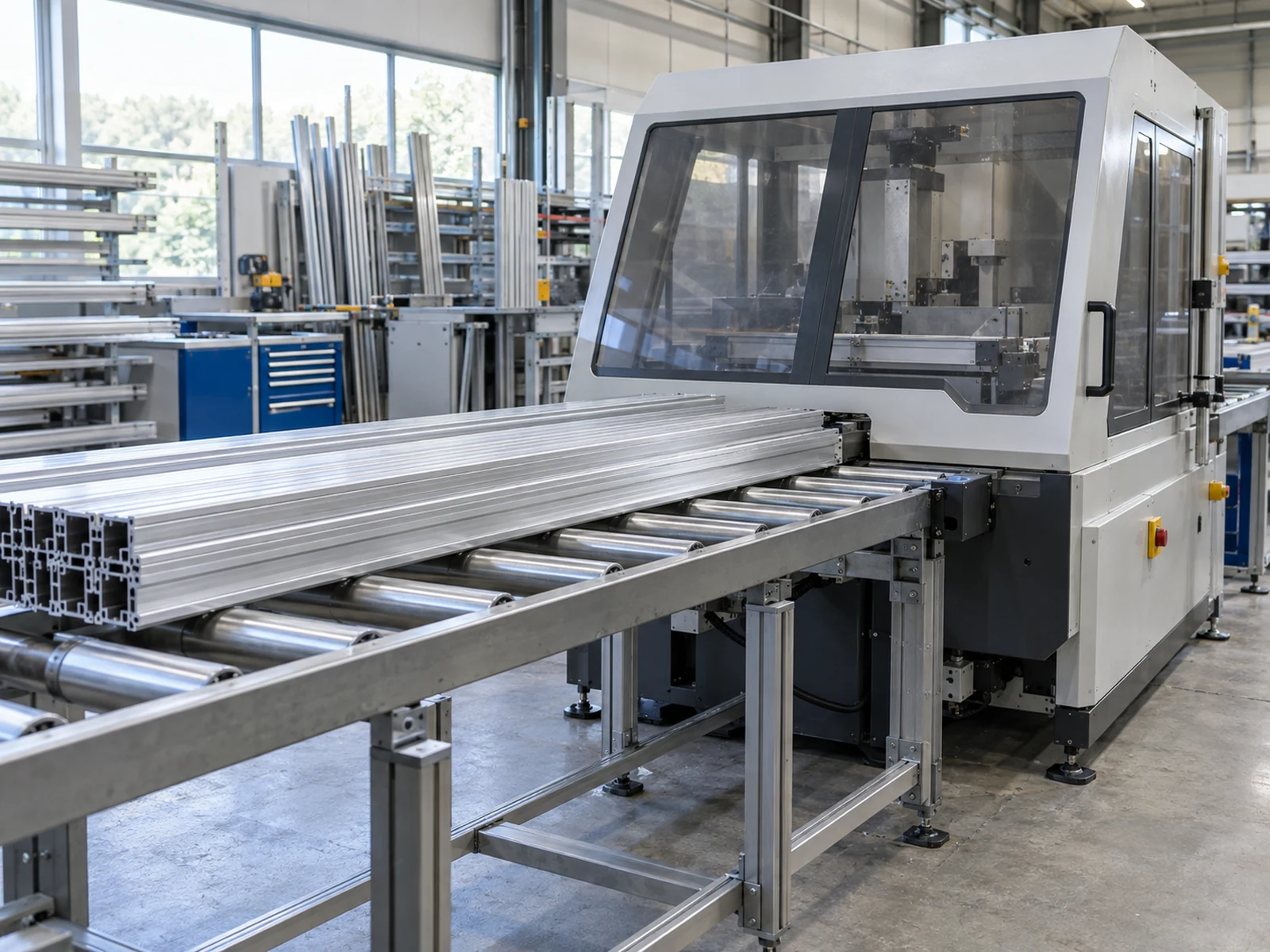
The JiurunMachinery video below shows a general aluminum saw operation from the company’s channel. It helps buyers observe the type of cutting process; it is not a test of the shelving material, cut tolerance, room suitability or any particular machine configuration described here.
6. Set first-off and batch acceptance records
Before full production, inspect a first-off part from each relevant profile and setup. Record drawing revision, source bar or lot, measured length, end quality and visible-face condition. Agree on who signs the first-off. During the batch, label or segregate members that look similar but differ in length or orientation. A representative dry fit can catch connector and stack errors earlier than an end-of-lot count. For cold room aluminum shelving member cutting, keep this cut acceptance separate from the assembled shelf approval.
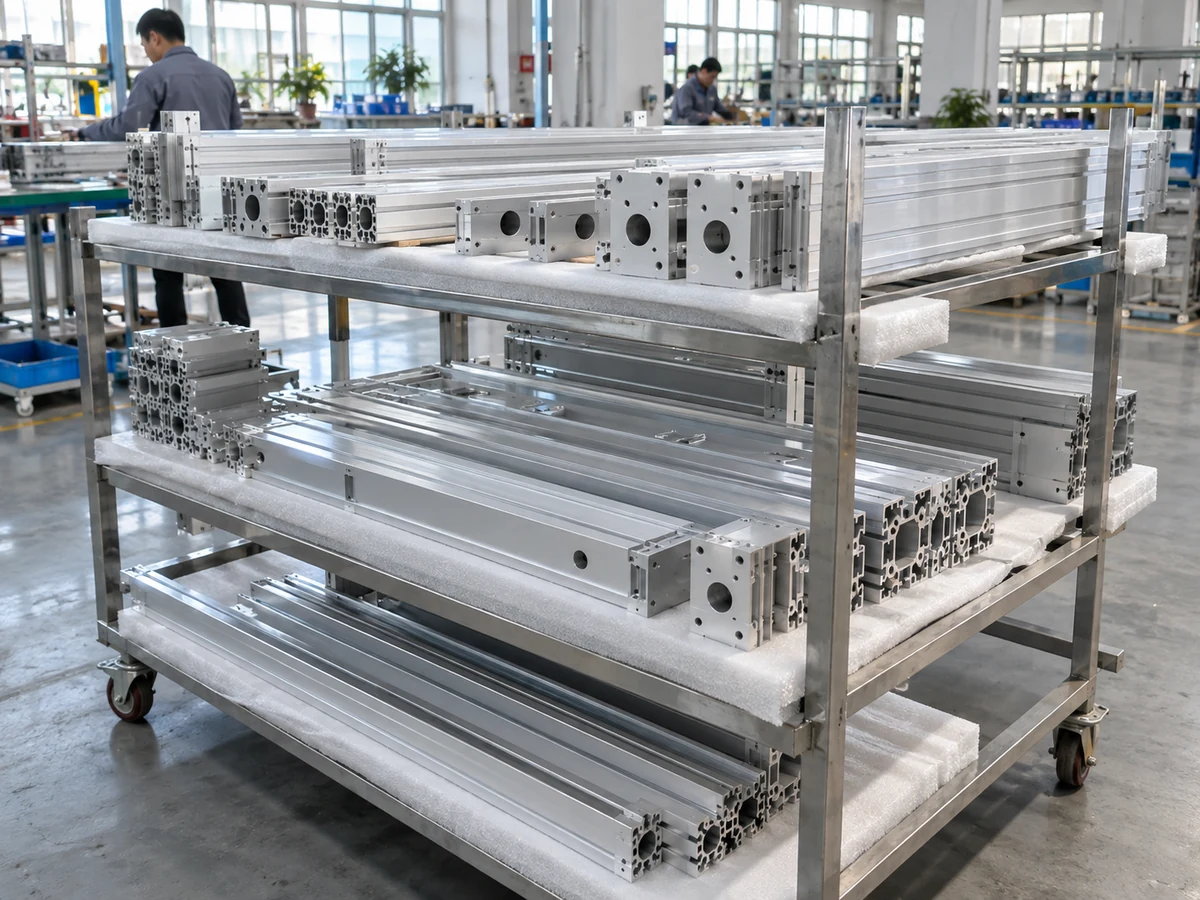
Packaging belongs in the acceptance plan. Separate anodized visible faces from hard metal contacts, keep labels tied to bundles and state whether protective film stays on for delivery. These handling steps reduce identification and surface-damage disputes; they do not replace structural or hygiene testing of the finished shelving.
7. Compare quotations on the same scope
| Route | What to quote | Who must confirm fit and service approval? |
|---|---|---|
| Complete shelf kit | System part numbers, bays, shelves, connectors, rated conditions and delivery | Kit manufacturer or authorized designer |
| Outsourced cut members | Released drawings, stock, operations, inspection, finish protection and packaging | Your system owner; cutter confirms only its agreed part scope |
| In-house saw | Representative trial, stock range, fixture, throughput, operator checks and maintenance | Your engineering and quality team for the shelf; machine supplier for its quoted equipment scope |
Use the same annual volume, scrap assumption, rework cost and inspection burden when comparing outsourced cutting with an in-house saw. A shorter quoted cycle time is not useful if the stock needs manual protection, secondary deburring or extra sorting. Request a documented sample review and a written list of included and excluded operations.
What to send with an RFQ
- Approved shelf family or system reference and the decision between kit, cut part or machine.
- Drawing revision, profile specification, finish, part quantities and length datum.
- Representative bars and the worst-case visible and thin-wall sections for a cut trial.
- Cut-end, surface, inspection, traceability and packing acceptance criteria.
- Required cold-room conditions and the party responsible for system approval.
If you are evaluating cold room aluminum shelving member cutting for released drawings, send JiurunCut the drawings and sample profiles. Ask for a process review and a sample-cut plan; confirm shelving-system suitability with the system owner.