
A coach luggage compartment door aluminum frame RFQ starts with a boundary question: are you buying straight saw-cut profiles for the moving flap, parts for the fixed body opening, a machined frame kit, or a complete door? These are different purchases. A length list that mixes them can make even accurate cut pieces unusable at assembly. This guide is for an OEM or approved fabricator who already has a released door design and wants to specify the aluminum blanks to be cut. It does not qualify a door, a vehicle, or a cutting machine for a particular project.
There is a real application behind the question. apt Group describes customer-specific aluminum door frames and body flaps for buses, including luggage compartment lids. Its examples also show why a generic catalog section is not a substitute for a drawing. The profile, flap construction, and work retained by the buyer must be stated for each order.
Table of Contents
1. Coach luggage compartment door aluminum frame: moving flap versus fixed opening
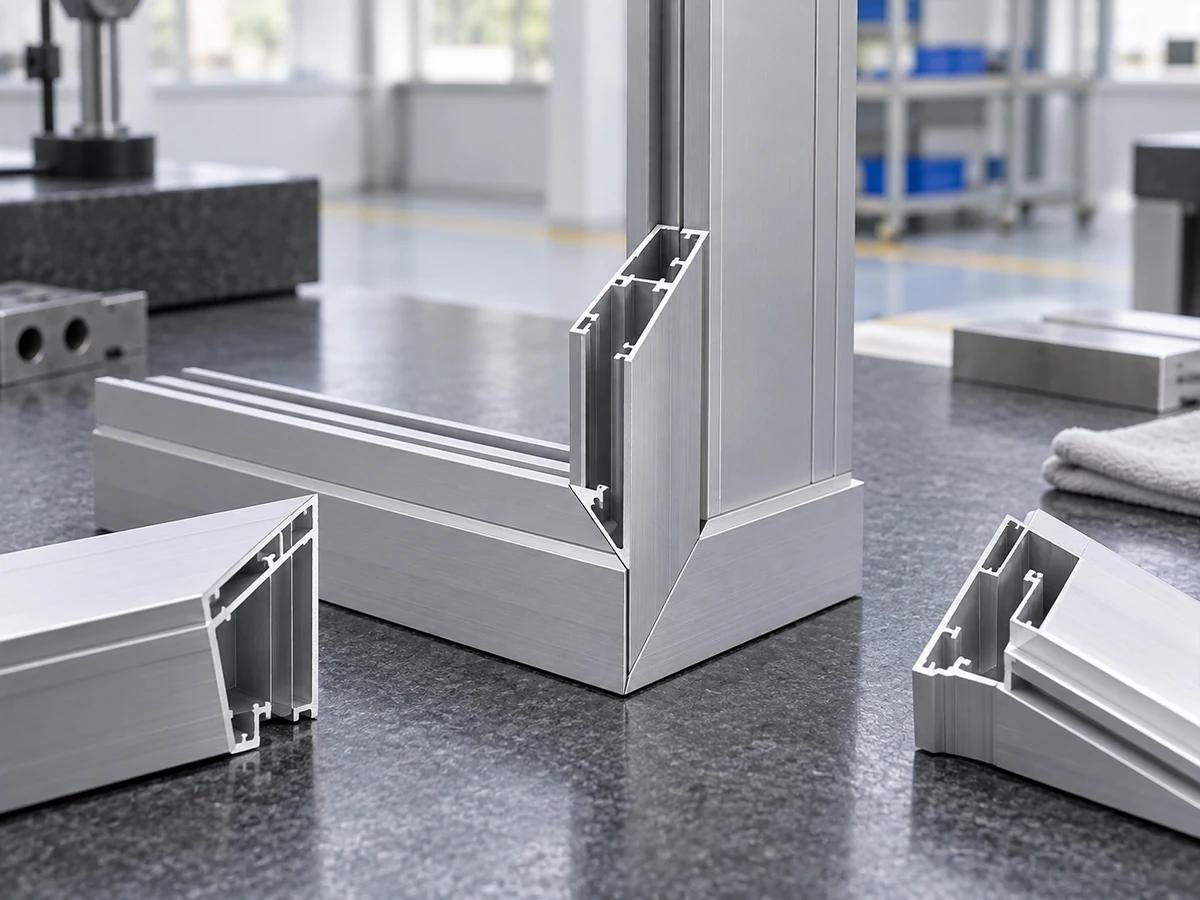
Mark every line on the cut list as a door-leaf member, a body-opening member, or another part. The moving flap may carry an outer skin, hinge points, a lock path, a seal, and support hardware. The fixed opening has its own relationship to the vehicle body. A profile intended for one location must not be substituted merely because its section looks similar on a photograph. Ask the design owner for the exact assembly drawing, profile identification, revision, and position of each member.
A published bus luggage-hatch patent illustrates one possible arrangement with side and top frame members, a lock box, a hinge, a gas-spring support, and an outer skin; it allows aluminum alloy extrusion or stainless sections in the example. That is a design example, not a universal coach specification. The approved drawing for the actual vehicle determines which pieces are aluminum and which fabrication steps are needed.
2. Decide whether a saw-cut blank is the correct supply stage
A saw-cut blank has a defined section, orientation, length, and end condition. It is not automatically a finished frame member. If the buyer needs curved or formed sections, holes, pockets, welded corners, bonded skin, installed seals, or assembled lock hardware, list those as separate operations with an identified owner. Quote a cut-only route only for the pieces that genuinely stop after cutting and inspection. Otherwise compare a machined kit or a completed door package with the appropriate specialist.
- Cut-only route: released straight extrusions with named end cuts, identification, and first-off checks; downstream machining and joining remain with the buyer.
- Prepared frame-member route: cutting plus explicitly quoted secondary machining or finish work; each operation needs its own drawing and acceptance criteria.
- Complete flap route: skin, joints, seals, hinges, struts, locks, fit, and vehicle-level validation belong in a complete assembly specification, not an assumed saw quotation.
The decision is economic as well as technical. Buying only blanks may suit an OEM that already owns the fixtures and assembly process. Buying a prepared kit can reduce internal handling but changes how revision control and inspection evidence are exchanged. A finished door has a much wider test and warranty scope. State the purchased stage before asking a saw supplier to suggest capacity.
3. Release a profile-by-profile cutting schedule
For each aluminum member, request a drawing or controlled sketch that names the extrusion section, alloy and temper specified by the design owner, surface condition, length basis, and end preparation. Do not infer the alloy from a photo, or replace the OEM grade with an online example. The same nominal length can be wrong if one party measures an outside long point and the other measures a short point or centerline.
- Assign one part number and revision to each section and orientation, including handed left/right pieces.
- Show the length datum, end-angle convention, orientation mark, and any deliberate overlength for later machining.
- State whether the cut face is a final visible edge, a joint face, or stock for a subsequent operation.
- Record quantity by door variant and vehicle build, rather than merging unlike pieces under one bulk length.
The RFQ should also say what is excluded. In particular, do not assume cutting includes burr removal to a cosmetic standard, drilling a hinge pattern, fitting a seal channel, or proving the final door gap. Each inclusion changes tooling, time, and inspection.
4. Protect the hinge, support, lock, and seal interfaces
The positions of hinge hardware, gas springs, latches, and seal contact surfaces are downstream assembly questions, but they affect how a blank is referenced and handled. Ask the door designer which face is the primary datum and whether an end cut will become a locating surface for a drilled or bonded feature. If a strut bracket or lock box is fastened later, the drawing must identify the offset from the cut datum. Do not let a shop-floor operator choose an apparently convenient datum that changes left/right alignment.
A cut supplier can record the blank dimensions it can measure. It cannot certify closing force, weather tightness, hinge life, emergency egress, or vehicle approval from a saw sample alone. The OEM or door-assembly owner should plan those checks after assembly. This separation prevents a cut report from being mistaken for a finished-door qualification.
5. Plan support and first-off inspection before batching
A hollow aluminum section may have thin walls, lips, or a visible finish that needs supported clamping. Give the cutter an actual sample and the profile cross section so support can be evaluated without crushing the section or marking the face. Review stock length, straightness, clamping contact, blade path, short-piece retrieval, and safe handling against the specific section. A general equipment video can show a feed and cut sequence; it does not establish that the proposed fixture is suitable for these door parts.
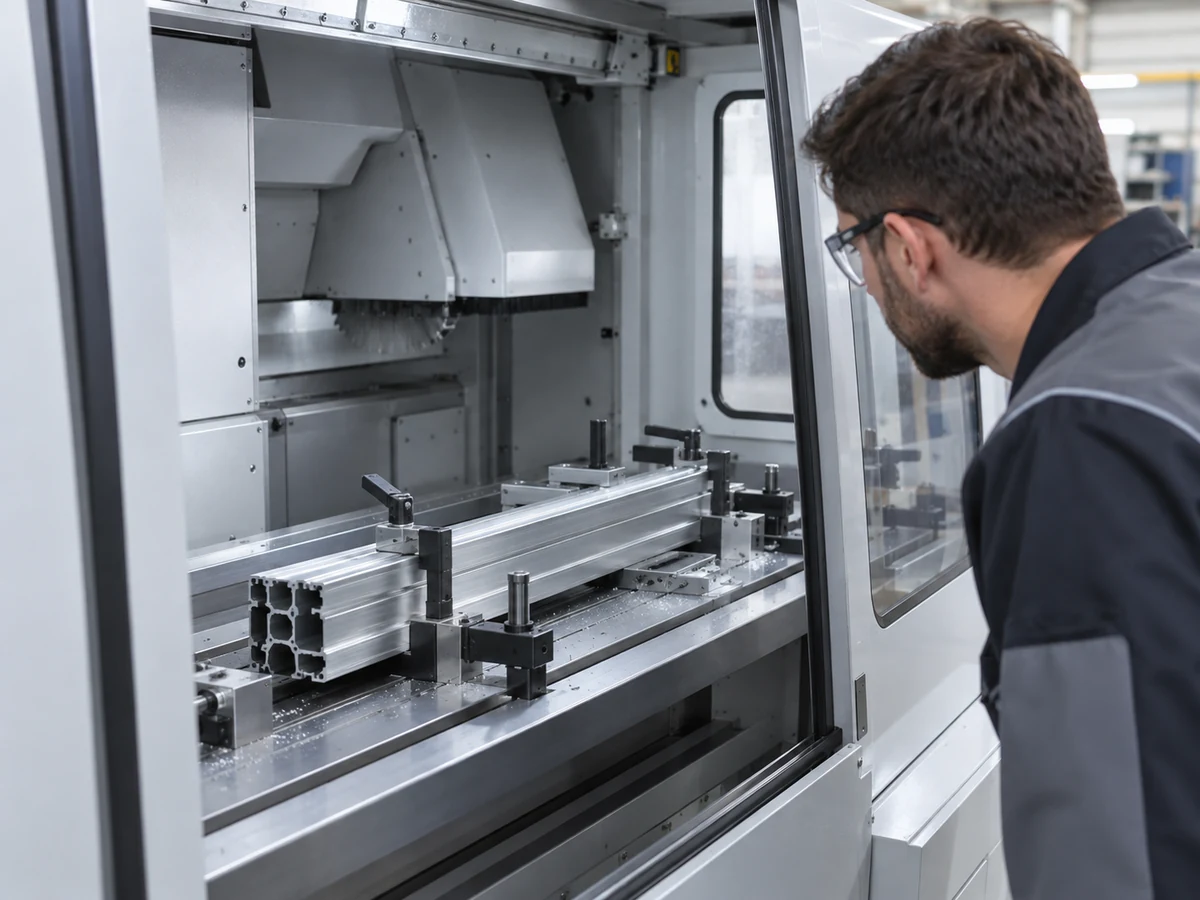
Before volume production, agree a first-off piece for every distinct profile, hand, and end-angle combination. Measure the released length datum and angle, then check the cut face, burr, wall deformation, and protected surfaces. Where a corner must mate to another member, let the assembly owner trial the first-off set against the actual fixture or drawing before the remainder of the batch is cut. Record any changed orientation or overlength as a revision, not an informal note.
6. Put the handoff and packaging in the quotation
A door-flap program can have many visually similar members. Mark each bundle with part number, revision, hand, quantity, and vehicle or door variant as agreed with the buyer. Separate cut-only pieces from those waiting for machining or finishing. Define whether protective film stays on visible faces, how open ends are protected, and who accepts transit marks. A strong quotation states what is measured at dispatch and what is verified during assembly.
Send the buyer a concise evidence request: released profile drawings; alloy and temper confirmation; sample extrusions; a per-variant cut list; the end-condition and visible-surface standard; the first-off acceptance method; and the owner of machining, joining, hardware, sealing, and final tests. If any of these is missing, price the unknown as an open item rather than assuming a finished-door service.
General saw demonstration
The following video from Jiurun Machinery shows a general aluminum cutting machine and feeding arrangement. It is a process illustration only. It does not show this article’s coach luggage-door profiles, a customer order, a verified model configuration for the application, a test cut, or any door-performance result.
A practical RFQ decision
Request a cut-blank quote when the released design uses straight aluminum extrusion members and the buyer controls all remaining frame and door work. Request a wider fabrication quote when the supplier is expected to machine, finish, or assemble those members. In either case, settle the door-leaf versus body-opening boundary and the first-off acceptance point before placing an order. That is the fastest way to compare offers that actually cover the same deliverable.
If you have an approved coach luggage-door frame drawing and sample profiles, contact JiurunCut with the cut list, section dimensions, end conditions, expected lot mix, and the acceptance checks you need. We can discuss a suitable aluminum sawing workflow after reviewing the actual material; this article does not promise a machine configuration or finished-door compliance.