
Checkweigher frame cutting should start with the approved aluminum member drawing, not with a promised weighing result. A cut-part supplier can quote straight extrusion blanks and record their geometry. The checkweigher maker and line integrator must own the load-cell installation, conveyor transfers, vibration control and final performance tests. This distinction helps a buyer compare quotations without treating a saw-cut frame as a complete weighing system.
This guide concerns a drawing-controlled aluminum support kit for an inline checkweigher. It is a purchasing and cut-release checklist, not a JiurunCut checkweigher design or a tested customer installation. The system owner must confirm whether aluminum is appropriate for the load, cleaning regime and operating environment.
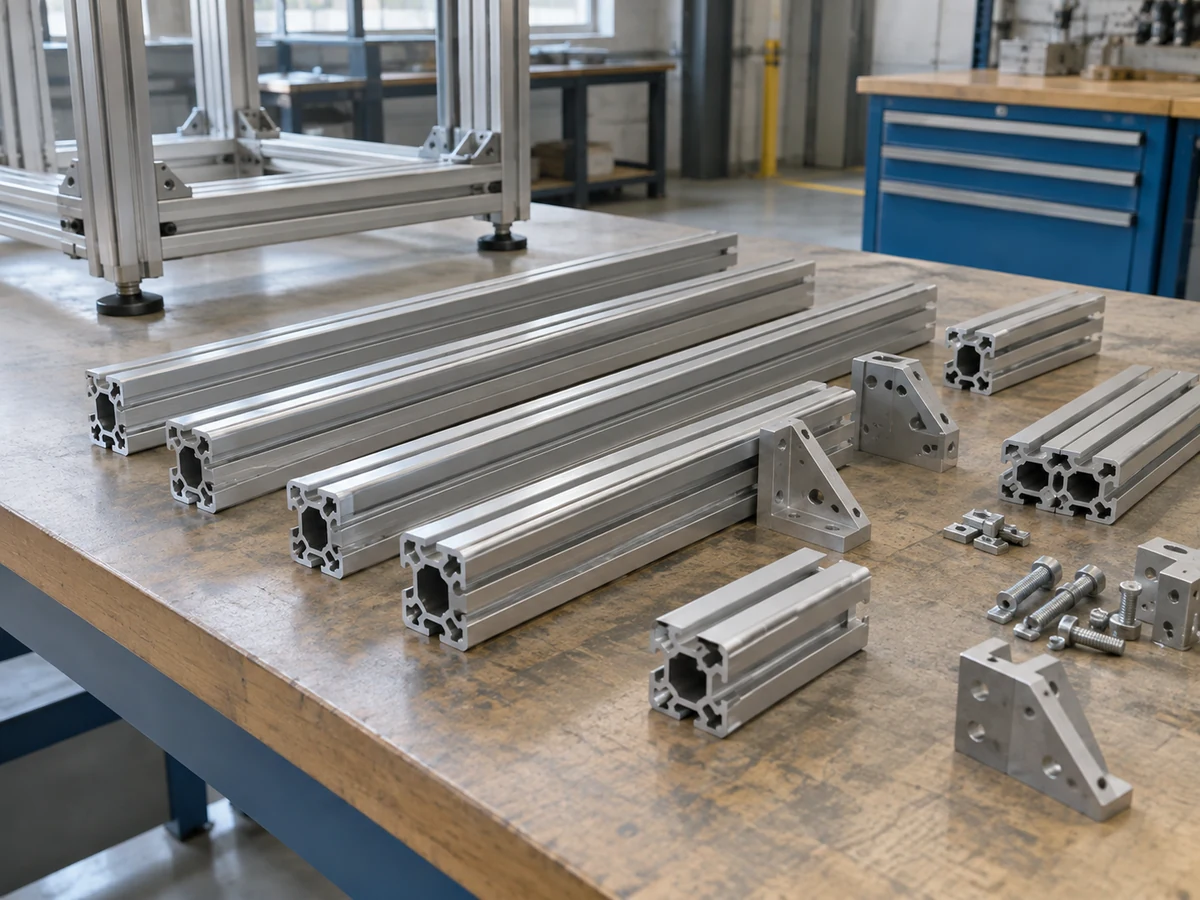
Define the equipment boundary first
A typical dynamic checkweigher has an infeed, a weighing section and an outfeed. The weighing section is sensitive to contact and vibration. METTLER TOLEDO’s checkweighing guidance describes the effect of external vibration and warns that guide rails should not touch a product while it is being weighed. Those are system-design constraints for the checkweigher supplier, not performance claims about the aluminum cut blanks in this article.
Ask the integrator to mark which rails belong to the fixed line support, which carry infeed or outfeed equipment, and which are part of the isolated weighing assembly. The drawing should show the interfaces and clearances between them. Do not replace a specified isolator, foot, bracket or load-cell mount with an assumed T-slot connector just because the extrusion size appears compatible.
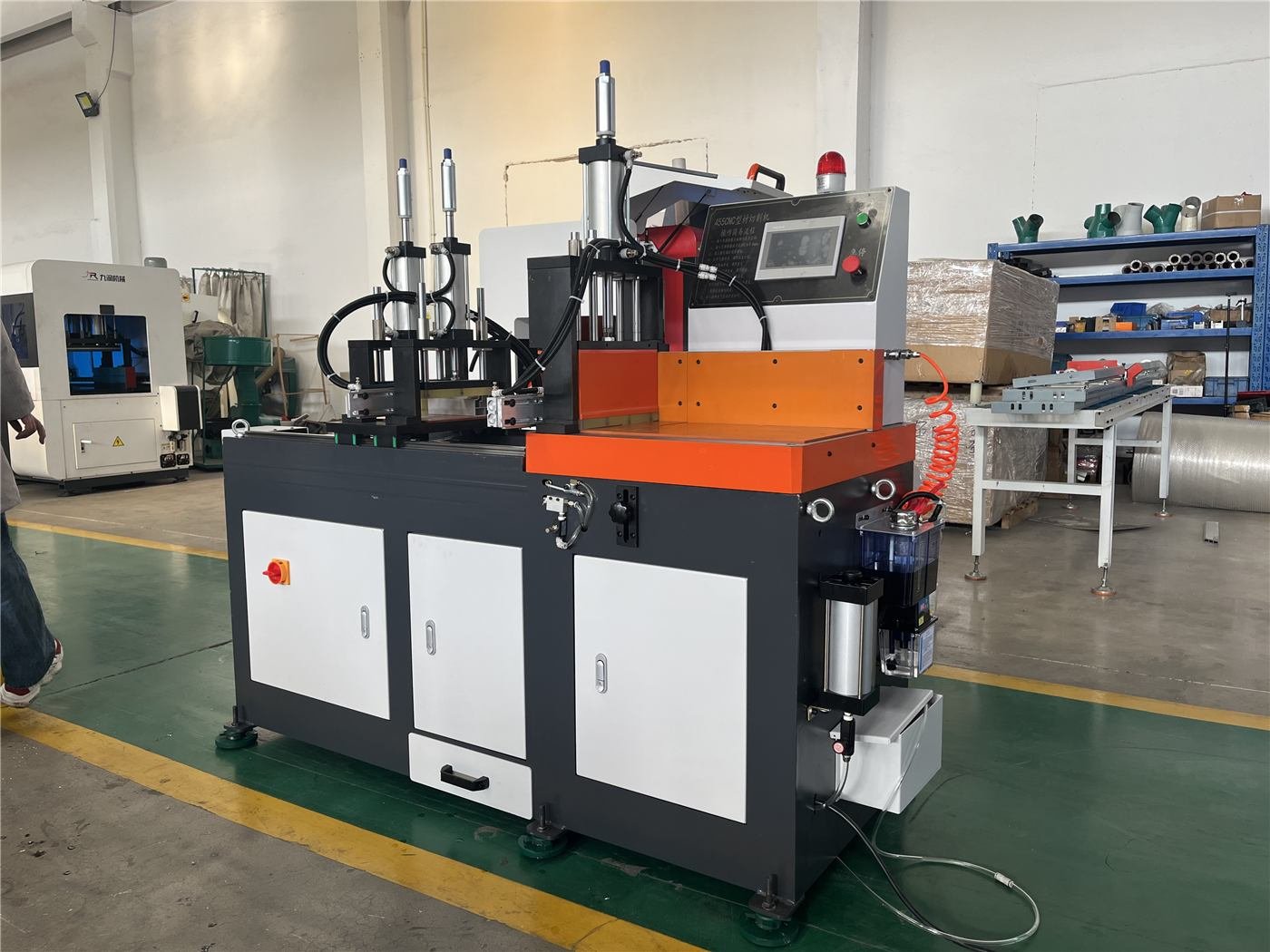
Decide whether a separate cut kit belongs in the purchase
Before requesting prices, compare three supply routes. If the checkweigher OEM supplies a complete stand, the buyer may need only a line-interface drawing and installation acceptance; a second extrusion order can duplicate that scope. If an integrator designs the support around an OEM weighing module, that integrator should issue the cut list and retain responsibility for brackets, isolation and assembly. If the project already has released member drawings and a named assembly owner, a separate aluminum blank RFQ can be useful. Ask for a clear exclusions list with each route so the low cut price is not mistaken for a complete machine-frame offer.
Use the same drawing revision, stock specification, sample requirement, shipping assumption and delivery date when comparing cut suppliers. A quote that omits material supply, first-off inspection or protection of finished faces is not directly comparable with one that includes them. Clarify whether offcuts belong to the buyer, whether stock is customer supplied, and how replacement pieces are ordered if a later integrator revision changes one member. These questions can change the real purchase cost without changing the nominal cut length.
Send a member schedule that a saw supplier can quote
Give each straight blank a part number and drawing revision. Identify its approved alloy and temper, extrusion cross-section, stock length, required finished length, quantity, cut direction and end-face requirements. If the member is asymmetric, mark the visible face and the orientation from which length is measured. State whether the supplier provides loose cut blanks, deburring, marking and packaging, or additional operations under a separate drawing.
For example, the integrator may list legs, crossmembers and conveyor-side support rails as separate items. That is a schedule format, not a bill of materials for a specific checkweigher. The supplier should not infer the profile section or length from a photograph or from a similar machine. Holes, slots, tapping, assembly, guarding, electrical work and food-contact suitability require explicit scope and approval.
RFQ comparison fields
- Drawing control: Send the part number, revision and release owner. Require every quoted line to map to that revision.
- Profile and cut: Send the section, alloy and temper, datum, length, angle and end-face criteria. Ask which stock and measuring method the supplier will use.
- Quantity: Send the batch size, length mix, first-off quantity and delivery sequence. Ask the supplier to separate setup, yield and sample costs.
- Scope: Define blanks, edge treatment, marking, packing and any extra machining. Name excluded assembly and checkweigher components.
- Evidence: Define the approved sample and inspection record. Request cut-part measurements rather than an implied scale-accuracy certificate.
Check the first-off part before releasing the batch
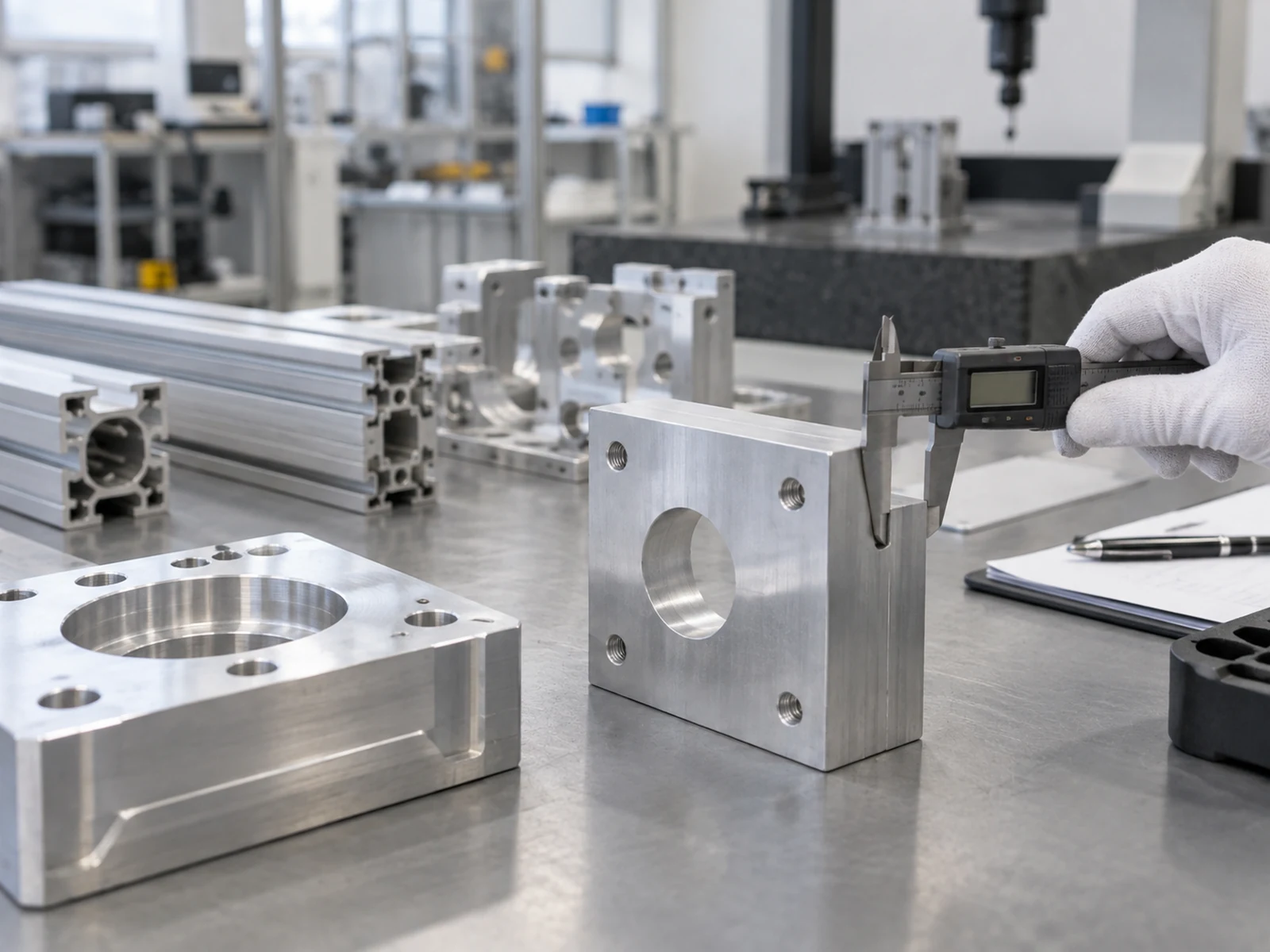
For checkweigher frame cutting, at first-off inspect length from the drawing’s datum, specified squareness or angle, burrs where parts meet brackets, and visible-face condition. Use an appropriate method for each dimension and record the instrument, result and drawing revision. A sample that looks square in a photo is not a measured acceptance record. Keep an identified reference part if the integrator wants a repeatable comparison at assembly.
Separate a geometric fit check from dynamic weighing acceptance. A frame can meet a cut drawing yet transmit vibration after assembly, or a badly positioned guide can interfere with product travel. The system maker must verify those interactions in the installed line. METTLER TOLEDO’s guidance places conveyor behavior, vibration at the load cell and accuracy checks in system commissioning. A cut supplier should not represent a blank inspection as that commissioning result.
Make acceptance and traceability usable at assembly
Agree in advance whether the first-off piece is approved against the cut drawing by the cutting supplier, the integrator or both. Record the revision, datum and actual measured values on the inspection sheet. For a batch with similar lengths, label the accepted bundles by part number and keep mirrored or differently finished members separate. Protect burr-sensitive ends and visible faces in transit. At receiving, the integrator should check quantities and identifiers before removing labels, then confirm fit with the approved connectors and mounting plates. Any mismatch should point back to the exact member and revision rather than to an anonymous pile of profiles.
That receiving check still cannot prove dynamic weighing performance. The installed conveyor, guides, load cell, isolation and controls must be assessed together under the checkweigher maker’s commissioning plan. Treat the cut-part record as evidence for geometry and condition only.
Keep vibration and transfer decisions with the system owner
For checkweigher frame cutting, the cut-kit quote should include the mounting interfaces exactly as released, but it should not prescribe a vibration-isolation scheme or promise weighing accuracy. Anritsu’s checkweigher information notes that conveyor vibration has greater impact as speeds rise and describes a vibration-resistant frame arrangement for its own model. That example shows why the exact machine design matters; it is not a specification that can be copied into a different system’s aluminum RFQ.
Before freezing the cut list, the integrator should confirm belt transfer positions, cable and hose routes, cleanout access, floor fixing and guarding clearances. Record any permitted adjustment in the assembly drawing. A saw supplier can then quote the approved lengths and sample inspection without deciding where a weighing module may be rigidly connected.
Watch a general aluminum saw-process example
The following video from Jiurun Machinery shows an aluminum cutting machine and process for observing material support and cutting-area sequence. It is a general equipment demonstration. It does not show a checkweigher, this guide’s frame members, a customer trial, isolation test or weighing performance.
Send a useful inquiry package
Send the released extrusion drawings, member schedule, material specification, expected batch sizes, first-off criteria and packing requirements. Identify who owns the checkweigher and line integration. For the aluminum cutting portion, contact JiurunCut with the most difficult section and a representative sample request. Machine, fixture and process suitability must be assessed against the actual drawings and trial conditions; the complete weighing system remains the responsibility of its designated supplier.