
Checkout counter aluminum edge cutting is a small but consequential part of a larger retail lane build. A buyer may ask for a “checkout counter cut list” when the saw supplier actually needs a list for one extruded perimeter band. The countertop, bumper, corner blocks, steel cabinet, conveyor, scanner mount, and wiring may follow different processes and suppliers. This guide turns a mixed assembly request into a cut-blank RFQ that can be checked before anyone quotes cycle time or tolerance.
Checkout counter aluminum edge cutting starts with the band
Commercial checkout designs vary. Gibam’s Olympia technical details distinguish an extruded aluminum external perimeter band from a polypropylene bumper profile and die-cast aluminum corner pieces. SuMetall’s electric checkout counter specification separately lists a steel structure, stainless work surface, and aluminum alloy edge banding. These are examples of how component boundaries differ; neither is a Jiurun project or a validated machine setup.
Start with the approved drawing and bill of materials. Mark each line as straight aluminum extrusion, shaped corner casting, plastic bumper, sheet-metal part, or complete assembly. Ask whether the aluminum band is supplied in raw stock, already anodized, or preformed. A saw quote for straight extrusion blanks should not silently include corner casting machining, a conveyor assembly, or on-site fitting.
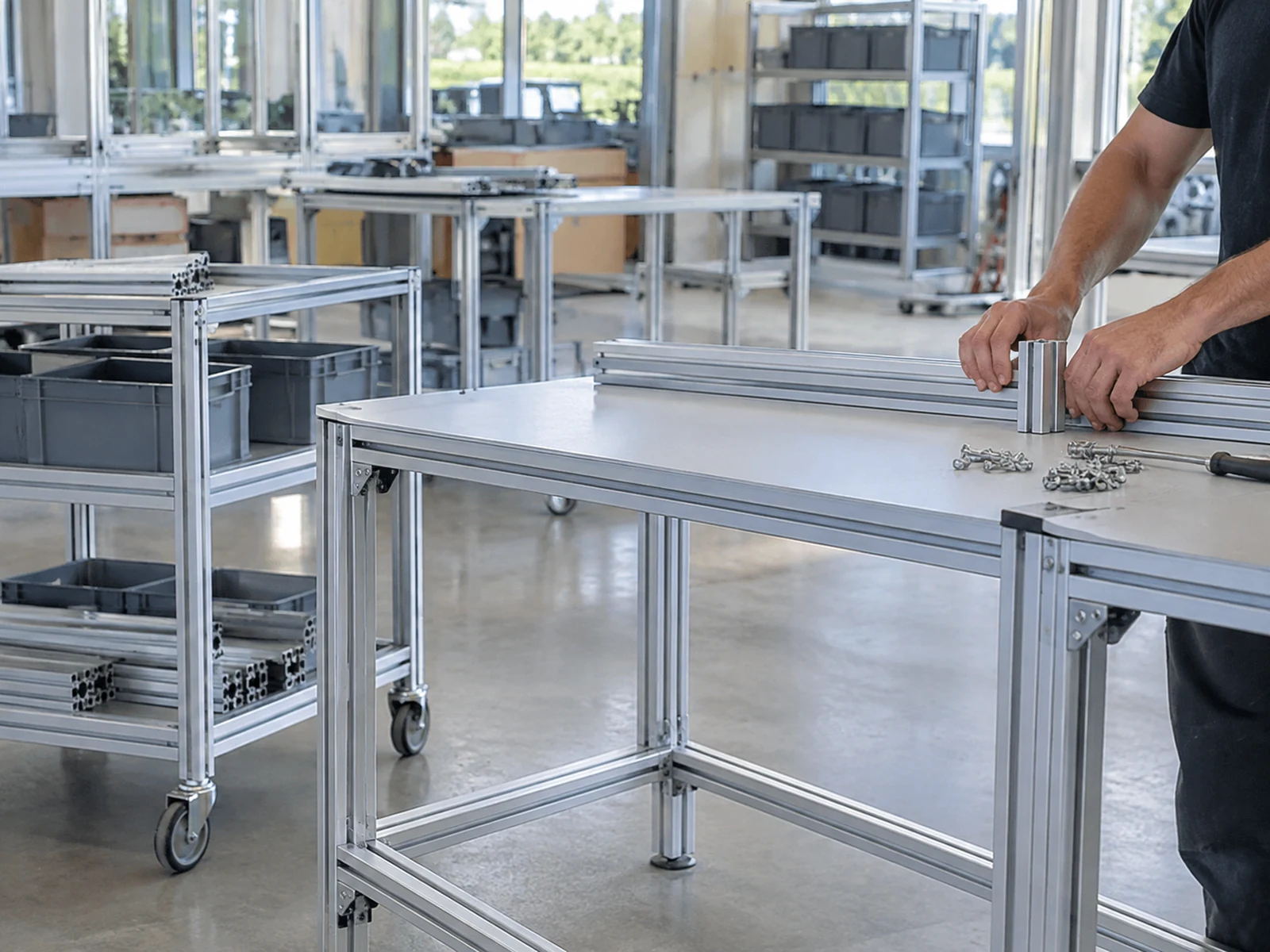
Build a cut list from the assembly datum
The outside length of a checkout lane is not automatically the blank length of its edge band. The approved drawing must identify the datum: finished countertop edge, band shoulder, or a stop against a corner block. It also needs to show where a plastic bumper begins and ends. The difference matters because a die-cast corner can cover the cut end, butt against it, or require a gap that is hidden after assembly.
For each extrusion, record the profile revision, alloy and temper if specified, stock length, finish state, section orientation, quantity, finished length, length datum, end angle, handedness, and any protected face. If the lane has left- and right-hand versions, give them separate line items even when nominal lengths look equal. A print or a marked sample is better than a verbal request to “cut the four sides.”
Use a drawing-led chain for each length. For a straight band between two corner blocks, the required blank is the distance between its two defined contact planes after any specified clearance; it is not simply the countertop overall dimension minus two guessed corner widths. For a mitered band, define whether the print measures long point, short point, or centerline. If the corner is die-cast, a 45-degree miter should not be assumed just because the countertop has a rectangular outline.
Separate saw output from downstream work
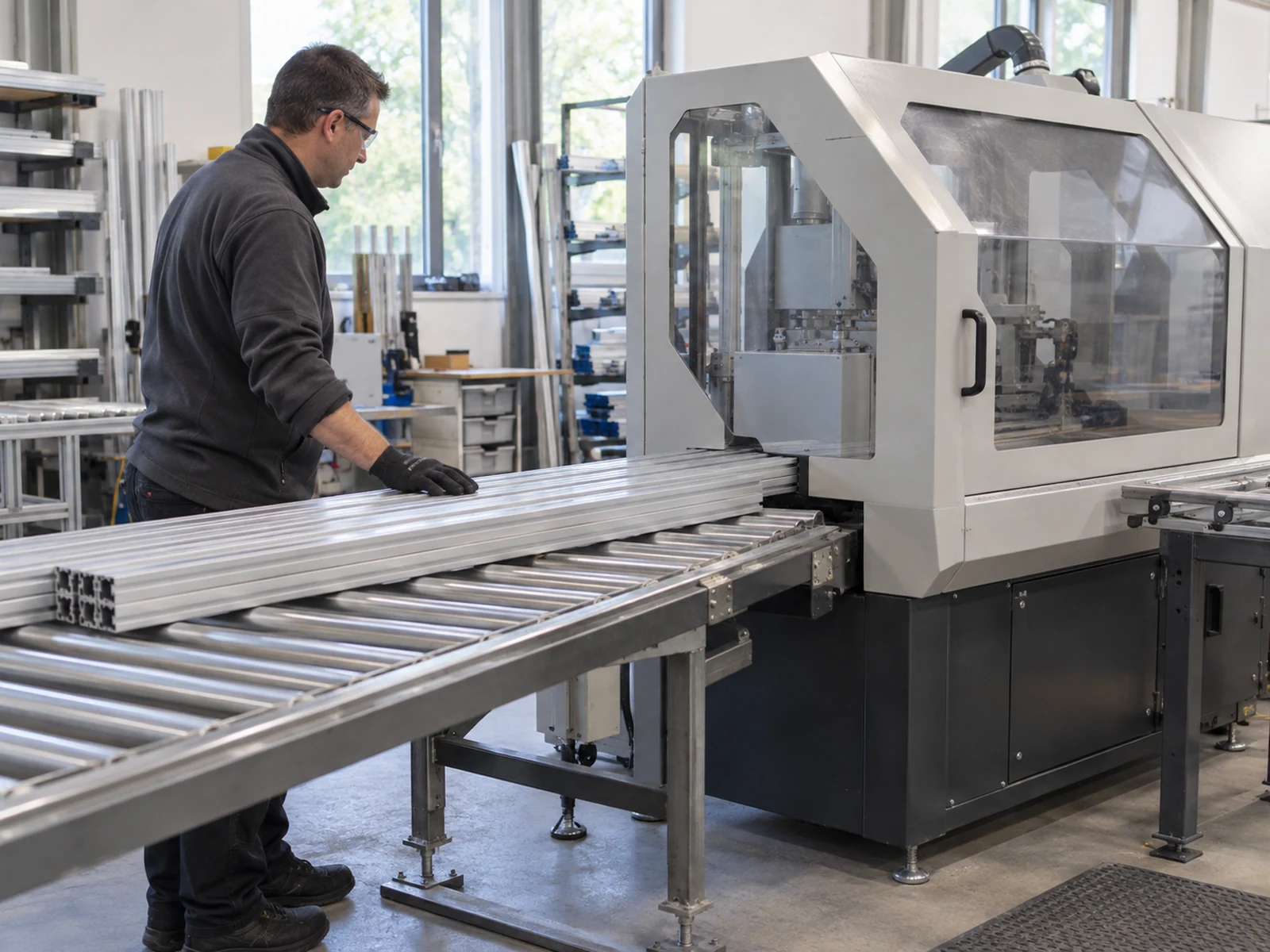
An aluminum cutting machine can be evaluated for feeding, holding, cross-cutting, and the cut-end condition of the approved extrusion. Other operations may include punching, slotting, drilling, deburring, coating, sealing, and installation. Put each operation in the route sheet. If the band arrives anodized, the buyer should also identify which visible surfaces need scratch protection during loading, clamping, collection, and packing.
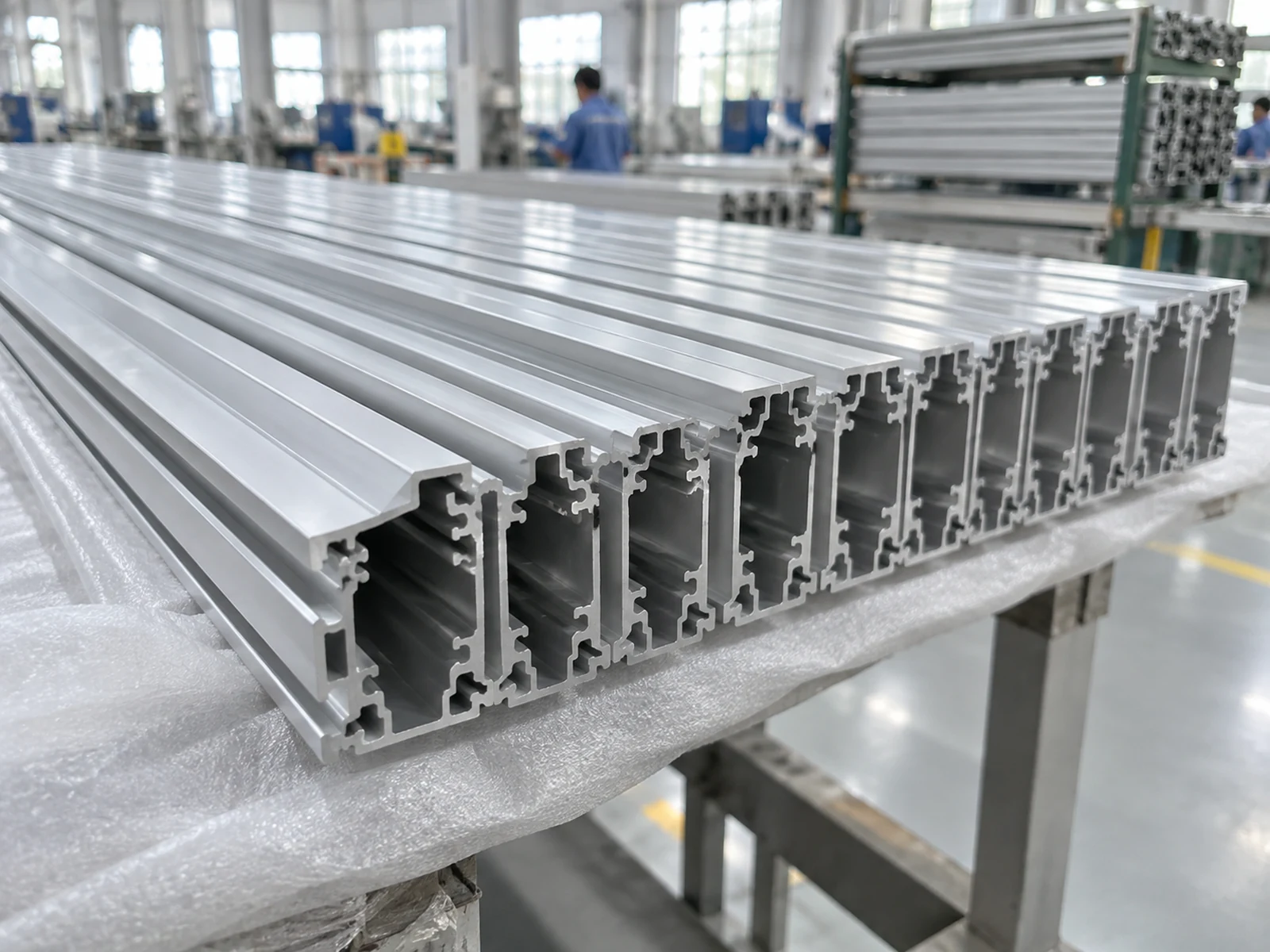
Multiple cavities, thin walls, a projecting lip, or an uneven back face change how a stop and clamp touch the section. Provide a cross-section and identify the load-bearing contact faces. Do not let a quotation infer clamp pressure from a photograph. A sample trial, when available, should use the buyer’s actual profile revision and inspect both the dimension and surface condition.
Specify what the receiving team will inspect
A useful acceptance plan checks more than one number. The drawing should state the allowable length variation and reference point, angle or squareness requirement, burr direction and removal method, cut-face appearance, and what counts as visible damage on the finished face. Give the inspection method and sampling plan or ask the supplier to propose one for approval. Any numeric limit must come from the buyer’s print or agreed trial, not from a generic saw brochure.
Ask how parts will be identified after cutting. A band that is 8 mm longer than its mate might still look plausible in a mixed bin. Piece labels with part number, revision, left/right designation, and lot reference make receiving and assembly checks faster. Packaging should keep cut ends from striking the anodized faces of neighboring parts. If the extrusion is cut before finishing, define whether burr removal precedes anodizing and who owns that step.
For first-article approval, compare cut pieces against the actual corner and bumper interface. A caliper measurement alone cannot show whether a lip meets a casting without a visible step, whether the bumper covers the edge as intended, or whether a fastener remains accessible. Record any fixture or stop adjustment as trial information; do not treat it as a qualified mass-production setting until the buyer signs off.
What to send in a checkout band RFQ
- Scope: straight extruded aluminum edge-band blanks only, or a clearly defined expanded operation list.
- Drawing package: countertop assembly, band cross-section, corner interface, bumper interface, part revisions, and left/right layout.
- Material and finish: alloy/temper if required, raw or prefinished state, protected faces, stock lengths, and expected lot variation.
- Cut schedule: part number, datum-based finished length, end geometry, quantity, order of operations, and scrap allowance.
- Acceptance: drawing tolerances, cut-face and burr criteria, surface limits, inspection and packing method.
- Trial: representative stock and mating pieces for a first-article fit check when the project calls for one.
For checkout counter aluminum edge cutting, this packet lets the saw conversation focus on the actual extrusion: support over its full feed length, secure location without marking a finished face, repeatable length and angle inspection, and a safe collection route. If the quote covers only cutting, say so in the purchase order. If it includes deburring or labeling, make those separate deliverables.
Related machine demonstration
The Jiurun channel video below shows a general aluminum saw and feed process. It is a related equipment illustration only. It does not show this checkout band, the manufacturers cited above, an approved profile, a customer trial, a specific configuration, or verified production results.
Next step for a buyer
Send the approved band drawing, cross-section, corner and bumper interface, required quantities, stock finish, and acceptance criteria to JiurunCut. Ask which parts of the route a proposed CNC aluminum cutting machine can address and request a representative trial plan before using any quoted tolerance or output in the release. This keeps the equipment discussion tied to a measurable blank rather than to an entire checkout lane.