
A centralized aluminum cutting workshop can supply several factories, but the purchasing decision depends on whether accepted members reach each factory when its next operation needs them. Comparing one central saw with several local saws only by purchase price or nominal cutting speed leaves out much of the supply route.
The buyer must decide where cutting, identification, checks, packing, transfer and receiving will take place. A central machine can complete a cut while a receiving factory still lacks the required kit. Conversely, a local station can be available but lack the correct stock, approved job information or supporting provisions. Both arrangements need evidence for the complete work.
This guide compares a central workshop, local cutting stations and a deliberately divided arrangement for a manufacturing group. It addresses the location of the retained cutting process and the inter-factory supply responsibilities. Machine configuration still needs assessment against actual material, section and finished-member requirements.
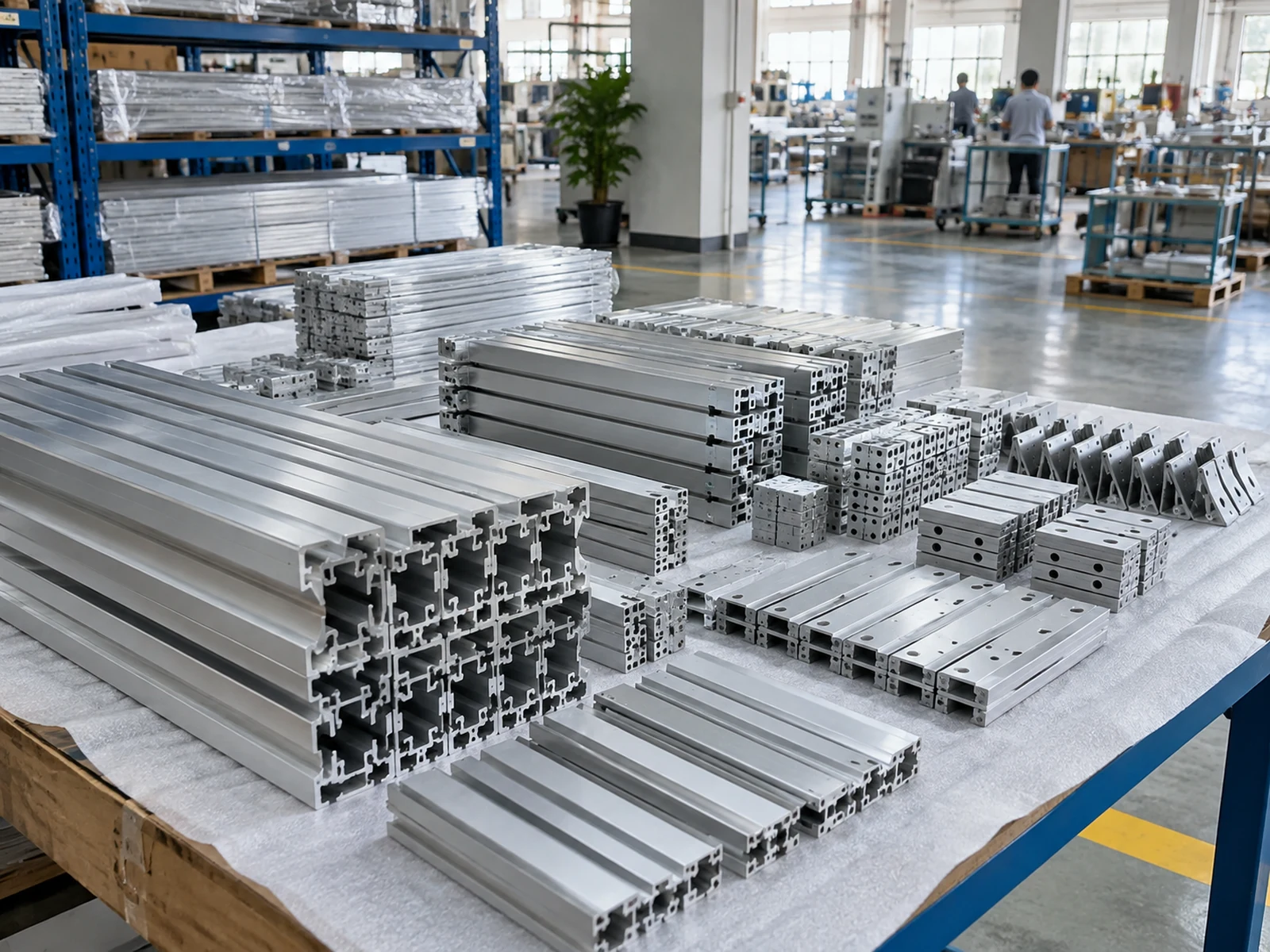
Define the supply responsibility before selecting the machines
Start with the factories the proposed workshop will serve. For each one, identify the receiving operation, member families, drawing revisions, quantities and required handover times. State whether the central workshop will supply cut members, identified assembly kits or members that require additional processing at the receiving site.
These outputs are different. Twenty members held in a central output area are not equivalent to twenty accepted members allocated to a particular assembly. A receiving factory may need different lengths, end orientations or revisions within that total. The central order needs a clear description of what the downstream operation can actually use.
Record work that will remain outside the proposed cutting system. A site may buy a complete module from another supplier, process a specialized member locally or receive a prepared part directly. Keep those routes visible without counting their quantities as central saw demand. This avoids selecting a machine for work it will never perform.
Assign the release decisions. Someone must issue the member requirement, approve changes, accept output and authorize transfer. The purchase should identify these responsibilities so the equipment supplier receives a stable task description. The saw itself cannot decide which factory’s revision is authoritative.
Compare three arrangements for a centralized aluminum cutting workshop
A central workshop places the agreed cutting work at one location and transfers its accepted output to the receiving factories. The buying scope therefore includes the central station’s supporting equipment and the arrangements for preserving member identity through movement and receipt.
Local stations retain specified cutting tasks at the factories that use the output. Each station needs its own assessed site arrangement, instruction and available stock. Similar-looking jobs do not establish that an identical offered configuration is suitable at every factory, although some provisions may be confirmed as common.
A divided arrangement can centralize a defined family while retaining another family or a bounded local task at its receiving site. This is useful to compare only when the boundary is explicit. A vague promise that every site will help when busy creates uncertain stock allocation, competing job versions and an unproved transfer route.
| Arrangement | Buying scope to establish | Supply question to resolve |
|---|---|---|
| Central cutting workshop | Central tasks, complete station, output handling and transfers | Will the receiving factory have accepted members by its handover? |
| Local cutting stations | Site-specific tasks, stock, supports, people and release | Can each site deliver its retained work independently? |
| Defined central and local split | Named task families and responsibility at each location | Which route owns every member, revision and exception? |
None of these arrangements is automatically cheaper or more reliable. Compare the same downstream requirement through each route. A central proposal should not exclude transport and receiving while a local proposal includes all its supporting provisions.
Map one member from stock receipt to factory acceptance
Select a representative member family and follow it through the current arrangement. Record material receipt, stock identification, job release, preparation, cutting, checks, packing, dispatch, transport and receiving. Include the information that moves with the material and the point at which ownership changes.
NIST’s value stream mapping overview describes mapping materials, processes and information flows, then comparing the current arrangement with a future state. That provides a useful planning method here. It does not establish a machine rate, a transport allowance or a saving for the proposed workshop.
Use observations from the actual route. If completed members wait for a collection vehicle, include that waiting point. If the receiving factory must sort an unidentified bundle before it can accept the output, include the sorting responsibility. Do not treat these activities as invisible simply because the saw has already finished.
Then map the proposed route using the same handover requirement. This makes a meaningful equipment comparison possible: the buyer can see which activities move to the center, which stay local and which become new transfer work. Unknown times and responsibilities remain open inputs until the relevant party supplies evidence.
A hypothetical example shows why the combined total is insufficient
Suppose Factory A needs eighteen frame members at its morning assembly handover. Factory B needs twelve support members for a later handover. The quantities and times in this example are invented for explanation; they are not Jiurun production data, delivery commitments or recommended buffers.
Now suppose the central workshop has eight accepted members allocated to Factory A and ten accepted members allocated to Factory B. It holds eighteen accepted members in total. That total does not cover Factory A’s requirement: A still needs ten of its own members, while B needs two of its own members.
The same applies after additional cutting. Assume the center completes all twelve outstanding members, but the planned transfer to A arrives after its assembly handover. The central output count may be complete, yet A’s required supply has not been delivered at the time it matters. A higher machine cutting rate alone cannot correct a transfer that starts too late.
Change the proposed arrangement so A retains its ten outstanding members locally, while the center supplies B’s remaining two through an agreed transfer. The quantities can be assigned clearly, but the local route still needs confirmed stock, an assessed configuration and acceptance responsibility. Calling those ten members urgent does not create that capability.
| Receiving factory | Requirement | Accepted members allocated | Outstanding supply |
|---|---|---|---|
| A, morning handover | 18 frame members | 8 matching members | 10 matching members accepted and received in time |
| B, later handover | 12 support members | 10 matching members | 2 matching members accepted and received in time |
| Combined planning view | 30 members with separate requirements | 18 allocated members | 12 outstanding members with distinct routes and times |
Replace every illustrative figure with actual site demand. Keep member identity, drawing revision, route and handover attached to each quantity. Never count the same accepted members as available supply for two factories.
Decide which families belong at the center
Compare families through their actual material and end requirements. Straight members, angled members and different sections may require different configuration responses. Do not assume that moving all aluminum work to one location means one proposed saw covers every task.
A family with released requirements and an agreed transfer route may be a candidate for central cutting. A family whose final member requirements are confirmed only at its receiving operation needs a different information arrangement before it can be centralized. This is a planning distinction, not a claim that either family must always be processed in one location.
Ask how a new revision will be released to the cutting location and how superseded output will be identified. The transfer process needs a decision about already cut or dispatched members. The buyer should not rely on a machine control to resolve which version the receiving factory wants.
If local work is retained, list it positively in the scope. Identify its material, task owners and receiving requirements. A small local station should be bought for those actual tasks rather than justified as an undefined backup that supposedly covers all central work.
Specify the central station through the combined retained portfolio
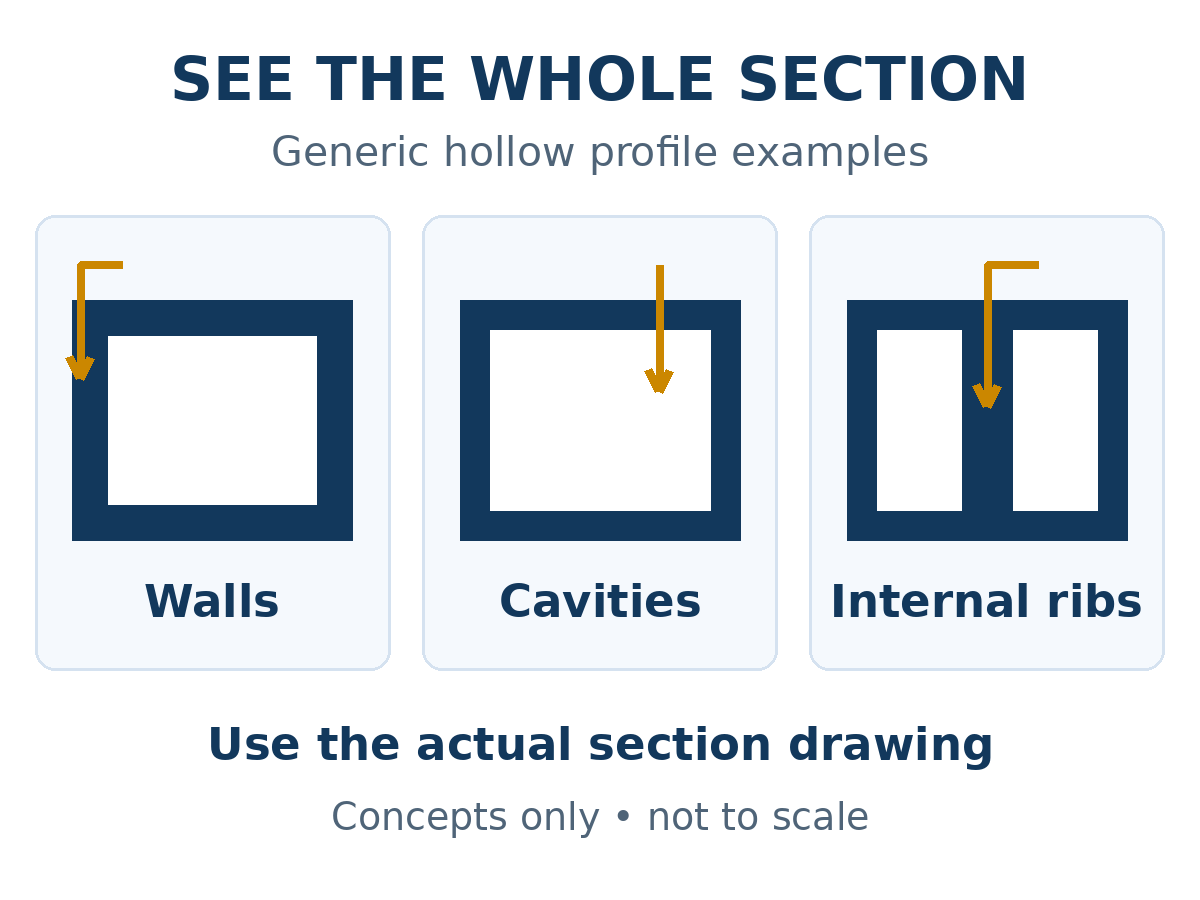
Send the equipment supplier a representative portfolio of the families the central workshop will retain. Include material and section information, member drawings, end requirements and finished-member checks. Explain the job mix rather than submitting only the largest individual member.
Ask for a configuration response to each relevant task. Where the center expects repeated programmed jobs, confirm the actual control functions and job information supported by the offered system. Existing spreadsheets or a familiar filename do not prove that the supplier’s control can receive the information unchanged.
Include incoming stock support and accepted-output handling in the scope. Long stock, cut members and packed transfer units occupy different positions in the route. A machine footprint is one input to the station plan; it does not establish the complete space or movement requirement.
Keep output acceptance tied to the drawings and next operation. A stated feeding or positioning accuracy is not a guarantee of finished-member accuracy. Assess agreed samples and configuration evidence against the actual receiving requirement before treating that task as covered.
Protect member identity through packing, dispatch and receiving
Define how members will remain associated with a factory, order, assembly or member list. The arrangement should distinguish material awaiting checks from accepted material ready to dispatch. It should also identify the receiving party and the evidence it needs to accept the shipment.
Ask what the receiving operation requires after transfer. It may need a complete kit, sorted members or separately identified quantities. A central bundle that has to be reconstructed at the destination creates additional receiving work. Include that work in the comparison rather than describing the bundle as immediately usable.
Establish responsibility for the proposed protection and packing method. Assess it against the actual finish, member form and movement route. A picture of wrapped stock cannot establish that the specific members will arrive without damage, and no universal packing method can be inferred from an equipment offer.
Record what happens when a received member is disputed or missing. Identify who can authorize replacement work, which drawing applies and how accepted supply is reconciled. The route should preserve the original request and replacement allocation so that duplicate orders do not become unexplained central demand.
Give transfer timing the same attention as cutting timing
Use the actual dispatch opportunities and receiving windows for each site. Ask who prepares the load, which information must accompany it and when the receiving operation can accept it. A planned vehicle movement is not evidence that the members will be released in time for that movement.
Separate cutting completion, acceptance, dispatch and usable receipt in the planning record. Each describes a different state. If a factory cannot use a shipment until its receiving checks are complete, the handover plan needs to reflect that requirement.
Compare disturbances using defined scenarios. A delayed vehicle, an unreleased member revision or unavailable receiving staff affects a different part of the route from a machine interruption. Record the available response to each event instead of assuming that one extra machine resolves every supply failure.
Use actual agreed timings and responsibilities when making the purchase decision. This guide cannot supply a standard inter-factory transport allowance or a reliable buffer quantity. Those inputs depend on the particular members, route, demand and approved operating arrangements.
Compare costs across the same boundary
For the central proposal, identify the machine and included configuration, supports, site provisions, output handling, packing, transfers, receiving and continuing support. For local proposals, identify the corresponding provisions at each site. Keep separately quoted items and buyer-supplied work visible.
Record the actual quoted costs and the assumptions behind continuing costs. Transport, packing and receiving may be charged or supplied internally through different arrangements. They should not disappear from the comparison simply because their invoices are outside the machine purchase.
Consider inventory by location and allocation. Stock at the center, accepted members awaiting dispatch and members held at receiving factories are different holdings. A central purchase does not automatically eliminate these holdings, and the same pieces must not be counted twice when comparing available supply.
Any saving or payback calculation needs actual baseline and proposed-route evidence. Keep volume, job mix, transfer requirements and the comparison period explicit. A supplier’s general equipment description cannot establish a universal percentage saving for centralization.
Plan the change to the new supply route
List the families that will transfer first and the acceptance decisions needed at the new location. Equipment delivery, installation readiness, assessed tasks and release of the inter-factory route are separate milestones. Do not close a working local route merely because the central machine has shipped.
Reconcile orders already released to local stations with those assigned to the center. Identify accepted members, unfinished work, material allocation and the receiving factory’s next handover. Give each outstanding quantity one responsible route so that neither site assumes the other is completing it.
Introduce the arrangement through agreed representative work and actual receiving evidence. A central sample can support its defined task; usable receipt at the destination also needs to be checked through the proposed transfer route. Preserve unresolved families outside the released scope until their requirements are addressed.
Document the boundaries after the change. If local cutting remains available for named work, retain its responsibilities and applicable information. A defined split is easier to evaluate than an informal arrangement in which central and local teams alternately claim ownership of the same order.
Equipment video for the configuration discussion
This Jiurun video provides equipment context for the offered-configuration discussion. It does not prove the proposed cross-factory supply route, receiving result or workshop capacity.
What to send Jiurun for a central workshop proposal
Provide the sites to be served, retained member families, representative material and sections, drawings, end requirements and acceptance checks. Add the agreed output form: individual members, identified sets or kits. Describe the expected job mix without turning it into an unsupported machine rate.
Explain the incoming stock route and the provisions already available at the proposed cutting location. Identify output handling, packing and dispatch responsibilities, plus the receiving handovers the central workshop must support. Keep local or bought prepared-member routes separate.
The Jiurun aluminum cutting equipment range can start a configuration comparison. Use the sample-cutting assessment checklist for the agreed member evidence, and assess the full transfer arrangement alongside it.
Discuss your centralized aluminum cutting workshop with Jiurun. A useful inquiry explains what the center must deliver to each factory, what each site retains and which requirements still need confirmation.
Questions about central and local cutting
Does one central saw always cost less than several local saws?
No general conclusion follows from machine count. Compare the complete quoted stations and the actual packing, transfer, receiving and inventory arrangements through the same downstream requirement.
Can accepted output at the center be counted as available at every factory?
Keep it allocated to a named receiving requirement. Its location, identity and expected usable receipt determine whether it covers that factory’s handover.
Should every local station use the same model?
Confirm the tasks and site requirements separately. Common configuration elements need written offered-scope evidence; a model label alone does not establish suitability.
Does a faster saw fix late inter-factory supply?
Identify where the delay occurs. Cutting, acceptance, dispatch and receiving are distinct steps, and a rate change does not by itself establish an earlier usable handover.