
A cable reel rack frame cutting RFQ can go wrong before the first blank reaches a saw. A buyer may ask for a “rack frame” while the drawing actually combines aluminum extrusion rails, steel reel supports, bought-in clips, and assembly work. If those parts are quoted as one cutting job, the saw supplier cannot tell which lengths and end conditions it owns. Separate the members first, then ask for a cut plan that can be checked at first-off.
This guide is for a passive storage rack with specified aluminum members. It does not establish a rack load rating or approve an installation. The rack designer or integrator owns those decisions.
Identify the rack type before listing cuts
Ask whether the project is a passive reel storage rack, a mobile handling fixture, or a powered payout stand. The words “cable reel stand” can describe different assemblies. For example, MayTec’s reel stand combines an aluminum profile frame with ABS-coated steel crossbars. In contrast, Amphenol TPC describes a powered reel stand that adds a motor, gearbox and tension control. These are examples of different scopes, not specifications for a Jiurun cutting job.
In a passive rack RFQ, identify each aluminum extrusion that is actually to be cut: uprights, depth rails, shelf or bay rails, braces, guards, or other designed members. Mark steel crossbars, reels, fasteners, end plates and assembly as separate lines unless the supplier has expressly agreed to provide them. Do not infer a crossbar’s material from the frame’s material.
Cable reel rack frame cutting starts with a member-level cut list
Give each part a unique identifier that survives cutting, inspection and packing. A useful row names the extrusion drawing and revision, stock length, finished cut length, quantity, end angle or orientation, datum, visible face, burr or edge requirement, and any required downstream operation. If one end is cut before drilling or milling, show which feature controls the final length. If an end must mate with a connector, define the mating face instead of writing “square and clean.”
For a rack with repeated bays, identify whether equal-looking rails are truly interchangeable. A rail with an access-side feature or a handed end may need a separate part number. Also state whether the first-off piece must be checked against a drawing, a master sample, or a fit-up gauge. The supplier can then quote the cut blanks and inspection steps without claiming that the complete rack has been validated.
Plan support and clamping around the actual extrusion
Long profiles need stable support before the blade engages. Tell the cutting shop which faces can contact a fence or hold-down and which visible surfaces need protection. Provide a cross-section drawing and mark internal voids, thin walls, T-slots and connector channels that affect clamping. The fixture should restrain the stock without distorting a wall or hiding the datum used for inspection. A first-off check should confirm the cut length and end condition on the actual specified profile.
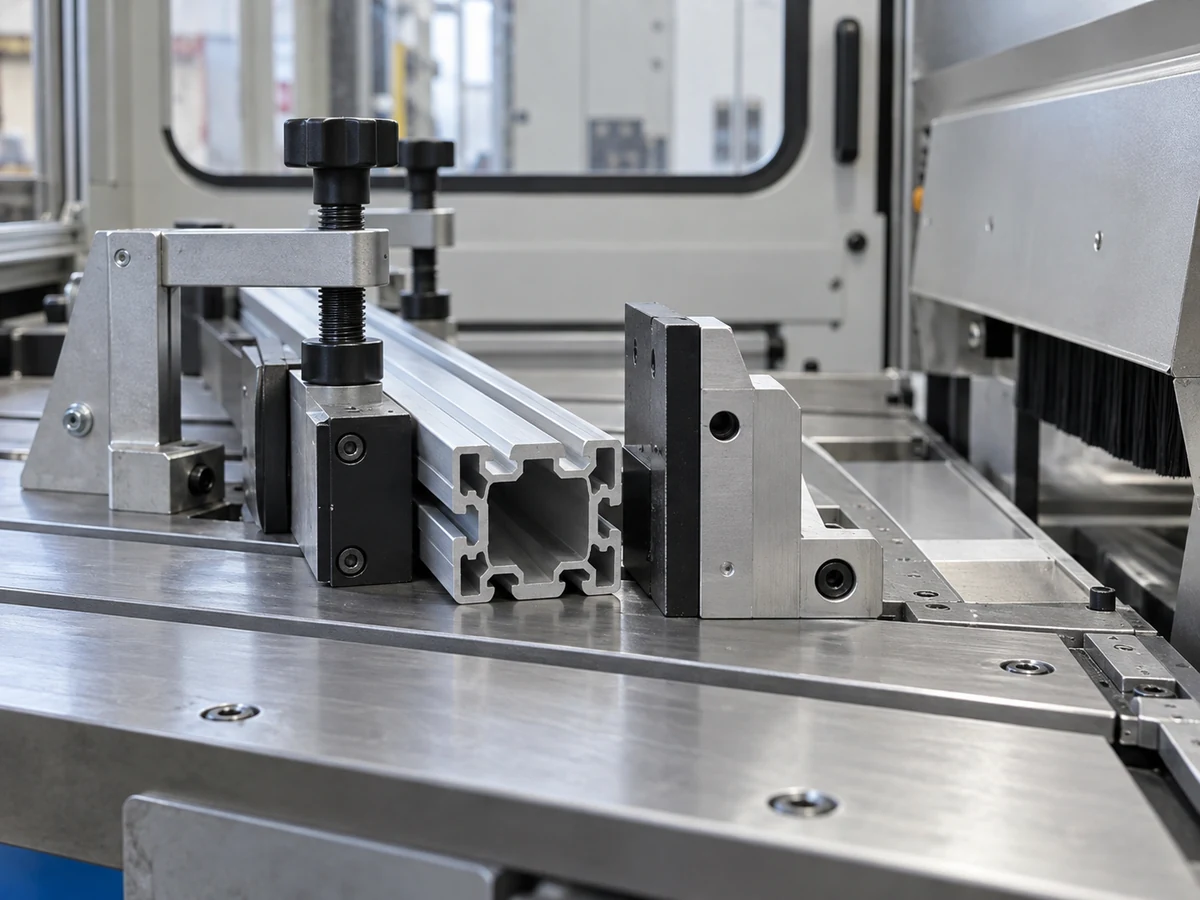
Do not turn a generic saw photo into a process guarantee. The released drawing, stock sample, fixture review and first-off measurement govern the job. If a bay rail or upright needs a second operation, ask the supplier to quote it as a separate step and name who checks the final assembled interface.
Watch a cutting sequence without treating it as this project’s test
The following Jiurun Machinery channel video shows a saw process example. It can help a buyer discuss feeding, support and cutting sequence; it is not a reel-rack material test, a specified machine setup, a customer installation, or proof of rack performance.
Control first-off, labels and mixed-member packing
Request a first-off record for each unique member and end condition, then define how production pieces are sampled. Record measured dimensions against the drawing revision, rather than accepting a blanket “within tolerance” statement. If multiple bay lengths share a profile, a label should carry the part identifier, revision and quantity. Pack long rails and short braces in separate, protected groups so assembly crews do not have to sort by eye.
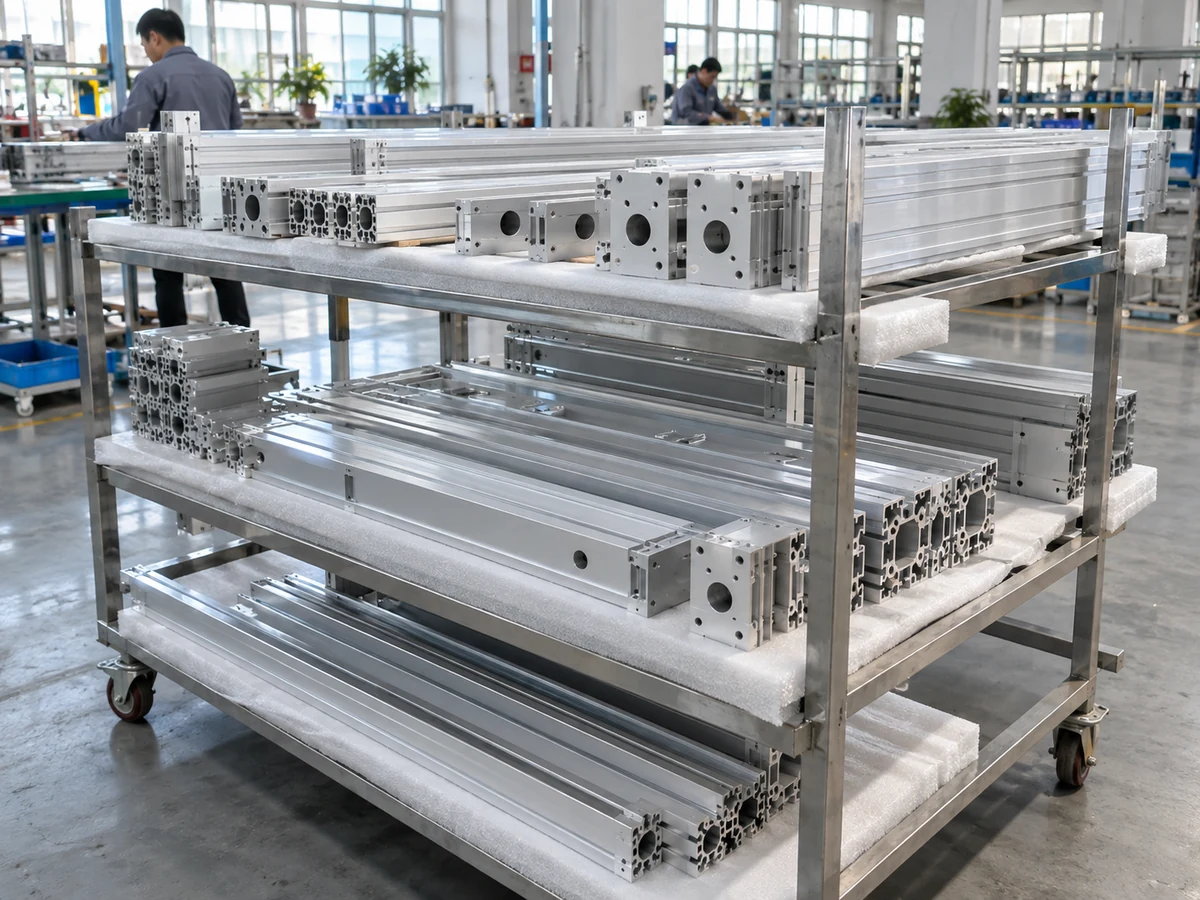
In cable reel rack frame cutting, a good shipment record is as valuable as the cut list. Give the assembler a separate list for steel supports, brackets, reel-contact parts and fasteners. The cutting supplier’s delivery record should identify only the components it made. This distinction makes a missing purchased part easier to trace and keeps a cut-blank inspection from being mistaken for a completed rack acceptance test.
If the RFQ is for a cutting machine rather than outsourced cut blanks, use the same released list to discuss stock support, clamping faces, first-off checks and required throughput with the machine vendor. Ask it to propose a process for your actual profile sample; do not treat a generic video as that trial.
RFQ checklist for a cutting supplier
- State the rack type and identify the aluminum members in the supplier’s scope.
- Attach released extrusion and part drawings with revisions, datums, lengths, end conditions and quantities.
- Mark visible faces, handling limits, first-off checks and any fit-up gauge.
- Separate steel crossbars, bought-in hardware, drilling, assembly and installation into owned line items.
- Specify part labels, batch grouping, protection and the inspection record to accompany shipment.
- Keep load rating, reel retention, guarding, installation and whole-rack acceptance with the rack designer or integrator.
If you are selecting a saw for released rack-member cutting, send JiurunCut the extrusion drawings and cut list, along with expected batch volume and first-off criteria. We can review cutting-machine requirements and prepare a machine proposal. The rack design, cut-part production and whole-system approval remain with their assigned owners.