
Cable-entry brush strip cutting needs a clearer scope than a request to “shorten the rail.” A cable-management strip may contain an aluminum holder and a flexible brush insert, while the surrounding rack or enclosure provides the mounting datum. An aluminum saw quotation only answers the metal-cutting part if the customer has approved which component arrives at the saw and what condition leaves it. This buyer guide separates the aluminum blank, the assembled accessory and the installed cable opening so a first-off trial can test the right output. The photographs, diagram and machine video below are related illustrations, not a test of a particular brush-strip product.
Start with the exact accessory and the accepted supply stage
Ask whether the order is for an empty extruded holder, a holder with brush already inserted, a cut and prepared accessory, or a completely mounted cable-entry assembly. These are different jobs. The brush, mounting brackets and cable route may be supplied by separate parties. Record who owns each item, who releases the drawing, and who accepts the fit after installation. A supplier that only cuts aluminum stock should not be credited with an assembled rack accessory unless the quotation actually includes that work and its inspection.
Rittal’s DK 7827544 vertical brush strip illustrates why the boundary matters. Its product information identifies a natural-anodized aluminum section and a plastic brush strip, lists a 950 mm product length, and says the strip must be shortened when attached to the 19-inch mounting angle. That is a statement for this accessory and installation route, not a general cut allowance or authorization to put an assembled brush through an aluminum circular saw. Obtain the current manufacturer instructions and the customer’s released drawing before specifying a machine operation.
On the RFQ, state whether the bristles can be removed before the metal is cut, whether the holder may be cut as loose stock, and which party restores or replaces the brush. If the manufacturer only approves field trimming of a completed accessory, ask the product owner to define that method separately. Do not substitute a loose-holder saw trial for approval of a completed or installed brush strip.
Identify the metal datum and installation clearance
A rack opening, nominal catalog length, actual aluminum length and installed brush coverage can differ. Define the measurement datum on the approved drawing: over bare aluminum ends, between bracket faces, or over the installed accessory. Give the cut list a product number and revision, left or right placement if applicable, quantity, finish, end condition and required receiving stage. Do not let a sales-order cabinet height become the saw stop setting without a released metal dimension.
The same Rittal page specifies a minimum 75 mm of free space in front of its 19-inch mounting level and describes fixing at the vertical frame or chassis. That clearance belongs to the stated product context; it is not a universal allowance to subtract from the extrusion. The buyer should request a marked installation sketch showing brackets, adjacent equipment and cable access, then have the system owner translate it into the metal length for each row. Changing the bracket, rack position or brush engagement requires a revised cut list rather than an operator’s informal adjustment.
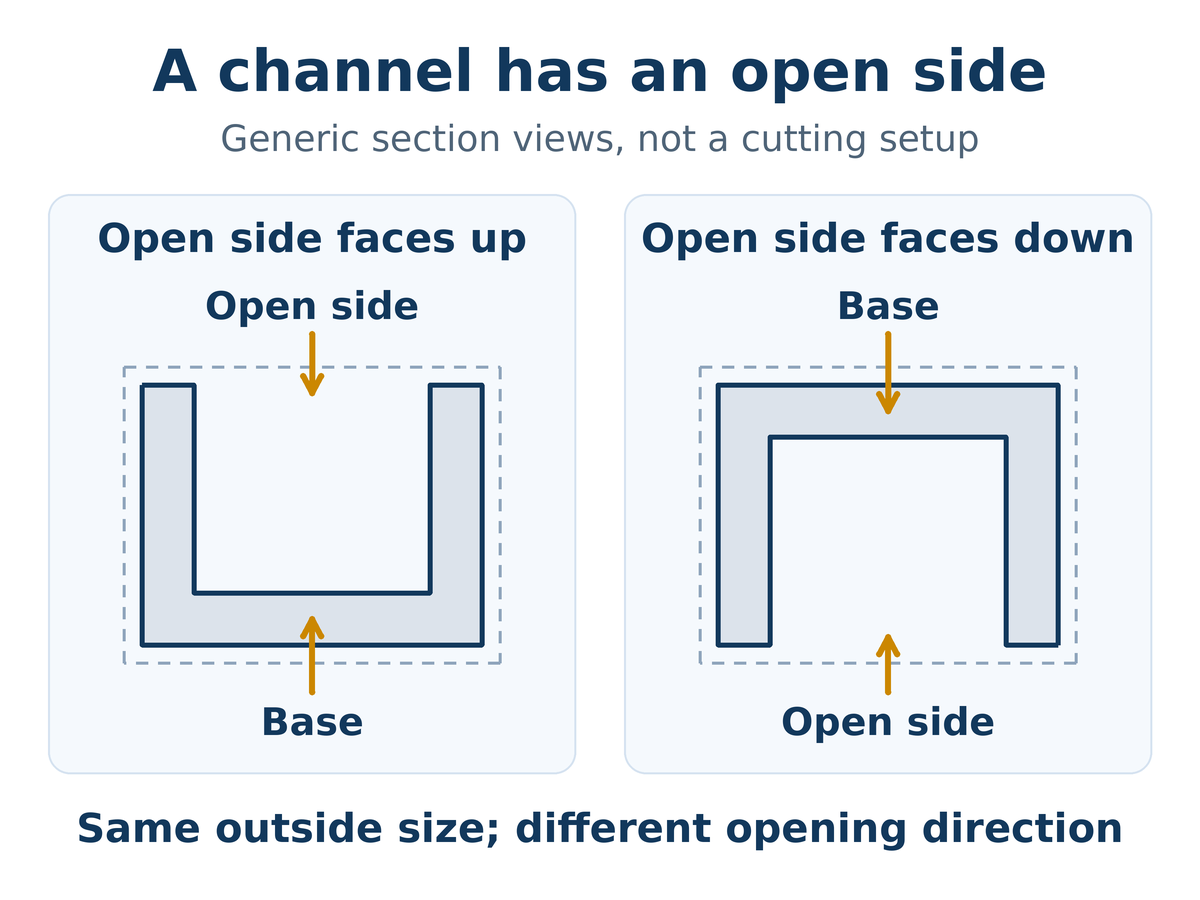
Use a section view to mark the holder’s brush-retaining slot, exposed finish, bracket contact and any face that must remain clear. The diagram above illustrates why an unlabeled opening direction is inadequate; it is not a substitute for the real accessory section. If two parts share an outside dimension but differ in slot orientation or engagement, separate them in the bill of materials and in the trial record.
Keep the brush and aluminum-saw scopes separate
For a loose aluminum holder, assess the stock form, wall thickness, opening direction, support span and cut length before choosing a blade or clamp layout. A flexible insert introduces a different material and a possible snag or contamination route. Unless the product owner explicitly validates a method for the assembled accessory, quote the metal cut with the brush absent and keep any brush trimming, insertion and functional check downstream. This is a scope decision, not a claim that one universal process suits every strip.
Ask the equipment bidder to show which surfaces support the holder at infeed, clamp, stop and outfeed. The fixture should preserve the brush slot and visible anodized face. A narrow section may roll or deflect if it is clamped on an unsupported lip; chips can become trapped in a slot that later accepts the insert. These are trial risks to inspect on the customer’s actual part, not a prediction that a particular Jiurun machine will fail or meet a stated tolerance. Specify how short finished pieces will be safely held and how long incoming stock will be supported.
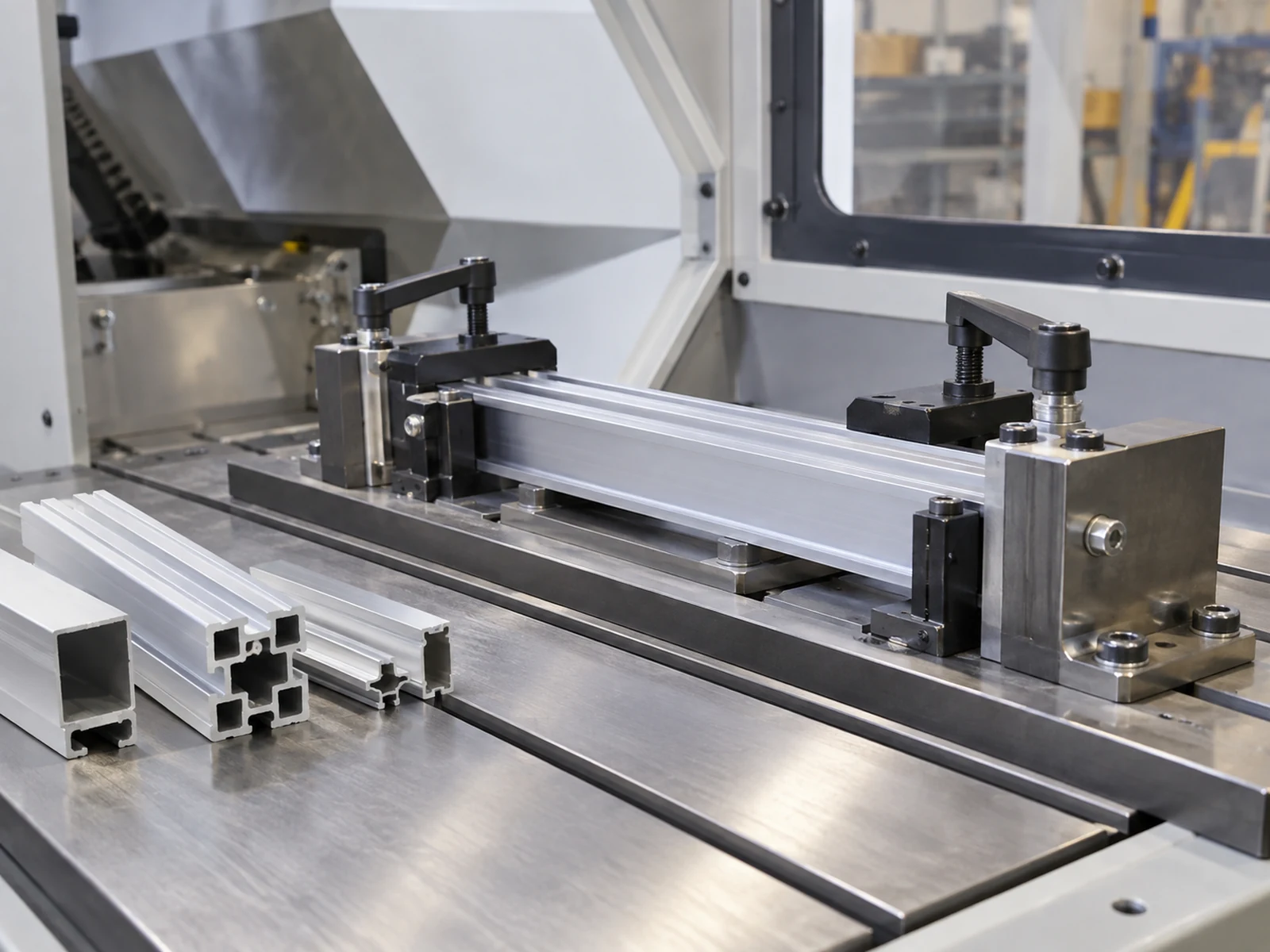
Define the end condition the next station needs. A cut edge that measures to length may still interfere with a bracket, catch the insert, mark cable insulation or leave chips in the holder. Agree how burrs and loose swarf will be assessed, who may deburr, and whether any operation changes the anodized appearance. Do not publish a generic micrometer tolerance, blade speed or cycle-time promise as a brush-strip result without an approved profile and first-off evidence.
Run a first-off set that includes the downstream fit
Send representative stock from the released product family, including the intended finish and shortest and longest metal lengths. Mark the part number, drawing revision and incoming condition. For each setup, record the machine and blade configuration actually proposed, contact points, stop reference, cut orientation, operator sequence and sample count. The buyer should witness or receive evidence for length, end squareness where specified, slot condition, visible finish and chip removal. Keep rejected samples and their causes separate from accepted material.
Then take the accepted metal piece through the real handoff. Check that the specified brush can be inserted or retained by the approved method and that the piece fits its bracket at the stated rack position. If the accessory is already assembled before shortening, the trial must address the manufacturer’s modification instruction and the brush condition after the operation. Installation should confirm cable access, clearance and any finishing parts under the system owner’s criteria. A good metal cut alone cannot prove cable-routing or enclosure performance.
Rittal’s listed material and dimensions do not establish the protection rating, airflow, fire behavior or electrical safety of a buyer’s modified cabinet. Those claims require the applicable finished-system evidence. A trial report should say precisely what was observed and what remains for the rack or enclosure owner to approve.
Compare quotes on accepted output, not just cut pieces
Issue identical RFQ inputs to each bidder: released holder drawing, actual stock and finish, length distribution, annual and batch quantities, brush insertion stage, bracket details, allowed clamp faces, edge criteria, packaging and receiving definition. Ask whether the proposal supplies a saw, blade, support, fixture, chip-control method, first-off trial, changeover instructions and spare parts. List exclusions. A machine photograph or a generic demonstration video is a reason to ask about trial capability, not evidence that the brush holder has already been qualified.
Compare three practical routes at the same final boundary: buy the complete shortened accessory, buy cut aluminum holders and retain brush assembly, or cut stock in-house and retain all preparation and inspection. Include setup, offcut, rework, brush damage, finish protection, labeling and installation fit checks. Assign the cost and owner of every downstream step before claiming savings. If a product is supplied as a finished branded accessory, the buyer also needs to know whether a proposed modification affects its instructions or warranty; ask the product owner rather than assuming.
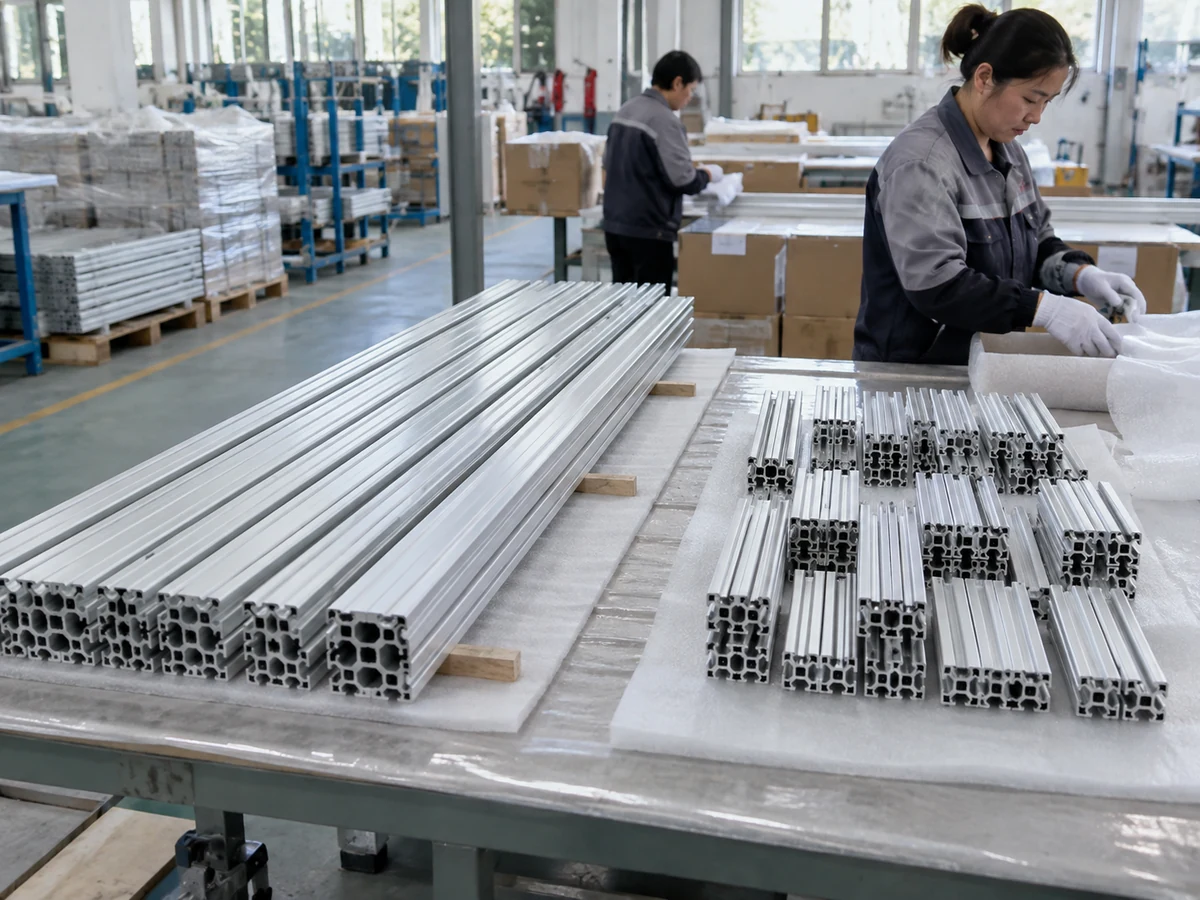
At receipt, match each holder or kit to its part number, length, revision, finish and intended mounting position. Keep brush inserts and brackets identified with the right metal member. Protect the visible face and slot from mixed loose parts during transport. Quarantine damage or mixed lengths before they reach installation. That receiving discipline gives the first-off result a traceable production meaning.
Video: related Jiurun aluminum cutting equipment
The Jiurun channel video below shows a related aluminum cutter in operation. It provides equipment context for discussing a holder trial. It does not show a brush strip, bristle removal, the proposed fixture, a customer rack or a proven finished-assembly result.
Send a decision-ready brush-strip cutting RFQ
A useful cable-entry brush strip cutting RFQ names the product and revision, distinguishes loose aluminum from an assembled insert, shows the approved metal datum, lists bracket and cable-clearance interfaces, marks clamp-safe faces and finish requirements, and defines the first-off and receiving tests. Ask the machine supplier to identify the exact configuration and samples it will evaluate. Ask the accessory owner to approve any modification of a branded strip and the assembled cable-entry acceptance criteria.
For a machine review, send Jiurun the released aluminum-holder drawing, stock sample and required metal cut list. Include the brush and bracket information so the quote describes the correct handoff. The rack or enclosure-system owner remains responsible for the completed accessory and installed cable route.