
Boat trailer aluminum frame cutting starts with a boundary: a saw can prepare specified aluminum members, but it cannot establish the load rating or fit of a completed trailer. For a trailer builder, that boundary affects the quotation, the cut list, and the sample you send to a machine supplier. This guide shows how to separate saw-ready blanks from welded, drilled, bolted, and purchased components before requesting an aluminum cutting trial.
Published trailer designs show why the distinction matters. Load Rite describes an aluminum I-beam frame with integrated gutters and fastener channels; EZ Loader lists I-Tube or I-Beam construction and adjustable bunks. Those are examples of finished trailer systems, not a universal extrusion specification for your project. The builder must supply the approved section drawing, alloy and temper, joining method, and acceptance criteria.
Boat trailer aluminum frame cutting: what belongs on the saw-cut list?
Start with the physical part and the process that creates its final interface. A straight frame rail, crossmember, guide support, or accessory angle can be a saw-cut candidate when the supplied stock and required end geometry fit the saw’s working range. A bent, welded, drilled, notched, coated, or assembled item needs separate operations and a clear handoff. Even a simple crossmember may require a non-square end, bracket holes, or a weld preparation after sawing.
| Line-item type | What to put in the RFQ | Boundary to confirm |
|---|---|---|
| Frame rail or crossmember blank | Approved section drawing, stock length, finished blank length, end angle, quantity | Whether the saw makes the final end or leaves machining/weld prep |
| Accessory angle or channel blank | Leg/flange orientation, cut reference, length datum, finish protection | Whether holes, slots, bends or plates are supplied elsewhere |
| Bunk, axle, hitch, winch and wiring assemblies | Interface envelope and assembly drawing only where they affect the blank | Usually purchased or fabricated outside the saw scope |
Do not ask a saw vendor to infer a safe trailer rating from photographs. The trailer OEM or responsible engineer controls structural design, towing requirements, corrosion strategy, and final inspection. A cutting quotation should state exactly which approved metal blanks it covers.
Freeze the section before debating the machine
A trailer assembly may combine I-beam, box, channel, angle, plate, and purchased hardware. The saw setup for one section does not automatically suit another. Confirm the actual profile envelope, wall and flange thickness, open cavities, surface finish, straightness, and how each section can be supported without distortion. Keep differently shaped sections on distinct cut-list lines, even when their nominal lengths match.
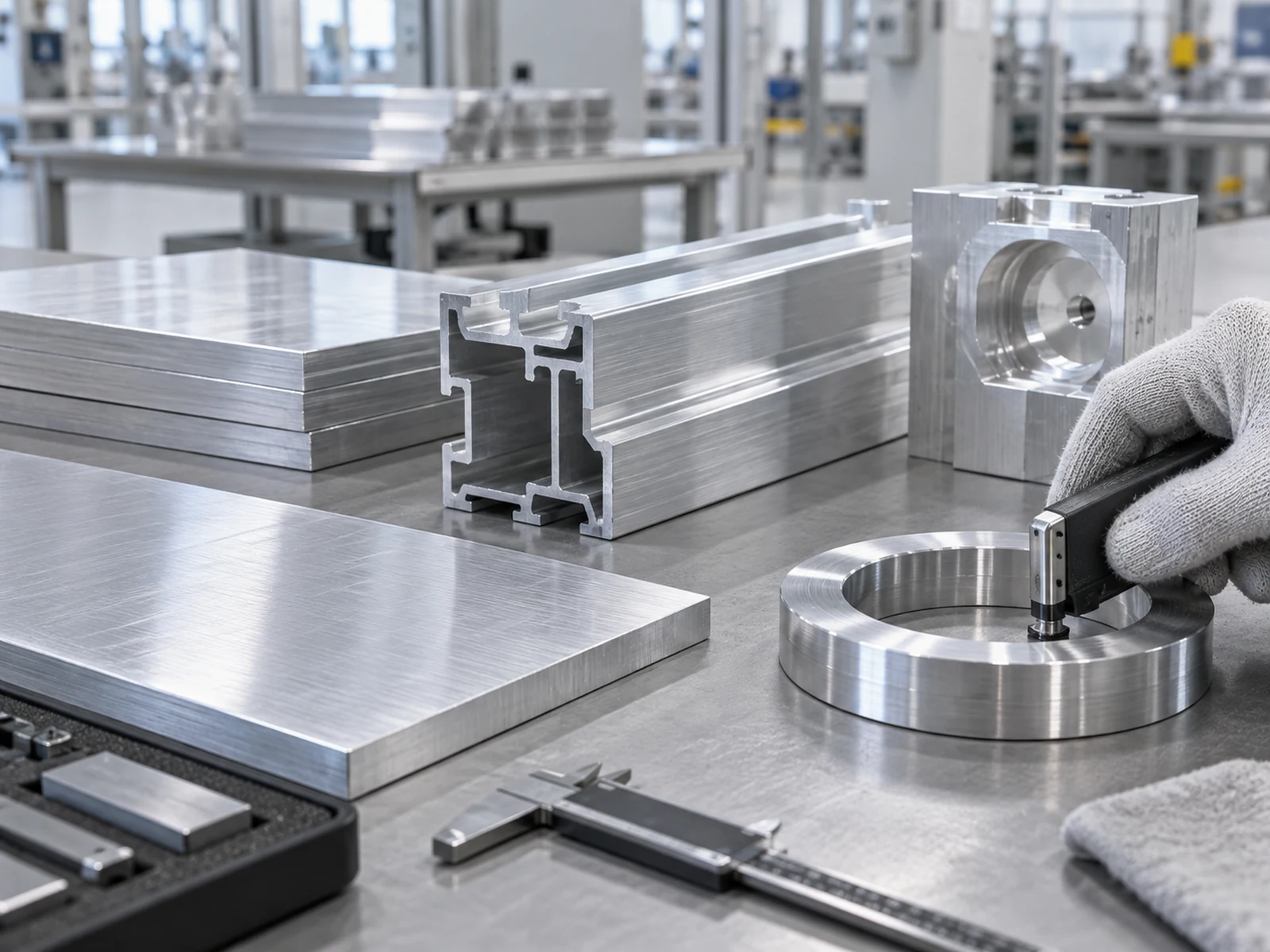
If your design uses a proprietary frame extrusion with wiring gutters or fastener channels, show the full cross-section drawing and identify the datum surface. A clamp that bears on a thin flange, lip, or channel can move the profile before the blade reaches the intended plane. A sample trial should check contact points and end geometry on the actual approved stock. A generic industrial extrusion image cannot establish those contacts.
Boat-trailer frame materials also have a service environment that a cutting trial cannot certify. Specify the alloy and temper from the design authority and identify any coating, anodizing, or exposed surface that must be protected. Keep corrosion and galvanic-isolation decisions with the trailer designer and assembly team; a clean saw cut alone does not resolve them.

Build a cut list that survives the handoff
For each blank, provide a part number and revision; alloy and temper; section drawing; raw stock length; finished length and tolerance; angle and orientation at each end; quantity per trailer and batch; and the surface to protect. Label left and right members explicitly. If the cut plane is measured from a channel, a flange, or an outside corner, specify that datum rather than writing only an overall dimension.
Where the next operation is welding or bolting, identify the mating part and any allowance the downstream team expects. Decide whether the saw delivers a final-length member, an oversize blank for secondary machining, or an end requiring weld preparation. This prevents a clean but unusable cut from being counted as a completed part.
For mixed batches, group by stock profile and setup instead of by trailer model alone. Record the number of changeovers, the longest stock that must be loaded, the shortest acceptable piece, and the offcut policy. That information matters when comparing a manual stop arrangement with automated feeding. It also exposes cases in which a purchased pre-cut part or another process is more economical than setting up a saw.
How to evaluate a cutting machine for this work
A useful trial uses your approved stock and drawing, with a written pass/fail method. Ask the machine supplier to demonstrate how the profile is located and clamped, how stock is supported over its full length, how the two ends are referenced, and how cut pieces and offcuts are separated. Then measure the results against your drawing with the gauges your production team will use. Do not accept a generic machine video as proof for a different trailer section.
Run more than a single ideal blank. Include a representative long rail, a short support, any angle cut, and the section most vulnerable to clamp marks or end distortion. Check length, end squareness or specified angle, burr and edge condition, visible handling marks, and fit at the next assembly interface. Record blade and fixture setup, stock orientation, acceptance limits, and who signs the sample. Repeat after a setup change if that change is material to the production mix.
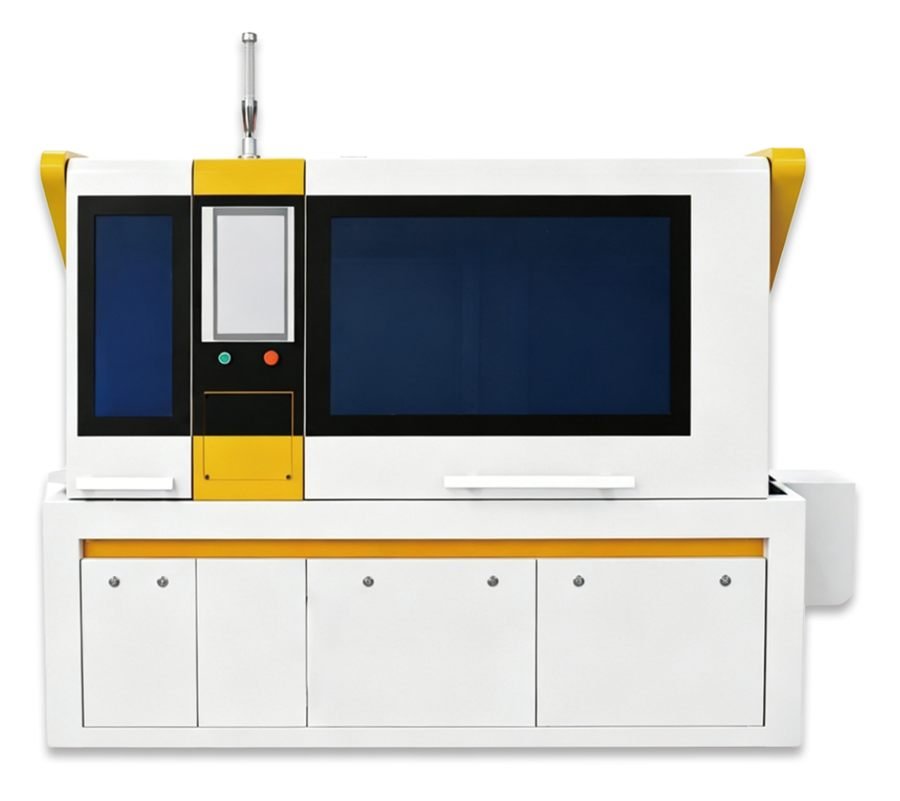
For machine selection, ask for the documented capacity and configuration of the proposed model. Compare the approved section’s dimensions with its clamping and feeding range. The Jiurun product range provides equipment starting points; a final recommendation requires the actual profile and cut schedule. Do not infer a cycle time, tolerance, or throughput from a catalog photograph.
Where the saw scope ends
Venture’s frame-parts catalog separates aluminum support plates, crossmember support plates, U-bolt channels, frame hardware, and other items. That separation is a useful reminder: a straight aluminum profile cut is only one operation in a frame build. Hole making, bending, welding, fastening, bunk positioning, axle alignment, wiring, and finished-trailer testing require their own owners and acceptance records.
If the project is a replacement part rather than a new trailer, obtain the original drawing or OEM part identification. Measuring a worn or modified assembly can reproduce an error. Do not replace a structural member with a different section merely because its outside dimensions are similar. Let the responsible trailer engineer approve substitutions and installation.
A practical RFQ package for boat trailer aluminum frame cutting
- Approved drawing and revision for every saw-ready aluminum member.
- Actual stock samples or a complete profile drawing, including channels and thin flanges.
- Blank lengths, end angles, tolerances, quantities, and left/right orientation.
- Required surface protection, burr limits, and downstream joining or machining allowance.
- Longest and shortest pieces, batch mix, target changeover pattern, and offcut rules.
- Written sample inspection method and responsible acceptance owner.
Ask the supplier to mark any drawing item outside the proposed saw process. That single clarification can prevent a machine quotation from quietly absorbing structural design, finishing, or assembly obligations it cannot verify.
Video: Jiurun machinery demonstrates an aluminum saw process. It is a related equipment illustration, not a test of the boat-trailer members, alloy, model configuration, or acceptance limits discussed here.
Decision: quote blanks, a prepared kit, or a completed trailer?
Choose a blank-only RFQ when the trailer builder controls subsequent drilling, welding, and assembly. Request a prepared cut kit when the cutting supplier can document each numbered member, orientation, and inspection record for a defined assembly handoff. Source a completed trailer through an appropriately responsible trailer manufacturer when structural design, running gear, compliance, and final performance must be included. These purchasing routes carry different responsibilities; label the route before comparing prices.
For a Jiurun cutting-machine discussion, send the approved metal-member drawings and a representative stock sample through the contact page. Ask for a configuration and trial plan against the actual cut list. A useful answer should identify what the saw can cut, what needs another operation, and which acceptance checks remain with the trailer builder.