
Bike parking mounting rail cutting starts before the saw: the buyer must release the rail as a specific extruded component within an approved parking system. A cut length alone does not define the section, finish, end-cap fit or mounting interface. If those decisions remain open, a clean saw cut can still produce the wrong blank.
Featured image: related aluminum channel extrusion stock used around conveyor equipment. It illustrates rail-like stock only; it is not the bicycle parking rail, a Sportworks product or a Jiurun project.
This guide is for purchasing and production teams ordering cut aluminum rail blanks. It does not specify a complete bike rack, certify an installation or replace the system designer’s drawings. A public Sportworks mounting-rail example shows why the distinction matters: its aluminum extrusion joins multiple inverted-U racks, while the end caps and field installation are separate parts of the system. That is a manufacturer example, not a Jiurun project or a universal rail specification.
1. Release the rail profile, not just a nominal rack capacity
Ask for the approved cross-section drawing and revision, extrusion supplier, alloy and temper if specified, finish and protected faces. Identify the datum used to locate the saw cut. A low-profile mounting rail, a generic slotted channel and a bicycle carrier tray may all be long aluminum sections, but their interfaces are different. Do not substitute one based on a photograph, a rough outside width or the phrase “bike rack rail.”
The Sportworks manufacturer specification gives a useful example of a tightly defined product: it calls out a custom 6061-T6 extrusion, a clear anodized finish and separate molded end caps. Those details apply to that product. Your own released drawing and order control what may be cut and accepted.
2. Specify the actual cut length for each rail variant
A parking count is not a production cut length. Modular systems may have several rail variants to hold different numbers of racks. Give each variant its own drawing number, nominal length, tolerance, quantity and revision. State whether the dimension runs between sawed ends, between assembled end caps or between installation references. If a field layout changes, issue a revised cut list rather than asking the shop to infer a length from a site sketch.
For a mixed order, label each bundle by rail variant and keep the cut list traceable to the released drawing. The buyer should decide whether a left/right distinction exists; the saw operator should not create one by assumption.
3. Separate saw work from caps, holes, anchors and installation
Mark the supply boundary on the RFQ. A saw shop may supply straight-cut extrusion blanks only. Cap installation, drilling, slotting, anchor selection, rack attachment and site layout need their own drawings, operations and acceptance criteria if included. Do not imply that a cut blank is an installed rack or that a cut-to-length quotation covers engineering approval of the floor or foundation.
Ask the system owner where caps register: against a cut end, an internal feature or a separate fastener. That answer determines how to inspect burrs and end damage. If the design needs a secondary machining operation, list it explicitly; a circular saw cut cannot create unspecified holes or slots.
4. Qualify stock support, clamping and the first-off cut
Long extrusions can deflect, twist or shift as they move from infeed to the blade. Before choosing a saw setup, compare the actual section and stock length with the machine’s supported infeed, clamp contact and guarded cutting envelope. Protect visible anodized surfaces from metal-to-metal marks. For a hollow or thin-walled section, validate the clamp method on the real profile rather than assuming a solid bar setup will work.

Make a first-off sample from the released extrusion. Check the specified length datum, cut squareness, end burr and fit to the approved mating part where that fit is in scope. Record the actual profile revision and cut conditions with the sample. If the first-off fails, correct the setup or drawing interpretation before committing the batch. A machine catalogue tolerance cannot replace inspection against the buyer’s part drawing.
5. Agree on finish and packing before the batch
Define which faces are cosmetic and how they are protected during cutting, deburring, stacking and shipment. Specify whether the extrusion arrives pre-anodized or will be finished after cutting, because the exposed ends and inspection method may differ. State who removes burrs and who checks end-cap fit. Separate approved handling marks from defects rather than relying on a vague “good finish” note.
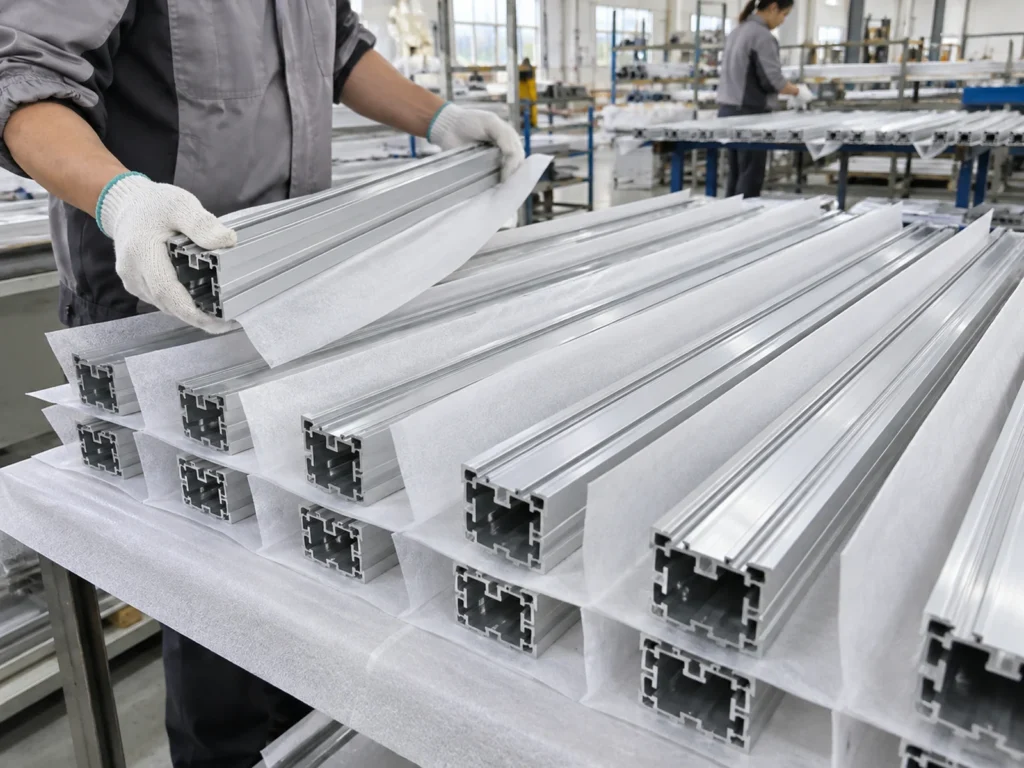
For dispatch, ask for separated lengths, end protection where needed, bundle labels, and a quantity record by variant. The purpose is to keep the received blanks identifiable and the visible surfaces usable, not to claim that packaging proves installed-system performance.
Bike Parking Mounting Rail Cutting: 7 RFQ Checks
- Released identity: profile drawing, revision, supplier and material callout.
- Cut list: each variant’s length, tolerance, quantity and measuring datum.
- End interface: cap or mating-part drawing and acceptable burr/edge condition.
- Operation scope: saw cutting, deburring and any separate drilling or slotting.
- Visible finish: protected faces, incoming finish state and acceptance limits.
- First-off approval: sample, measurements and sign-off owner before production.
- Delivery traceability: labels, packing method and inspection record by variant.
Send a representative extrusion sample and approved drawings when requesting a saw demonstration. Jiurun supplies industrial aluminum and nonferrous circular-saw cutting equipment; the correct machine and feed arrangement depend on the actual section and required process. The following video shows related aluminum sawing equipment, not a bicycle parking rail test or proof of a particular cut tolerance, finish or installation.
Frequently asked questions
Can the rail be ordered from a rack-count description alone?
No. Rack capacity helps describe the system, but the saw needs the approved extrusion identity and a cut list with actual dimensions and tolerances. Confirm how each rail variant is measured.
Should the saw shop choose the anchors or approve the installation?
No. Site support, anchor design and installed rack layout belong to the system designer or installer unless a separate engineering scope has been agreed. Include those responsibilities in the project documents.
Does a clean saw cut guarantee the end cap will fit?
No. End-cap fit depends on the specified extrusion, the cap design, the end condition and their tolerances. Validate the interface on a first-off sample using the approved components.
Next step: share the extrusion drawing, cut list and first-off criteria with Jiurun to discuss a representative aluminum cutting trial and machine selection. For a different bicycle component route, see our bicycle manufacturing saw overview; its frame and tube considerations should not be treated as the mounting-rail specification.