
A bicycle repair stand aluminum tube cutting RFQ begins with the member drawing, not with the assembled stand’s height or load rating. A portable stand may include an upright mast, telescoping tube, folding legs, a yoke, clamps, hinges, fasteners and covers. Only some of those are eligible aluminum stock-cutting jobs. If a buyer sends a photograph and asks for a “stand cutting machine,” the supplier cannot know whether the purchased item is a bare tube blank, a prepared member with later features, a matched mechanical subassembly or a finished stand.
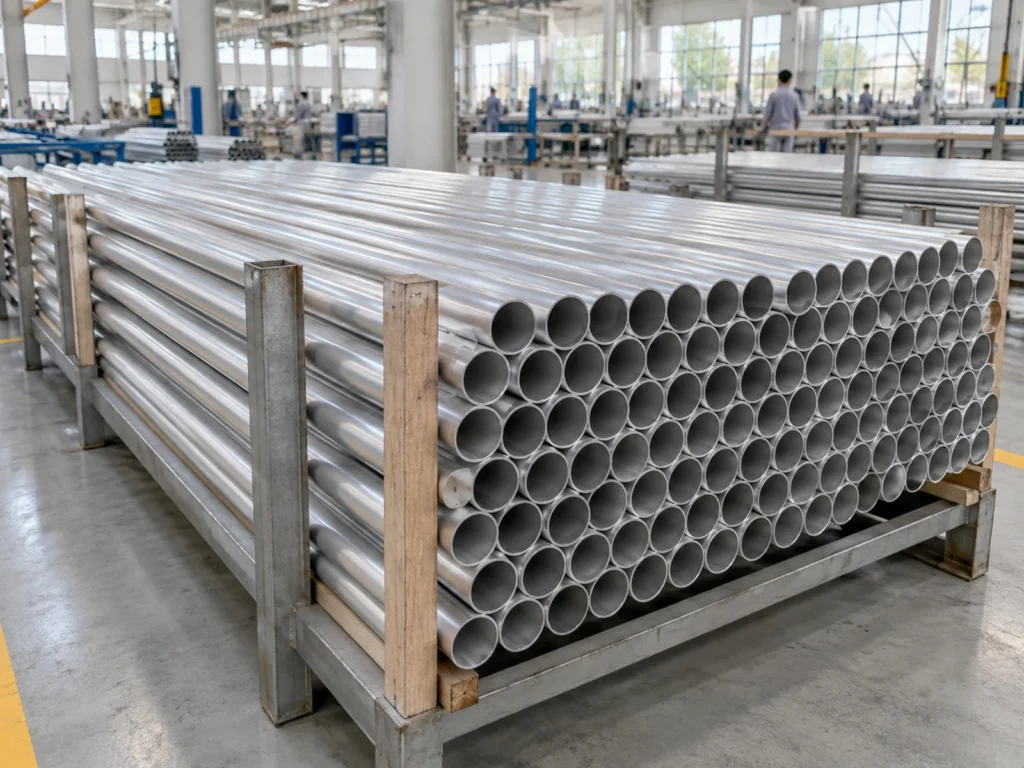
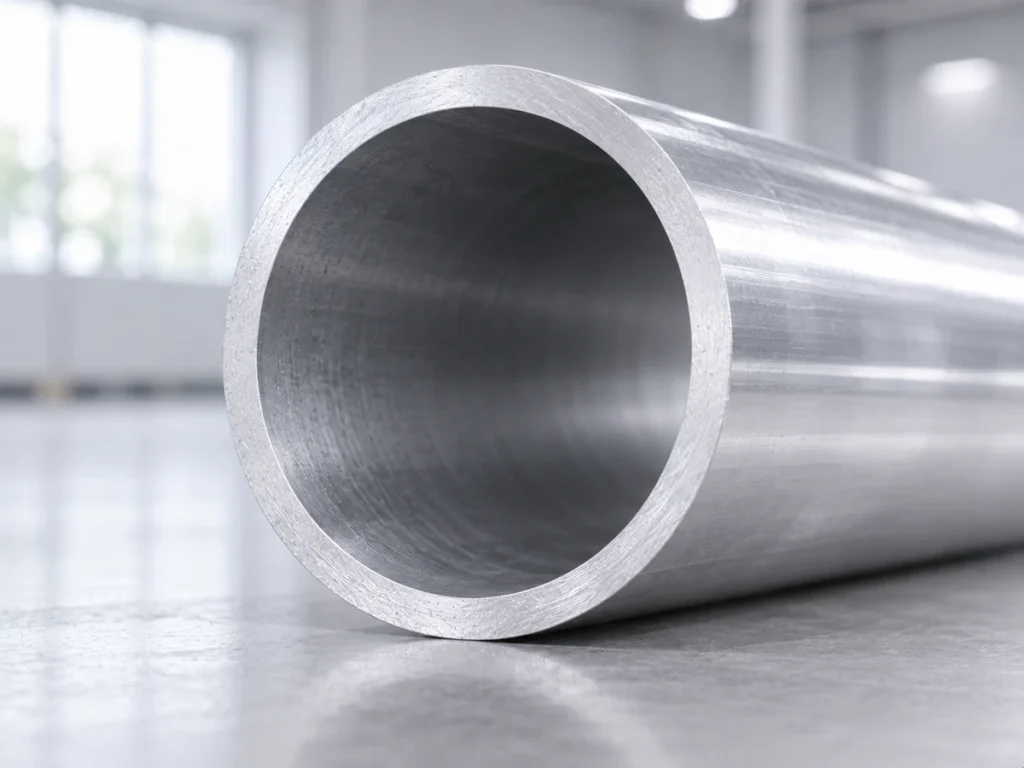
Public product examples show why that distinction matters. Park Tool’s PRS-25 describes proprietary hex-shaped aluminum tubing, while Feedback Sports’ Pro Mechanic identifies aluminum mast, telescoping tube and tripod legs among its materials. These are examples of different finished products, not Jiurun customer projects or drawings for interchangeable stock. A round tube photograph in this guide is only an illustration; it must not replace the actual released section.
First decide what the factory will retain
Map the purchase to the receiver’s actual stage. A bought complete stand includes folding and clamp functions supplied by another party. A prepared mast-and-leg set may already include cut ends, holes, inserts, surface treatment or identification. A bare cut-blank order supplies measured metal members for downstream work. Those three routes have different inspection and cost boundaries. Compare them at the same accepted stage rather than comparing a raw cut price with a complete product invoice.
Write one line per retained member family: upright mast, inner telescoping member, leg, brace or other approved aluminum stock part. Record whether the input is extruded, drawn or otherwise prepared; whether it is round, hexagonal or another profile; whether its surface is already finished; and which party owns any drilling, slots, deburring, joining, coating, clamp hardware and final stand assembly. Do not infer alloy, temper, wall thickness or capacity from a public model description.
Bicycle repair stand aluminum tube cutting: six trial checks
1. Release the physical section and member identity
Give the supplier a controlled drawing or measured sample for every member, with material, stock condition, cross section, wall and contact faces. Include revision, orientation marks and whether a tube is outer mast, inner slider or leg. “Fits a bicycle repair stand” is not a dimensional definition. A stand’s overall height, folded envelope or clamp range describes the completed product; none is the cut blank length. If the upright is proprietary hex stock, a trial on ordinary round tube may reveal handling concepts but cannot qualify the released member.
2. Define the length datum and end geometry
State which face starts the measurement, where the finished cut plane lies and whether each end is square, angled or left for a later feature. Tell the shop whether the blank is measured before or after any downstream end fitting, insert or surface process. For a telescoping pair, note which dimensions control the receiving assembly; do not assume that equal outside lengths mean equal functional travel. Include the permitted variation only when the product engineering team has approved it.
3. Show how the stock can be supported and clamped
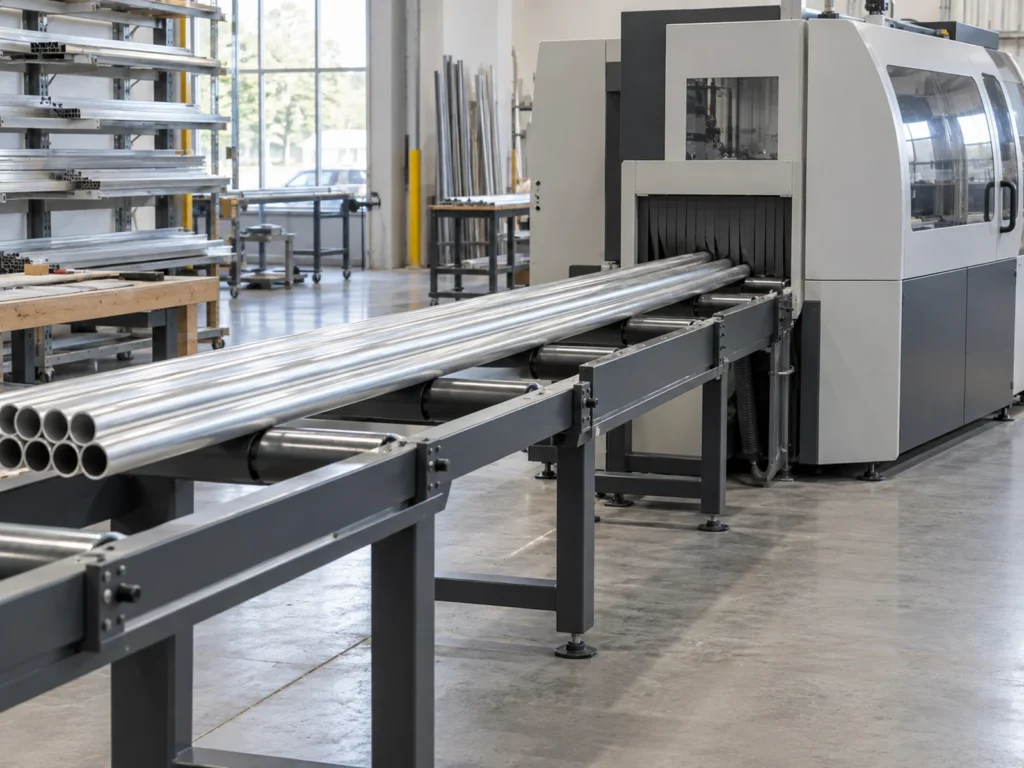
Long, thin-wall or non-round sections may roll, mark or deflect if support contacts are chosen from a different tube. Ask the saw supplier to show the stock orientation, infeed support, clamp contact, cut-off collection and operator-safe handling for the actual section. A machine model name alone does not establish that a finished face will stay unmarked or that a particular profile is approved. Protect visible anodized or coated surfaces according to the buyer’s actual acceptance rule, then verify the result on representative stock.
4. Inspect the first-off cut end and downstream interface
Choose a first-off sample from each meaningful section and finish condition. Check the identified datum-to-end length, end angle where applicable, burr or sharp-edge acceptance, wall deformation, visible-face damage and whether the cut member still passes the receiving assembly check. A tube that passes a length gauge but damages an inner slider, end cap or fold mechanism can still fail the intended handoff. Define who performs that fit check and how a rejected piece is traced back to its stock lot, program and drawing revision.
5. Keep member sets and revisions together
Portable stands often pair an upright, a sliding section and folding legs with hardware from other supply routes. Specify the order quantity in complete receiving sets and list each member’s quantity per set. Keep left/right or upper/lower identities if they matter. Label samples, accepted pieces and rejected pieces by drawing revision. If one tube changes while its mating part does not, record the compatibility decision before mixing lots. Packing by equal lengths alone can conceal a missing or mismatched member.
6. Compare the full route at one handoff point
For the in-house cutting route, count purchased stock, setup, representative trial, cutting, edge handling, inspection, scrap, sorting, packing and all remaining operations until the same receiver can accept the set. For a bought prepared set, include incoming inspection, supplier lead and any rework at that same stage. For a bought complete stand, count the product and its acceptance boundary. Do not assign a savings percentage from an illustrative photo or a generic saw demonstration. The useful decision is whether the retained job volume and constraints justify controlling these blanks in-house.
A practical RFQ package
Send a compact package that lets a cutting-equipment supplier discuss a genuine trial rather than guessing from the stand model:
- One controlled drawing or physical sample per retained aluminum member, with section, material/condition and revision.
- Annual and peak-period quantities by member family, batch size, current stock length and expected cut length range.
- End-face geometry, datum, approved length/edge/appearance criteria and any later features excluded from saw scope.
- Stock finish and no-mark zones, infeed space, handling constraints and available cut-off collection route.
- Receiving set definition: mast, slider, legs and bought hardware identifiers, plus first-off fit owner.
- A representative trial matrix that includes the shortest, longest, thinnest or most sensitive actual sections.
- The commercial comparison stage: bare blank, prepared member set or complete stand.
Ask for a recorded trial on the released material before accepting a capacity or quality claim for your part. Jiurun makes industrial circular saw equipment for aluminum and other nonferrous stock; a specific machine and fixture recommendation depends on the real section, cut geometry, stock condition and acceptance criteria. This guide is a procurement framework, not an operating recipe or a certification of any stand’s load, stability or safety.
Related equipment view
The Jiurun JR-455Q video below shows a related aluminum-cutting machine. It does not show the particular mast, tube alloy, workholding configuration, customer order, sample trial or performance claimed in this article.
Next decision
If the receiver already buys a qualified complete stand, maintain that route unless a real component-level business case exists. If the factory retains aluminum mast and leg work, send the released member drawings and trial requirements to Jiurun for a machine discussion. For a closer look at the difference between stock length and a receiving set, see the bicycle manufacturing saw selection guide and the round-tube cutting guide. Confirm any linked route against your actual repair-stand section rather than reusing another application’s cut settings.