
Bedhead trunking extrusion cutting is one early fabrication step in a hospital service unit, not a substitute for an approved bedhead system. A completed unit may combine separate gas and electrical routes, removable covers, outlets, lighting, accessory rails and site connections. A saw supplier can quote the aluminum blanks it will cut only after the bedhead manufacturer identifies the released profiles, end conditions and the stage at which the parts are handed over. The buyer should keep system design, service integration and approval with the responsible medical equipment and project teams.
This guide is for a bedhead-unit OEM or its metal-fabrication buyer preparing a machine or cut-blank RFQ. It does not specify a medical gas installation, electrical layout or clinical performance. Use the actual product drawings and samples. A photo of a completed headwall cannot establish the geometry of a hidden extrusion, cover or mounting rail.
Identify every extrusion in the approved unit
Start with the product owner’s bill of materials, then mark which members are aluminum extrusions actually cut in the factory. Sostel describes one horizontal bedhead family built from three extruded aluminum profiles: two for lighting and electrical equipment, with medical gas piping in another mechanically separated profile. Gaz Systèmes describes separate gas, low-voltage and higher-voltage compartments in its own bedhead products. These examples show why “one bedhead length” is an incomplete cutting schedule. Their arrangements and dimensions are product-specific, not Jiurun machine settings.
For each proposed cut member, record the approved profile code and revision, cross-section sketch, stock length, material and surface condition, visible face, allowable support face, finished-blank length and quantity. Separate a main trunking body, front cover, lighting channel, backplate, accessory rail and trim if the product actually has them. Some pieces may be rolled, machined, molded or purchased complete instead; do not invent a saw operation for them. Mark parts that are cut before coating separately from finished profiles that need protected handling.
Keep the saw blank separate from the finished service unit
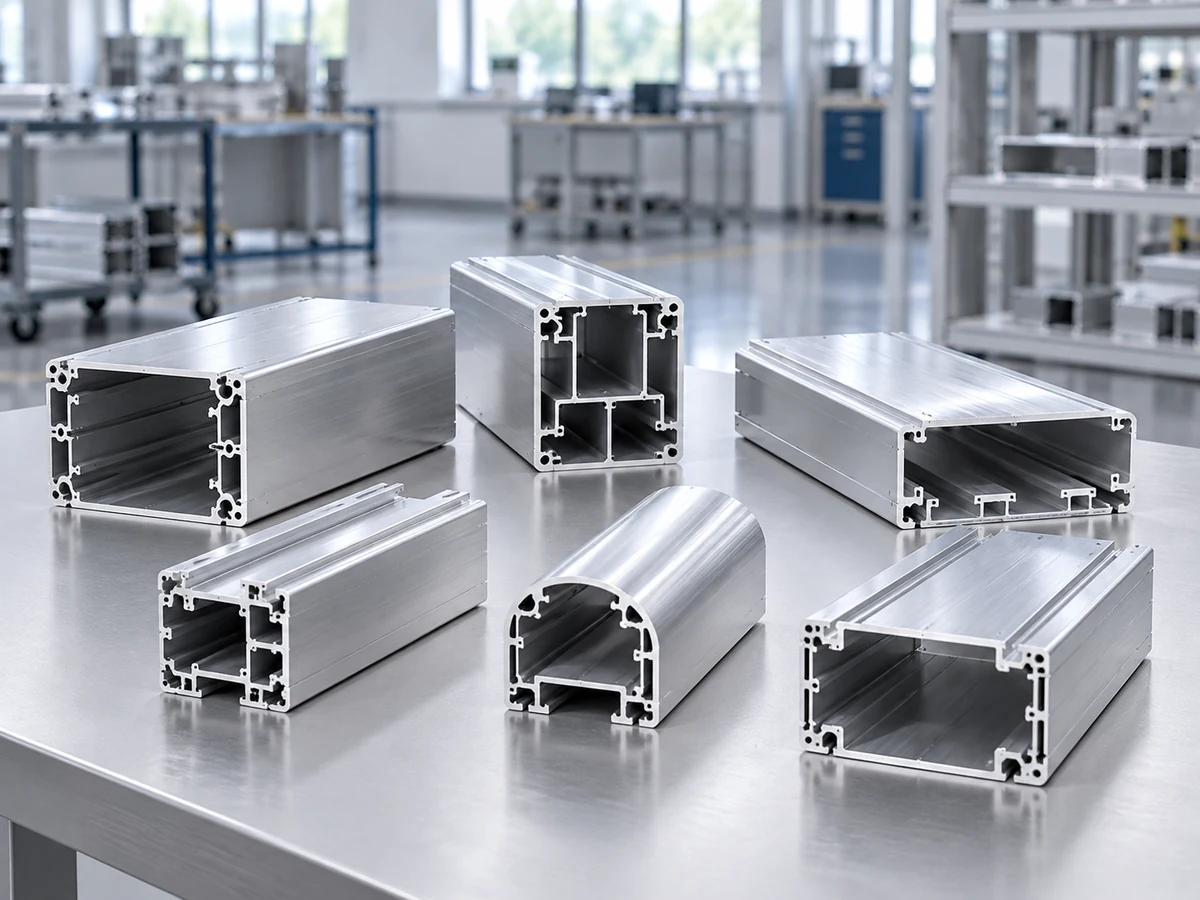
A bidder may price raw cut profiles, a prepared housing kit, or a fully assembled bedhead unit. These are different receiving conditions. A raw blank is a named length of stock with agreed cut-end and surface criteria. A prepared kit may include holes, cover fit, finishing, labels and protected packing. The completed unit adds its approved outlets, wiring, gas components, lights, rails, tests and project documentation. Ask every bidder to price the same boundary and list excluded operations.
The distinction is visible in a WTK Technologies vertical bedhead specification, which lists gas and electrical outlet cut-outs separately from complete fitted outlet options and identifies other accessories. It is an example of supply-stage separation, not a universal operation plan. Tecnomed’s Clarail product adds a full-length accessory rail and a removable decorative front cover to its bedhead arrangement. A factory that only cuts the body extrusion has not thereby supplied that rail, cover, equipment support or assembled service unit.
| Receiving stage | What the cutting quote may include | What remains to assign |
|---|---|---|
| Released saw blank | Profile identity, length, end geometry and protected finish | Holes, inserts, covers, services, assembly and approval |
| Prepared housing kit | Cut members plus explicitly listed later features | Outlet installation, service checks and site integration |
| Complete bedhead unit | Only the cut members within a wider system quote | Acceptance and documentation as defined by the product owner |
On a phone, swipe the table sideways. In a buy-versus-make calculation, do not compare a saw’s cost per blank with a delivered, approved bedhead unit price. Put all remaining operations and responsibilities beside the blank-cut cost.
Build a part schedule from the approved layout
The number of beds or the wall span is not enough. Gaz Systèmes notes that bedhead length and configuration depend on the quantity of installed appliances. For a machine RFQ, convert the approved product into one row per factory cut member. Give the bed or room reference, product variant, profile and revision, cut quantity, stock length, finished blank length, left and right end condition, finish state, exposed faces and later operation owner. A continuous cover may need a different cut length from the underlying body or rail; only the released drawing can establish that relationship.
Keep outlet positions and service openings on a separate drawing layer from a saw’s length schedule. If the factory will machine them later, specify that as a second operation rather than assuming a circular saw creates them. If an installation requires field trimming, define which member and which end may be trimmed, the supplied oversize condition, the protection needed after trimming and who approves the final fit. Do not add a generic allowance to every blank.
State a cut datum and a finish condition for each member
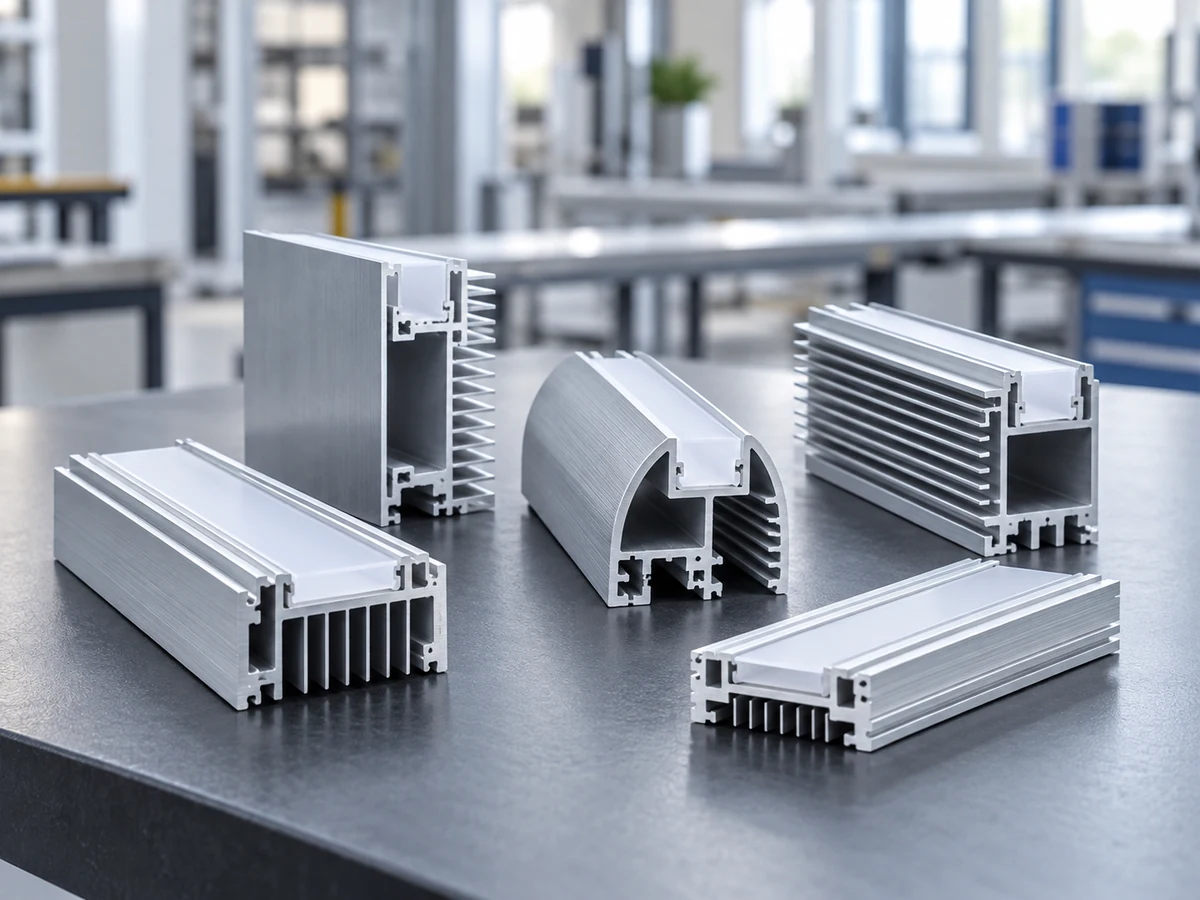
On the section drawing, identify the physical locating face, protected face and the dimension measured between finished end planes or other approved datums. State whether ends are square, angled, notched in a later process, or prepared for an end cap or mating cover. Do not infer an angle or cap allowance from a product photograph. For a section with open lips or several chambers, specify where a fixture may contact it. A clamp on a thin cover lip can distort the section; a clamp on a visible coated face can leave marks even when length is correct.
Define acceptance for blank length, end squareness or angle, burrs, chips trapped in cavities, coating damage, face marks and protection before packing. These limits must come from a released drawing or sample. The buyer should also say whether inspection occurs on a free blank, in a locating fixture, after cover fit or after complete assembly. Those observations answer different questions. A clean cut end cannot demonstrate segregation of services, safe outlet installation or the unit’s overall approval.
Trial real stock before selecting a saw configuration
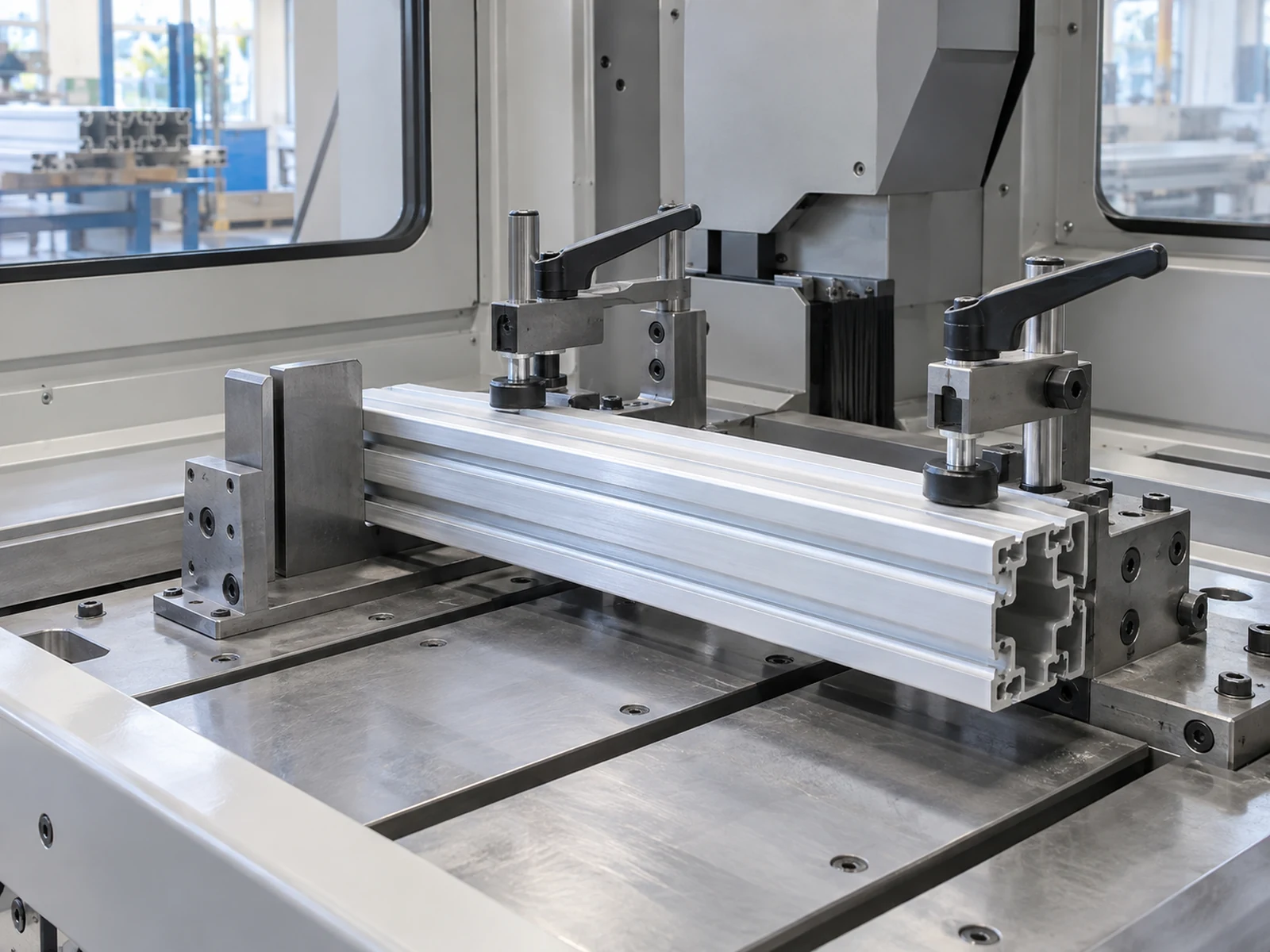
Send representative stock from each materially different profile family, including the longest and shortest planned blanks and any finished surface that changes handling. Provide a section sketch and identify the allowable clamp and outfeed contacts. Ask the machine supplier to show how stock is supported through the cut, how the length datum is repeated, and how chips are kept from sensitive cavities. A catalog maximum cross-section alone does not verify that a thin wall, decorative cover or multi-chamber body is held safely.
Record the actual trial setup: stock identity, fixture contact points, blade and feed settings used, first-off part ID, measured ends, surface observations and rejected pieces. Repeat after a changeover if the RFQ includes several section families. When a cover and body must mate, the product owner should check fit using representative paired parts. The saw trial supports only the agreed cut-blank acceptance, while the responsible bedhead manufacturer validates the finished medical service unit.
Count accepted member sets, then price the remaining work
For capacity, count every actual profile in a representative bedhead unit, its cut lengths and changeovers. Add first-off inspection, handling of long stock, finished-face protection, part identification, short offcuts and packing. Request accepted, identified member sets per representative production period alongside any quoted pieces per hour. A fast single-profile demonstration can understate the time spent changing from a main body to a light channel and then to a cover.
The total cost comparison should include sourced extrusions, saw and fixture, tooling, operators, inspection, scrap, coating, later machining, cover and rail preparation, assembly, gas and electrical components, testing, documentation, packing and installation coordination where those steps are in scope. Assign each line to an owner. The saw supplier can discuss a cutting-machine option and sample-cut plan; it cannot turn a bare profile blank into an approved medical service unit by quoting a cutting tolerance.
Bedhead trunking extrusion cutting: seven RFQ checks
- Product authority. Supply the approved bedhead family, section drawings, bill of materials and revision owner.
- Profile identity. List every aluminum body, cover, light channel, backplate, trim and rail that the factory really cuts.
- Receiving boundary. Say whether each line is a raw blank, prepared housing part or complete purchased unit.
- Part schedule. Give quantity, stock and factory length, end condition, finish and later machining owner for each member.
- Datum and face. Mark measurement reference, visible face, permitted clamp contact and support area.
- Trial and acceptance. Provide real stock and released criteria for length, end, burr, chips, surface and paired-part fit.
- Handoff. Specify part labels, protected packing, subsequent assembly and the team responsible for service-unit approval.
Have the bedhead product owner approve the member schedule before comparing saw offers. For general equipment context, see JiurunCut’s industrial aluminum profile cutting overview. A suitable saw and fixture depend on the actual profile and agreed acceptance plan.
Related equipment video
The following Jiurun machinery video shows an aluminum-profile cutting equipment scene. It is a related demonstration only, not a bedhead extrusion, approved machine configuration, customer project, medical trial or evidence of any service-unit performance.
Send a member schedule for a relevant saw discussion
If your factory cuts approved bedhead trunking extrusions, send JiurunCut the released section drawings, stock samples, blank lengths, finish, protected faces and expected member-set volume. We can discuss a machine and sample-cut plan for those blanks. Keep medical gas, electrical, equipment-rail and installed-unit approval with your qualified product and project teams.
Frequently asked questions
Can one overall bedhead length define every extrusion blank?
No. The body, cover, light channel and rail may have different ends, fit details or receiving stages. Each cut member needs its own approved part identity and length datum.
Does a successful saw trial approve the medical service unit?
No. The trial can verify agreed cut-blank geometry and surface condition. Service segregation, outlet integration, electrical and gas work and complete unit acceptance need separate responsible review.
Can a machine quote assume the same clamp for every profile?
Only after actual section samples and finish requirements show that the proposed contacts and support are suitable. Different chambers, cover lips and visible faces may require different fixtures or handling.