
Battery enclosure vent mounting begins at the approved housing drawing. A pressure-relief vent may sit next to an aluminum rail, but that proximity does not mean an aluminum saw should make the vent opening. Before requesting a saw trial, identify the part that actually carries the vent: a sheet or cast housing wall, a separately machined plate, or a specified extrusion. The purchase decision is which straight aluminum blanks need cutting and which vent-mount operations belong to another supplier.
This guide is for a buyer with an approved enclosure design. It does not select a vent, set a relief pressure, design a battery pack, or claim a saw-cut member can meet sealing or safety requirements. Those decisions belong to the enclosure and vent engineering teams. The saw supplier can only quote a defined aluminum section, cut length, end condition, and inspection method.
Battery enclosure vent mounting starts at the actual surface
Donaldson’s battery-pack vent literature illustrates vent designs attached to a pack housing wall. The interface includes a mounting method and sealing element; the document does not turn a neighboring structural rail into the vent seat. For any project, obtain the approved vent drawing and ask which part contains the opening and the sealing land. Do not infer that answer from a cabinet photograph or a generic aluminum extrusion sample.
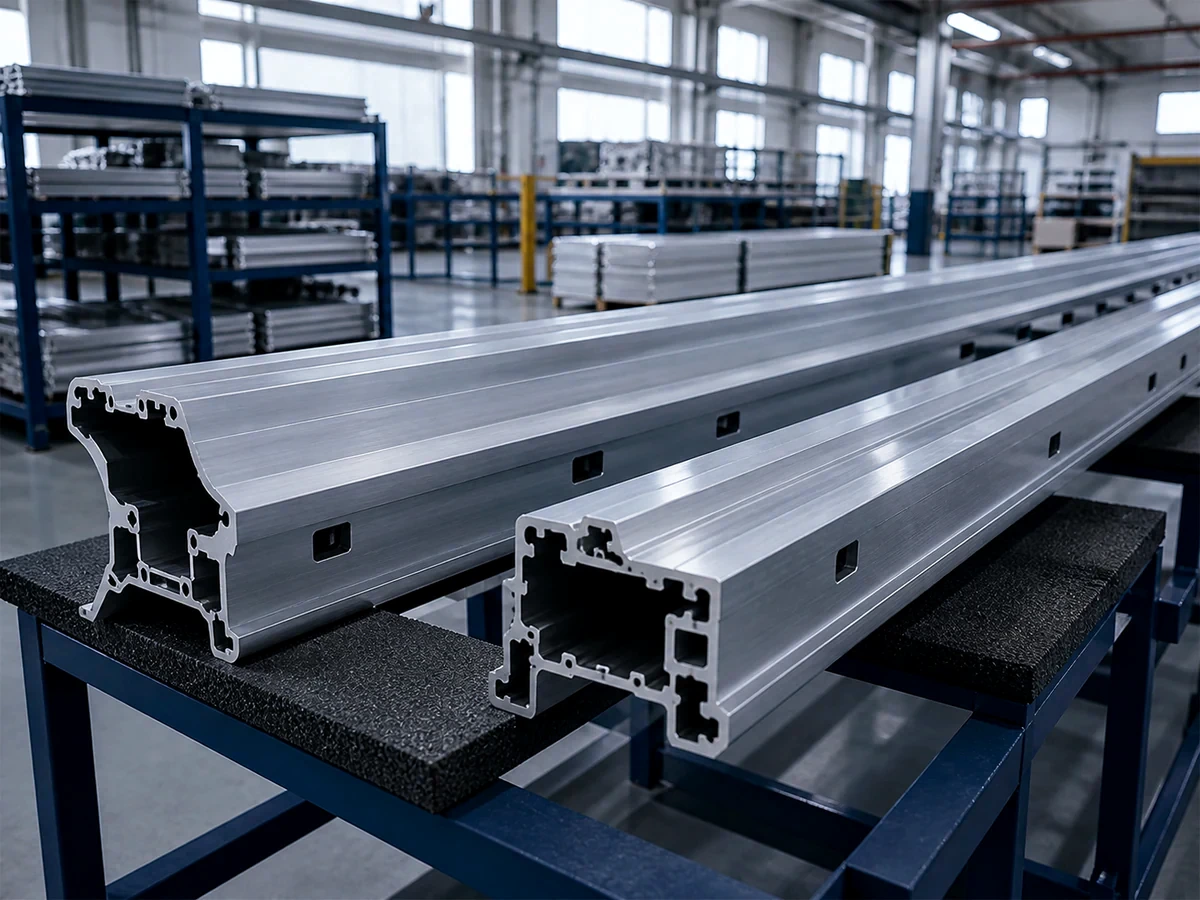
Mark the vent seat, hole or cutout, fasteners, gasket or O-ring contact, and clearance envelope on the enclosure assembly drawing. Then highlight the aluminum extrusions separately. If the vent mounts in sheet metal, casting, or a purchased plate, a circular saw cutting rail blanks cannot produce or validate that mount. If an approved extrusion is the mounting part, the saw may still supply only its straight blank; drilling, milling, tapping, deburring, cleaning, and leak testing need their own process owners.
Choose one of three purchase routes
- Vent in a separate housing wall: buy the wall opening and vent installation from the responsible fabricator or integrator. Quote an aluminum saw only for released rail or frame blanks elsewhere on the bill of materials.
- Vent in a later-machined extrusion: give the saw supplier the approved extrusion drawing and blank length. Give the machining supplier the vent-hole geometry, location from agreed datums, finish and sealing requirements. Identify who removes chips and verifies the assembled interface.
- Vent in a purchased subassembly: specify the approved subassembly and its attachment to the enclosure. Do not replace it with a saw-cut profile on the basis of a similar outline.
Each route changes the RFQ. The first may require no saw work at the vent location. The second needs a traceable handoff between cutting and machining. The third is an assembly procurement decision. Ask the enclosure designer to approve the route before asking the saw vendor to promise fit or throughput.
Keep the cut datum separate from the vent datum
A saw cut is normally referenced to a stock face or an end stop. The vent’s mounting hole may be located from another assembly datum after several members are joined. Send both drawing references and state which process establishes each one. A correct rail length does not demonstrate that a later vent opening is in the right place or that its sealing surface remains flat.
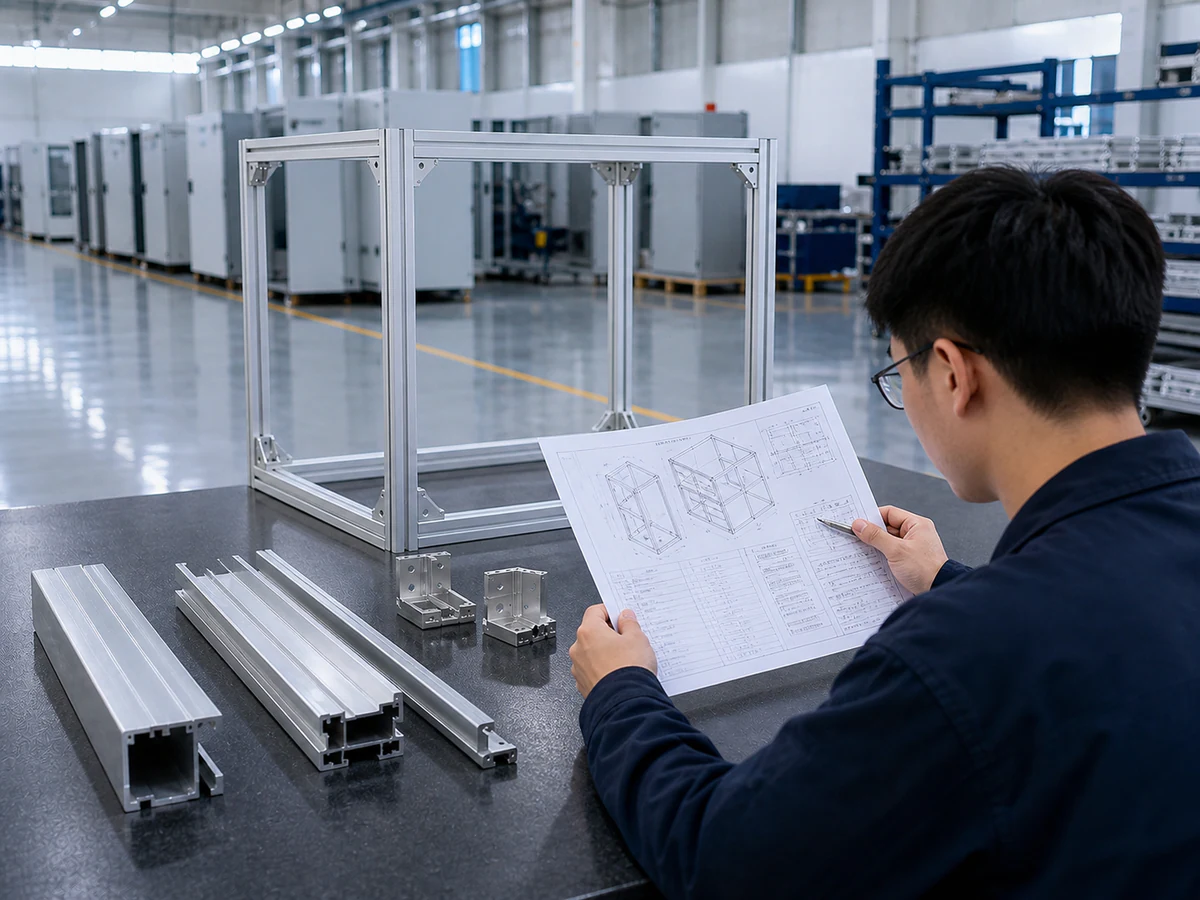
For each rail proposed for saw cutting, release the profile cross-section, material and finish, stock length, target blank length, reference face, orientation, end angle, allowed burr and surface condition, quantity, revision, and inspection method. Identify protected faces and any cavity that needs support during clamping. If machining will follow, define the stock allowance and which end is the locating end. Values must come from the approved drawing; a catalog machine specification is not a substitute for a part tolerance.
What a first-off saw sample can prove
Choose the actual released section if it is available. Record its part number, revision, incoming condition, support and clamp arrangement, blade setup, measured length, end angle, visible burr, cavity damage, and marked faces. If the rail later mates to a wall or frame, check fit with the approved mating part. Label a substitute profile as a process demonstration only.
The sample cannot establish vent flow, pressure relief, water ingress, electrical safety, fire behavior, or pack-level performance. Those require the vent manufacturer’s instructions and the enclosure team’s validation plan. Donaldson’s vent selection guidance treats vent location and system conditions as design inputs; the saw supplier should not make them up from a cut blank.
Send a two-column RFQ, not one ambiguous drawing
| To the saw supplier | To the vent / enclosure owner |
|---|---|
| Released aluminum part numbers, sections, blank lengths, cut datums and quantities | Approved vent type, mounting part, hole or cutout, seal and installation drawing |
| End quality, surface protection, stock allowance and first-off method | Machining, cleaning, installation and validation responsibilities |
| Batch identity, revision control and packing by rail family | Fit, sealing and pack-level acceptance plan |
If nobody can name the vent’s mounting part or say whether an aluminum extrusion is involved, hold the saw quotation for that interface until the drawing owner resolves it. A useful saw RFQ can still proceed for other approved straight rails in the same project.
Related aluminum cutting demonstration
The following video is from Jiurun Machinery’s YouTube channel. It shows a JR-455CNC machine and aluminum-profile cutting equipment as a general process view. It is not a trial of a battery enclosure rail, vent mount, approved part tolerance, seal, or pressure-relief performance.
Questions to close before ordering
Does the saw cut the vent hole? A profile saw makes the specified blank cut. A vent hole, mounting flange, or sealing face belongs to a separately approved operation unless a drawing and process plan explicitly assign it elsewhere.
Can one clean end face approve the vent? No. It only supports the agreed blank acceptance. Vent installation and enclosure performance need their own evidence.
What should the buyer send Jiurun? Send the approved aluminum profile drawing, cut list, datum and end requirements, material state, quantities, and sample acceptance plan. Identify the vent mounting part as context so the saw scope remains clear.
Request a bounded cutting review
If your released battery enclosure design includes aluminum rail blanks, send Jiurun the drawings and the cut-only line items. We can discuss suitable saw equipment and a first-off cutting review for those members. Keep vent selection, mounting, sealing, and pack-level approval with the responsible engineering and integration teams.