
Bath transfer bench aluminum frame cutting is a component procurement decision, not a claim that a sawed tube is a finished, safe bench. A buyer may source cut frame members while a separate product owner controls the adjustable legs, seat, fasteners, finishing, assembly and final validation. The useful RFQ therefore starts with the released part drawing and the exact receiving condition. It does not start with a generic promise to cut “bathroom aluminum” to length.
Transfer benches vary. Drive Medical describes one sliding design with polished aluminum tubes and a locking seat mechanism, while another transfer-tub bench uses an A-frame, adjustable legs and a molded seat. Those public product examples show why the complete bench and a cut frame member must be specified separately; they do not establish the geometry or performance of a JiurunCut customer part. See the manufacturer’s sliding transfer bench and transfer tub bench descriptions.
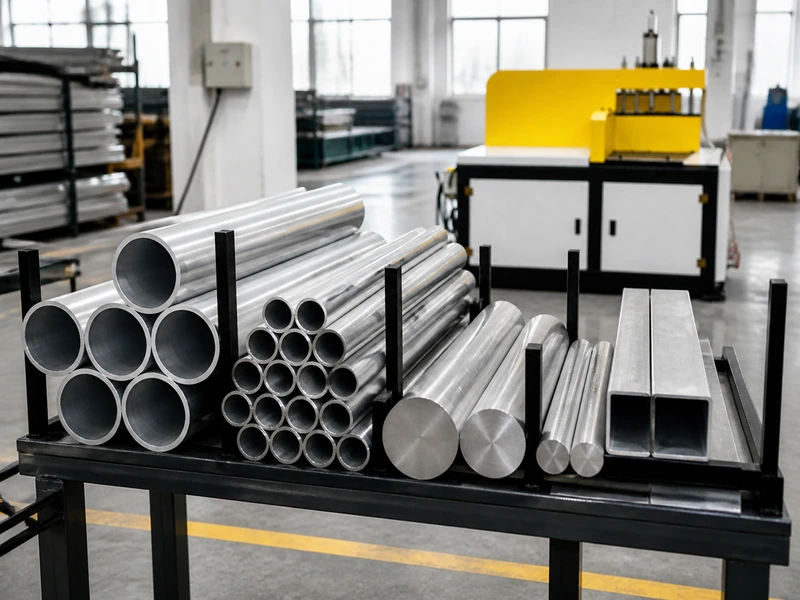
Bath transfer bench aluminum frame cutting: Where the frame-member quote stops
Before discussing cutting capacity, mark the supply boundary on the assembly drawing. A cut-to-length shop might deliver straight blanks, cut and deburred tubes, or members prepared for a later drilling or bending operation. Those are different scopes. A completed adjustable bath transfer bench also brings together a seat, cross-bracing or rails, leg adjustment parts, grips or feet, surface treatment, assembly instructions and finished-product checks. The bench owner must decide and validate those matters. JiurunCut should quote only operations it can review against the released component specification.
This boundary matters especially when one drawing shows a tube but the purchase order names the whole product. Ask which party owns material grade and traceability, post-cut operations, finish, fit, environmental exposure assessment, and final bench acceptance. A “rust-resistant frame” phrase on a finished-product page is not a substitute for an alloy/temper and finish callout for each purchased member.
1. Identify each frame member and its drawing revision
List the member identifier, quantity per bench, drawing revision, and left/right or inner/outer designation. An adjustable leg may contain an inner and outer tube with different cross sections, holes and end treatments. A sliding-seat rail, an A-frame leg, and a crossbar may share an aluminum family yet need different cutting datums. If a bench is reversible for tub orientation, confirm whether the frame members are actually interchangeable or whether some operations are handed. Never infer interchangeability from a marketing description.
Attach a marked bill of materials or a part matrix. If the product owner has not released a drawing, request a sample only for feasibility review and label any provisional quote as such. The approved drawing governs production.
2. Freeze the section, alloy, temper and finish state
State whether the stock is round tube, rectangular hollow section, another extrusion, or solid bar. Include outside dimensions, wall thickness and any section tolerances supplied by the stock producer. A cut length alone does not tell a shop how to support a thin-wall tube or how a telescoping pair must fit. Identify alloy and temper from the product owner’s engineering record; do not select them by appearance or by the word “medical.”
Also identify whether cutting occurs before or after coating, polishing or another finish. The exposed edge and gripping surfaces may be evaluated differently in each sequence. Wet-use exposure should trigger a finish and cleaning discussion with the product owner, but a sawing quotation cannot certify corrosion resistance or finished-product hygiene.
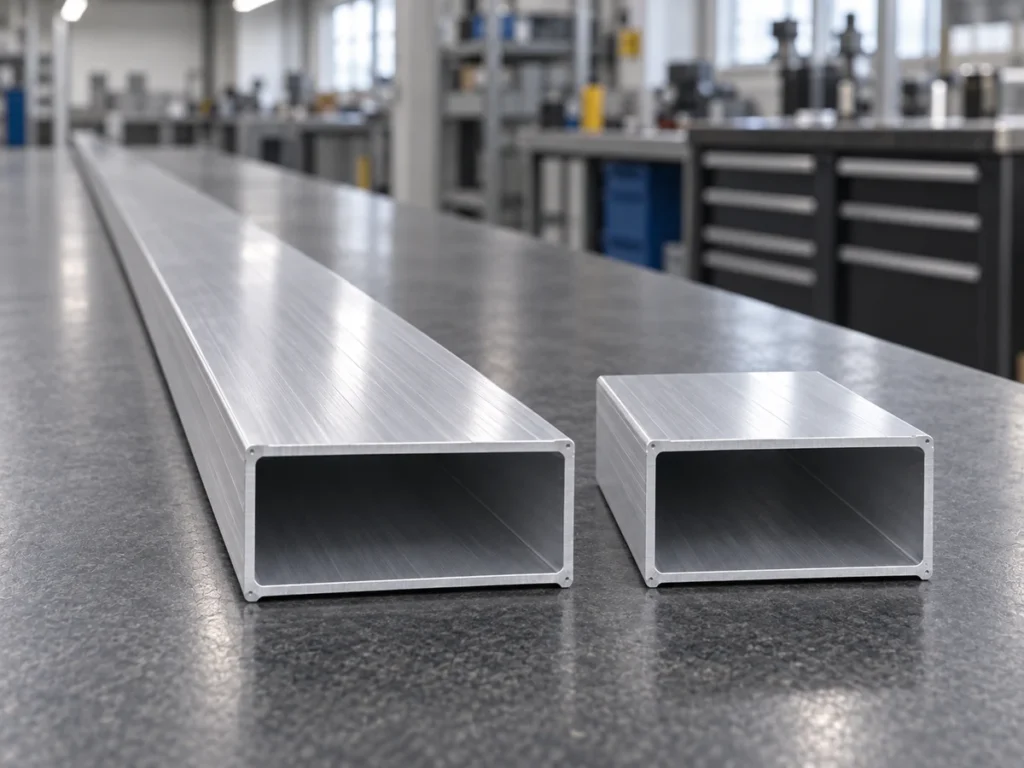
3. Define length from an unambiguous datum
Specify finished cut length for each part number, the datum face, permissible variation, squareness requirement, and the point in the process where acceptance is measured. If a later operation removes material, distinguish blank length from finished member length. If an end cap, joint or telescoping insert occupies the tube end, the assembly owner should supply the required insertion or clearance condition rather than asking the saw shop to invent it.
For a family of adjustable legs, a supplier may receive several lengths that look nearly identical. A clear part-by-part length table, marking rule and sample plan reduce mix-ups. Include the intended measurement method or a mutually agreed gauge where the drawing requires one. Avoid a single “tight tolerance” statement without the feature and acceptance datum.
4. Map holes, bends and attachment interfaces to the cut
Push-button adjustment holes, seat or rail connections, bends and fastener locations can determine which end of a tube is the true datum. If the cutting supplier does only straight cuts, indicate who later drills, bends, punches or assembles and how much stock they need. If holes already exist before cutting, the feeding and clamp plan must avoid damage and preserve orientation. Any tube with asymmetrical features needs a drawing view that shows which end is first.
Ask whether the end enters a socket, remains visible, is capped or is covered by another part. That answer affects burr limits, edge break, cosmetic handling and packaging. It is more actionable than a generic request for “clean cuts.”
5. Review holding and feed with representative stock
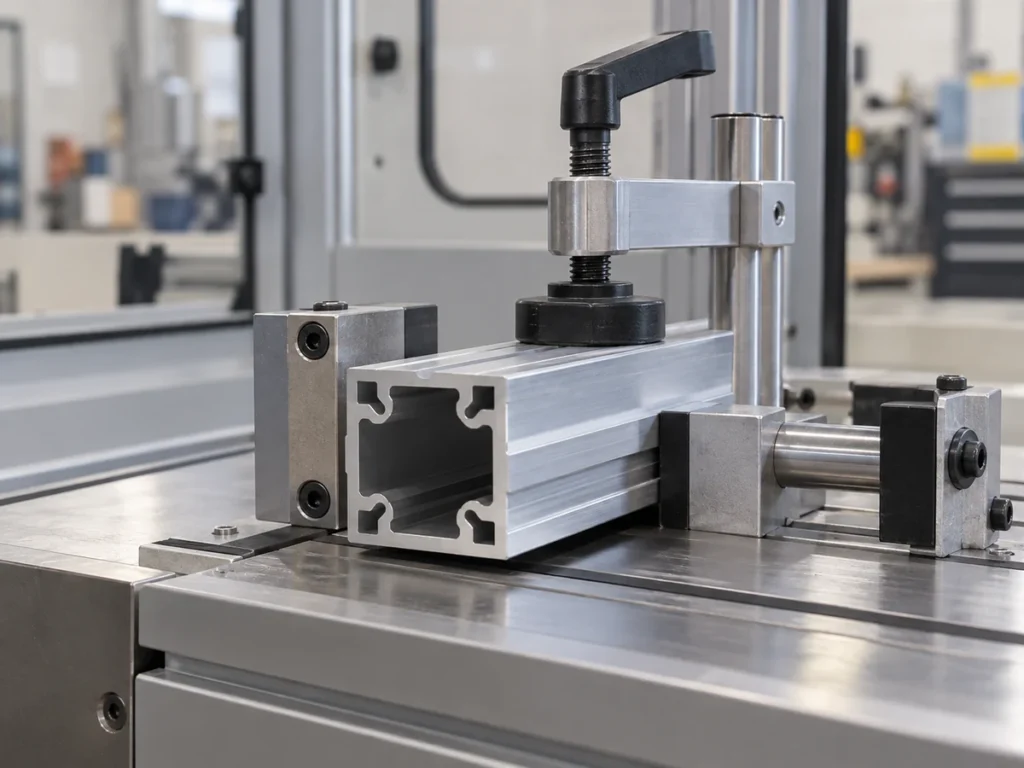
A saw trial should use the approved section and representative incoming straightness, wall condition, finish and longest/shortest production lengths. Review where the tube is supported before, during and after the cut. Thin-wall or finished surfaces can deform or mark under unsuitable contact; long stock can need controlled infeed and outfeed. The supplier should propose a fixture and demonstrate that it does not compromise the specified features. A general machine photo is only a discussion aid, not evidence that a bath bench member has passed a trial.
The short Jiurun Machinery video below shows a related aluminum cutting machine. It is a general equipment view, not a test of this article’s material, model configuration, customer product or performance.
6. State edge, surface and cleanliness acceptance
Define whether the cut edge must be deburred, edge-broken or left for a downstream operation, and which surfaces are cosmetic. A visible polished rail, a hidden crossbar and a telescoping leg may have different acceptance criteria. State who will remove chips from the tube bore and when. A shop should not assume that a later cleaning step exists unless the product owner specifies it.
For a wet-use product, also clarify whether the final finish must cover the cut edge, who checks finish continuity, and how corrosion or cleaning-agent exposure is evaluated at product level. The cutting supplier can document its own handling and inspection scope. It cannot turn an unapproved tube into a certified finished bench by adding a deburring step.
7. Agree on lot identity, packaging and first-article evidence
Link each delivered length and section to its part number, revision and incoming stock lot where traceability is required. Keep variants separated in packaging. Protect the surfaces and open ends as specified so transport does not undo the agreed edge and finish condition. Define how many samples will be inspected in a first-article review, who signs off, and which measurements or photographs are retained. Those items belong in the purchase agreement, not in a generic machine-speed claim.
A practical first-article package can contain a marked drawing, stock identification, a small set of measured cut lengths and end conditions, and the fixture or process notes relevant to the accepted sample. Production should follow the approved disposition, with changes to stock, section, finish or cutting setup reviewed before a new lot. The product owner still validates the assembled bench.
A usable RFQ packet
| Give the cutting supplier | Decision it enables |
|---|---|
| Released part drawings and revision-controlled BOM | Separate leg, rail and crossbar lengths and handed parts |
| Section, alloy/temper, finish state and stock source | Assess support, blade/fixture feasibility and handling |
| Cut datums, dimensions, tolerances and downstream operations | Quote the correct blank and inspection plan |
| Edge, surface, bore cleanliness and packaging requirements | Define receiving acceptance without guessing end use |
| Annual and trial quantities by part number | Compare manual and repeat-production approaches |
Send the highest-risk member first: for example, the thinnest wall, the longest unsupported blank or the most visible finished surface in the approved family. That is a procurement prioritization, not a claim about any particular machine’s capability. Include a sample or drawing only through the normal inquiry process. For a related but distinct tube-procurement example, see our medical walker tube cutting RFQ guide; its dimensions and assembly decisions must not be copied into a bath bench order.
Questions buyers often ask
Can one saw quotation cover the whole transfer bench?
Only if the quoted supplier explicitly owns the defined downstream work and finished-product responsibilities. A cut-frame-member quote does not by itself include seat, feet, assembly or validation.
Should a square-tube photo be used to approve a round-tube setup?
No. It can illustrate a question about clamping, but the approved round tube needs its own section-specific fixture and acceptance review. The photos on this page are related or illustrative scenes, not bath bench evidence.
What should be resolved before asking for a price?
At minimum, release the drawing revision, part list, section and material, quantity, cut datum and tolerance, finish state, end condition, downstream ownership and receiving criteria. If any item is provisional, label it clearly in the RFQ.
Request a component-cutting review: send JiurunCut your released frame-member drawings, section and stock details, expected lots and the boundary of the cutting scope through the site’s inquiry channel. We can discuss a cutting approach against those inputs; the product owner remains responsible for the assembled bench and its intended-use verification.