
Ambulance interior cabinet extrusion cutting is a useful saw inquiry only when the vehicle builder has released a loose aluminum extrusion as a defined intermediate part. A cabinet can combine extruded posts, brake-formed sheet, welded joints, doors, shelves and installed hardware. Quoting a saw from the cabinet envelope alone hides the actual blank, its datum and the operations that follow the cut. This guide helps an ambulance module OEM or approved cabinet fabricator prepare a bounded RFQ for its own aluminum member. The vehicle builder retains responsibility for cabinet design, occupant protection, installation and all applicable testing or approvals.
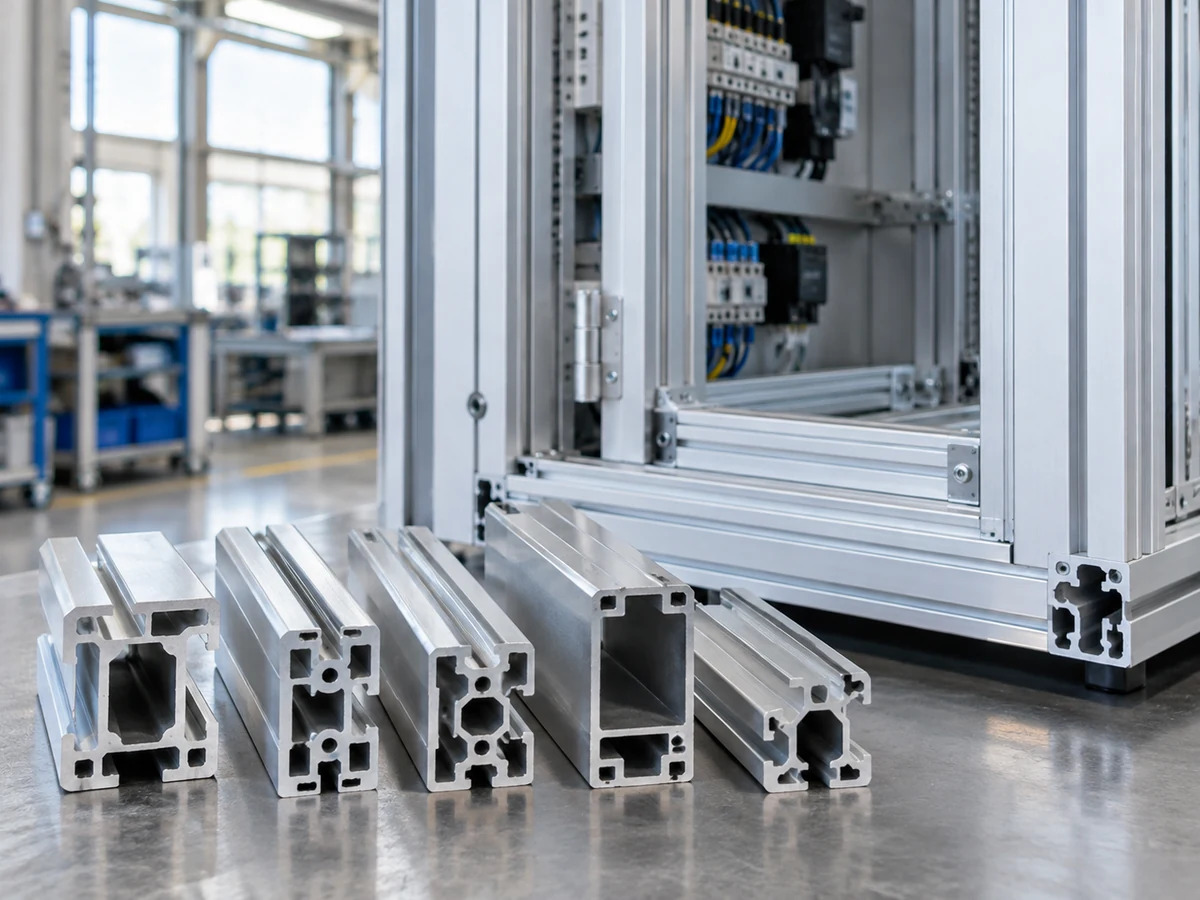
Ambulance interior cabinet extrusion cutting begins with the build route
Ambulance makers do not all use one cabinet construction. Excellance describes interior cabinets made with aluminum extrusions and brake-formed sheet, then welded into the modular body. Its construction overview also says tubular members used in the body are welded into cabinet frames. Crestline describes aluminum cabinetry with rolled cabinet edges. These examples show why “aluminum cabinet” cannot by itself identify the saw stock, its section or the production handoff. They are not specifications for Jiurun equipment or for another manufacturer’s vehicle.
Ask the vehicle design owner which released part is to be cut. A straight extruded post or rail can be a saw blank; a formed sheet panel, a completed welded cabinet and installed storage hardware are different supply units. If the customer asks for a finished cabinet, return to its bill of materials and isolate any genuinely separate extrusion cutoff stage before discussing a machine. Do not turn a drawing of the whole patient compartment into a cut list without the approved part numbers and revisions.
Identify the member before selecting a fixture
Request a section drawing, stock sample and material identification for each candidate extrusion. Mark the visible face, rounded corner, joining feature, cable or trim channel if present, and any thin wall that can move under pressure. Confirm whether a profile arrives bare, coated or anodized, and whether a protective film must remain intact. A hollow structural tube and a small decorative edge member may need different locating faces even if both are called a “cabinet frame.”
Record whether the part is left-hand or right-hand, whether it is cut square or mitered, and which face must be oriented toward the cabinet opening. The approved design may require a subsequent drill, slot, weld, deburr or finish step. State exactly when the blank is accepted by the next workstation. The saw station cannot be credited with completing a weld or verifying the cabinet’s crashworthiness.
Convert cabinet geometry into a part-level cut list
A cabinet height or opening size is an assembly dimension, not automatically a stock cutoff. Separate vertical posts, upper rails, lower rails and door frame pieces by part number. Give each its own nominal length, tolerance, end condition, quantity per cabinet and expected batch. If a corner is welded after cutting, specify the approved joint preparation and whether the length is measured to a square end, miter point or finished joint datum. Never infer a miter from a perspective drawing.
Include a revision-controlled drawing and a material list that reconciles the loose blank to the module layout. Where cabinet geometry changes between vehicle variants, identify common members and variant-specific members instead of sending a single “mixed cabinet profiles” line. That lets the equipment supplier study changeover, stop positions and material yield without assuming an unapproved machine program. If incoming extrusion lengths differ by supplier, give the range and required traceability.
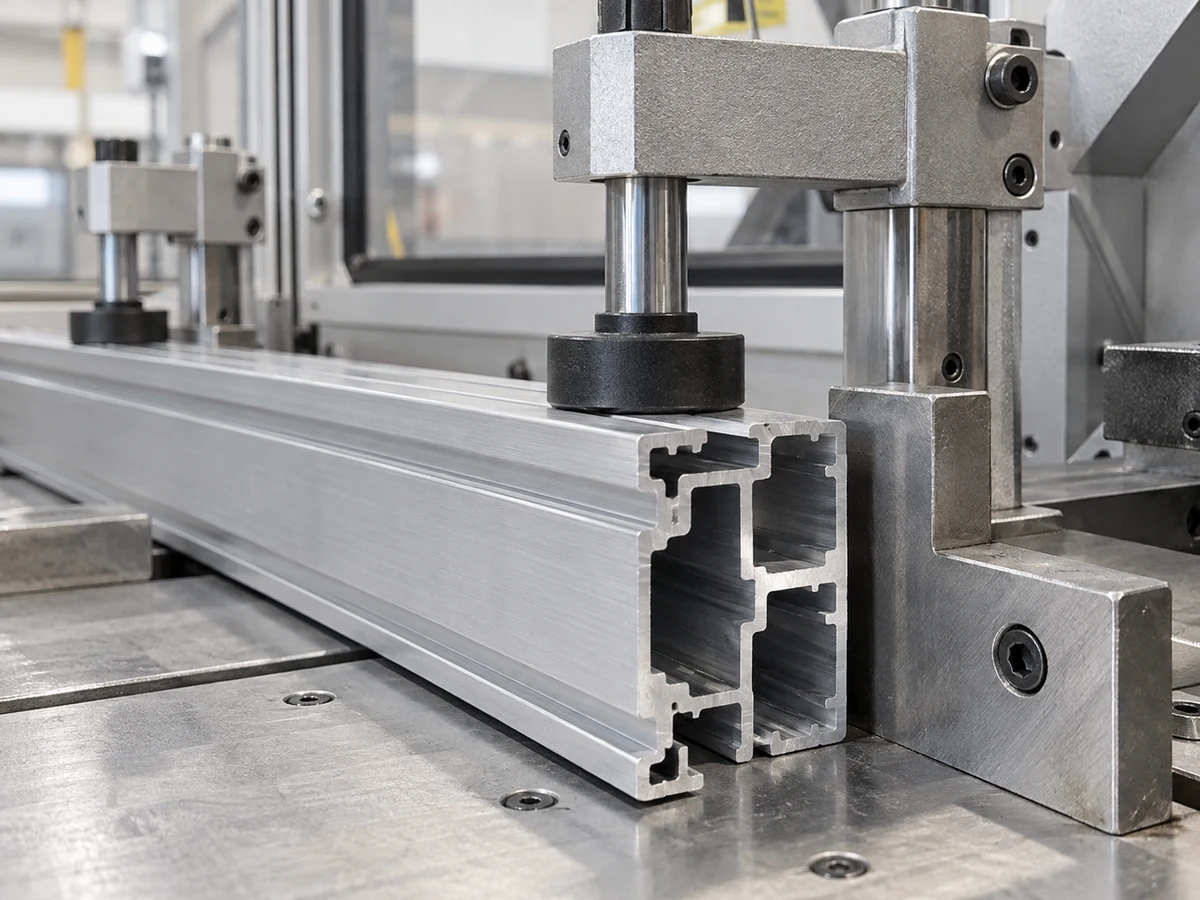
Protect the section during the saw trial
The trial should use the actual released profile, not a visually similar sample. Map clamp contact away from a finished face or a joint feature whose shape must be preserved. Provide support close enough to the cut to manage a slender member, but leave clearance for the blade path and for protruding lips. A vertical hold-down may restrain one section well and mark or distort another. Set clamp pressure and support based on measured first-off results under a controlled shop procedure, not a generic setting in an article.
Ask the shop to inspect the member after it is released from the fixture. A profile can be held square while clamped and spring out of alignment afterward. Discuss cut-face condition, burrs, chip retention inside cavities and how parts will be staged to avoid scratches. If painted or coated stock is involved, confirm whether cutting before finishing would be the approved route; changing process order requires the vehicle builder’s sign-off.
Define the end inspection and next owner’s acceptance
First-off review should include the part number and revision, stock batch, chosen datum, measured length, end angle or squareness, visible face condition and orientation. Give the inspector a drawing that identifies which surfaces touch a gauge. A caliper at an arbitrary lip can return a number without confirming the dimension that matters to cabinet fit. Keep a signed sample and record any approved adjustment before production release.

The fabricator who assembles the cabinet should review the actual blank for fit and downstream processing. The vehicle builder then evaluates the completed structure, hardware, edge treatment and installation against its requirements. Passing a cutoff length alone does not establish occupant safety, retention strength, crash performance or regulatory compliance. Keep those claims out of a saw quotation unless the appropriate system-level evidence exists.
Send a bounded RFQ, not a cabinet promise
| RFQ input | Decision supported |
|---|---|
| Released part, assembly relationship and revision | Identifies which loose extrusion is actually saw-cut. |
| Stock sample, alloy/temper and finish | Shows profile geometry and surfaces to protect. |
| Part-level lengths, ends, orientation and batch mix | Supports positioning, changeover and stock-yield review. |
| Approved datum and first-off inspection method | Prevents a measured but wrong dimension. |
| Downstream weld, form, machine and finish owner | Keeps the saw scope separate from the completed cabinet. |
| Acceptance and sample-review contact | Allows the actual builder to sign off the blank. |
A useful machine proposal states the proposed stock range, workholding concept, cut and inspection handoff, and any trial assumptions. It should flag missing drawings or an uncertain material route as questions. It should not substitute a generalized aluminum cutting demonstration for a trial on the approved cabinet member.
Related equipment video
This Jiurun Machinery channel video shows a general aluminum-cutting equipment scene relevant to discussing stock positioning and cutoff. It does not show an ambulance cabinet, the specific material or configuration in this article, a customer project, a qualifying test or vehicle performance.
Decide whether the saw belongs in this package
If the module maker can provide a released straight aluminum cabinet member, sample stock and the handoff criteria above, review industrial aluminum profile cutting options and send the drawing to Jiurun for a scoped equipment discussion. If the inquiry concerns a formed-sheet cabinet, a welded module or completed vehicle, define that manufacturing package with its responsible builder first. Ambulance interior cabinet extrusion cutting is one possible intermediate operation, and its evidence should stay at that boundary.