
An order for “an aluminum spacer bar cutting machine” is incomplete until the buyer names the frame-making route. An insulating glass unit (IGU) may use cut lengths joined with corner keys, or a profile may be bent into a frame and closed at a joint. Those routes place different demands on the cut end. A saw that produces an acceptable window-frame miter has not thereby qualified to cut the much smaller spacer used inside the glass unit.
This article helps IGU producers and machine buyers prepare a spacer-specific request for quotation. It is a qualification checklist, not a claim that any named Jiurun saw has cut or been approved for a particular spacer. The profile supplier’s handling and assembly instructions, and a trial on the buyer’s own stock, govern the decision.
First identify which frame the drawing describes
The outer aluminum window or door frame holds the glazing assembly. The IGU spacer sits between panes at the sealed glass edge. They are different components and should have separate drawings, material descriptions and acceptance criteria. Sending only a photograph of the finished window can cause a saw supplier to quote the wrong workpiece and the wrong corner operation.

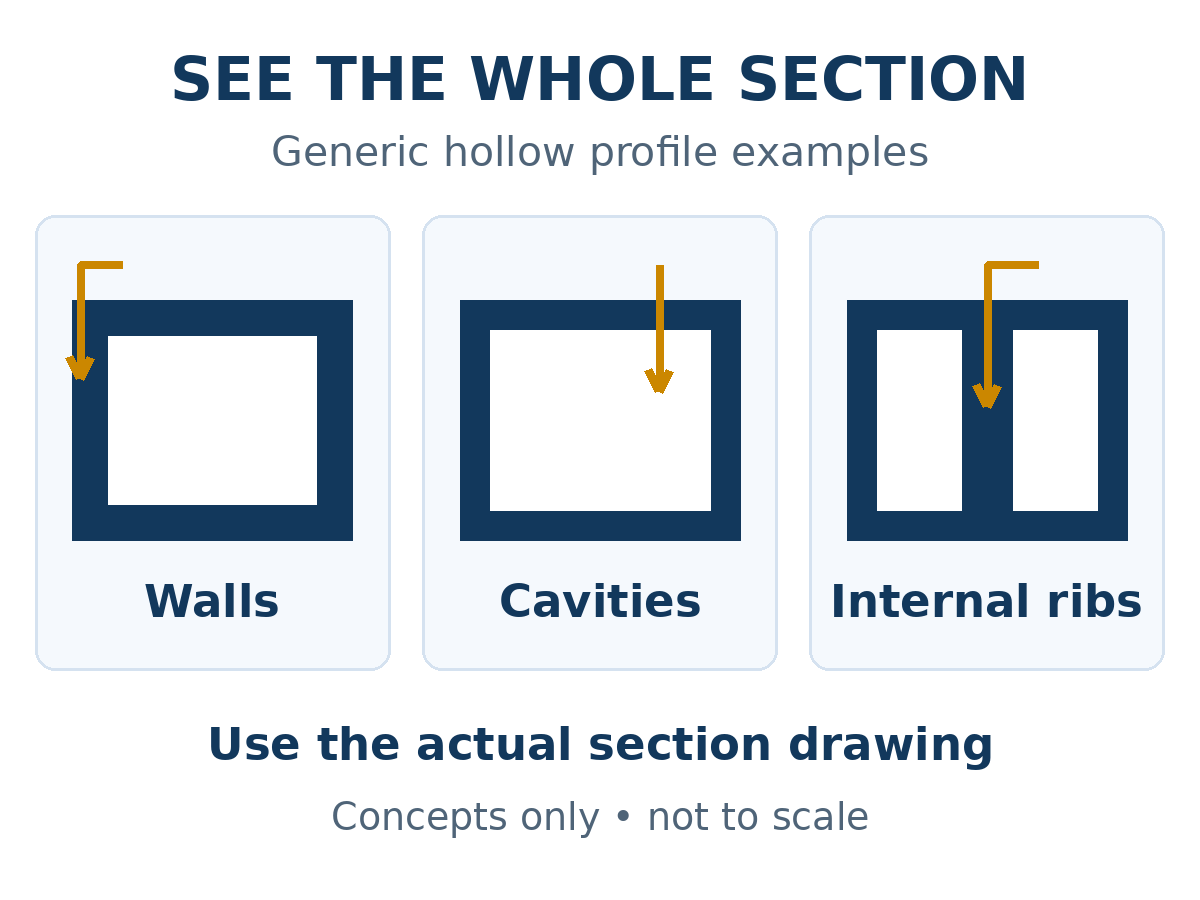
Give the machine supplier an actual spacer cross-section drawing and samples in every proposed size. State whether the item is an aluminum box spacer, a hybrid warm-edge profile or another construction. Fenzi lists aluminum, steel, hybrid and composite spacer families, and notes that one hybrid profile can be cut for corner-key assembly or bent. That is a useful reminder that the word “spacer” alone does not define a cutting process. Fenzi’s spacer profile information describes those alternatives.
Decide whether the cut becomes a corner, a joint or only an end
For a cut-and-corner route, the cut length and end condition affect how a specified corner key enters the spacer and how the assembled frame closes. The buyer should provide the actual key and ask for a fit check, not just a dimension check on a loose bar. A burr, flare or crushed wall may be invisible in a simple length report. Fenzi’s IG quality guidance calls out burrs, cleanliness and corner-key fit as handling and inspection concerns.
For a bent-frame route, ask the profile supplier which corners are bent, where the closing joint lies and which cutting or punching operation belongs to that approved process. Do not replace that route with four saw-cut pieces simply because a saw is available. Technoform describes both bending and cut-and-corner fabrication across its spacer solutions; its product specifications also show that an individual spacer system may prescribe a particular corner method. Technoform’s fabrication overview is a reason to check the named profile’s instructions before issuing an equipment order.
Aluminum spacer bar cutting acceptance starts at assembly
For aluminum spacer bar cutting, agree on a first-off test before discussing cycle time using production stock, the intended corner components and the intended assembly operator. Record the profile supplier, material construction, size range, stock length, finish, perforation or fill state, and allowable handling contact. If several spacer families are planned, treat each as a separate qualification until the supplier approves a shared process.
Then inspect more than the saw length display. Measure the cut member using the datum and method agreed with the IGU team. Look for burrs, crushed corners, wall distortion, loose particles and surface contamination. Insert the approved corner key where the route calls for one; check the fit without forcing the profile to flare. Assemble a representative frame and verify the agreed squareness and joint condition before passing it to the next sealing step. These are proposed acceptance checks for the buyer to formalize with its profile and IGU suppliers, not universal tolerance figures.
Keep the cut stock clean and traceable. The IGU process has its own desiccant, sealant and gas-fill controls. A machine quotation should name whether it delivers a clean cut member, an assembled spacer frame, or merely parts awaiting downstream inspection. Do not attribute a finished unit’s moisture or gas performance to a saw demonstration.
Do not infer spacer capability from a larger aluminum saw
A guarded saw and long feed table may be well suited to some aluminum extrusions yet offer no proof that a thin spacer can be clamped without collapse, fed without marking, cut without burrs, or kept free of chips. Ask the supplier to show the actual support, clamping contact, blade selection, extraction, part collection and changeover plan for the submitted sample. Require a written statement of what was tested and what remains for the IGU line integrator.

Ask for the trial record by profile variant. It should identify the tested stock and tooling, measured output, rejected pieces and assembly observations. A video of general aluminum cutting is useful for viewing a feed-and-saw layout, but it cannot substitute for that record.
A compact RFQ package for a meaningful reply
- Frame route: cut-and-corner or approved bend-and-close process, with a drawing of the finished spacer frame.
- Actual stock: supplier, profile family and cross sections, material construction, perforation and fill state, stock length and finish.
- Corner parts: approved keys or connectors, joint method and the assembly stage at which cut members are accepted.
- Acceptance: dimension datum, end condition, cleanliness, connector fit, frame squareness and sample quantity, as agreed with the IGU team.
- Scope: cut-only machine, part collection, dust handling, inspection and integration responsibilities.
If the supplier cannot demonstrate the submitted bar and assembly route, keep the quotation conditional. That is a useful outcome: it prevents a generic aluminum-saw photograph from being mistaken for an approved IGU spacer process.
Send JiurunCut the actual spacer drawings, stock samples and corner route for a suitability review. Ask which cutting approach, if any, merits a witnessed trial and request the agreed acceptance record before selecting equipment.
The following video on Jiurun’s own channel shows a related automatic aluminum feed-and-cut arrangement. It does not show IGU spacer stock, corner-key assembly, a qualified model configuration or measured IGU performance.