
An aluminum sign frame saw trial should finish with a frame that assembles around the intended panel, not merely with a pile of clean-looking cuts. The buyer has to decide whether the chosen saw, blade, workholding and cut sequence can make the approved frame members consistently enough for the actual corner joint and visible face. This guide turns that decision into a repeatable sample plan. It is for profile and sign fabricators specifying a cutting process; it does not claim a particular Jiurun machine, blade, tolerance or customer result.
Define the finished sign system before choosing the saw
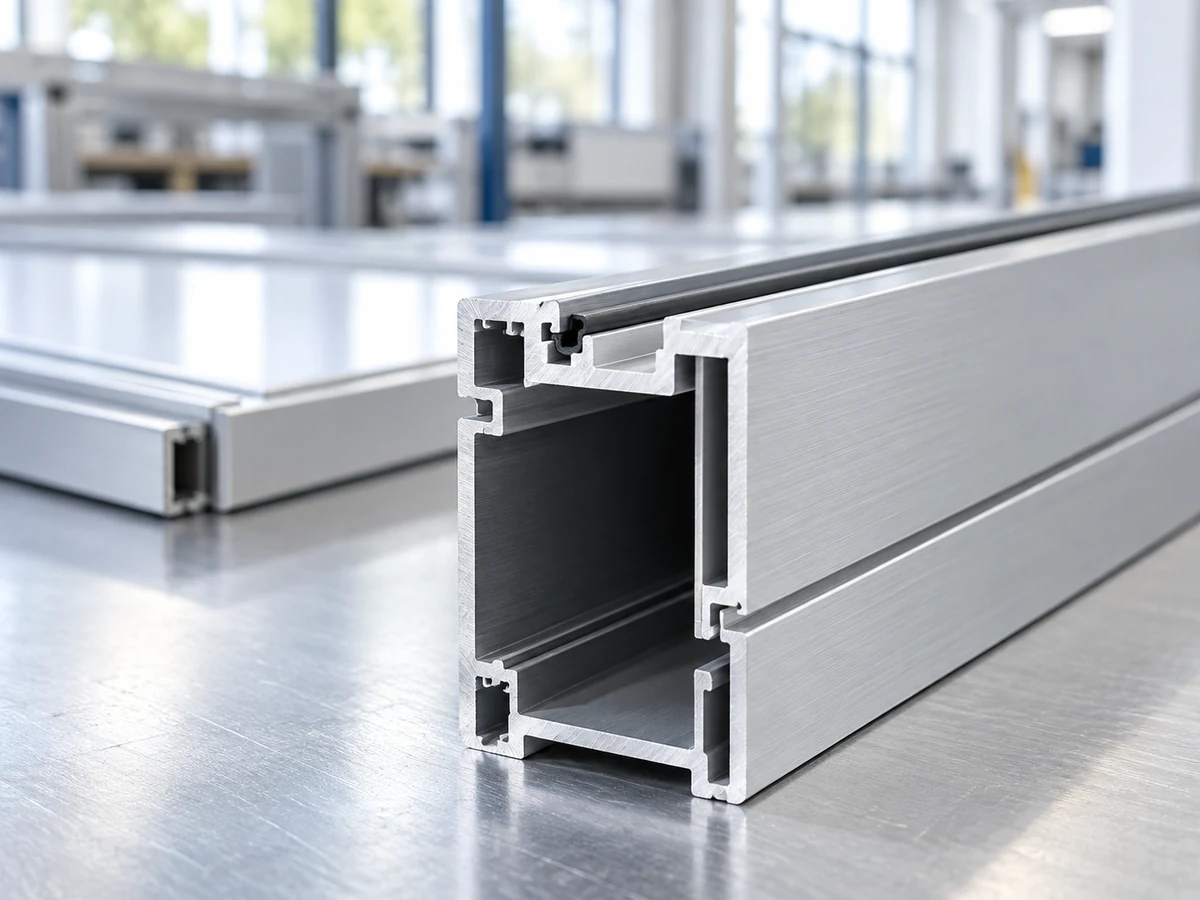
Start with the approved extrusion drawing and a physical reference assembly. Identify the front display face, return, panel groove, cover or snap feature, corner connector, and any handed members. Record whether the shop receives raw lengths, a precut kit, or an assembled panel. Those are different acceptance points. A cut length that passes a caliper check can still leave a miter gap, damage a visible finish or prevent the panel from seating.
Do not assume every sign frame uses the same joint. As examples of distinct commercial systems, SignComp’s architectural sign range includes insert-panel and corner-angle arrangements, while Displays2Go’s snap-frame assembly describes mitered corners and a graphic behind a closing cover. These examples explain why the actual purchased extrusion, connector and panel must travel with the trial. They are not specifications or performance evidence for a Jiurun saw.

Aluminum sign frame saw trial: build a matrix that exposes assembly risk
Select the approved production profile and finish rather than an easy substitute. Include the longest member, the shortest member that challenges clamping, left- and right-hand miters if both are needed, and a straight-cut member when the design uses one. Tag each sample with profile revision, alloy and temper if known, finish, nominal cut angle, length datum, blade and machine setup, operator, and sequence position. Record those as trial facts, not promises for every material.
Make enough paired members to assemble at least one complete corner and one representative frame opening. A single isolated coupon cannot show accumulated length or angle effects. An aluminum sign frame saw trial needs paired members for assembly. Reserve a first-off set for setup evaluation and a later set for repeatability; keep their labels separate. Agree sample quantity and inspection method with the buyer before cutting. If the order contains more than one extrusion family, repeat the relevant checks for each family rather than averaging unlike profiles.
Specify the datum clearly: is length measured from a long point to long point, a short point to short point, or a straight end to a miter point? Is the visible face up, against a fence, or protected by a sacrificial contact surface? Document the direction of the burr and any allowable witness mark. These details often decide whether a frame is fit for a display installation even when a dimension reads correctly.
Check support, clamping and the visible face
Inspect how a full production length is supported before the cut and how the offcut is controlled after separation. A light hollow section may twist under a clamp or spring when released. A short final piece may need a different stop or support strategy from a long member. Verify that the clamping surfaces bear on suitable lands without crushing a channel, shifting a cover feature or scratching the finish. Keep guards and safe operating procedures in place, and inspect only after the blade has stopped and the part is safe to handle.
Run the approved setup, then examine both the retained member and offcut. Look at the visible face under the agreed lighting, the miter line, burr at the panel groove, end squareness where applicable, and any chip trapped in a cover or connector feature. Photograph each defect with its part ID and location. If a protective film is present, inspect both with the film in place and at an agreed reveal area; film can hide a mark that appears during assembly.
Measure cut geometry, then assemble the actual corner
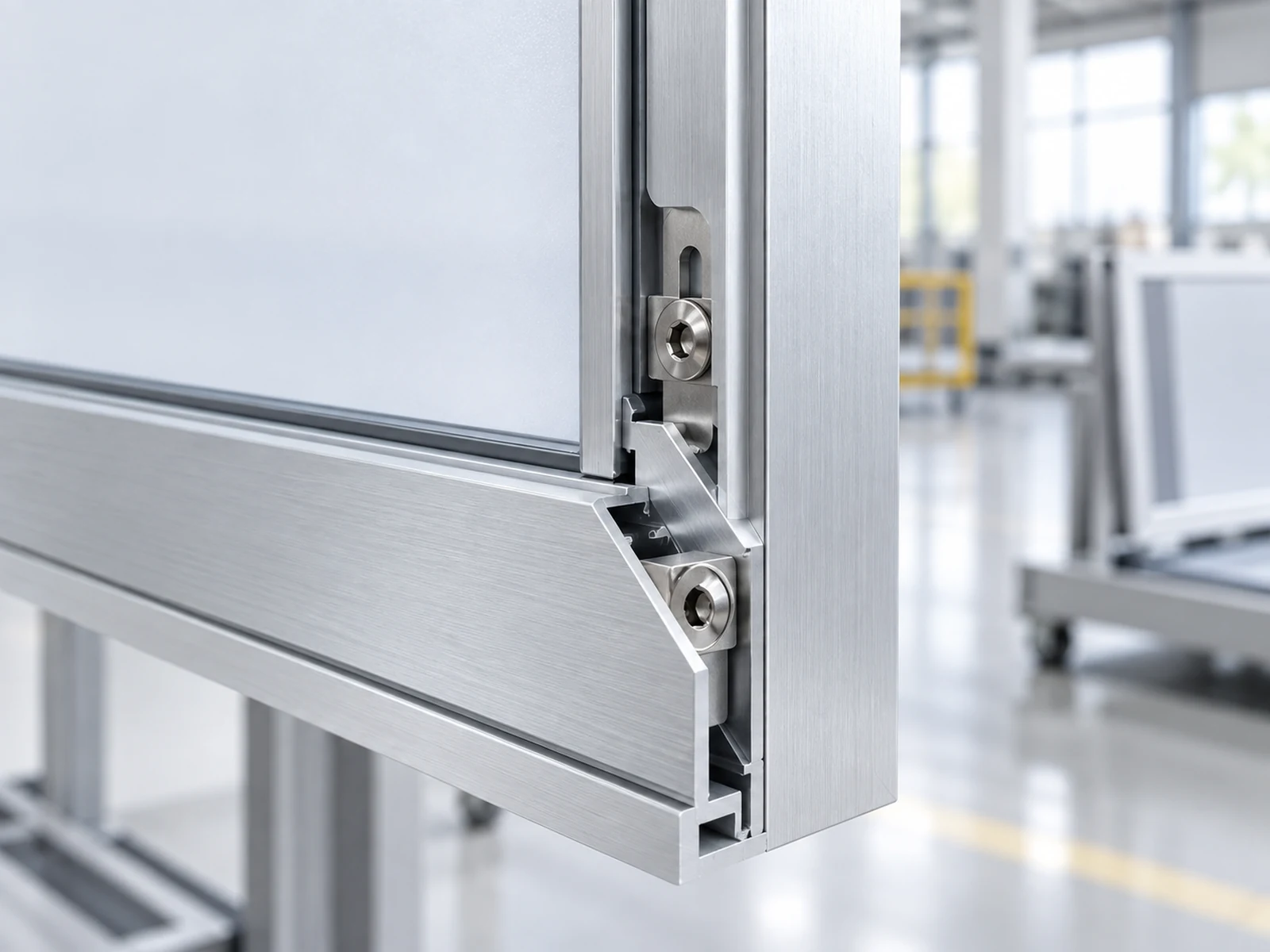
Measure against the drawing using an agreed gauge and datum. Record individual member length and angle observations, but make the assembled corner the decisive checkpoint. Fit the specified corner key, bracket or joining method with the intended fasteners. Check whether the two visible faces align, whether the gap is acceptable under the buyer’s viewing condition, whether a connector seats without force or ad hoc rework, and whether the joint remains stable after the approved fastening step. Do not disguise a cutting problem by filing the sample silently.
Install a piece of the approved sign panel or graphic carrier and close the intended cover or retainer. Check that the panel slides or drops in as designed, that the reveal is consistent, and that service access remains possible if the sign is meant to be reopened. Record which issue belongs to the saw cut, extrusion variation, connector, panel dimension or assembly method. This prevents a supplier dispute based on the wrong cause.
Compare first-off, later cuts and receiving-stage cost
For an aluminum sign frame saw trial, take a first-off measurement after setup and mark any adjustment. Then take later samples at positions agreed with the buyer. Keep the actual measurements and assembled-fit observations, including failed pieces. A feeder’s positioning repeatability is only one contributor to the final part: blade condition, fixture, extrusion, cut angle, thermal state and inspection datum matter too. Never substitute a quoted feeding accuracy for demonstrated finished-length or corner accuracy.
Compare the saw trial with the actual purchasing choice. A shop buying precut kits should evaluate labeled length pairs, rework and assembly time at receiving. A shop buying raw extrusion should also consider setup time, scrap length, changeover, blade maintenance and operator handling. If the plan is to ship assembled panels, inspect the complete frame, protection for transport and access to damaged-panel replacement. Calculate cost per accepted frame, not just cuts per minute; an impressive cycle time has little value if miters need hand fitting or visible faces are marked.
What to send with an RFQ and what to accept
Send the extrusion drawing revision, real sample lengths, finish and film specification, panel and connector parts, expected mix and batch size, required miter and straight cuts, inspection datum, and acceptance criteria. Tell the supplier which face is cosmetic and whether a second operation is allowed. Ask them to state the proposed support and clamp approach, blade selection process, first-off routine, achievable changeover approach and the evidence they will return. Machine model and optional configuration should be quoted explicitly for the actual profile; do not infer them from a generic product photo or video.
Before an order decision, obtain tagged sample parts, the measurement method and readings, corner and panel-fit photos or an in-person fit review, a defect list with disposition, and the agreed production control plan. A buyer may set numerical limits in its drawing or quality agreement; this article intentionally supplies no universal miter, burr or length tolerance. Accept only against that approved specification and a repeatable inspection routine.
Related equipment footage
The following video is from the Jiurun Machinery YouTube channel. It shows general aluminum-saw equipment footage to help readers visualize a cutting station. It does not show this sign-frame material, a specified model configuration, this buyer’s connector or panel, a customer trial, or measured cut and assembly performance.
Practical next step
For a useful saw discussion, send Jiurun the approved sign-frame profile drawing, real extrusion and mating panel/connector samples, target receiving stage, and your written acceptance criteria. Ask for a trial plan that returns individual cut observations and a complete assembled corner. Contact JiurunCut with those materials so the proposed machine and process can be evaluated against your specific frame rather than against a generic specification sheet.