
Aluminum shelf-edge label rail cutting looks like a small job. The purchase can become expensive when the quoted cut piece fits neither the shelf nor its insert and cover. Before asking a saw supplier for a machine trial, decide whether your order is for a finished labeling system, a prepared rail kit, or straight aluminum blanks from a released extrusion. That boundary determines which drawing, measurement, finish, and acceptance evidence belong in the RFQ.
Aluminum shelf-edge label rail cutting begins with the system
Real systems use different interfaces. Absolute Museum & Gallery Products describes an aluminum holder supplied with separate acrylic cover pieces and shelf-edge clips. Systech describes a cut-to-length aluminum InfoStrip with a replaceable paper insert, optional clear acetate, and adhesive mounting. These are examples from their respective manufacturers, not interchangeable specifications or Jiurun product configurations. A plain channel of similar width cannot be assumed to hold either supplier’s cover, label, or mounting parts.
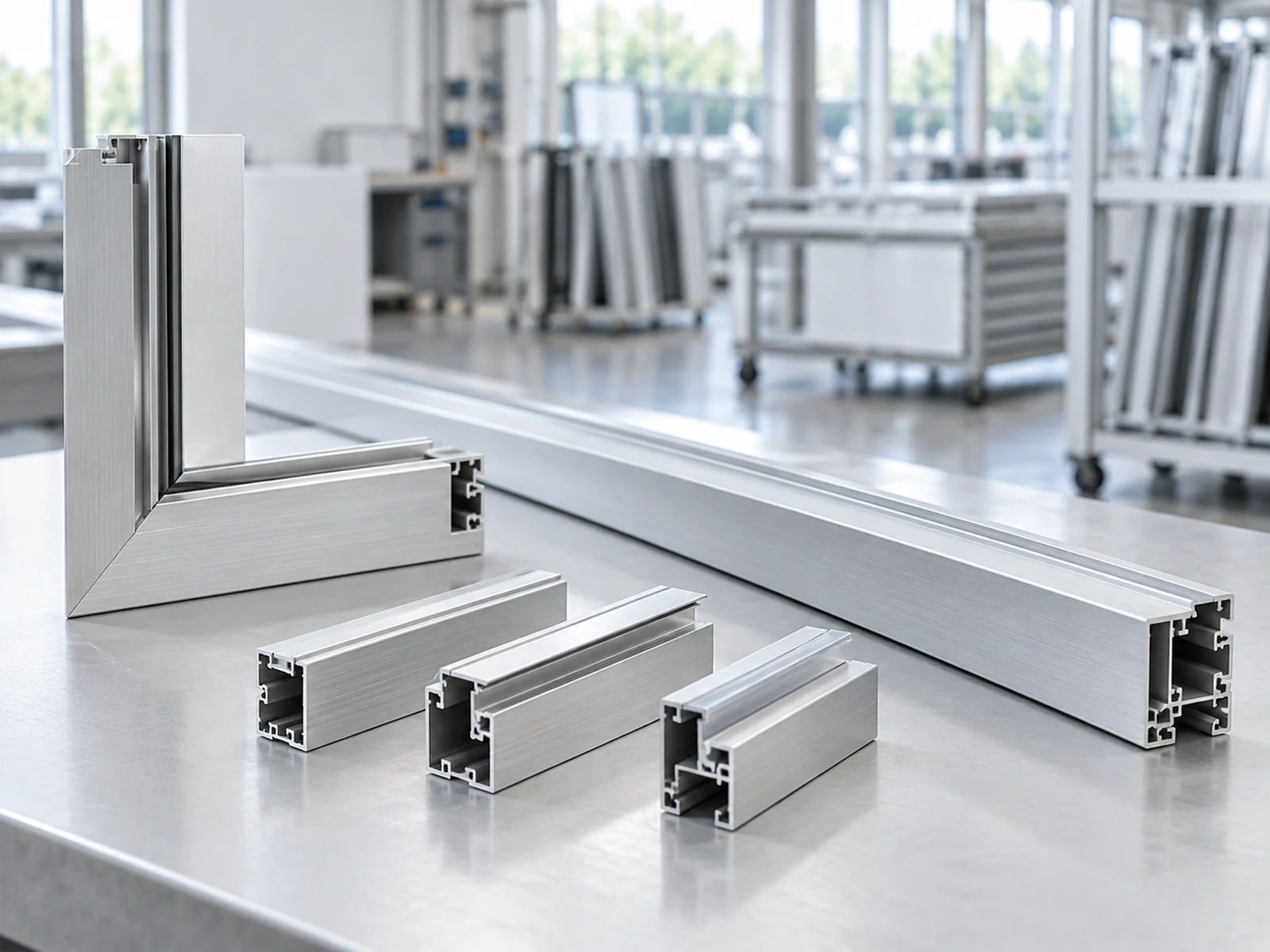
Ask the label-system owner for a released section drawing or approved sample, the shelf interface, label insert, protective cover, mounting method, and end treatment. Record the revision and who may approve substitutions. If the buyer has only a shelf length and a photo, there is not yet a cut-member specification. A system supplier may be the safer purchasing route until the interface is released.
Separate three purchasing routes
- Complete holder system: one supplier owns the rail, cover or insert, clips or tape, finish, and application fit. Quote the installed or ready-to-install package.
- Prepared rail kit: the rail is cut and perhaps end-finished or grouped by shelf location, while another party supplies covers, graphics, or fixing parts. Name each missing component and receiving check.
- Straight cut blanks: the saw shop delivers only the approved aluminum section at specified end-to-end lengths. The buyer or integrator owns later operations and system fit.
Compare prices at the same accepted stage. A low price for bare blanks is not comparable with a finished labeling kit until cover cutting, mounting hardware, finishing, sorting, scrap, inspection, and installation responsibility are included. For an in-house saw purchase, count only the rail families and volumes the buyer will actually retain. Do not size a machine from total shelf-label demand if most systems are bought complete.
Release a cut length that can be measured
Do not turn a nominal shelf width into a saw stop setting without the system drawing. The rail may terminate inside end caps, between uprights, at a shelf joint, or clear a clip. State whether the controlled dimension is the aluminum member end-to-end, the visible label opening, the shelf front, or the assembled outside length. Define the datum face and cut orientation for each handed or asymmetric section. If both ends are square, say so; if a special end or later notch is required, identify who performs it. Do not apply a generic miter or kerf allowance to a proprietary rail.
Supplier stock lengths also vary. Absolute’s published shelf-edge holder example has a 2.4 m aluminum extrusion with separate cover pieces; Systech publishes a different maximum length for its InfoStrip. These figures describe those manufacturers’ products only. Obtain the actual stock length, trim allowance, cut list, and allowed remnant policy for the selected system before estimating yield. A generic aluminum-channel supplier shows why channel dimensions and finishes are specified by section; its stock channel is not automatically a finished label holder.
Check section support and the exposed end
A narrow open channel or thin lip can move when it is clamped. The trial should use the actual approved extrusion, the intended stock condition and orientation, the proposed blade and fixture, and representative longest and shortest accepted parts. Confirm where the section bears against the fence, whether the insert pocket is protected from distortion, and whether the clamp leaves a visible mark. Keep the machine stopped for setup inspection; follow the machine maker’s guarding and operating instructions for the actual cut.
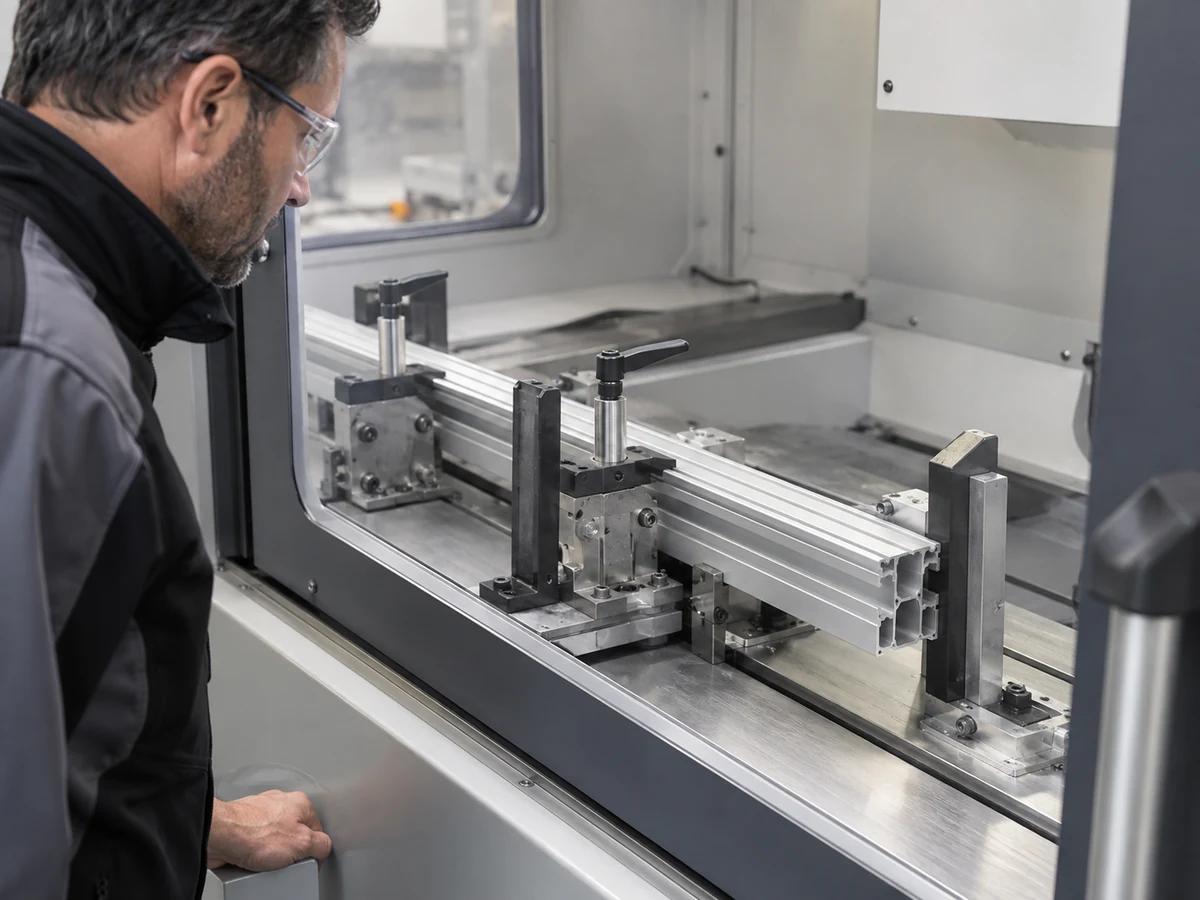
Inspect the first off part at the finished end: length from the released datum, squareness or specified end geometry, burr condition, lip shape, insert path, cover engagement, and visible finish. A sharp-looking end is not proof that a cover slides or a clip seats. Try the actual cover and mount components on a sample cut, with the system owner present or using its approved acceptance method. Record whether deburring, coating repair, or end caps are included after sawing; do not quietly assume the cut shop provides them.
Keep mixed lengths and systems identifiable
Many projects contain repeated bays plus one-off end shelves. A cut list needs location or kit ID, section and revision, finish, length datum, quantity, and hand/orientation if applicable. Separate rails that share a nominal length but take different covers or mount differently. Decide whether each shelf position receives a labeled kit or whether the buyer accepts pooled blank lengths. This receiving choice affects sorting time and the risk of fitting a visually similar wrong section.
RFQ and first-off acceptance checklist
- State whether the quote covers a complete holder, prepared rail kit, or bare cut blanks, and list excluded covers, inserts, clips, tape, and end treatments.
- Attach the approved extrusion section and revision, finish, stock length, shelf interface, mounting method, and sample of the real insert and cover.
- Provide member lengths from a named datum, end geometry, quantity by location, allowed variation, and receiving or kit-label format.
- Ask for a trial on the actual section, including short and long parts, clamping marks, end quality, and a fit check with the actual mating components.
- Assign who signs off the first off sample, who owns later end work, and what evidence accompanies repeat batches.
The video below is a general Jiurun machine demonstration for discussing aluminum-profile cutting and setup. It does not show the label rail, a specified shelf system, the quoted configuration, a customer job, or verified results for this RFQ.
Send a useful buying brief
If your team will retain the aluminum cut work, send Jiurun the released section drawing, a physical sample where available, the longest and shortest accepted members, annual mix, finish, end acceptance, and who supplies the mating cover and mount. Ask for a saw trial and quotation against that defined blank stage. If you are still choosing a complete labeling system, settle its rail and mounting design first. For broader sign-manufacturing equipment selection, see our sign fabrication saw guide. Contact Jiurun with the cut-member brief for a configuration review.