
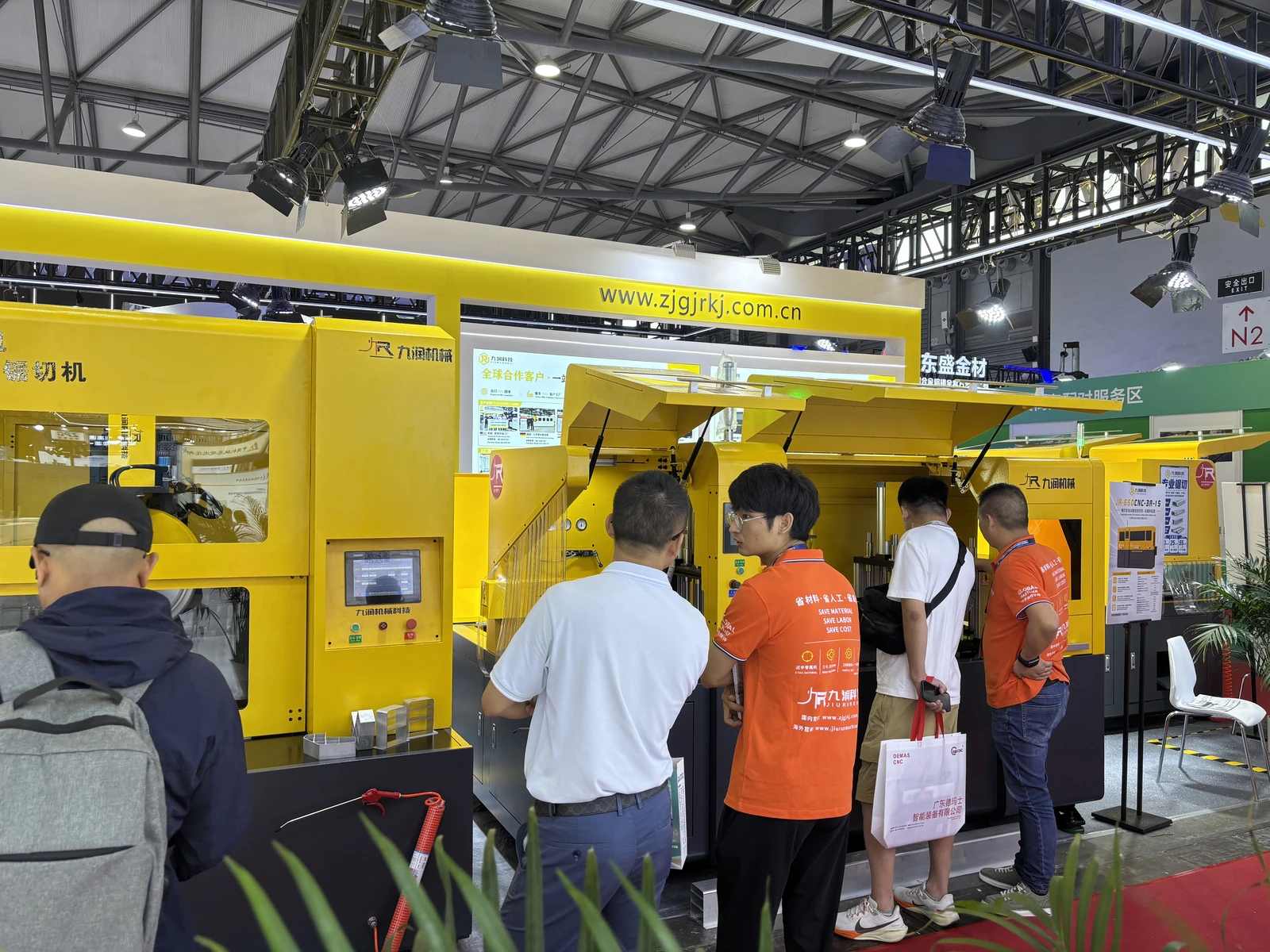
An aluminum saw can look convincing on a trade-show floor. The enclosure opens smoothly, a sample is on the table, and a representative can walk through the controls. Yet an aluminum saw trade show demo answers only a narrow question: what was visible on that particular machine, with that material and setup, at that moment. A purchase decision needs a bridge from the booth to a written machine scope, a representative cutting trial, and an acceptance plan for your factory.
This guide is for a buyer who has seen a saw at an exhibition and now must decide whether to request a quotation, arrange a trial, or reject the fit. It treats the show visit as discovery. It does not treat a display photograph, a cut sample with unknown history, or a stated feed-positioning figure as proof of finished-part accuracy.
What an aluminum saw trade show demo can establish
At the booth you can identify the machine shown, observe its physical loading and unloading arrangement, see where an operator stands, and ask which motions are automatic. You can also inspect whether the displayed sample resembles one of your profile families. Record those observations as observations. If cutting actually takes place, note the stock section, cut length, tooling, operator intervention, settings the supplier is willing to disclose, and how the part was checked. A static display cannot establish cycle time or cut quality; even a live demonstration cannot establish either across an untested product mix.
The exhibition machine may have options that are omitted from the later quotation. Conversely, a different build of the same named model may be offered for your material. Capture the nameplate or written model designation, the displayed option list, and the representative’s contact details. Ask for the exact configuration to be quoted in writing. Do not rely on a photograph of a brochure board as the contract specification.
Start with your own production boundary before comparing booths
Make a one-page demand sheet before asking for a price. Separate stock that the saw must actually cut from bought finished pieces and downstream operations. For each approved profile family, identify the cross-section drawing and revision, stock supply condition, relevant finish or protective layer, required cut geometry, part-length range, batch mix, and the next receiving operation. If some parts are mitered while others are square-cut, list them separately. A single attractive show sample cannot stand in for the whole mix.
State the inspection basis as well. Which feature is measured from which datum? Is the requirement a saw-cut blank dimension, a later machined feature, or a final assembled condition? Who owns each criterion and measurement method? A feed-positioning claim should never be copied into the purchase specification as a promise of finished-part tolerance. Finished results depend on the actual stock, clamping, blade, setup, measurement method, and production condition.
A practical demand sheet has five columns: representative part and revision; incoming stock and finish; saw-stage features; required production pattern; and receiving-stage checks. Mark any family that is outside the proposed saw’s material or process scope. This makes a supplier’s refusal, substitution, or proposed extra operation visible before the quote is scored.
Capture observations that can be checked later
During the conversation, ask the exhibitor to distinguish the displayed machine from the offered build. Write down what you physically saw: infeed support, clamping contact, guard arrangement, blade access, cut-piece handoff, operator controls, and the space occupied around the machine. Photographing a guard or a control panel is useful for follow-up, but it is not evidence that a particular option is included in your order.
If the machine runs, separate the cycle into loading, positioning, clamp engagement, cutting, unloading, sorting, and any manual reset. Ask which steps the supplier expects your staff to perform. A dramatic cut of one easy profile says little about changeover between your difficult sections, short-part handling, or a mixed shift. Record whether the displayed material was supplier-selected and whether the cut part can be identified back to the observed run. A sample laid out beside a machine without that link is a conversation aid, not a verified trial result.
Also note what cannot be judged at a show. Exhibition noise and power supply conditions are unlike an installed factory. Safety, extraction, coolant, electrical supply, floor loading, access clearance, and local integration all need site-specific review. Do not infer these from a brief public demonstration.
Translate the booth conversation into a comparable quotation
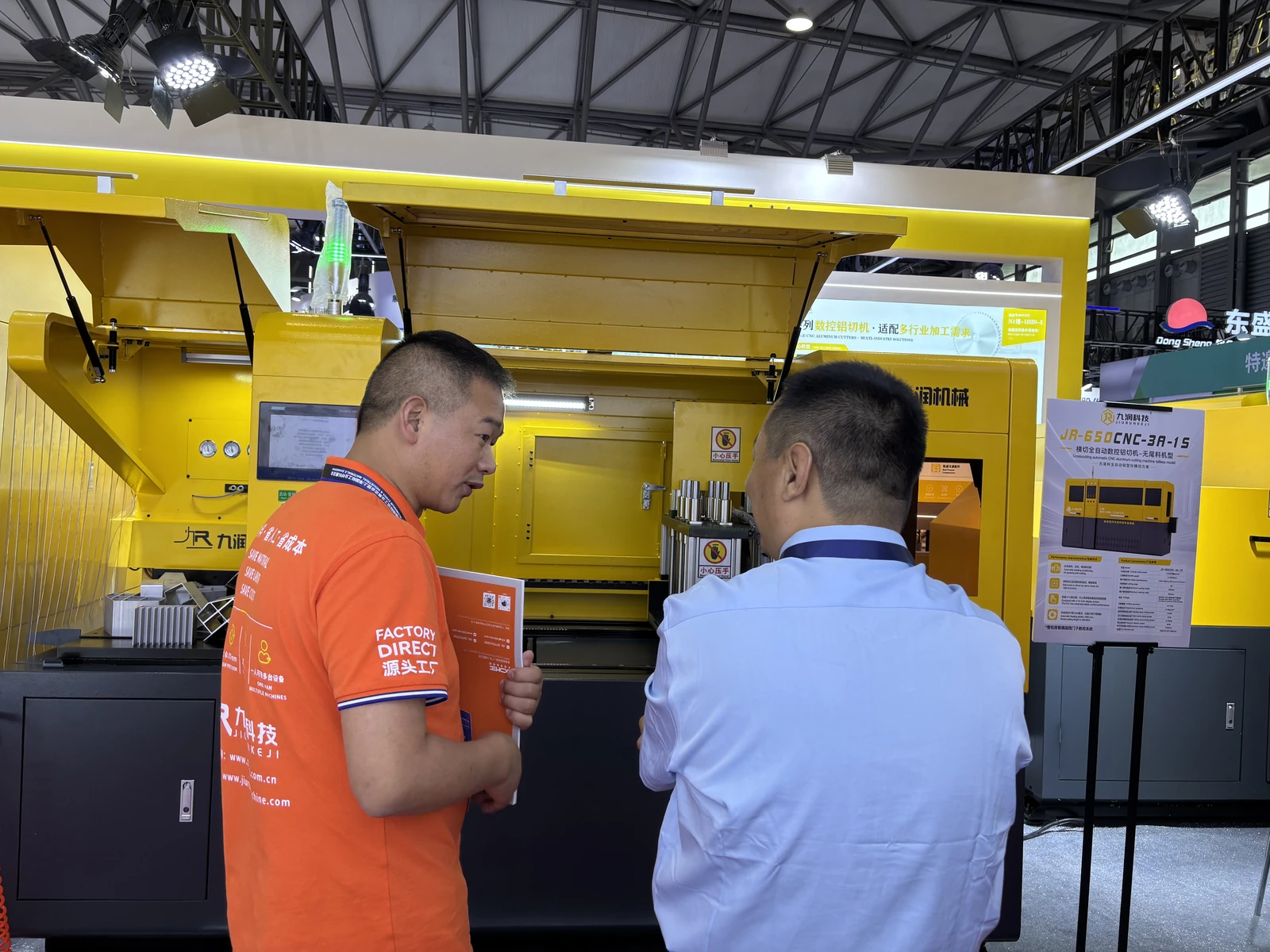
After the show, send every shortlisted supplier the same demand sheet. Ask each to answer against the same production boundary, not against a broad model family. The response should identify the base saw, every relevant option, tooling and consumables, loading and unloading equipment, controls or software functions, utility and installation requirements, training, documentation, service coverage, delivery basis, and exclusions. Request an explicit answer when a required part family needs another process or cannot be demonstrated.
| Buyer question | Booth observation | Written answer needed | Verification stage |
|---|---|---|---|
| Which machine will be supplied? | Displayed model and visible features | Exact configuration, included options, exclusions | Order review and delivered-machine check |
| Will it handle the part mix? | One displayed section or cut | Covered families, setup limits, required extras | Representative trial across agreed families |
| What labor is required? | Observed operator actions | Normal loading, changeover, discharge and checks | Timed complete workflow on agreed parts |
| Will the parts meet drawing needs? | Visible sample appearance | Agreed saw-stage criteria and measurement method | Measured samples under agreed conditions |
| What must the factory provide? | Booth footprint and utilities | Site, electrical, air, extraction, access and support scope | Installation and acceptance planning |
Do not rank offers by headline price while one includes an automatic loading rack and the other assumes manual feeding. Likewise, do not score a polished display as a substitute for an answer to a mandatory part-family requirement. A useful comparison has three states for every line: included and evidenced, included but awaiting trial or document confirmation, or excluded. The buyer can then see whether the remaining uncertainty is acceptable before ordering.
The ISO guide to selecting a supplier emphasizes clear purchasing information and agreed verification of supplied products. Apply that principle to this saw purchase: send controlled requirements, obtain a written response, and define how acceptance will be demonstrated. An ISO management-system certificate alone does not prove that this machine will cut your parts to your criteria.
Design a trial that tests the purchase decision
The next step is a controlled trial, either at the supplier or at another agreed location. Use the actual drawing revision and stock supply state. Choose a small set that challenges the proposed purchase: a common production section, a difficult section or finish, a changeover between families, and a short or awkward part if it materially affects the business case. Agree in advance who provides the stock, who sets the blade and fixture, what settings may change, how many pieces will be checked, and what happens to trial parts. The supplier may propose a safer or more suitable test sequence; document the accepted sequence before interpreting results.
Measure saw-stage features with the agreed tools and datum. Record sample identity, setup, run sequence, interventions, rejects, and inspection results. If throughput matters, measure the complete workflow rather than the cutting stroke alone. Loading, changeover, inspection, discharge, and recovery from a stopped cycle can dominate a mixed-product shift. A show-floor cycle time may be useful as a question, but it is not a production-capacity commitment without a comparable scope.
For a deeper trial checklist, see aluminum sample cutting trial checks. If the buyer expects a formal pre-shipment test, make the trial requirements and the later factory acceptance test consistent while keeping their purposes distinct. A developmental trial may reveal a needed change; an acceptance test checks the agreed supplied configuration against its agreed criteria.
Keep demonstration evidence separate from commercial promises
Before placing an order, reconcile the trial record, written configuration, and final commercial offer. A successful trial on a fixture or blade that is absent from the quotation is an unresolved scope gap. A quote that changes the feed system, controls, guarding, or installed utility requirements after the trial requires a new equivalence check. Name the person who can accept each difference on the buyer side; do not let an informal booth discussion become an undocumented specification change.
Include delivery and installation interfaces. Identify who unloads and positions the saw, supplies foundations and utilities, connects extraction or handling equipment, trains operators, provides spare parts and documentation, and supports the first production handover. Ask how a failed criterion will be diagnosed and corrected, and which check will be repeated. If several suppliers remain, compare them using the same mandatory gates before weighting convenience or price; the supplier-scoring guide explains why a high total score can hide a failed requirement.
A buyer’s decision record after the exhibition
Keep the record short enough to use. It should contain the booth date and machine observed; the approved part-family demand sheet; the exact written configuration offered; the trial plan and results or the reason a trial is pending; the common-basis quote comparison; site and service responsibilities; unresolved questions with owners and dates; and a decision gate. That gate can be reject because a mandatory family or interface is uncovered, hold until a specific test or written correction arrives, or proceed because the agreed evidence and commercial scope are complete. This is more useful than a general impression that the machine looked capable.
A trade show is an efficient place to see equipment and meet a supplier. It is also a noisy, compressed setting. Turn what you observed into traceable requirements and a representative trial before treating the machine as selected.
Questions buyers often ask
Can I order from the trade-show sample alone?
Only if the buyer accepts the remaining risk and the sample is genuinely representative of the contracted scope. For most mixed aluminum-profile work, the safer decision is to establish the sample’s material, setup and inspection provenance, then test the actual approved part families. A sample with unknown origin cannot prove a drawing criterion.
Does the displayed model number guarantee the quoted options?
No. Ask for the exact supplied configuration and a line-by-line inclusion list. Some options may be fitted to the display machine only, while a quoted build may differ in material handling or controls.
What if the supplier cannot run my stock at the exhibition?
Use the booth to screen physical layout and discuss feasibility, then arrange a later controlled trial. Write down what remains unverified. Do not present a general equipment video or another customer’s sample as evidence for your stock.
Ask JiurunCut for a decision-ready saw quotation
Send your profile drawings and revisions, actual stock sections and finish, cut-list range, target batch mix, saw-stage acceptance criteria, loading and outfeed constraints, and site utilities. Tell us which points you observed at a show and which still require evidence. We can then discuss an offered configuration and an appropriate trial scope without treating a general exhibition scene as proof of your part results. Contact JiurunCut to start that review.