
A cut aluminum extrusion can pass the saw’s length check and still enter the punch press the wrong way round. If the press fixture locates from one end while the saw batch mixes end orientation, a correct cut length does not protect the hole location. Before ordering a cutting cell for a cut-first, punch-later route, agree on the physical datum that the next operator will actually touch.
An aluminum saw to punch press handoff is a separate decision from whether a profile can be punched at all. The buyer needs a common drawing, a way to keep each part oriented, and a trial that proves the press can locate the saw’s output. It does not require the saw supplier to claim responsibility for a punch die it has not seen. The featured image shows a related saw-side locating fixture; it is not the punch die or a trial for this article.
Put one locating end on the drawing
Mark the end that seats against the punch fixture as datum A. Mark the face that sits on the fixture as datum B, then show the hole or slot position from those datums. If both ends look alike, add a practical orientation instruction to the traveler and container label. Ask the punch supplier which face and end its existing tooling contacts before the saw layout is frozen.
The question is concrete: after cutting, can a worker pick up any accepted part, identify datum A without guessing, and seat it in the press fixture in the intended orientation? If the answer depends on a visual feature that disappears after trimming, specify another identification method before quoting an automatic outfeed.
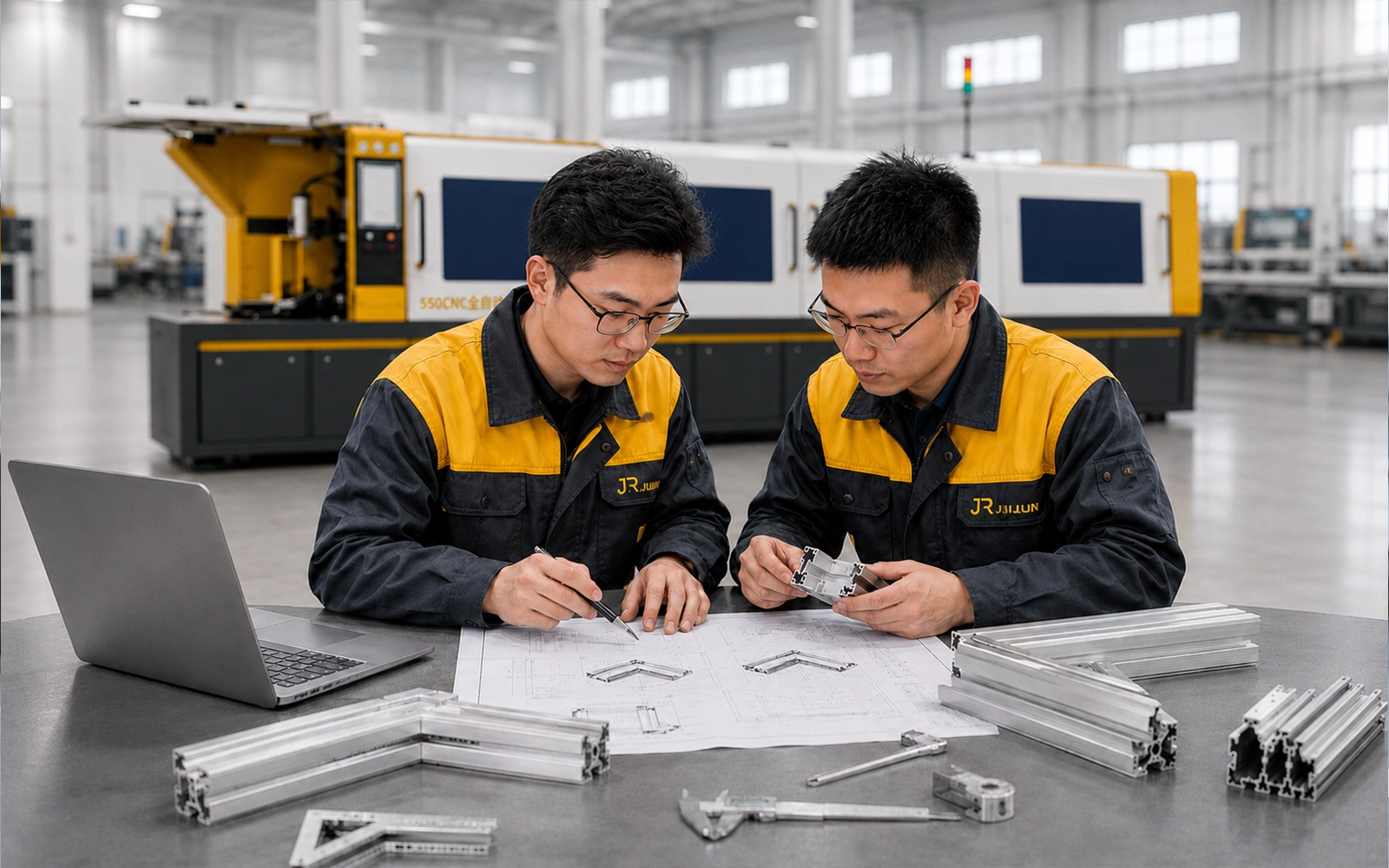
Walk a short and a long piece through the fixture
A single nominal-length sample may hide the handling problem. Use the shortest and longest planned cut lengths and the profile’s normal section variation. For each, show how an operator takes it from the saw’s accepted-parts location, turns it, supports it and seats it against the press stops. Record whether the unsupported end tips, the extrusion twists, or an external feature blocks the clamp.
Do this with the actual punch fixture or an agreed fixture drawing. A photograph of a saw clamp cannot establish punch access. The Aluminum Extruders Council’s fabrication guidance describes cutting and subsequent operations such as punching as distinct fabrication steps. The interface between them should therefore be specified as part of the purchasing route, rather than assumed from either machine’s brochure.
Check the cut end as a contact surface
When the press stop touches a saw-cut end, local burrs, angled faces or loose chips can change the way a part seats. Define the end condition the punch fixture needs, and choose whether that condition is achieved at the saw, by a separate deburring step, or at the press. Record the inspection method and the person who releases a disputed piece. Do not substitute a generic “burr-free” claim for a contact check at the actual stop.
Take measurements from the same datum used by the press. For a representative trial, check the cut length and the distance from datum A to the first punched feature on the same pieces. That paired record shows whether the handoff is stable; a saw length report alone cannot establish a downstream hole position. Keep saw acceptance and punch acceptance as separate fields so a failed feature can be traced to its station.
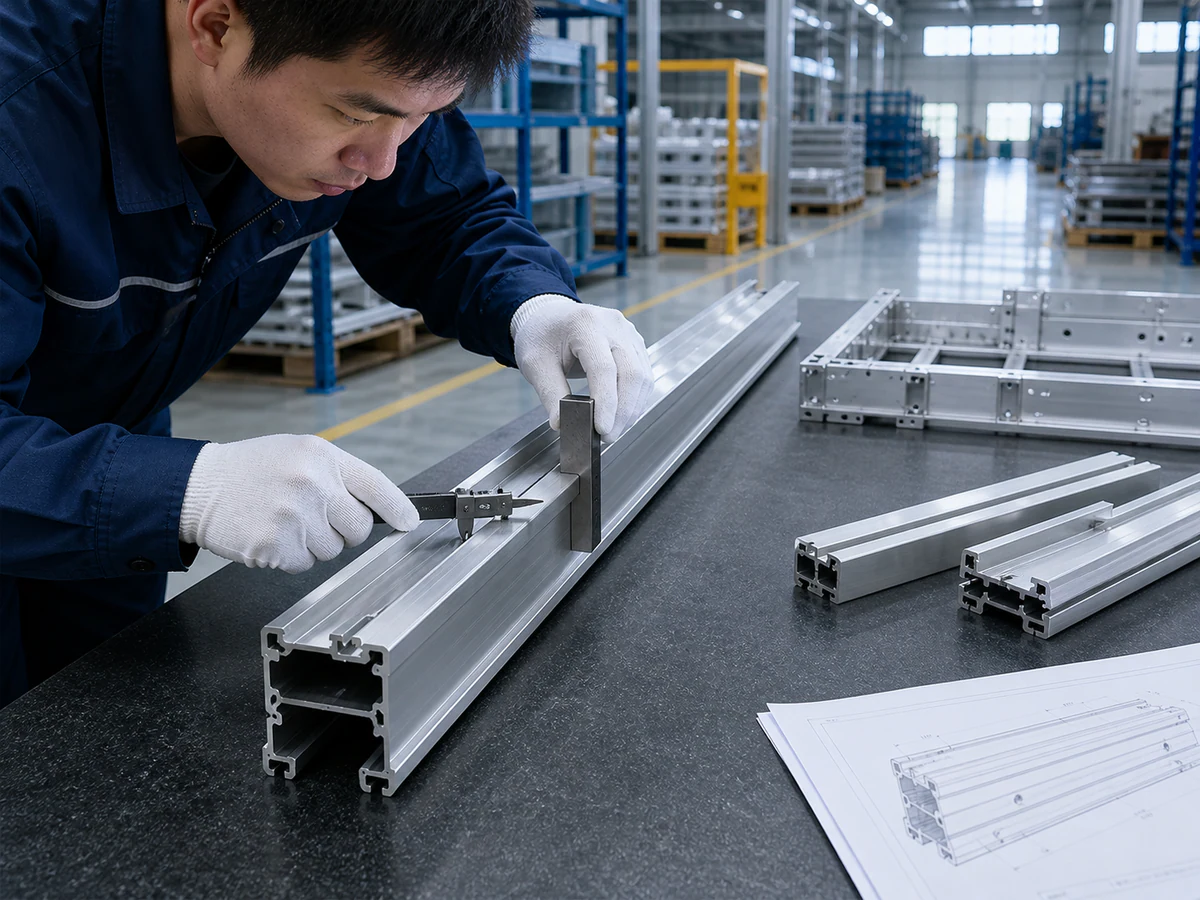
Aluminum saw to punch press: write the transfer rule
For an aluminum saw to punch press route, attach a one-page handoff sheet to the RFQ. It should identify the profile drawing revision; stock and finish; accepted cut lengths; datum A end and datum B face; cut-end contact condition; part orientation in the output container; maximum quantity per container if handling could reverse pieces; and the inspection records that travel with the lot. If the route includes more than one punching tool, identify the tool or operation each cut batch feeds.
Name an owner for each boundary. The saw supplier confirms the proposed clamping, cutting and outfeed arrangement using supplied profiles. The punch supplier confirms seating, support and tool clearance. The buyer or integrator confirms transfer, orientation and lot identification. A clear responsibility split is more useful than a claim that either standalone machine is “fully automatic.”
What should the trial prove?
Send both suppliers a small, marked sample set. Include first and last parts from a cutting run, the shortest and longest lengths, and any profile face that is easy to reverse. Have the punch operator load the parts without coaching, using the proposed labels and container orientation. Record misloads, seating gaps, rework, and measurements from the agreed datum. Agree on the pass limits before the trial; the limits must come from the part drawing and press fixture, not from a generic saw specification.
This trial is a purchasing test, not a promise that Jiurun equipment has already passed it on your profile. The video below is from Jiurun’s own channel. It shows a related automatic aluminum feeding and cutting machine in operation. It does not show a punch press, the datum scheme above, a joint trial, a customer installation, or hole-position performance.
Send the saw inquiry with the press datum
If your line cuts extrusions before a separate punch operation, send JiurunCut the section drawing, cut list, expected finish, datum-marked punch drawing, sample lengths and a photo or drawing of the press stop. Ask for a saw and outfeed proposal that preserves the agreed orientation and supplies parts in a condition the press can locate. Contact JiurunCut with the handoff details so the machine discussion starts from the downstream interface.
Related reading: cutting stock that is already punched addresses the opposite process order; extrusion punching quote decisions covers tool and feature feasibility.