
An aluminum saw servo drive replacement is a purchasing and commissioning decision, not simply a request for a box with the same power rating. The drive has to suit the existing motor, feedback, controller, cabling and machine functions. A replacement that powers up but does not restore the agreed feed or positioning sequence has not solved the production problem. Use the checks below to turn a breakdown report into a precise request for a compatible unit and a documented return-to-production trial.
First identify the machine and the failed function
Record the saw model and serial number, the controlled axis, the symptom, when it occurs, the displayed alarm and the date of the last known good cycle. Is the affected function automatic stock feeding, an adjustable stop, a head position or another motion? A saw can contain several drives with different duties. The same alarm may also arise from feedback, cabling, a mechanical obstruction or a control issue. Ask the qualified service team to establish the fault boundary before ordering a drive. Do not treat an operator description as proof that the drive itself has failed.
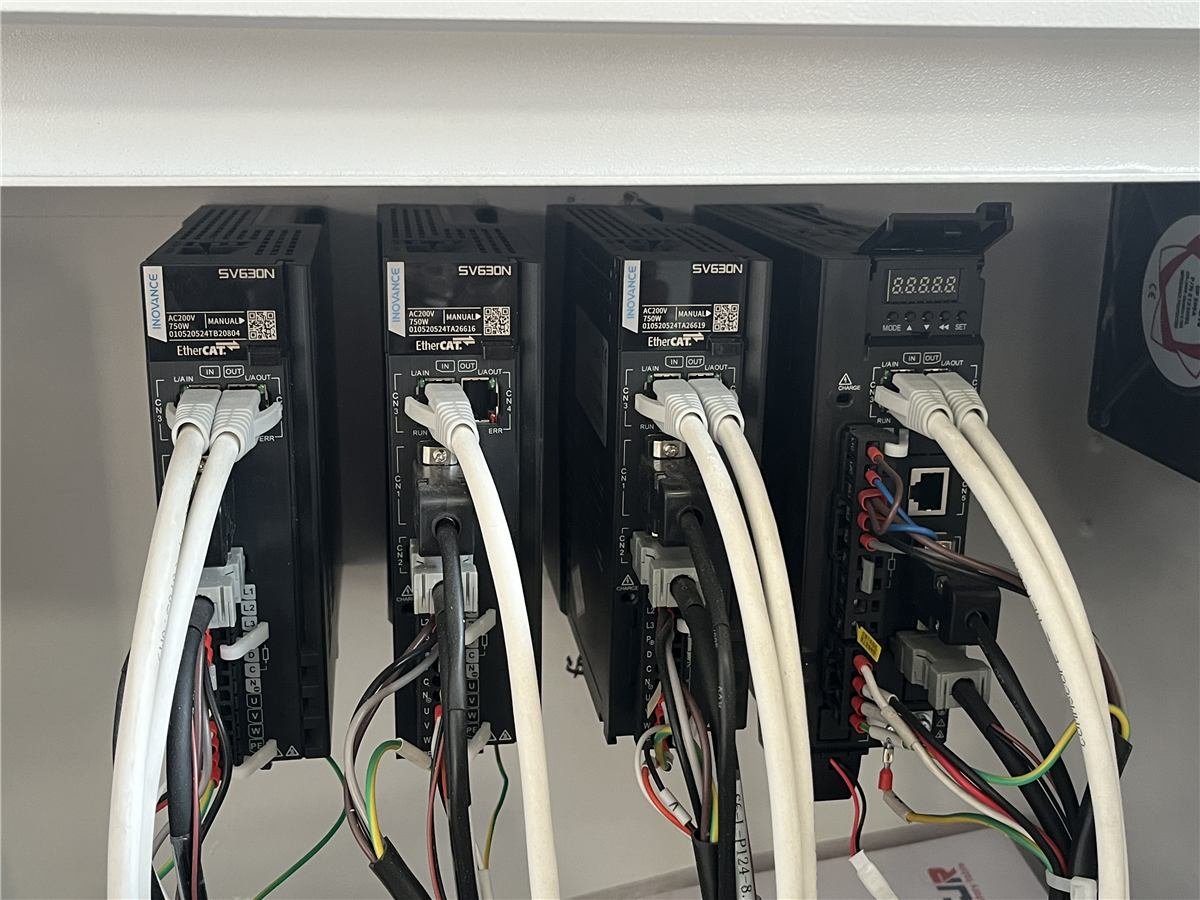
Photograph the installed unit’s complete nameplate and its visible port labels while the machine is under the site’s approved safe-service process. Retain the cabinet drawing revision, machine wiring diagram, motor nameplate, encoder details, drive firmware or hardware revision if available, and the installed unit’s parameter backup or commissioning record. If a backup is missing, say so in the RFQ. That absence changes the recovery work and should appear in the quoted scope.
Aluminum saw servo drive replacement: match the complete system
Request a line-by-line compatibility statement against the installed configuration. At minimum, compare the exact drive series and suffix, supply class, rated output, motor model, feedback type, communication interface, I/O allocation, safety functions where fitted, connectors, mounting envelope and available firmware support. A shared family name or similar wattage is not a complete compatibility check. For example, Inovance’s servo-system selection overview lists specific SV630 drive and motor combinations and distinguishes the pulse and EtherCAT variants. That manufacturer’s table is an example of why the exact suffix matters, not a claim that every aluminum saw uses those models.
Require the seller to classify the offer as (1) the exact approved part number, (2) a manufacturer-approved successor with a documented conversion path, or (3) an engineering alternative needing a revised design and test plan. For the latter two, ask which motor, encoder, cable, control-network, safety and drawing changes are included. A low-priced drive is not the lower-cost option if it requires unquoted controls work or creates a long production hold.
Put parameters and responsibility in the quote
The buyer should ask who will obtain the current parameter set, where the controlled backup will be stored, who may load it, which revisions are supported, and how the final version will be documented. Do not assume an old backup is safe to copy without checking the replacement’s model and firmware. Ask the machine integrator or drive manufacturer to approve any required mapping or recommissioning. Rockwell’s axis documentation, for a different control platform, illustrates that motor feedback configuration is a defined part of a servo axis; its settings must not be copied as instructions for a Jiurun machine.
The purchase order should name the party responsible for fault confirmation, part selection, physical installation, parameter work, controller integration, safety validation and production release. If one party supplies the component and another commissions it, define the handoff record and what happens when the supplied part does not match the approved configuration. Request a separate price and lead time for each step rather than a single unexplained “replacement” line.
Make safe access a service prerequisite
A drive sits in an electrical system that may retain hazardous energy. Only authorized, qualified personnel should inspect or service it under the site’s documented energy-control procedure and the applicable machine and drive instructions. A production buyer can require this process in the service scope without giving technicians a field wiring recipe. The OSHA hazardous-energy overview explains why isolation and trained personnel matter in machinery service; local requirements and the actual equipment documentation govern the job at the buyer’s site.
Before the crew arrives, confirm access to the correct cabinet, drawings, keys, permitted work window and an agreed restart owner. Record any machine options that could be affected, including connected loading equipment and downstream handling. These are scope questions, not assumptions about a specific saw’s configuration. For general cabinet documentation questions, see our electrical cabinet handover guide.
Define a release trial before downtime starts
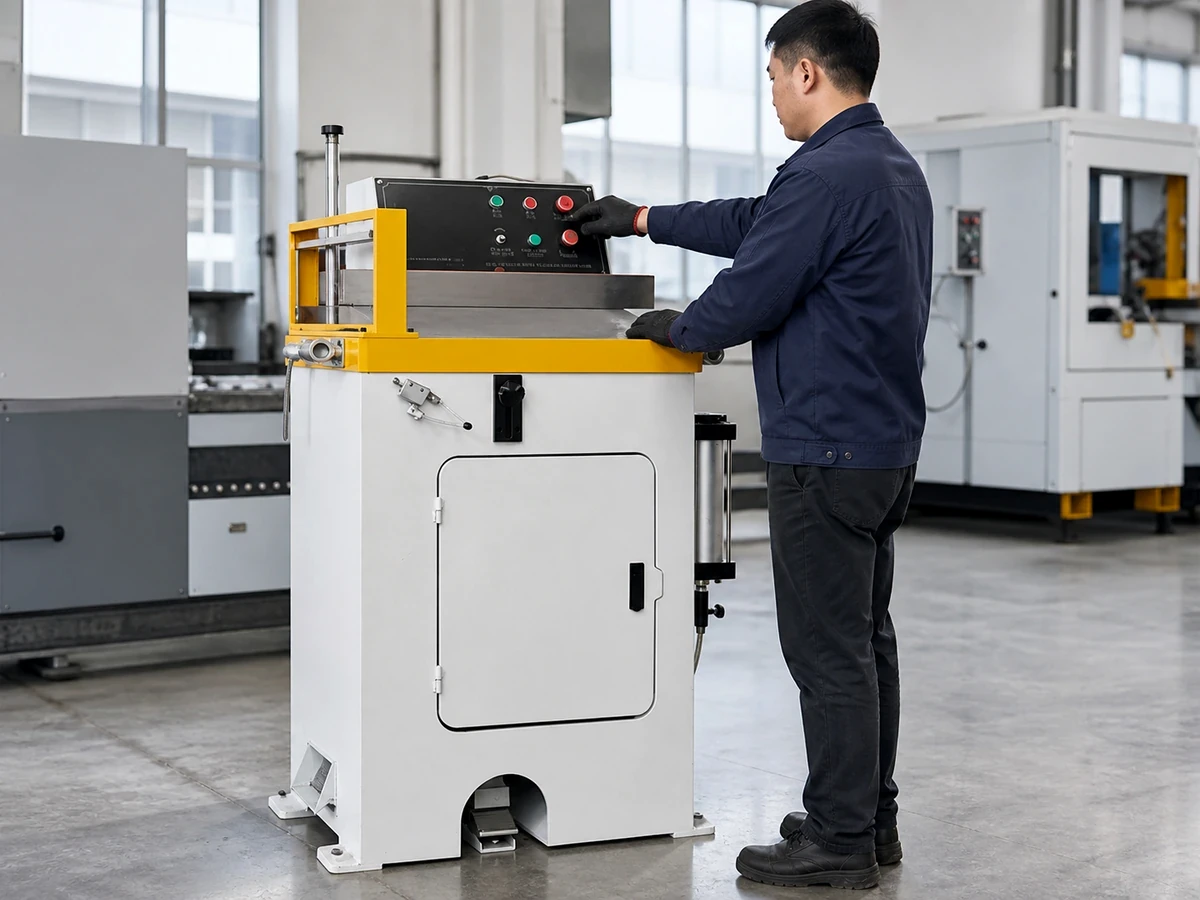
The acceptance plan should be written before the new part is installed. Separate electrical and controls sign-off from production sign-off. The qualified service team should document the installed part identity, wiring and parameter version, fault status, communication, applicable safety functions and the restored sequence. The production team should then approve a representative, guarded trial using the actual stock family and agreed cut program. Neither a cleared alarm nor a single motion command proves a finished cut is acceptable.
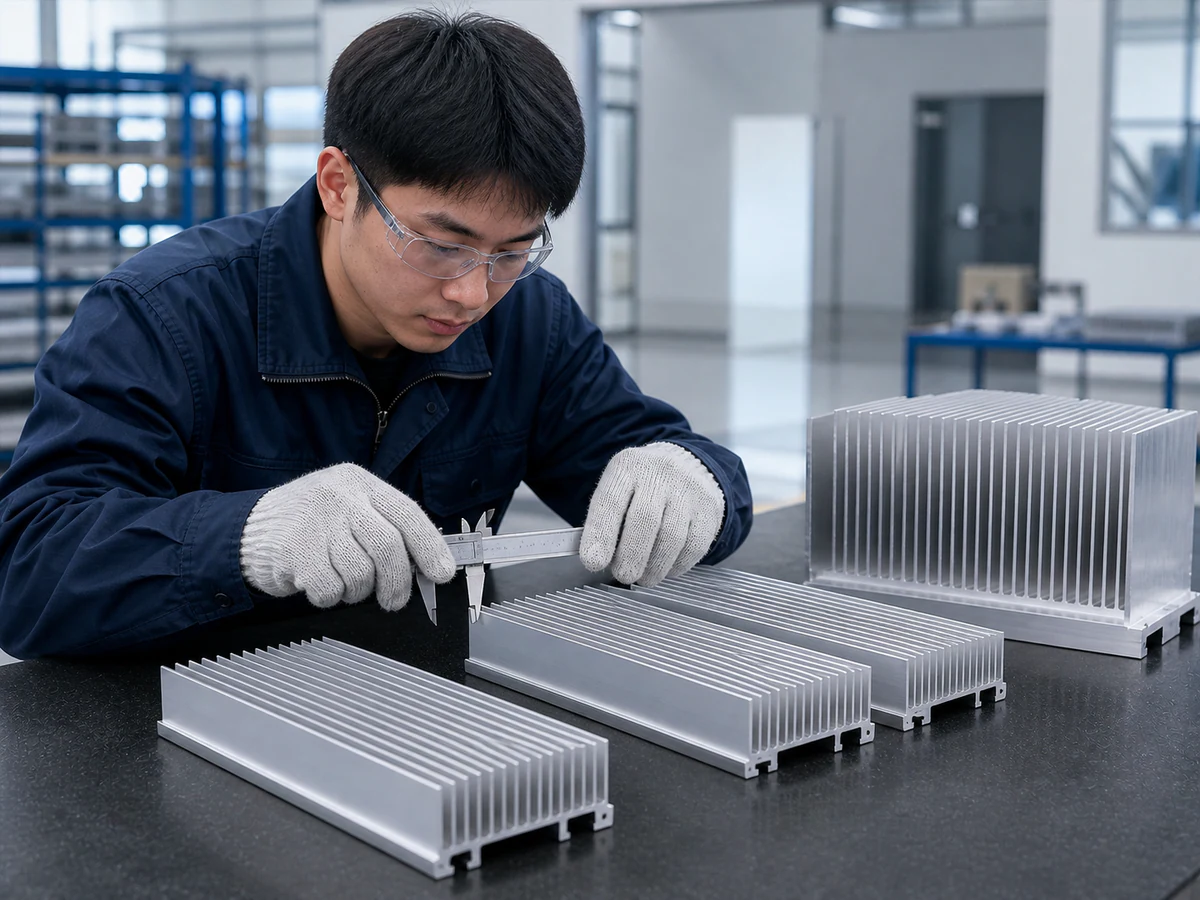
For the production check, record the input stock and drawing revision, first-piece identification, finished-length reference, cut-end condition, burr or surface criteria where relevant, and the outcome of a repeat cycle. Use the same acceptance limits already agreed for that job; do not infer a universal saw tolerance or convert a feed-axis specification into finished-part accuracy. If the trial differs from normal production, record what remains unverified and who authorizes release. Our servo-feed scope guide helps distinguish which axis a sales quote actually covers.
What to send for a replacement quotation
- Machine identity and fault record: Send the model, serial number, affected axis, symptoms and alarm history to confirm the service scope and fault boundary.
- Installed motion components: Send drive and motor labels plus feedback and network information to check exact-unit or approved-successor compatibility.
- Controls records: Send current drawings, parameter backup status and revision to estimate controls work and document the final configuration.
- Service window: State access, location and required production window so travel, downtime and responsibility can be priced accurately.
- Release sample: Provide representative stock, drawing and acceptance criteria to define the post-service cut trial.
Ask each bidder to return a marked compatibility matrix, the proposed part number and availability, exclusions, commissioning steps, ownership of the final backup and drawings, and the criteria for a failed or incomplete trial. Compare total restored-production cost and evidence, not only the drive’s purchase price. Where the original series is nearing end of support, request a separately priced future-spares path; see our component lifecycle checklist.
Video: general saw motion, not a replacement test
The video below is from the Jiurun Machinery YouTube channel and shows general JR-650CNC-3A-1S aluminum cutting equipment and automatic feeding. It is an equipment-flow example only. It does not document the drive in the photos, a drive failure or replacement, the configuration of your saw, a customer’s stock, a release trial or verified performance.
Send a precise service inquiry
For an aluminum saw servo drive replacement or planned service visit, contact Jiurun with the machine and drive labels, affected function, alarm record, drawings and backup status, and your proposed release sample. Ask for a written compatibility and responsibility statement before committing to a part. If the installed system differs from the examples here, the actual machine documentation and qualified service assessment should decide the route.