
Aluminum saw rental can be a workable route for a finite production project when the available machine, supplied accessories and usable time match the actual cutting job. A short project does not automatically make rental suitable. First confirm that a provider can supply the complete equipment required, at your site, for the dates when approved parts must be produced.
The useful comparison is between ways of delivering the same accepted output. Renting a machine transfers temporary use of equipment; buying establishes an owned production resource; outsourcing purchases a cutting service with its own agreed deliverables. They leave different work with your factory. This guide concerns an industrial aluminum sawing job, rather than hiring a handheld tool or financing a machine purchase.
Rental availability, rental terms and equipment suitability must be confirmed with the actual provider. This article does not claim that Jiurun offers a rental service or that a particular machine can be hired locally.
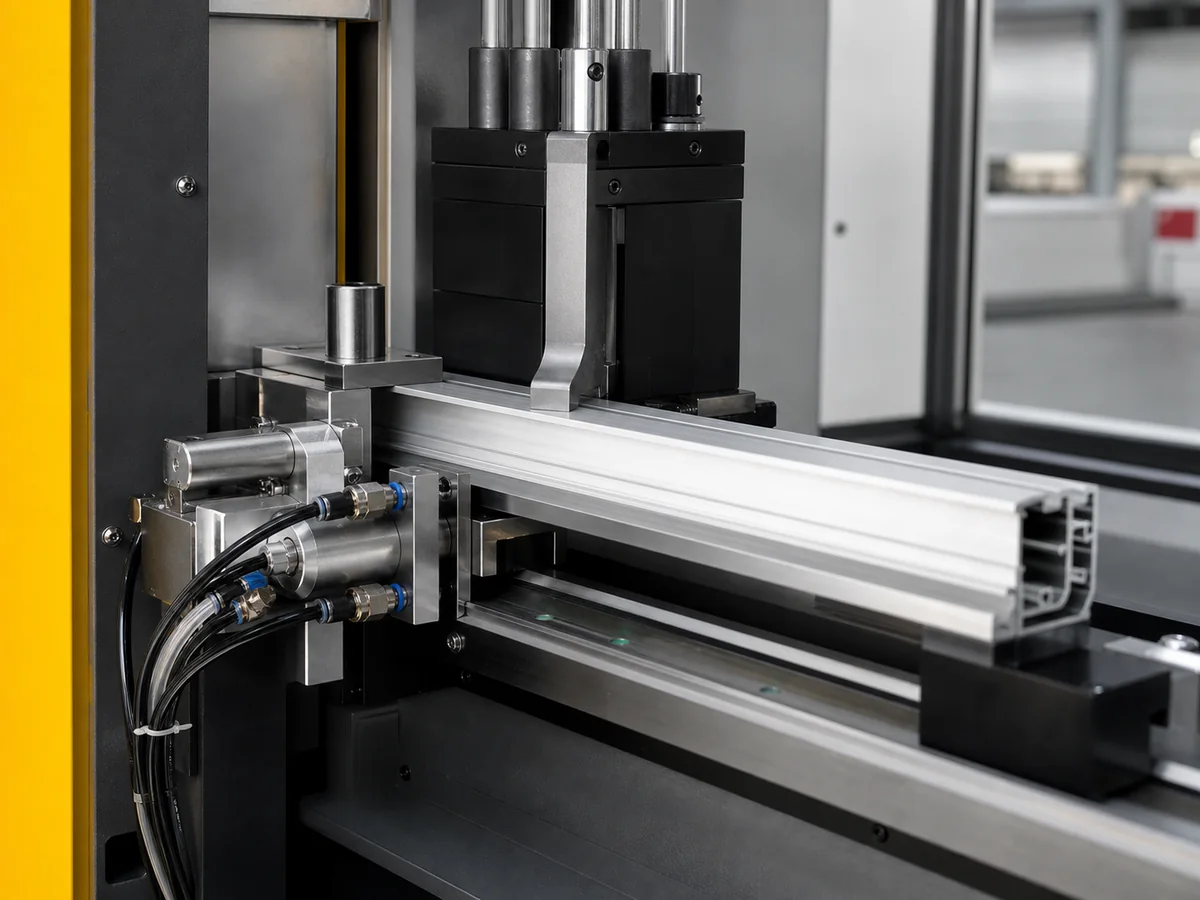
Define the complete job for aluminum saw rental
Start with the output that must leave the cutting stage. State the aluminum alloy and temper, stock section and incoming length, required cut lengths and angles, acceptable end condition, dimensional requirements and quantity by part family. Include the shortest finished piece and any surfaces that must remain protected. Give the provider a drawing revision, rather than a verbal description such as “some aluminum frames.”
Explain where the material comes from and where cut parts go next. A project receiving loose, long extrusions needs a different handover from one receiving already shortened blanks. A requirement for straight blanks does not cover drilling, notching or assembling frame corners. Identify those remaining operations so that a rental proposal is not judged against a finished product the saw was never asked to deliver.
Separate confirmed work from possible additions. The approved order may require one profile and two cut lengths, while a later customer request could add another section or angled ends. Ask the provider to confirm the original job and the added family separately. Permission to use the machine for one job is not evidence that every later design or material is covered.
Also state why the requirement ends. A defined installation project, temporary overflow order and uncertain stream of repeat orders create different decisions. Record the final required output date and the intended equipment release date. If future work is unknown, retain it as a separate scenario instead of using it to justify either indefinite rental or an oversized purchase.
Match the offered unit and accessories to the whole workflow
A model family in a rental catalogue is not the same as a confirmed supplied unit. Request the identity and configuration of the offered machine, the accessories included, and the evidence used to assess your parts. Clarify what happens if that unit becomes unavailable: a substitute should be reviewed against the same job, not accepted merely because its model name sounds similar.
Describe the complete stock-to-parts route. Ask how incoming stock is presented, what supports it during the approved operation, how length and angle are established, and where separated pieces are received. Confirm whether the proposal includes the necessary infeed and outfeed equipment or whether your factory must supply it. Existing tables should be checked as part of the proposed installation; their presence in your workshop does not confirm compatibility.
| Requirement | Useful provider answer | Unresolved answer |
|---|---|---|
| Approved stock and cut geometry | Named unit and configuration assessed against the identified drawings and material | “It cuts aluminum” without the part family |
| Loading and receiving | Included equipment and buyer-supplied items listed with their interfaces | Photographs showing accessories that are absent from the offer |
| Production evidence | Comparable material, setup, measured outputs and test boundaries recorded | A free-running machine video presented as proof of part quality |
| Equipment substitution | Replacement identity and suitability review agreed before dispatch | Any available saw may be sent without further review |
For a repeating job, request evidence for the agreed output and sequence, including relevant loading and receiving work. For several part families, define which combinations must be demonstrated. Do not convert a feeding repeatability figure into a finished-part tolerance. Similarly, a successfully measured sample is useful only with its material, configuration and inspection conditions recorded.
If a temporary fixture or interface is proposed, ask who designs, supplies, approves and removes it. Avoid assuming that a hired machine may be modified. The provider and competent people responsible for the installation should resolve the proposal using the actual machine documentation and site requirements.
Calculate the usable production window, not just the hire period
The equipment can be on site without being ready for your order. Map delivery, installation, required checks, operator preparation, representative production approval, scheduled cutting, final part handover and removal. Keep the commercial charging period beside this sequence. Ask which event starts and ends charging; arrival, readiness, collection request and actual collection are different events.
For an invented planning example, suppose a rental period contains ten scheduled working days. Installation and preparation occupy two days, production approval one day, and planned removal preparation one day. The remaining six days are the candidate production window, before other interruptions. These are illustrative assumptions, not a standard installation duration or a provider commitment.
Suppose the same example requires 1,200 accepted blanks. Dividing by six gives a planning requirement of 200 accepted blanks per remaining day. It does not establish that the machine can produce them. The provider’s representative evidence, your working hours, staffing, material readiness, inspection and downstream receiving must support that requirement. A fast cutting cycle alone does not confirm daily accepted output.
Build a second schedule for a plausible delay. If production approval takes longer, identify the output date affected and the decision needed before the remaining window becomes insufficient. An agreed extension option may help commercially, but it cannot recover an immovable customer deadline unless the complete production route can still deliver the parts.
Confirm extension availability and the notice needed to request it. A machine booked by another customer may not remain available. Ask how a breakdown, delayed delivery, rejected substitution or postponed collection is handled in the actual offer. Record stated remedies as provider commitments only after receiving them; do not insert an assumed replacement time into the plan.
Recalculate a delay against the same accepted-output requirement
Continue the invented ten-day example. If preparation and approval together take five working days rather than the planned three, and removal preparation still occupies one, four candidate production days remain. Delivering the same 1,200 accepted blanks would then require 300 per remaining day. That increase is a requirement created by the shortened window, not evidence of a faster saw or an achievable recovery rate.
Put the two schedules beside the provider’s actual evidence. Ask whether the required stock, people, receiving space and inspection are ready for the revised sequence. If the evidence supports only the original arrangement, retain the deadline gap as unresolved. Do not approve an assumed overtime recovery or substitution solely to make the calendar appear complete. A proposed alternative needs its own confirmed equipment, support and output boundaries.
A useful decision record identifies the latest date by which the original plan can proceed, what evidence is outstanding at that point and who decides the next route. For example, the buyer might compare a confirmed extension, an available cutting-service offer and a changed customer delivery plan. These are potential options to investigate, not promised remedies. An extension without suitable production conditions, or an external service without an accepted-part delivery commitment, does not close the gap.
Keep the commercial clock separate in this comparison. The provider may charge during preparation or collection delay according to the actual agreement. Record those confirmed events alongside the production schedule and the remaining output requirement. That prevents a longer paid hire period from being mistaken for a longer usable production window.
Allocate preparation, checks and support before the machine arrives
List the site inputs that must exist before delivery: usable space and access, incoming-stock storage, the equipment connections specified by the supplier, receiving arrangements and people assigned to the job. Request the actual installation information for the offered unit. Generic power or air figures from another model are not a basis for preparing the temporary workstation.
As a jurisdiction-specific reference, the UK’s Health and Safety Executive discusses pre-hire inspection and information from equipment suppliers, while distinguishing these from day-to-day checks by the user. Its inspection guidance also addresses equipment whose safety depends on installation and evidence of inspection when equipment changes undertaking. These UK references are useful questions for the responsible local reviewers; they do not approve your installation or establish requirements for every country. See HSE’s equipment hire guidance and work-equipment inspection guidance.
Turn the agreed scope into an assignment record. Identify who supplies instructions, prepares the installation, performs the required checks, authorizes production and responds to a fault. Name contacts and the evidence each handover requires. Supplier responsibilities, your factory’s responsibilities and tasks assigned to a contractor should be visible together.
Confirm consumables and support separately from the machine rental. Ask which tooling is supplied for the agreed aluminum job, how replenishment is obtained, which maintenance activities your staff may perform and how faults are reported. A rental rate does not necessarily include consumables, on-site assistance or replacement equipment. Review the actual inclusions before relying on them.
Temporary use still needs people prepared for that equipment. Familiarity with another saw does not prove readiness for the offered controls or configuration. Arrange the provider’s agreed handover and any further preparation required by the responsible reviewers. This purchasing record is not an operating, guarding or repair procedure.
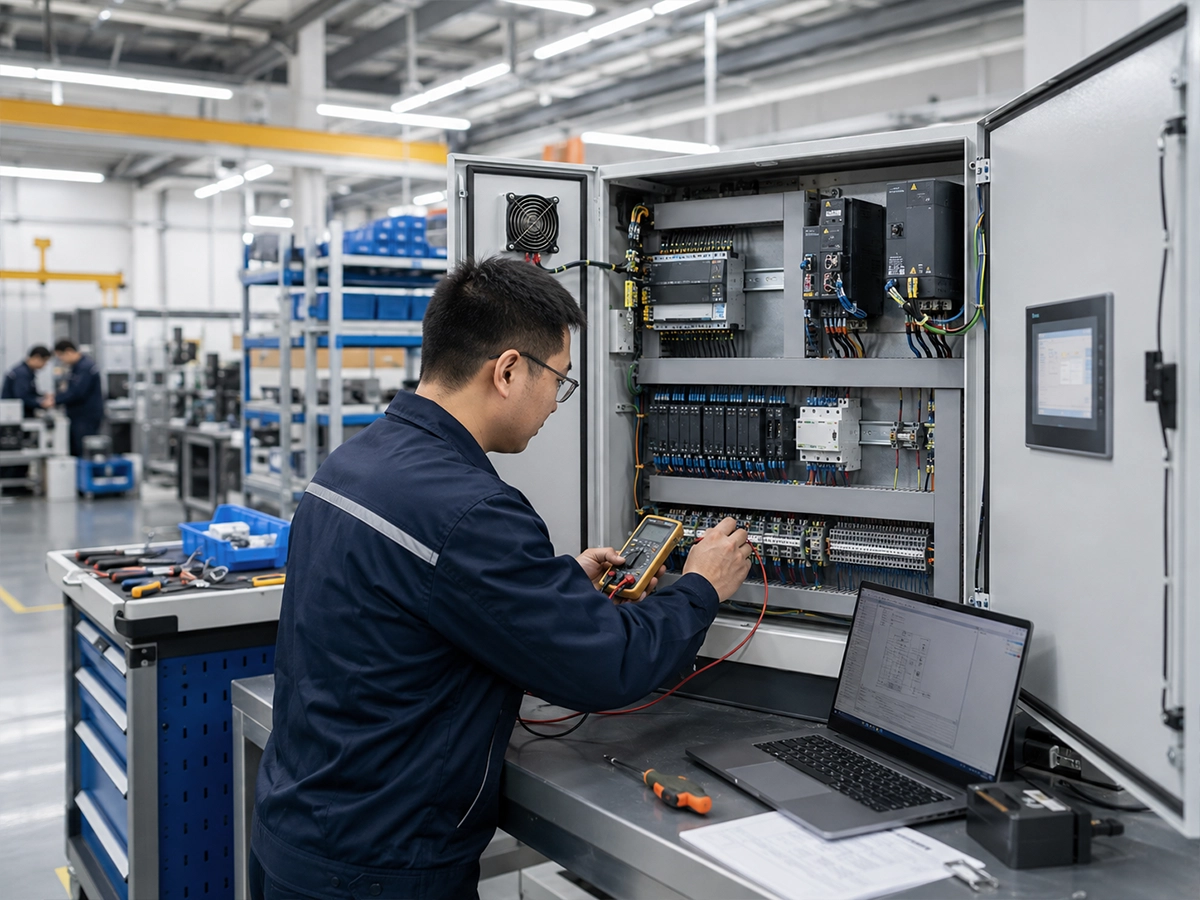
Compare complete options and plan the return handover
Compare rental with purchase or an external cutting service only after each route has a confirmed scope. Put transport both ways, agreed installation work, accessories, consumables, site labor and the actual charging basis alongside the equipment amount. Record refundable security amounts separately from expected operating expenditure, with their conditions identified. Avoid a break-even figure made from an unconfirmed weekly rate and a machine price covering a different job.
Time can decide the route before price does. A rental proposal that cannot supply suitable equipment before the required start date is not an available solution. A purchase that cannot complete the needed preparation before the order is also unsuitable for that immediate deadline. An external service requires its own material transport, output approval and delivery assessment. Availability should be established for each real offer.
Return is part of the production plan. Define who requests collection, who prepares equipment for removal, what condition and accessory record will be used, and how any disputed discrepancy is documented. Agree the treatment of remaining consumables and customer material. Do not assume that loose tooling, a fixture and an outfeed unit will be remembered because they arrived with the main machine.
Use identified equipment and accessory lists at receipt and return. Record existing condition with dated evidence and acknowledge later issues when they arise. Ask the provider how it distinguishes normal agreed use from damage and how proposed charges are reviewed. These are questions for the actual terms and responsible commercial reviewer, not a statement of universal contractual rights.
If repeat work develops during the project, reassess the future need using the production information now available. Extending a temporary arrangement should be an explicit decision against confirmed work and supply availability, rather than an automatic response to a busy week. A permanent purchase can then be considered with a clearer job specification.
Send a job brief that allows a meaningful rental or purchase reply
A useful inquiry identifies the location and required dates, approved stock and drawing revisions, quantities by part family, cut lengths and angles, tolerance and finish requirements, existing site resources, expected support, and the complete equipment return requirement. Attach a simple schedule showing when approved parts are needed, not just when you want a saw delivered.
Ask for an explicit reply to three questions: can the offered unit and configuration cover the approved parts; can the complete supplied scope be made ready within the available window; and which responsibilities, costs and extension conditions remain with your factory? Mark any unanswered requirement as open. A broad rental quotation should not close a detailed production requirement by implication.
Where suitable rental equipment is unavailable or the requirement becomes recurring, you can compare an industrial saw purchase using that same technical job brief. Send Jiurun your aluminum stock section, alloy and temper, drawings, cut lengths, angles, required output and site conditions to discuss equipment suitability and the scope of a purchase proposal. Request confirmation of the actual model, configuration and evidence for your application; rental availability and terms remain a separate inquiry to the rental provider.
Use a saw video to discuss the supplied equipment boundary
This Jiurun equipment video provides industrial cutting context. It does not establish rental availability, the condition of an offered hired unit or production results for your job.