
The control screen lights up in the new bay. A technician can see the clamps and a length of stock is already on the rollers. None of those observations, by itself, releases the saw for a production cut after its supply has been disconnected and reconnected. The useful question is who has verified the installed electrical interface, what the machine actually did during controlled checks, and whether the first cut meets the current part drawing. Aluminum saw phase sequence is one part of that handover, not a substitute for it.
This guide is for a factory returning an industrial aluminum circular saw to service after a site power change, electrical work or move. It is a purchasing and acceptance framework, not instructions for live electrical testing or rewiring. A qualified person must use the actual machine documentation, site procedures and applicable local rules. No phase-monitor hardware, drive arrangement or electrical rating is asserted for any Jiurun model here.
The lit control panel is only an observation
A powered HMI shows that some part of the control system has energy. It does not establish that the incoming supply matches the equipment, that each connected drive has the expected direction or response, that protective functions are ready, or that the cutting process is accurate. Conversely, a fault indication does not tell a purchasing team which component to order without a model-specific record of the installed circuit and fault conditions.
Keep three decisions separate: the facility’s electrical acceptance of the connection; the machine supplier’s or competent service team’s acceptance of the installed machine behavior; and production’s acceptance of a cut part. A single signature reading “powered on” cannot do all three jobs. The IEC 60204-1 consolidated publication description locates the scope of machine electrical equipment at the supply connection point and notes technical documentation and protective bonding among its subjects. It does not certify this saw or approve a particular installation.
Write down the boundary before anyone clears a fault
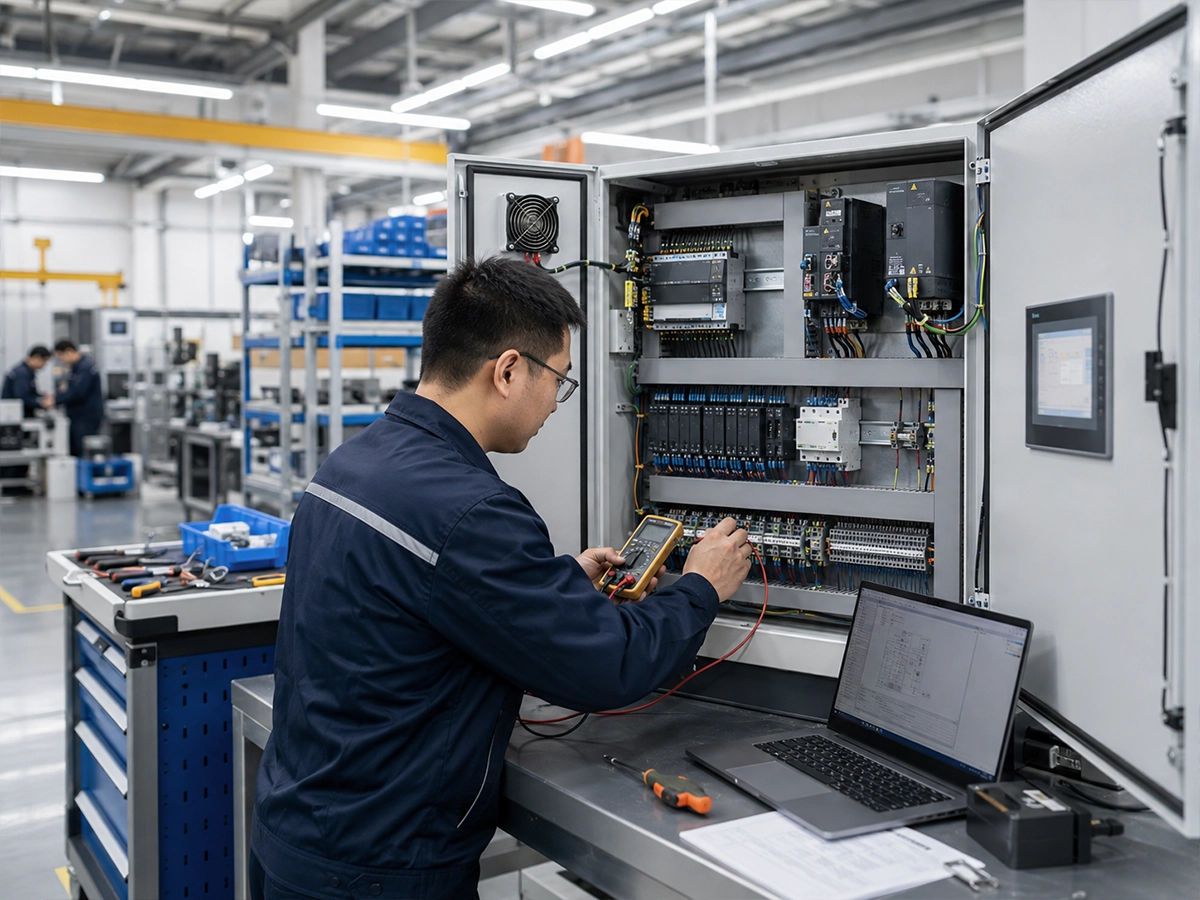
Start the handover with the exact machine identity: nameplate and serial number where available, supplied configuration, as-installed drawings and any later electrical changes. Identify the supply point, disconnecting arrangement and auxiliaries that belong to the site versus those supplied with the saw. If an automatic feeder, extraction system or external conveyor has its own supply, show that separately. A drawing from the original delivery is useful evidence only if it still matches the installed machine.
Have the qualified facility team document the supply against the applicable machine documentation, including the agreed voltage and frequency, protective bonding and phase sequence where relevant. The article deliberately gives no wiring sequence, measurement procedure or target value: those depend on the actual equipment and the site’s electrical rules. The machine team then records what was observed when the installed system was energized under an authorized procedure. If the expected behavior is not documented, keep the machine out of production and refer the discrepancy to the responsible specialist.
That separation matters after relocation. A transport contractor may deliver the machine, a site electrician may connect it, and a saw service provider may verify its behavior. The aluminum saw relocation guide covers the wider transfer scope; this handover focuses on the supply interface and first cut after reconnection.
Aluminum saw phase sequence is not proved by a cabinet photograph
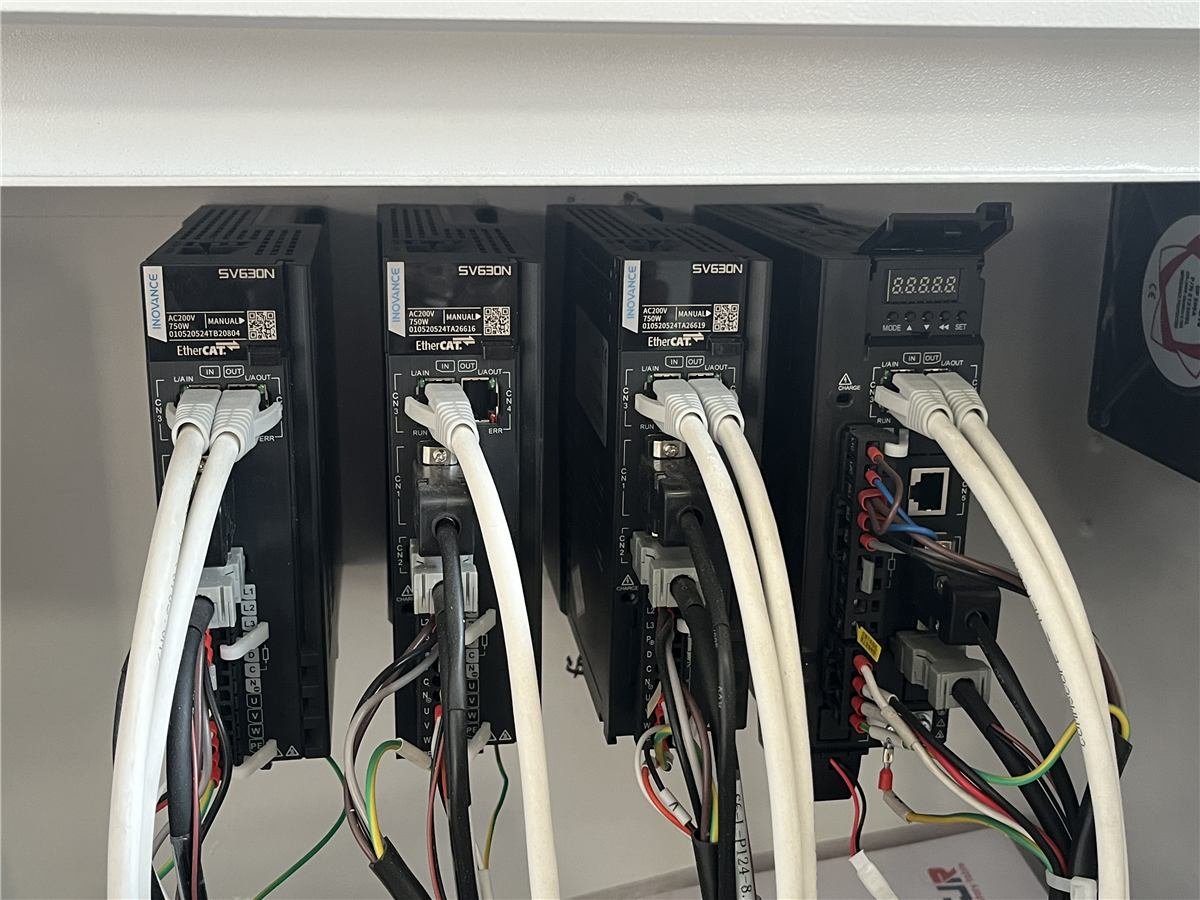
A purchasing file may contain a phrase such as “phase protection,” yet that phrase does not identify which conditions are monitored or how the installed control reacts. Schneider Electric’s comparison of specific phase-monitoring relays shows why the distinction matters: the listed devices all monitor phase loss and sequence, while their additional voltage and asymmetry functions differ. That example describes Schneider devices, not a standard Jiurun configuration.
For an installed saw, ask for the exact component identification and applicable drawing if a phase-monitoring function is claimed. Identify the condition that should be detected, the indication the operator sees, whether a reset or other recovery is required, and who approves that recovery. If no such hardware is specified, do not invent it from a label or a photograph. A drive, a control relay and a motor can have different relevant checks. The earlier phase-monitor purchasing note explains the quotation question; the return-to-service record needs evidence about the unit actually installed.
Make one release record travel from connection to cut part
The handover should let the next shift understand what was accepted and what remains open. A short record can name the machine, site and date; cite the drawing and electrical documentation revisions; identify the facility and machine representatives; and attach the authorized inspection findings. Record observed alarms or departures in the same document rather than hiding them in a separate service chat. A pass on one machine function must not silently close an unrelated fault.
Only after the responsible people clear the electrical and machine gates should production prepare the representative job. Use the released profile drawing and stock condition, a stated length or angle, the approved fixture and the normal guarding arrangement. Check that the operator-facing controls and material path correspond to the accepted configuration. Then record the first cut against the part’s own acceptance features: length, angle, cut-face condition, burr or deformation and fit where relevant. A stable HMI or correct supply does not establish these part results.
For the production gate, distinguish a stopped inspection from a trial cut. The image below illustrates someone examining a clamped aluminum section in an enclosed machine. It neither documents a post-reconnection trial nor proves a measured part.

For a visual reference to a Jiurun saw and stock handling, the following channel video shows a JR-455Y equipment demonstration. It does not show electrical verification, phase-sequence testing, a relocation, or approval of the cut described in this article.
What stays open when the demonstration looks normal?
A machine may complete one visible cycle while a documentation gap remains. Keep release conditional if the connection record lacks the applicable configuration, if an alarm or unexpected direction has no competent explanation, if a guard or stop function has not been accepted under the site procedure, or if the first part misses its drawing. Do not correct an unexplained direction or alarm by trial and error on a production machine.
Service work also needs an energy-control boundary. The US OSHA hazardous-energy rule is an example of documented isolation and controlled return-to-service requirements for covered US workplaces; applicable obligations elsewhere must be determined locally. The commercial handover should identify who is responsible for service and release, rather than telling an operator to diagnose an energized cabinet.
If a problem appears during the first production cycle, preserve the event: machine identification, time, job, material, visible indication, stage of the cycle and affected part. This gives the site electrician, saw supplier and production lead a common record. It also avoids ordering a relay or drive solely because one person saw an unfamiliar alarm. For a separate complete outage during a cycle, use the power-loss recovery guide; that is a different failure and acceptance question.
Ask for the installed configuration, then approve the first cut
For an aluminum saw phase sequence handover, send the machine identity and the proposed supply location, describe what has changed, and ask who will review the actual electrical documents, who will observe the installed behavior, and who will sign the production release. Request the exact monitoring functions and response only if they are part of the offered configuration. State the sample profile, drawing revision and first-part acceptance method. That creates a concrete handover rather than a generic promise that a machine “works after connection.”
Contact Jiurun with the actual machine configuration, intended cutting job and site handover question. Jiurun manufactures industrial aluminum and nonferrous circular-saw equipment; this article does not claim that a particular model includes phase monitoring, a specific electrical arrangement or an on-site commissioning service. Agree those items in the individual offer before using them as acceptance criteria.