
Aluminum saw outfeed roller sleeves may solve a visible-face marking problem, but only after the first new contact mark is located. A bright profile can leave the saw with an acceptable cut face and acquire a line at discharge. The buyer needs to know which surface caused it, whether that roller can be covered, and who will maintain the cover.
Do not add a sleeve to a purchase order merely because it sounds gentle. The machine may deliver the part onto a belt, a fixed tray, a roller table, or a receiver supplied by someone else. First identify the actual handoff and the face that must remain acceptable after cutting. JiurunCut can review a saw and handling proposal against your part, but no sleeve option or finish result should be assumed from a general machine photograph.
Find the first new contact mark
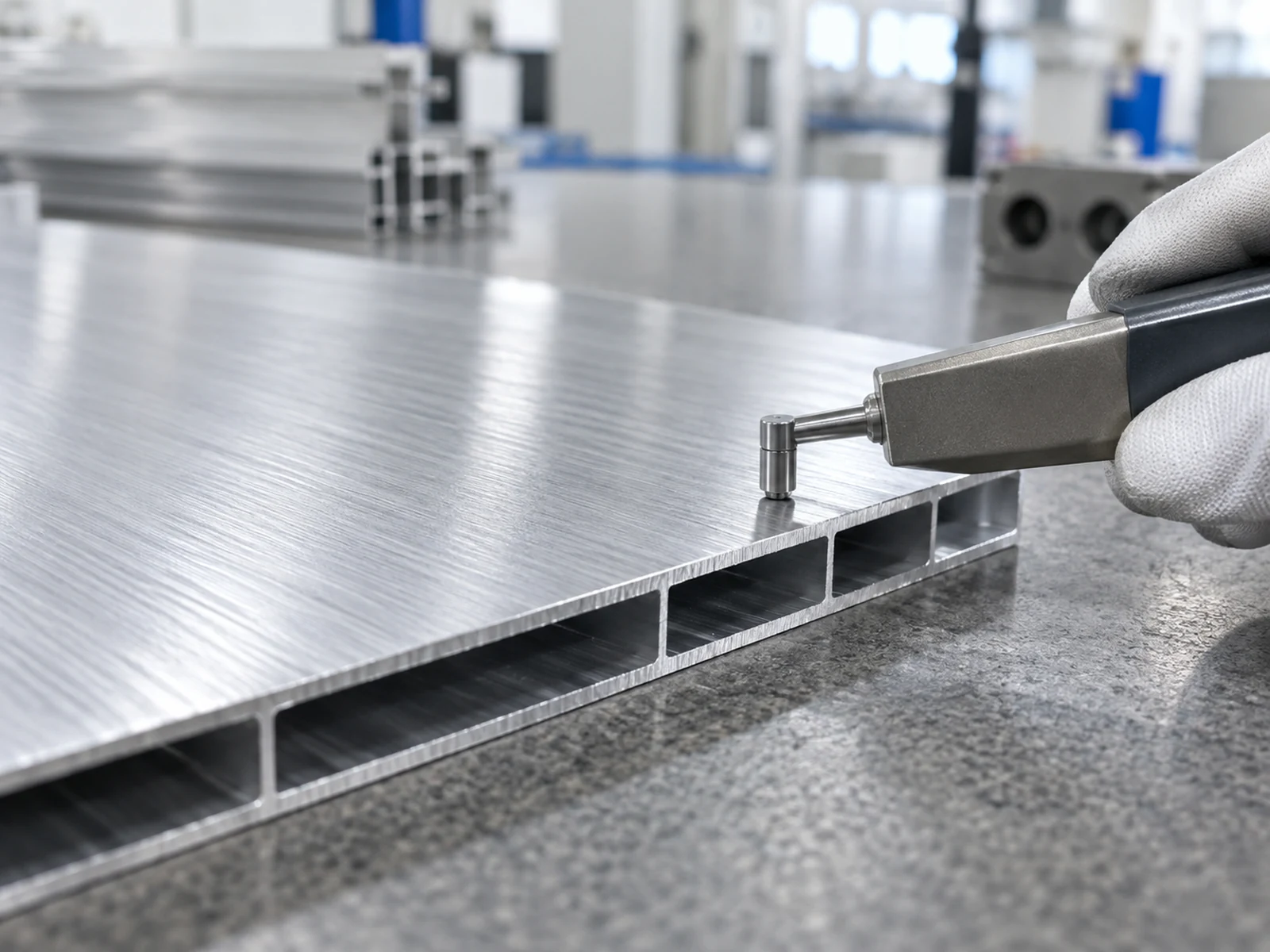
Agree on a visible-finish reference before the trial. Photograph an untouched profile from the same stock lot under the agreed lighting, with its orientation marked. Record whether the face is mill finish, anodized, coated, or protected by film; the approved drawing and customer specification decide what counts as a defect. After a cut, inspect the part before it enters the outfeed, at the first discharge contact, and at the collection point. Keep the same face and orientation in every view.
If the line is already present before the saw, a roller sleeve on the outfeed cannot cure it. If it appears under a clamp or from trapped chips, investigate that contact first. Our separate guide to infeed scuffing describes how to locate an upstream mark. The point here is narrower: decide what the outfeed contact surface must be and who supplies it.
Map the actual outfeed, including the shortest part
Ask the supplier for a side view of the proposed saw-to-receiver route. Mark each point touched by the cut part: the machine exit, transfer edge, rollers or belt, stop, bin, and any manual pickup. Note which elements rotate and which remain fixed. A soft sleeve on one roller is of little value if the part scrapes a bare transfer lip immediately afterward.
Use both a long profile and the shortest released piece. A short part may bridge fewer rollers, tilt into a gap, or land on a different surface; a long part may drag while its trailing end is still controlled by the machine. Existing guidance on outfeed support for the shortest piece addresses stability. This RFQ adds the finish and replacement boundary of each contact. Confirm guarding and safe access with the machine builder before anyone observes or handles a moving discharge.
Compare the full contact path and service scope
There are three legitimate answers to a visible-face problem. Keep the supplied roller if a witnessed sample stays within the agreed finish limit and the roller can be cleaned. Quote a replaceable sleeve or coated roller if the actual contact needs a softer, serviceable surface. Change the transfer route if a belt, lined tray, different orientation, or revised pickup removes the harmful contact more reliably. The correct choice depends on the part and complete handoff, not on a generic material ranking.
Interroll describes sleeves as providing a softer surface for sensitive conveyed goods in its roller product literature. That is a conveyor design example, not evidence that a particular Jiurun saw includes such sleeves or that a specific finish will pass. The Aluminum Association’s in-plant handling guidance for sheet and plate also stresses clean rolls and guides because embedded particles can mar aluminum. Its sheet-and-plate scope differs from your extrusion; use the cleanliness principle as a trial question rather than borrowing an acceptance limit.
What belongs in an aluminum saw outfeed roller sleeve quote?
Ask the supplier to state the roller or receiver assembly to which the option applies, its location relative to the saw, whether the sleeve is fitted at delivery, and whether the quoted scope includes installation. Request the contact width, usable part envelope, retention method, and a drawing or part number for the replaceable item. These are fields to verify on the offered configuration, not dimensions inferred from another machine.
Clarify whether the sleeve can slip, trap chips, change the support height, or interfere with a sensor or guard. Ask how it is removed, cleaned, inspected, and replaced, and which of those actions require a qualified service person. The supplier should identify compatible cleaning agents and the condition that triggers replacement. A low purchase price without replacement access, a spare identifier, and ownership of the adjacent bare contact can leave the buyer with the same surface problem later.
Put the boundary in one sentence on the RFQ: “The quoted outfeed includes [named contact assemblies and protective surfaces] from the saw exit to [named receiving point], with replacement parts and cleaning access identified.” If an existing plant conveyor is retained, identify its owner and the interface drawing. Avoid an unqualified promise that the entire line is “scratch free”; define observable acceptance on the approved parts instead.
Run a trial that can reject the wrong answer
Use production-representative stock with its actual finish, film, cross-section, and length range. Inspect the same marked visible face before loading, immediately after cutting, at the first outfeed touch, and after collection. Record new lines, dents, film disturbance, chip impressions, and any part that stops, rolls, or bridges a gap. Trial the shortest and longest relevant pieces, plus the orientation that places the sensitive face at risk. Do not stop a cycle or enter a guarded zone for a photo; use the builder’s safe observation procedure.
Have the supplier show the proposed clean and soiled contact condition, the replacement method, and the first piece after replacement. If the machine is not yet equipped with a proposed sleeve, mark the trial as a baseline only. A video of another saw, a padded sample bench, or a supplier brochure cannot replace a witnessed test on the offered configuration. Put the accepted surface limit, viewing method, sample identity, and failed-piece disposition into the release record.
Equipment example and RFQ handoff
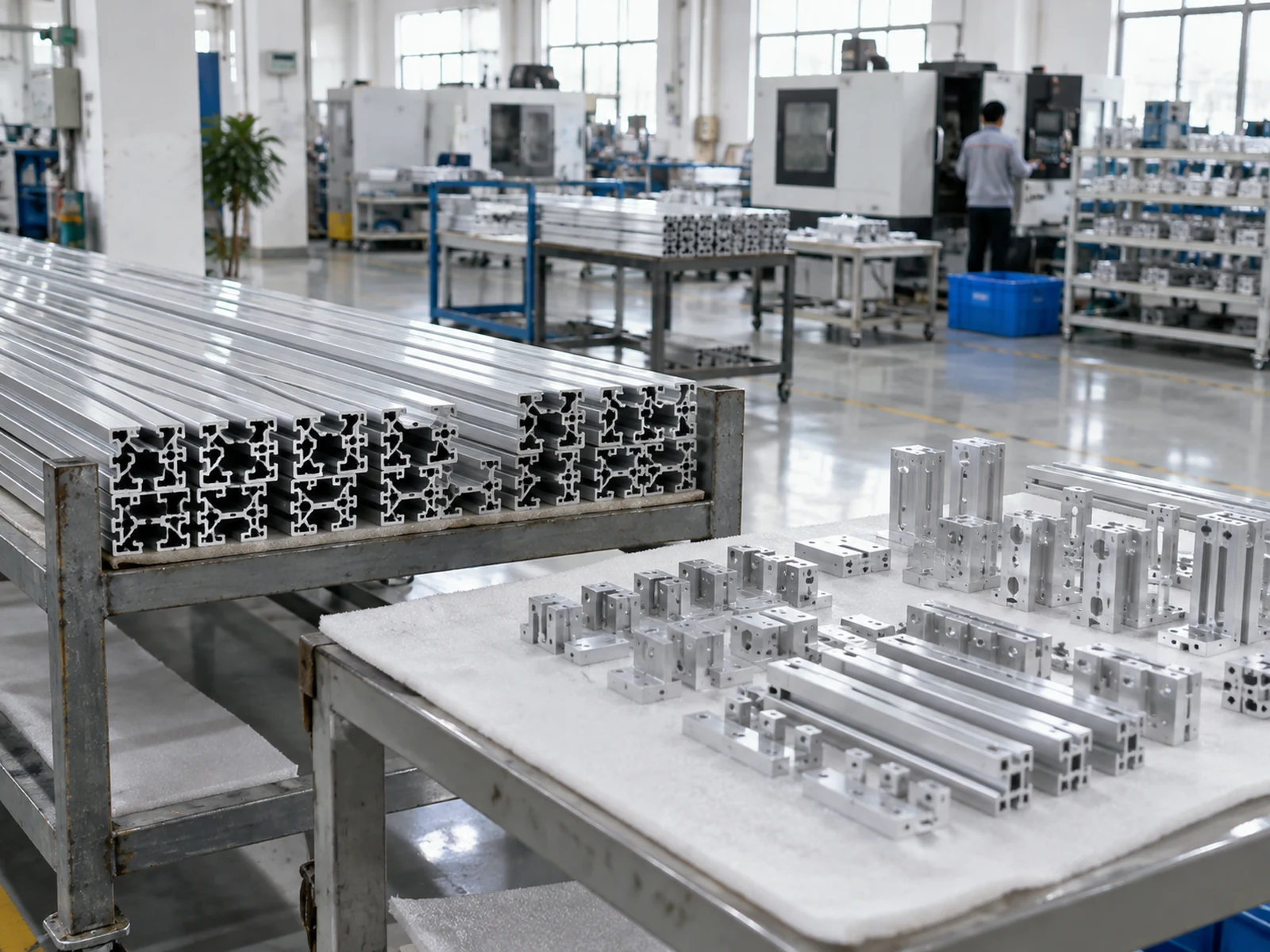
The following JiurunCut channel clip shows a JR-650CNC-3A-1S automatic aluminum cutter and feeding arrangement. It is related equipment footage only. It does not show a specified outfeed roller sleeve, this article’s finish sample, or a verified surface-performance result.
Send JiurunCut the approved profile drawing, finish and visible-face requirement, shortest and longest released lengths, current outfeed or receiver layout, and paired photos before and after the suspected contact. Ask for a marked handoff drawing, the exact contact-surface scope, service parts, and a trial plan. Contact JiurunCut about the saw and outfeed interface with those items so the quote can be compared on an accepted part rather than a sleeve description alone.