
Aluminum saw linear guide wipers are easy to overlook when two quotations name the same feed-axis rail but include different protection around its moving blocks. Before comparing prices, ask what actually keeps chips, fine dust and lubricant residue away from the guide. The useful purchasing question is not simply “Does it have wipers?” It is which parts are fitted to the installed block, where they sit, and how they can be inspected and replaced.
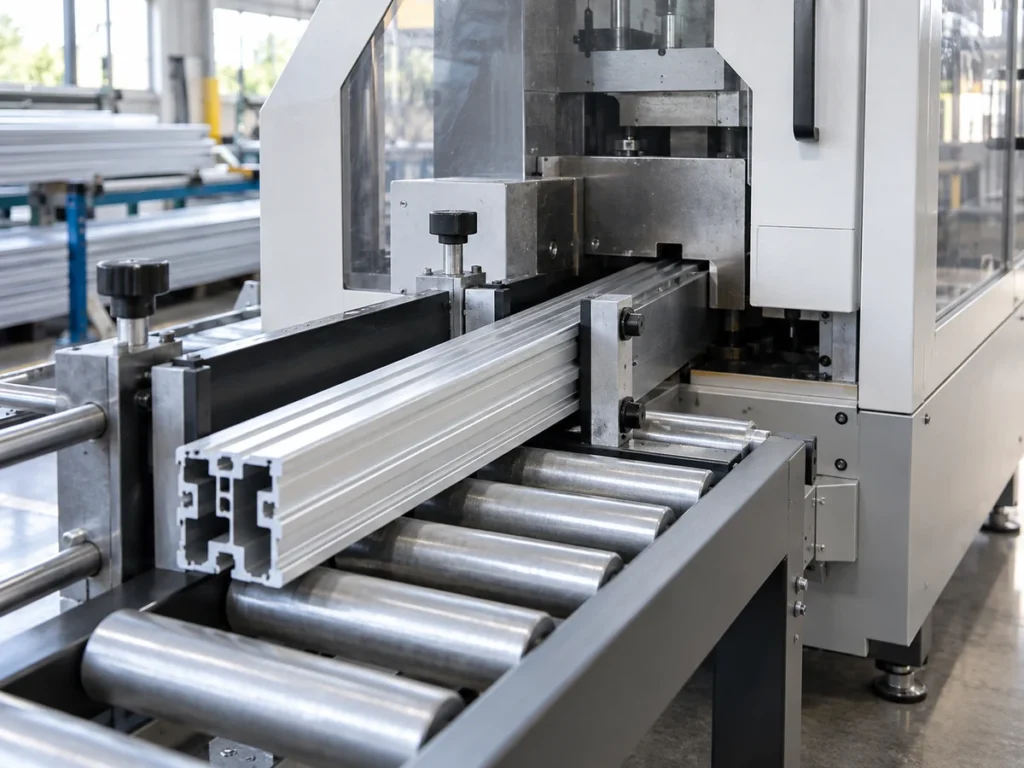
This guide concerns the machine’s moving feed axis. The side guides that position an aluminum extrusion on an infeed table are a different component. The featured image shows a related enclosed feed table, not its hidden linear-guide protection. A photograph of a table or side guide cannot prove the installed sealing package.
Match aluminum saw linear guide wipers to the installed block
Request the machine builder’s feed-axis assembly drawing or parts list, the linear-guide maker and block designation, and a photograph with the relevant cover safely opened. Locate the moving block, rail, exposed travel, chip path and service access. If the seller cannot identify the installed block, a generic “standard wiper” line item is too vague to price as an interchangeable spare.
Guide manufacturers offer different protection arrangements. THK lists end seals, side seals, inner seals, contact scrapers, bellows and rail-hole caps among its contamination measures. HIWIN lists seals and scrapers as options on guideway families. These examples show why the block designation matters; they do not establish which brand or option is fitted to a particular JiurunCut saw. Confirm the machine’s actual bill of materials before ordering.
Map the chip path before specifying a barrier
Walk through one full automatic feed cycle in a safe demonstration. Note where chips are generated, where they can settle, where the axis travels, and what each fixed or moving cover shields. A wiper on a moving block sweeps material from the rail immediately ahead of the block. A cover or bellows can reduce what reaches the rail in the first place. Rail-hole caps address another entry path. These parts solve different exposure problems and should not be treated as identical substitutes.
THK warns that foreign material in an LM guide can cause abnormal wear and shorten service life. Its precautions also identify cutting chips and coolant as conditions requiring protection. That guidance supports asking about contamination control; it does not prove a particular saw will achieve a given life or accuracy. The appropriate package depends on the installed guide and the actual cutting environment.
Make the quotation identify what is supplied
Ask each supplier to itemize the protection package against the exact block: fitted end seal or scraper, any side or underside seals, rail covers or bellows, and mounting-hole caps where applicable. Request the guide-maker part numbers and quantities for each moving block. Record whether these parts are included on the new machine, supplied as spare kits, or separately priced. A spare kit should identify its compatible block and any installation hardware rather than just a machine model name.
Then ask how the operator reaches the rail for routine cleaning and lubrication, and how maintenance removes a worn barrier without disturbing feed-axis alignment. Get the maker’s inspection and replacement instructions for the installed guide. Do not specify a cleaning tool, lubricant, interval or replacement threshold from a different guide family. A damaged wiper, trapped chip or obstructed cover may need attention, but the inspection decision should follow the machine and guide documentation.
Use a witnessed check, with limits
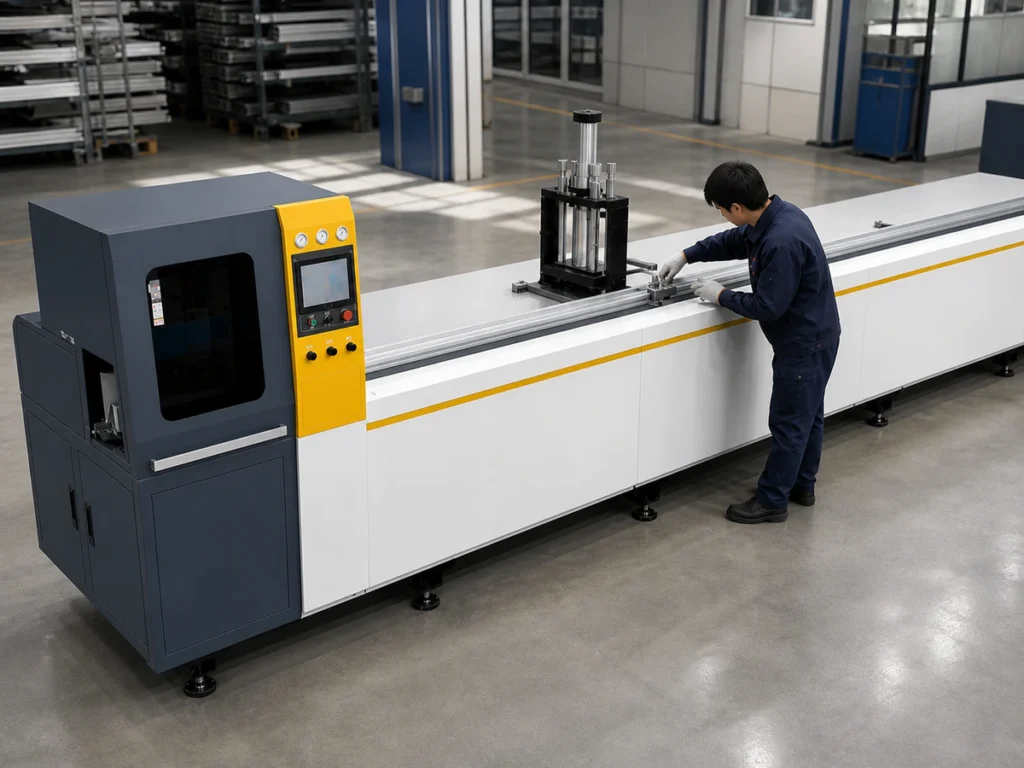
For acceptance, ask the supplier to show the identified feed axis with its covers in place, run a representative feed-and-cut sequence, and then demonstrate the prescribed safe access and visual inspection points. Record the block designation, fitted protection parts and photographs in the handover file. After the run, look for obvious chip accumulation at exposed rail sections or around a cover opening. This is a check of visibility and accessibility, not a laboratory wear test or a promise of contamination-free operation.
Do not ask an operator to open a moving enclosure or touch a live axis. The machine builder should set the safe isolation and access steps. Also separate the performance question from the part-identification question: a short demonstration can show the machine moves, but cannot establish long-term guide life, scraper effectiveness or a quantified accuracy claim.
What the video shows
Watch Jiurun Machinery’s automatic-feed cutting video. It provides a visual reference for automatic feeding and cutting. It does not expose the hidden linear-guide block, identify a wiper package, show chip ingress beneath a cover, or validate a specific spare-part fit.
Send a comparable RFQ
When requesting a quotation, send your profile drawing, material and finish, length range, expected production pattern and available floor space. Ask JiurunCut to identify the proposed feed-axis guide, contamination barriers, spare-part numbers and service access on the offered configuration. Request a witnessed demonstration plan that states what will be shown and what remains a document or long-term maintenance question. Contact JiurunCut with your cutting requirements to compare a machine and its protection package on the same basis.
Sources: THK LM Guide selection: contamination protection; THK LM Guide precautions; HIWIN HG Series guideway options.