
Aluminum saw for workstation crane manufacturing is a useful buying question only after the crane system supplier and fabricator define which aluminum members may be cut in-house. A workstation crane is a lifting system with a track, supports, trolley, hoist, connections, and installation requirements. A cutting machine makes blanks; it does not establish a track rating or approve a lifting-system design. The first decision is therefore a supply-boundary decision, not a blade-size comparison.
For context, Demag presents KBK Aluline as a modular aluminum crane system, and Gorbel describes workstation cranes and monorails as complete system offerings. Those pages show why a buyer should ask the system owner about approved track, joining, and site modifications. They are examples of supply routes, not endorsements of any Jiurun machine or evidence that a generic extrusion is a crane track.
Separate a complete system from cut-to-length components
One buyer orders an engineered workstation crane package and receives specified track sections and connectors. Another has written authorization to cut defined aluminum stock to a released drawing before the system supplier completes the assembly. A third makes unrelated support or guarding profiles near the crane. Those three jobs can look similar at the saw, but only the second may involve track stock, and even then the permitted work is controlled by the system documentation.
Before requesting a saw quotation, obtain a parts list and a clear answer to four questions: who specifies the stock, who releases each cut length and end treatment, who approves any hole or connector interface, and who accepts the installed lifting system? If those answers are missing, price the complete crane package first. A saw purchase should follow an authorized make-versus-buy decision.
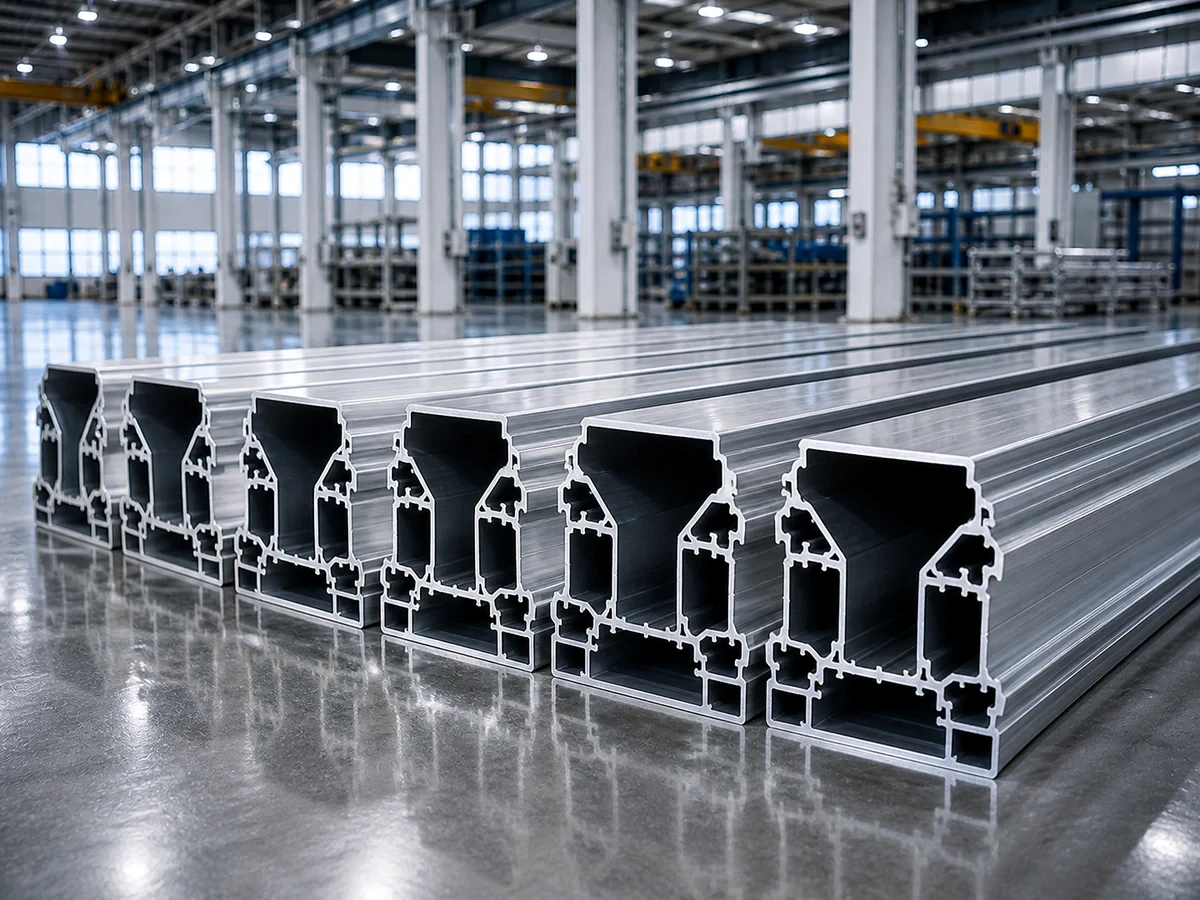
Define the authorized member portfolio
A useful RFQ names each part family rather than saying “crane aluminum.” Record the supplier’s profile identification, drawing revision, alloy and temper if specified, outside envelope, wall arrangement, finished cut length, end condition, annual and batch quantities, and how each member is traceable. State whether the saw will process track sections, non-load-bearing covers, support accessories, or unrelated plant framing. Never substitute a look-alike section based on appearance alone.
Long members need practical handling notes. List incoming stock length, straightness expectations, support points, floor-space limits, and the path from storage to infeed and outfeed. If the system supplier forbids local trimming or requires its own cut-end process, honor that boundary. The saw vendor can evaluate whether a released extrusion can be gripped and cut; only the responsible lifting-system party can approve the structural application.
Translate the drawing into a controlled cutting trial
For every authorized cut part, mark the dimension reference on the drawing: overall length, datum-to-end length, or a length measured after another operation. Include permitted variation and the inspection method. Specify whether the end must be square, whether a miter is actually required, and whether burr removal or edge protection follows. Do not turn a broad “clean cut” request into an unsupported accuracy claim.
Send representative samples of the real approved stock, including the longest and shortest members and the section most difficult to support. Discuss clamping contact points, thin-wall distortion, blade clearance, chip removal, feed support, and repeatability with the machine supplier. A trial should record setup, measured outcomes, visible end condition, rejected pieces, and adjustments. A sample cut is evidence about that sample and setup only; it is not proof of the installed crane’s strength, duty class, or compliance.
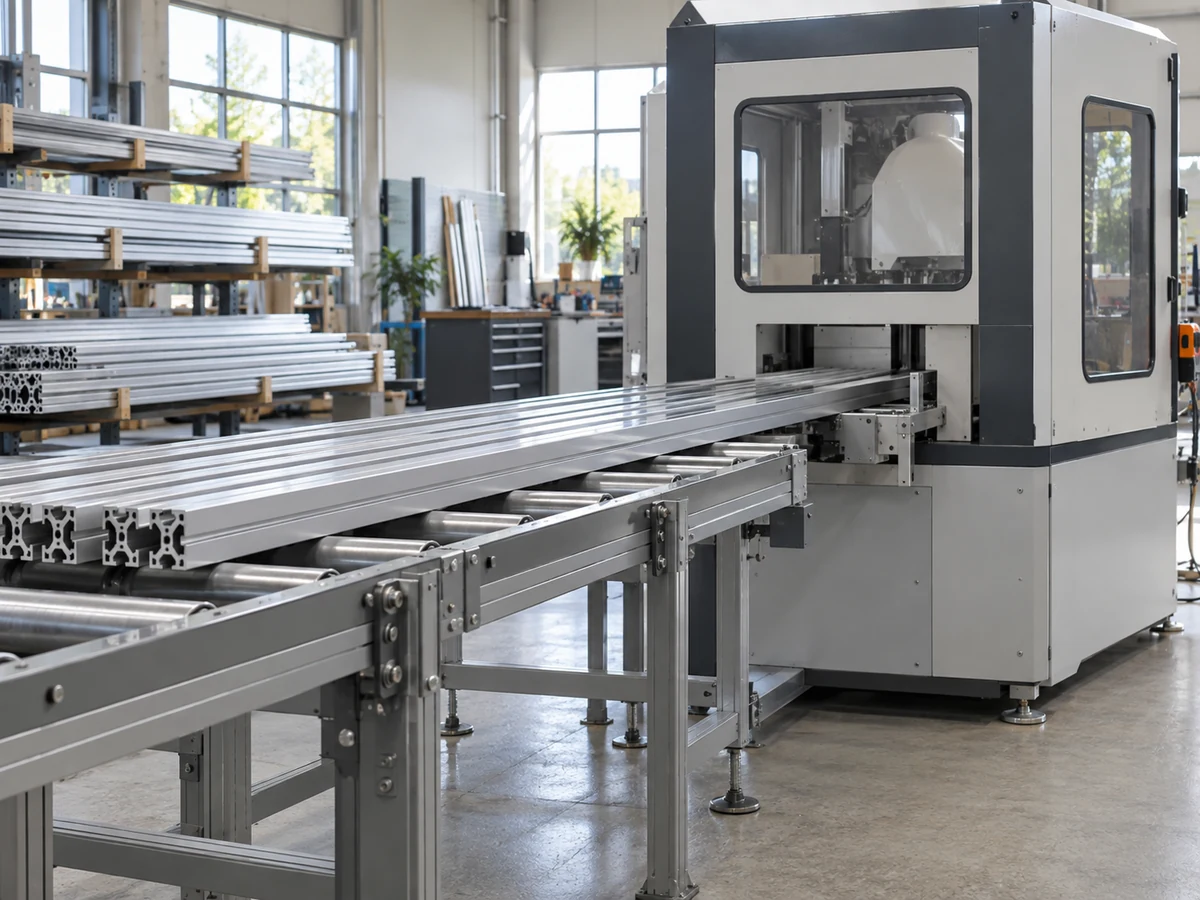
Keep inspection and lifting-system acceptance separate
A cutting-cell check can measure length, squareness where specified, visible damage, burr condition, and part identity. It should also capture the operator, drawing revision, material lot or supplier reference, and quantity accepted or set aside. An assembly or installation check has different owners and criteria: connectors, supports, alignment, travel limits, commissioning, and any tests required by the system supplier or project authority. Put these in separate records so a good saw sample is never presented as approval of the whole crane.
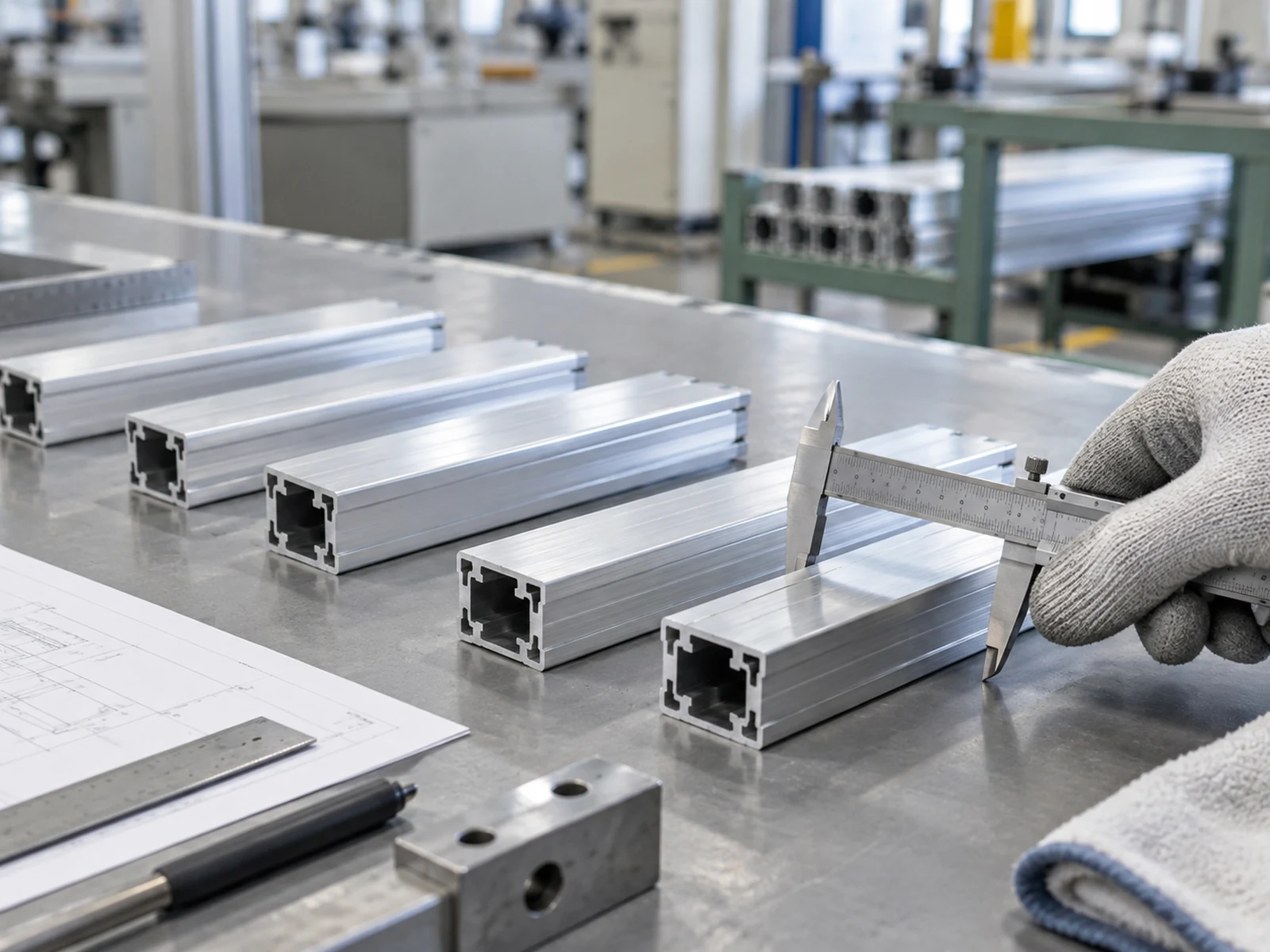
The inspection plan should state who measures each feature, what gauge or fixture is used, the number of pieces sampled, and when a batch is held for review. If a part will be coated or otherwise finished after cutting, clarify whether the drawing dimensions and edge requirements apply before or after that operation. For repeat orders, keep the drawing revision and cut-program version aligned.
Final comparison: aluminum saw for workstation crane manufacturing
If the authorized portfolio contains many long, repeated straight cuts, evaluate stock support and batch handling before adding automation. If it contains short service parts or varied end angles, the changeover and clamping plan may matter more than raw throughput. Ask how the proposed saw handles the released section envelope, how operators confirm the datum, and how offcuts are identified. An expensive automatic feed does not fix an unclear drawing or an unapproved track substitution.
Jiurun’s aluminum profile cutting machine range is a starting point for discussing sample stock and production rhythm. No model, capacity, cut tolerance, or crane-system approval is asserted here. Request a configuration review based on your drawings and sample parts before treating a catalogue category as a specification.
Related Jiurun channel demonstration: this video shows an equipment/process scene. It does not document the approved stock, model configuration, customer project, lifting rating, or trial result discussed in this guide.
Eight items to send with the RFQ
- The system supplier’s written boundary for local cutting and the party responsible for final approval.
- Released drawings, revisions, and the exact profile or stock identification.
- Part-family quantities, batch sizes, and incoming stock lengths.
- Dimensions, end conditions, and how each cut feature will be checked.
- Representative longest, shortest, and most difficult-to-clamp samples.
- Infeed, outfeed, floor-space, staffing, and handling constraints.
- Required part marking, traceability, and inspection records.
- A request for a documented sample trial and a written machine configuration proposal.
For a practical comparison, send Jiurun the released drawings and representative aluminum samples with the supply boundary stated up front. Ask the crane system owner to resolve any lifting-system questions; ask the saw supplier to show the cutting setup and its measured sample results.