
An aluminum saw for wind turbine components should be purchased against the components your factory is contracted to supply. A tower access package can arrive as approved modules, as prepared members for local assembly, or as extrusion stock requiring several manufacturing operations. Those routes put very different work on a cutting station. Begin with the released supply scope and the project configuration, then compare equipment for the cutting tasks you retain.
A long list of turbine applications is not a machine specification. The useful question is which input objects become which deliverable members at your factory, and how those members remain attached to the correct turbine variant, tower segment and drawing revision. This guide addresses industrial saw procurement for approved aluminum component work. It does not design turbine structures, access systems or fall-protection equipment.
Define the retained scope of an aluminum saw for wind turbine components
Start with the customer purchase order and the manufacturing bill of materials. Divide the package into complete bought modules, bought finished components, retained extrusion-member preparation and other retained processes. Record the supplier of each input and the point at which your factory accepts responsibility for it. Do this before treating every aluminum component in the project as future saw demand.
Hydro’s wind-system application overview identifies extrusion uses in tower platforms, ladders, handrails, cable mounting and nacelle component mounting. It also describes prepared-product supply. These examples establish the breadth of possible component routes; they do not establish that a JiurunCut saw can process every listed object or provide Hydro’s other manufacturing services.
For procurement, keep the whole project package visible while narrowing the actual saw workload. A factory assembling bought access modules may have only occasional replacement-member work. A supplier making loose members for several approved module types can need a dedicated profile cutting route. A supplier delivering completed modules must also account for the separate joining, machining, finishing and release operations that determine when a complete set becomes available.
Compare three supply routes before selecting equipment
Use the following comparison to identify what you are buying the station to achieve. These are purchasing alternatives, not claims that one route is universally cheaper or that JiurunCut supplies complete wind-system modules.
| Supply route | Work retained at your factory | Evidence needed for the saw decision |
|---|---|---|
| Complete bought modules | Receiving, approved assembly interfaces and any separately authorized local member work | Actual remaining cut orders; exclude members already included in bought modules |
| Prepared members with local module assembly | Any retained cutting plus separate connection, joining and set release | Member drawings, preparation stage, finished supply dimensions and assembly dependencies |
| Extrusion stock with retained component manufacture | Defined member cuts and the separately arranged downstream route | Actual stock, cut drawings, configuration-specific member mix, handling and trial cases |
Request comparable quotations for the same retained work. A saw-only price cannot be compared directly with a delivered module price without identifying the other operations, purchased fittings, handling and release work in each option. Where the scope is unsettled, record the competing routes and what information will decide between them. Do not fill the gap with an invented production volume.
Use the turbine configuration to build the member mix
The project name alone can conceal materially different member sets. Ask your production team to identify the configurations covered by the proposed purchase: turbine variant, tower segment, module location and approved component revision where these affect the actual members. Use the identifiers already present in the customer documentation rather than inventing a new engineering classification.
A tower platform module and a nacelle mounting assembly may both contain aluminum profiles, yet their member drawings, support requirements and next operations can differ. Map each retained input to its approved member output and receiving operation. Keep parts bought complete outside the cutting list. This makes the quoted station’s scope auditable without asking the saw supplier to approve the wind-system design.
Build a representative order mix from real releases or explicitly marked planning assumptions. Include the long and short member cases, relevant section changes and project variants that actually influence the station. A large total length of aluminum is not enough: it can consist of a single repeat member or many small families that require different references and handling. Keep those distinctions in the purchase comparison.
Separate the member drawing from the module interface
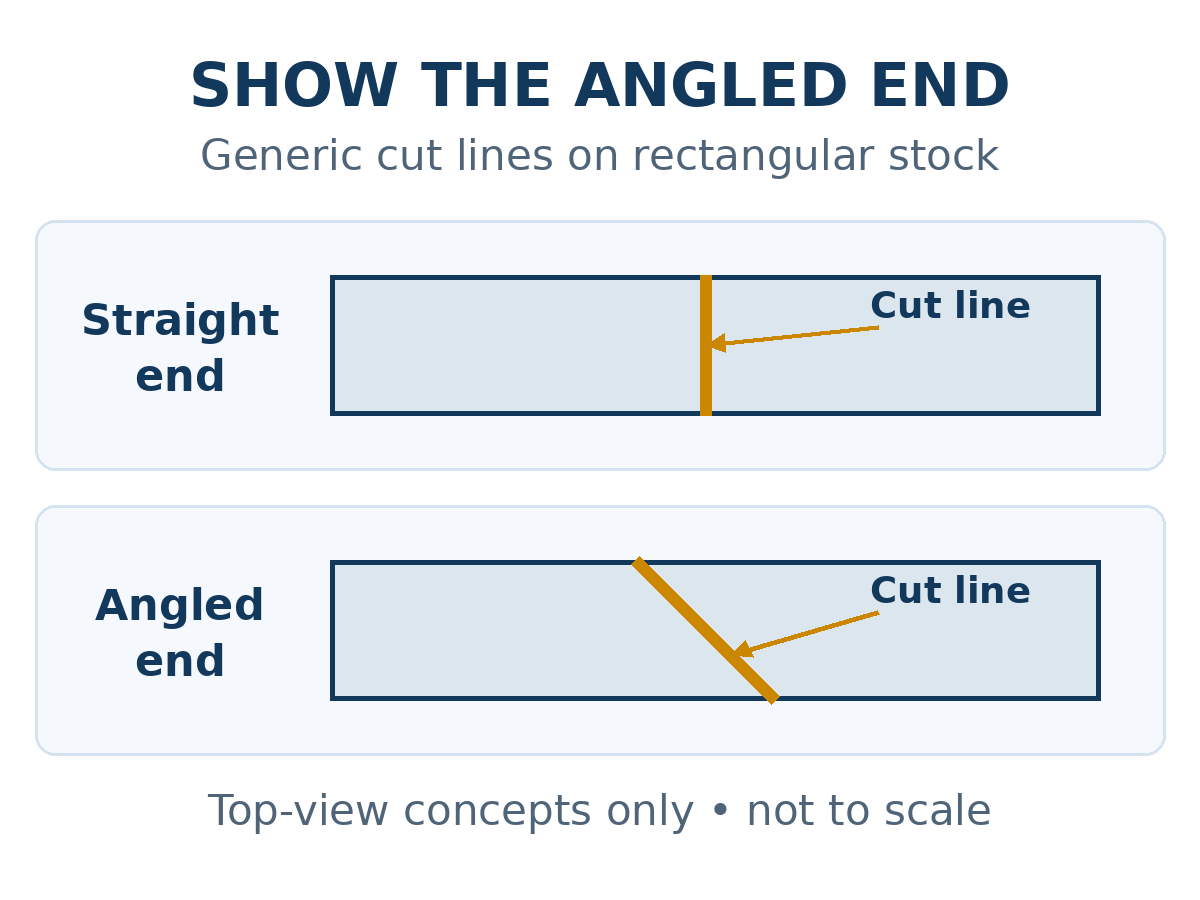
Identify whether the saw produces a rough blank, a length-finished member or a member that will change during later processing. A module installation dimension is not automatically the cut length of every constituent profile. Attached connectors, formed ends or a later machining reference can change the relationship. Use the approved component drawing and its manufacturing stage to state the required output.
For each trial case, provide the specified length reference, end geometry and relevant end-condition requirement. If a miter is required, state the drawing reference used to measure it. If a later operation establishes the finished face, identify that operation and its approved blank requirement. Ask the proposed supplier to review the actual case instead of applying a generic allowance to all components.
The aluminum ladder component cutting guide concerns individual component handoffs. Keep that detail subordinate to the wider wind-project purchase: the equipment decision must cover the retained mix across the contracted modules, with the correct component drawings and exclusions. A satisfactory cut on one ladder member does not establish coverage of the complete supply package.
Review incoming stock and supported contact surfaces
Send the actual extrusion cross-sections, incoming lengths and material condition for the retained work. Identify cavities, projections, thin walls and surfaces that the drawing or finish requirements protect. Include the material designation and temper specified for the component. Do not select an alloy or assume a surface treatment from a general wind-industry illustration.
Ask the supplier to explain how the reviewed profile is supported and held in the proposed cutting arrangement. Distinguish stock feed, clamping and output collection. The equipment envelope and contact arrangement must be reviewed for the actual input, including its condition at the time of cutting. A fit within a nominal section capacity does not by itself establish acceptable contact or member quality.
If stock is received with a coating or other finished surface, state that condition in the inquiry. If finishing follows cutting, identify the handoff and the customer requirements that remain to be met there. No general claim about aluminum’s corrosion behavior can replace the approved material and finish specification for a wind project. Keep such requirements with the responsible component and system review.
Keep plate, formed parts and bought assemblies on separate routes
A platform package can include profile members alongside plate, grating, formed parts, purchased fittings or complete assemblies. List these as separate input objects. Determine which are excluded from the profile saw quotation and how they reach the same completed module. Do not infer plate, joined-panel or assembly processing from a successful extrusion cut.
For any larger or joined object proposed for cutting, request a separate suitability assessment based on its actual geometry, condition and required result. Retain a clear exclusion where it is outside the proposed machine configuration. The purchase can still be complete when that task is deliberately handled elsewhere, provided the quotation and manufacturing route make the boundary explicit.
Check how the separate routes affect usable project output. Cut members can be ready while the matching bought fittings or platform elements await supply. This dependency belongs in the production plan and commercial comparison. It should not be reported as saw capacity loss or solved by adding unrelated tasks to the station’s promised scope.
Plan project sets and revision changes at the cutting handoff
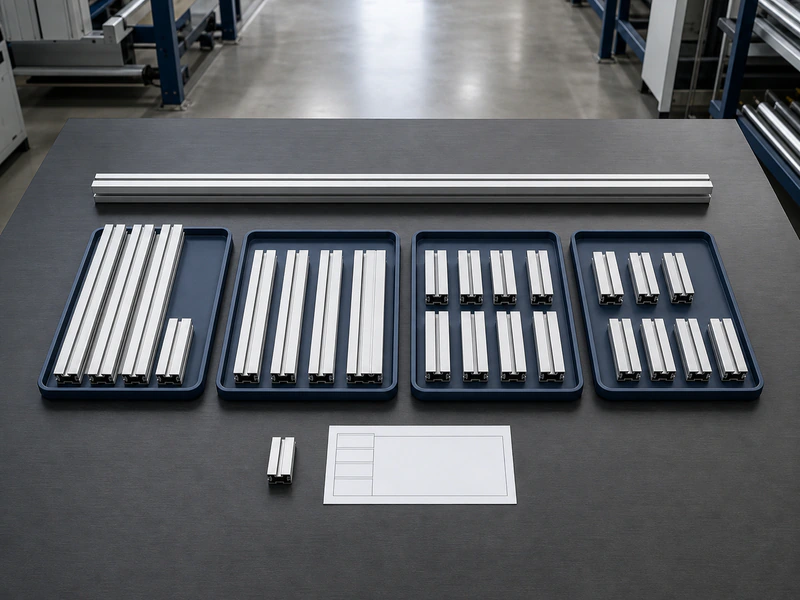
Define how a member leaves the station with its project and drawing identity. A suitable scheme depends on the actual factory route: loose members may be transferred by approved part number, while a module assembler may require a defined set associated with a tower segment or installation location. Confirm the receiving department’s requirements before choosing collection and identification provisions.
Review a drawing revision as a manufacturing release, not merely a new length entered at the machine. Identify affected stock, previously cut members, bought components and incomplete sets. Ask how your factory will distinguish accepted earlier work from work awaiting disposition. The saw quotation should describe any actual information or handling functions it includes; the buyer must separately arrange the broader project release controls.
Mixed projects deserve a representative trial of their planned handoff. Confirm whether operators can identify the required member and pass it to the correct receiving operation using the proposed workflow. Do not assume included software, automatic identification or connectivity from a planning illustration. Request the actual offered function and responsibility for every required interface.
Compare production readiness with the complete retained route
Evaluate a proposed station through a representative retained order mix, including preparation, cutting, transfer and relevant family changes. Keep observed trial times separate from planning estimates. Record which equipment, supports and operators were used, and whether they correspond to the quoted arrangement. A blade cutting-time observation alone is not the production time for a complete module set.
Include the work that remains necessary outside the saw: any drilling, joining, finishing, inspection and bought-part coordination in your approved route. Ask which provisions are included in the equipment offer and which are supplied separately. Compare usable released members or sets on the same scope, rather than contrasting a bare machine quotation with a fully prepared component service.
Where future project demand is uncertain, show the assumptions and the purchasing decision they affect. An initial retained workload can justify one arrangement while a later contract requires another. Ask about the actual configuration options for the current reviewed workload; do not turn an unconfirmed future project into a supplier capacity or delivery guarantee.
Use a trial that answers the wind-project purchase
Select actual approved component cases that resolve different purchasing questions. One may test a long member’s support and transfer. Another may test the end reference of a short member used in a specific module. A section change can resolve whether one proposed arrangement covers the required family mix. Explain each case and keep requested requirements distinct from achieved results.
Use the sample cutting trial checklist to connect the supplied stock, drawings, actual trial configuration and recorded outputs. Preserve the member identity, measurement references, observed end and surface condition, any exclusions and unresolved questions. Request review of differences between the demonstration setup and the quoted machine.
Acceptance of the cutting task does not establish the load rating of an access platform, approval of a tower installation, fall-protection compliance or the performance of a turbine. Keep component manufacturing release and system approval with their designated responsibilities. The equipment record should state exactly which cutting work has been demonstrated and what remains to be confirmed.
Discuss the actual offered cutting configuration
Use the JiurunCut aluminum cutting equipment range as an inquiry starting point, then ask for the model and configuration proposed for your retained member cases. Confirm the reviewed material, section, end geometry, support scope and handoff provisions. Product families and general application pictures do not replace a configuration-specific response.
See JiurunCut cutting equipment in operation
This JiurunCut video provides equipment inquiry context. It does not demonstrate wind-component stock, prove an offered configuration or approve an access system. Agree the actual member cases and required evidence with the supplier.
Prepare a complete wind-component manufacturing inquiry
For an aluminum saw for wind turbine components, provide the contracted module and component scope, complete-bought versus retained work, turbine and location identifiers relevant to the member mix, released drawings and revisions, actual stock and finish condition, output references, receiving operations and representative order plan. Separate excluded plate, formed, joined and bought objects.
Contact JiurunCut with your wind-component cutting requirements and request a proposed model, configuration, included support and transfer scope and a trial plan tied to the retained member set. This gives both sides a complete procurement question without attributing unverified wind-system engineering or manufacturing services to a cutting machine.